
Breanna Barbara Grapples With Creative Burnout on Latest Single “New Moon”

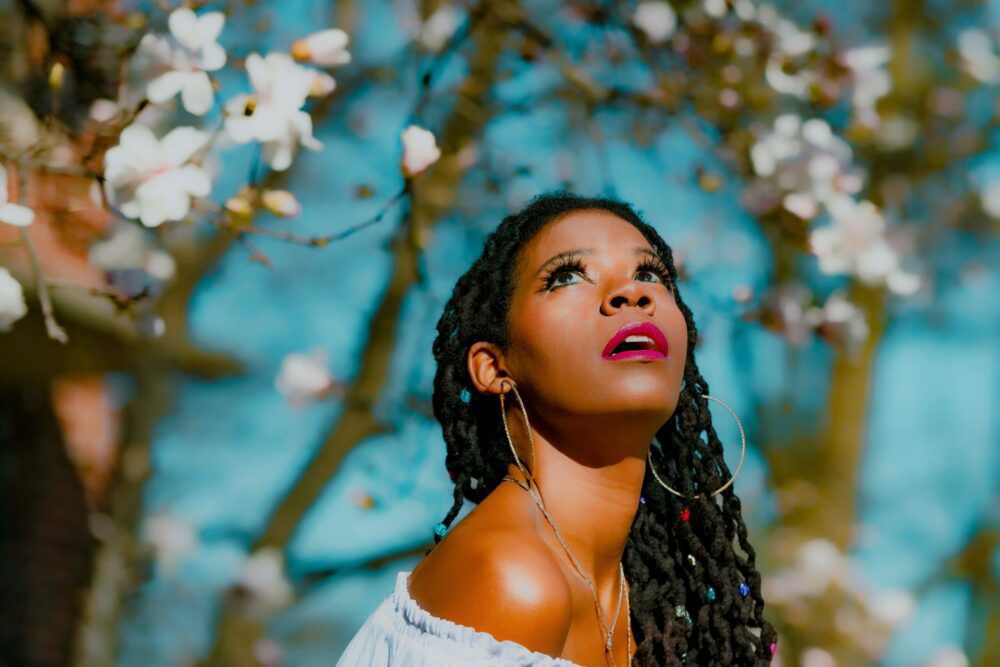
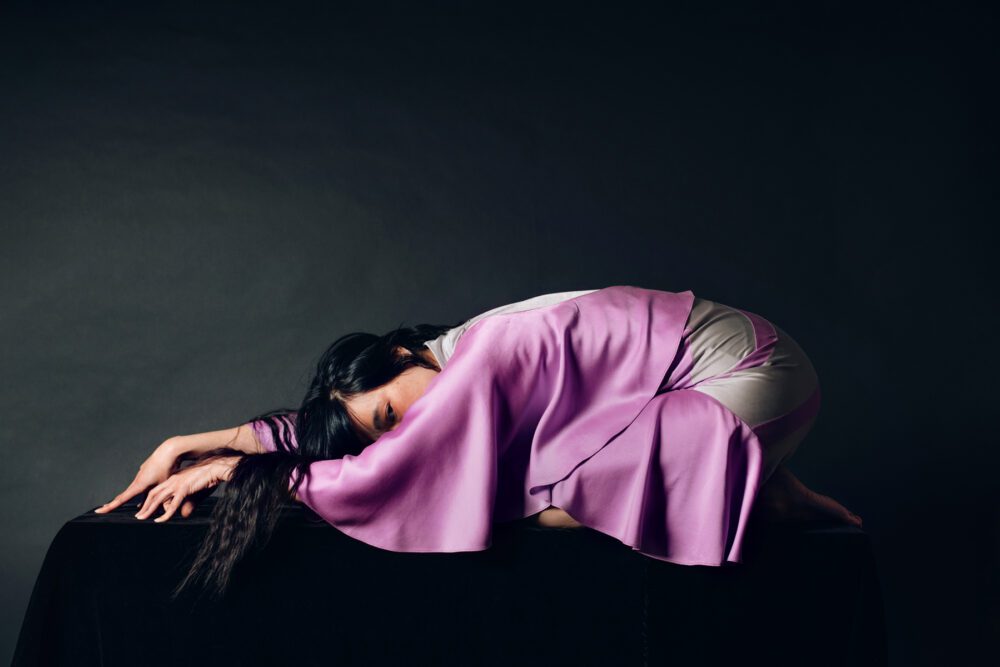
Photo Credit: Joel Arbaje

On the night of a new moon, NYC-based singer-songwriter Breanna Barbara looked up at the dark sky with teary eyes and an occupied mind distracted by confusion. Several successful years behind her as an artist, thoughts of never being able to write music again suddenly began to flood her thoughts; unsure of her future, she set out under the stars as the harsh realities of the music business threatened to wreak havoc on her greatest passion in life. An ethereal deliverance of her inner monologue, Barbara plays out the moment she felt her artistic purpose slipping through her fingers in her latest single, “New Moon,” released June 28.

“I was going through a lot personally,” she says. “I think I was just confused if I wanted to share my music any more and keep hustling in this business.” Sinking under the pressure of maintaining a presence in a competitive, cutthroat industry, practically robbing her of the joy musical creativity once brought her, Barbara throws a plea to heavens: “Dear muse/Why don’t you let me sing/Out there?”

“I am definitely very influenced by the moon. New moons represent new beginnings, and it’s good to set new habits and intentions on those days,” Barbara says. “Looking back at when I first wrote the demo, I was feeling kind of sad. There was something in the air that night, and I felt like I wanted to just think it out until I felt better.”

Upon moving to NYC to pursue theatre school years ago, Barbara continued to gravitate toward the guitar, naturally choosing music as a means for creative expression. As early as 2013, she began releasing self-produced tracks recorded on her iPhone, eventually sending the demos to producer Andrija Tokic at The Bomb Shelter in Nashville. This resulted in Barbara’s first record, Mirage Dreams, independently released in 2016. This was, of course, a significant milestone for a developing artist, but it brought new anxiety, too – that of keeping audiences coming back for more.

Following the momentum of her first record, Barbara hit a wall. “I was attempting to get back to that place of – I just want to play because I have to play, not because I have to write another record,” she says, nostalgic for the time when she wrote freely and recorded as she pleased. “I just wear it because I must. Getting higher and higher on social media, being in this whole new world of it and having to promote yourself – I think I got a little lost.”

Although the hustle of the business presented a roadblock for the artist, most of that anxiety was self-induced. “It was almost like I was putting pressure on myself. I saw that people had listened to my first record, so I knew that people were going to listen to my second record and judge or compare it to the first one,” the singer-songwriter describes. “I feel like there [was] a ghost of the past surrounding me.”

Breanna Barbara expresses her feelings on “New Moon” through the dreamy, whimsical effects of the omnichord, an ‘80s electronic instrument she hadn’t used before. The slow tempo adds intimacy to the track, giving listeners a window into Barbara’s inner thoughts and deep longing for the past. She draws in listeners with straight-forward, stream-of-consciousness lyrics (“Holdin’ on to old memories/Down inside, through all of me/I’m just trying to get to where I’m going/Without falling on the floor”), her impeccable talent for capturing and evoking emotion stemming from her affinity for soul-wrenching talents like Jessie Mae Hemphill and Bessie Smith. 

“New Moon” follows two other recently-released singles: the languid “Big Bang Blues” (available on 45RPM 7″ from Freeman Street Records) and the smoldering, minimal “The Way Out.” She will debut her newest material live with a rooftop show at Our Wicked Lady in Brooklyn on July 18 – evidently, calling out to the moon for healing and inspiration proved to be helpful in moving past her mental blocks.

Barbara also cites Rainer Maria Rilke as a huge inspiration, particularly Letters to a Young Poet, which famously details the dilemma of deciding between a path as an artist or following “less-creative” pursuits. Rilke concludes in his correspondence with aspiring poet Franz Xaver Kappus that art is only worth pursuing if the would-be artist feels an intense pull to do so – if they cannot live without creating, if there’s a void in the soul that can only be fulfilled by making art. “It’s something that I’ve always taken with me as an artist,” she explains, having picked up the book in theater school. “It’s like the lid is going to pop if I don’t get it out somehow.”

Moreover, her urge to write music, coupled with her gravitation toward spirituality, keeps her going through tough times. “In those times of desperation when nothing’s really clicking for you, it’s really good to sit down and do the things that make you come back to yourself,” she says. “For me, that’s definitely tapping into that spiritual side of myself. That seems to be a theme in my philosophy: learning what I believe in, questioning why I’m here and how complex human beings with all these emotions can be.”

Follow Breanna Barbara on Instagram, Facebook, and Twitter for ongoing updates.
Poppies Vocalist May Rio Releases Quirky Solo Debut Easy Bammer

Photo Credit: Noelle Duquette

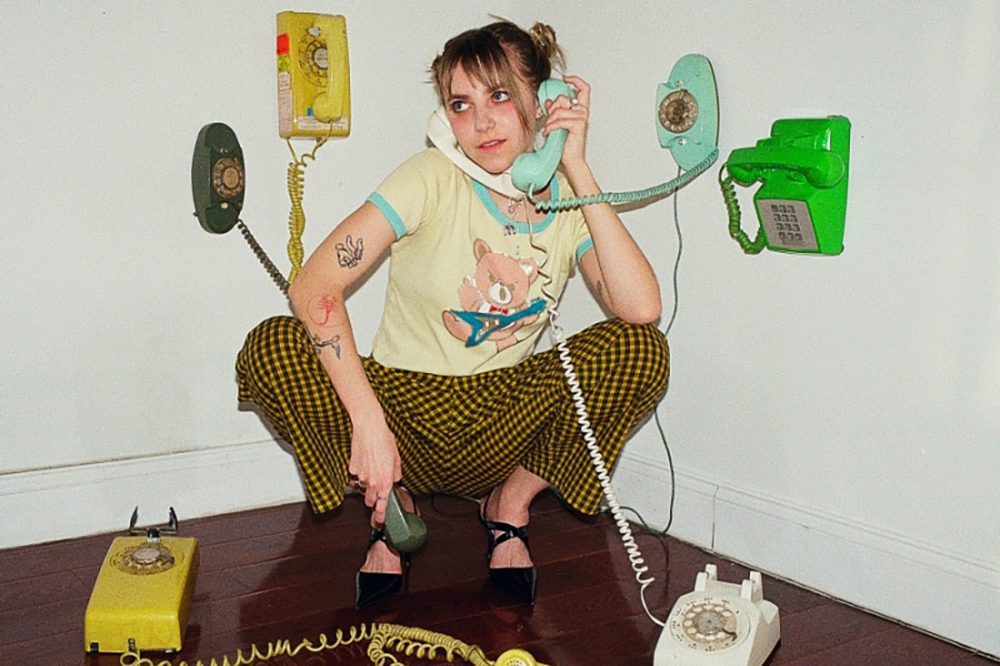
For May Rio, the writing of her debut solo album, Easy Bammer, is quite literally on the wall. Released June 25 via Dots Per Inch Music, the solo debut from the Poppies vocalist materialized as she taped lyrical snippets to the walls of her childhood bedroom, adrift in isolation like so many musicians during the pandemic.

Growing up in Austin, Texas, Rio began her creative career as a visual artist. But it wasn’t until her junior year of art school where her vision transitioned to music after picking up her first acoustic guitar, daring herself to write a song. “I could barely play an A chord, but I wrote a song, and it felt so good and so much better than making art,” Rio confesses to Audiofemme. “I knew that’s what I wanted to keep doing right then.” 

But her determination on this new musical path was also met with trepidation. Entering an industry that’s obsessed with youth, Rio was convinced that she was pursuing the craft too late. “I was praised a lot for my talent with visual art growing up. I think even by the time I was a teenager, it made it really not fun for me anymore. The upside of starting music so late was that there was never any expectation that I would be good at it,” she analyzes. After graduating college, the Texas native became a New York transplant with an overwhelming desire to start a band. That vision became reality when she met guitarist Ian Langehough, the two forming Brooklyn-based indie pop-rock band Poppies and releasing four EPs. 

But the onset of the COVID-19 pandemic brought her back to her parents’ house in Austin. As she ebbed and flowed through the early mundane days of the pandemic, the idea of making a solo album came creeping into mind, her song lyrics spilling onto sheets of paper that she taped to the walls. “Every day was the same and my emotions are the same every day. There wasn’t really a lot going on to process other than the exact same thing,” she describes of the album’s conception. “I was curious, ‘can I do this?’ It was an experiment to show myself that I could.”

From there, Rio consistently made demos, each one fueling her drive to make another. Upon returning to New York in the summer, she connected with Tony 1 of indie act Tony or Tony, toying with her solo demos in his at-home studio. “As soon as we started laying everything down, I was cheesing so hard because I was like ‘This is exactly how I want this to be,’” she describes of the “unambitious” endeavor. 

Intentional about stepping outside of Poppies’ guitar-heavy sound, Rio leaned more into pop production, pulling in experimental sounds, funky pop loops and eclectic arcade game effects to compliment her whimsical voice. Unafraid to explore “goofy” topics, Rio admits that an online shopping addiction developed during the pandemic on “Everything Must Go!” while “Gravy Baby” is an edgy pop homage to playing the lottery. 

Alongside more playful numbers, Rio was intentional about processing the real pain she was experiencing in the aftermath of heartbreak. “A lot of the songs are very personal. Lyrics are super important to me. It’s always been very important that they really mean something,” she conveys. “Even if the listener doesn’t know what I’m saying, I need to know what I’m saying.”

In “Reservations,” Rio explores her experiences at the end of a relationship with someone who is a recovering heroin addict; while she knew the relationship would ultimately end in demise, she still felt sorrow over the lost love. Meanwhile, “Reasons” explores the feeling of being stuck, and “Party Jail” captures the draining nature of tour life that’s “hard on the spirit,” Rio describes, citing it as her favorite song to record.

But she points to “songForNeo” as the most vulnerable of the 10 tracks, a tale of star-crossed lovers who desperately want to be together, but for inexplicable reasons are destined to remain apart, which Rio calls the “heartbreak of my life.” “It was really helpful writing that song because I could channel that energy into writing rather than reaching out at two in the morning, say everything I wanted to actually say to him but probably wouldn’t be all that helpful, and put it in the song instead,” she details of the emotional track. 

It’s this element of healthy processing that Rio channeled into the album, hoping that listeners get as much out of it as she put into it. “It’s good to question things. I don’t mind if my listeners are confused. I think it’s good to always be in at least some state of confusion. I feel like if you are confused, that means you’re questioning and you’re staying open,” she says. “Making [Easy Bammer] was very helpful and a release for me. I feel like it’s a fun album to listen to, but there’s also a darkness to it as well. I hope other people can find some release through it too.” 

Follow May Rio on Instagram for ongoing updates.
Melbourne Punks Plaster of Paris Distill Queer D.I.Y. Ethos on Debut LP Lost Familiar

Photo Credit: Kalindy Williams

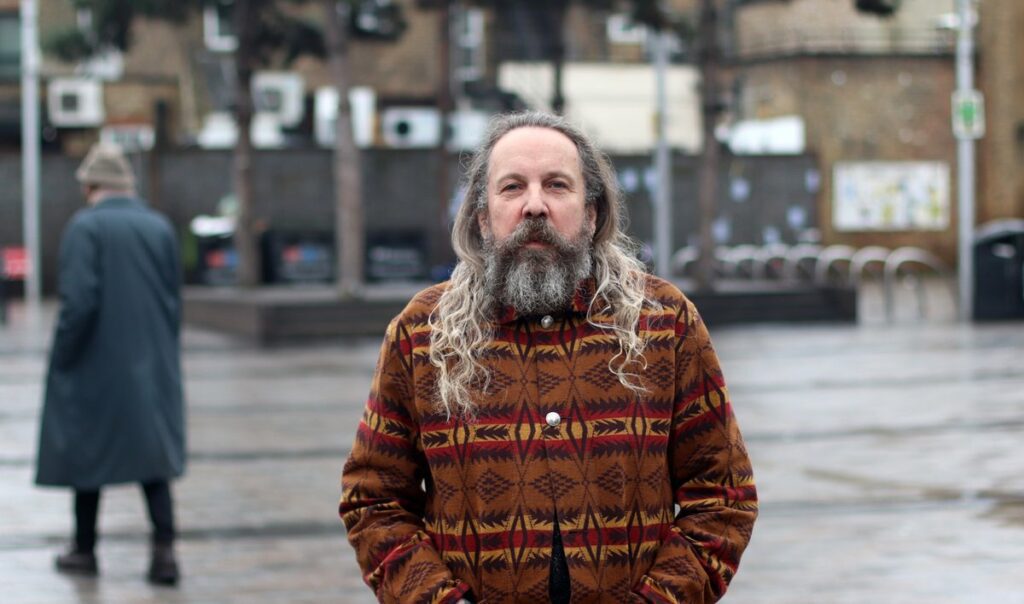
Melbourne three-piece post-punk purveyors Plaster of Paris are bristling, vulnerable and truthful on their debut album, Lost Familiar, out June 23. After years of thrilling Melbourne with brain-shuddering, pelvic-shaking garage rock on stage at some of Melbourne’s finest rock venues including The Tote Hotel, The Old Bar, and The Espy, putting their raw, live energy on record has been long-awaited.  

Formed nearly a decade ago, shifting lineups and changing band names solidified in the last five years, bringing us the Plaster of Paris we know and love today: Zec Zechner is on vocals, Sarah Blaby is the goddess of guitar riffs, and Nicola Bell is deadly behind the drum kit. Zechner came from a grassroots, feminist, DIY collective from the inner West of Sydney, while Blaby is Melbourne born and bred. The two met when their former bands played shows and toured together. Both were involved in queer-friendly, trans-friendly shows and bonded over their proactive political and personal attitude to art.

“We’re not your average four piece – we don’t have a bass player,” explains Zechner. “Essentially, Sarah and I write songs together. I write the lyrics, and I like to use a really organic process – having a theme, a really visual idea, and building a song up slowly, like a painting. I like to use really visually strong lyrics, built around how I see the world. It’s almost a diarised experience. We’ll hum along a melody, then Sarah will write a riff around it. Then I’ll polyrhythm, and weave it in and out of guitars. And of course, Nicola’s an amazing drummer and an amazing filmmaker, who’s been nominated for multiple awards for her films.”

Working with engineers Casey Rice and Paul Maybury, plus post-production by Nao Anzai, Lost Familiar was recorded at Atlantis Studios in Tottenham, a church-based studio in Fryerstown just outside Melbourne, and the rest was done at Secret Location studios. The mastering was done at Rolling Stock studios in inner-suburban Melbourne.

“We love Casey, we love Paul,” says Zechner. “They’re fantastic engineers and producers. We wanted to work with Casey because they’re from a really DIY, punk background in Chicago. They’ve also worked with [Melbourne punk band] Cable Ties. They get a really punk guitar sound, which suits Sarah’s angular, sharp guitar – not unlike Gang of Four. Paul lived close to us, and we wanted to get the work done and finish the album sooner, plus the two of them are friends. We wanted a bigger drum sound and guitar feel, which Paul executes beautifully. He has a reputation for that real garage vibe.”

Nao Anzai has worked with big names in Australian music, including studio engineering for David Bridie and Rolling Blackouts Coastal Fever, as well as doing live engineering for Tropical Fuck Storm and Alice Skye. “Nao is a wonderful engineer. He has worked on Cash Savage and the Last Drinks, Teskey Brothers – a lot of big names,” gushes Zechner. “It was just really good luck and a good friend introduced us to them. He did a beautiful job, and he’s got magical hands. He does a lot of live shows, festivals and things around the country and overseas.”

Thrashing out of the speakers with the spiritual essence of Hole’s “Violet,” Plaster of Paris’ “Newcomer” was originally released in 2017 on a dual 7” vinyl along with another track “Oh Wow.” The band decided to remix and include them on the album.

“’Newcomer’ initially came to me when I moved to Melbourne, but it took time to make sense to me,” says Zechner. “I talk a lot about Australian experiences – being a newbie, and reflecting on being the daughter of migrant parents. Moving from a small town to a big city, searching through dusty bazaars… searching for lost family, found family and connections, someone you can rely on to be there. That’s where the album title came from, too.”

Zechner’s dad is Austrian, her mother from New Zealand. “That’s informed my experience as a queer woman, growing up in a small town [Albion Park, south of Sydney]. Since 17, I was always moving to the big cities, fleeing childhood trauma: I’ve moved to Darwin, Canberra, Sydney. I’ve had a nomadic life, trying to fit in. I’ve worked in Indigenous communities in Darwin, and Nicola has too. That’s a big passion for us,” explains Zechner.

Another track, “Danceflaw” was inspired by the 2016 Pulse nightclub shooting in Orlando, which Zechner responds to with determination to take a stand against terrorism and fear.

“I love ‘Danceflaw.’ That’s one of my personal favourites,” she says. “Both Sarah and I were in LA for a lesbian wedding in Palm Springs in 2016. We happened to be there during Pride and we were going to go out that night, but [the nightclub shooting] happened that night. The song is about how it’s political to stay visible, and remain visible, and to keep going to the dancefloors as a queer woman and queer person. Don’t let homophobia or outside influences pressure you into not being your fabulous self.”

Zechner and Blaby ended up going out that night and being together with community, drinking cocktails and supporting each other. “The next day, I remember seeing rainbows drawn on the footpath around Silver Lake in LA, and thinking about how beautiful that was,” she recalls.

The political and the personal are intertwined, anthemic and empowering on Lost Familiar, which has a wholly fresh take on the early ‘90s riot grrrl sound that was exploding in Zechner’s formative late teens. “My dad bought me a classical, nylon-stringed guitar for my birthday,” she recalls. “I remember staring at the Hole Pretty On The Inside cover, Babes In Toyland, Sleater-Kinney – also Sarah’s favourite band – then going to see Nirvana at the Big Day Out [festival]. I loved Nina Hagen and those big diva vocals, Marianne Faithfull, Anita Lane, and of course, Kate Bush.”

Zechner’s passions also extend into goth and darkwave bands like Depeche Mode, Bauhaus, Sisters of Mercy and The Cure. “I love buying that goth stuff on vinyl because it’s so rare,” says Zechner. “I’d rather buy that than a meal. In iso, I was living in my Sisters of Mercy hoodie. I saw them in Melbourne and sang along to every song until I lost my voice.”

It was important to Zechner and the band that they align with like-minded people, so opting to release their album on Psychic Hysteria was an organic fit. “Psychic Hysteria has similar politics to us… we’ve worked really hard at keeping this precious DIY thing quite strong and really grounded,” she says. “Sarah worked with Kurt [Eckardt] at PBS [a local community radio station]. It was my idea to say, ‘Do you wanna put my band on your label?’ And he said ‘yeah.’ They’ve got some amazing bands like Hearts and Rockets, Zig Zag and Shrimpwitch.”

Having found a supportive community, Plaster of Paris are ready to thrive in 2021. They’re currently organising an East Coast tour; in the meantime, Lost Familiar provides a burst of their band’s “unapologetically queer, feminist and D.I.Y.” ethos, satisfying fans who’ve had to wait a while for a debut, and likely bringing new fans into the fold, too.

Follow Plaster of Paris on Facebook and Instagram for ongoing updates.

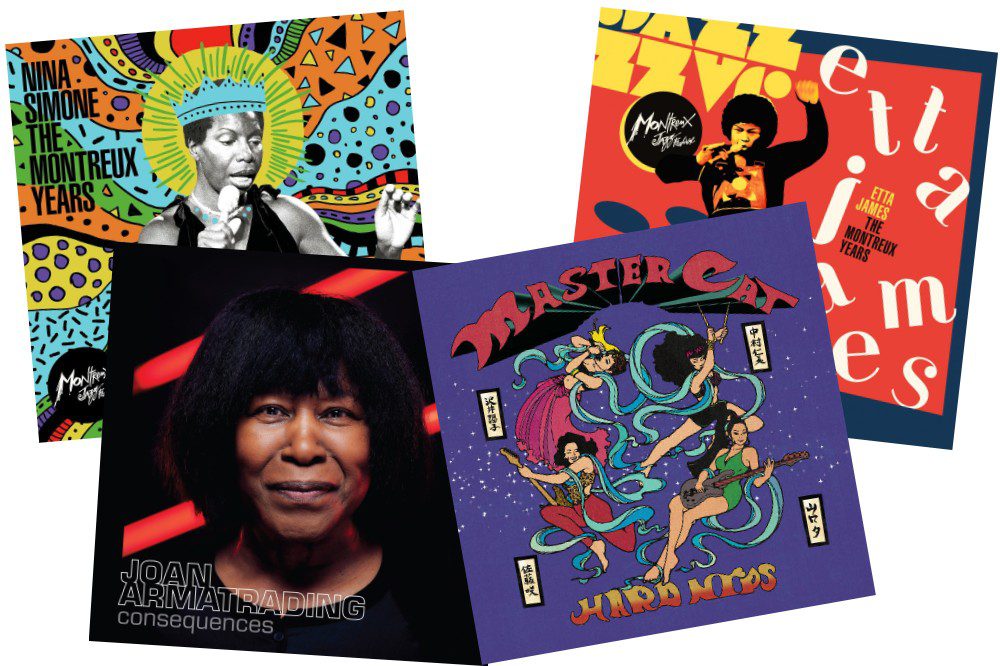
MUSIQUE BOUTIQUE: Joan Armatrading, Hard Nips, The Montreux Years

Welcome to Audiofemme’s monthly record review column, Musique Boutique, written by music journo vet Gillian G. Gaar. Every fourth Monday, Musique Boutique offers a cross-section of noteworthy reissues and new releases guaranteed to perk up your ears.

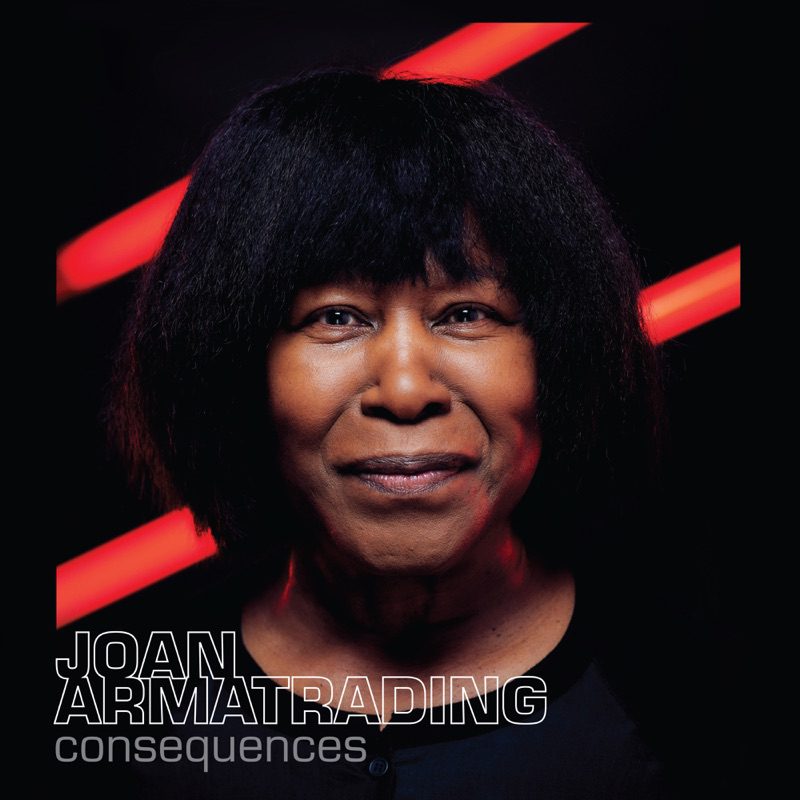
As Joan Armatrading recently told the New York Times, she was born to write songs; “I always say I can’t take credit for it because I did nothing for it. All I did was be born, and was then given this gift.” And there are always more songs to be written. On her latest album, Consequences (BMG), Armatrading brings her keen insight about the inner workings of relationships to a set of well-crafted songs of joy and heartbreak.

Given Armatrading’s generally upbeat outlook, there’s more of the former than the latter. The buoyant “Natural Rhythm” and “Glorious Madness” each capture the delirious, giddy rush of newfound love. “To Be Loved,” couples the lush harmonies of the chorus with wonderful observations like “Every day feels like a weekend with you around.” “Already There” is sung from the unique perspective of having already fallen in love and waiting for the object of your desire to catch up.

“Consequences” opens with watery-sounding keyboards before pivoting into a taut, edgy backing that’s perfect for illustrating the roiling turbulence that’s descended into a relationship. The closing song, “To Anyone Who Will Listen” is a heartfelt plea for connection, reaching out for solace. “Sunrise” is a laidback instrumental, with a shuffling beat, the lead melody traded between guitar and piano. Armatrading’s distinctive musical mix draws on rock, jazz, pop, blues (and she’s playing all the instruments as well), and arrangements featuring all sorts of percussive rhythms percolating underneath. It’s a great, optimistic album to welcome in the summer.

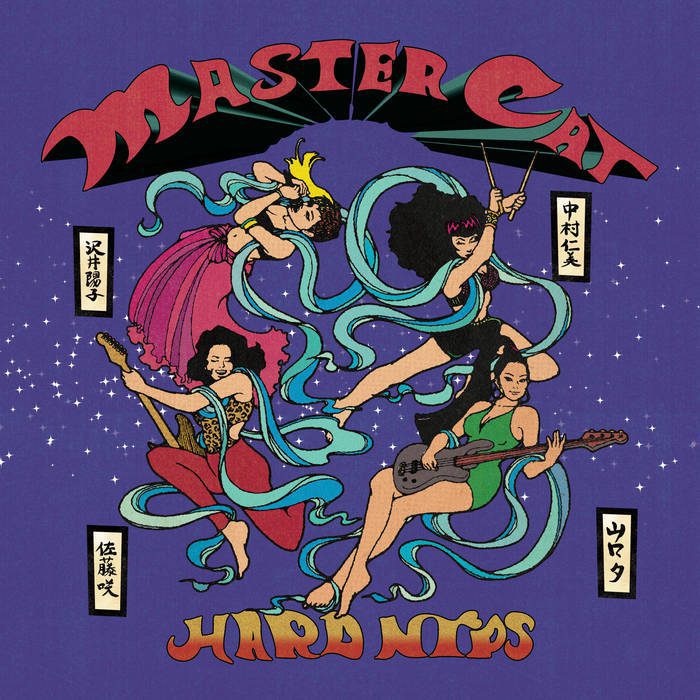
Hard Nips might have formed in Brooklyn in 2009, but their music has a late ’70s/early ’80s pop/punk/new wave vibe ‑ think Blondie, B-52’s, the Ramones. Smart and sharp, a bit of an edge, but a good dose of humor as well. The Japanese foursome (bassist Gooch, drummer Hitomi, and keyboard/vocalist Yoko born in Japan, guitarist Saki hailing from Long Island) are drawn as stylish superheroes on the cover of their new album Master Cat (Dadstache Records), soaring through the air as they spread the gospel of “sex, sushi and rock ‘n’ roll!!!”

Great, chunky guitar is to the forefront here, as you’ll hear from the kickoff, “Blender,” which also has a kitschy keyboard line. The album is mostly on the up-tempo side: the strut of “Workaholic;” “Analog Guys,” with its propulsive “My Sharona”-esque backbeat; the quirky “Motto.” Then there’s the moody “Cupid Devil,” where everyone gets a chance to be in the instrumental spotlight. The title track mixes it up, opening with an ethereal keyboard and a cool vocal, then shifting gears to a bright, poppy beat before spiraling down again into the mist.

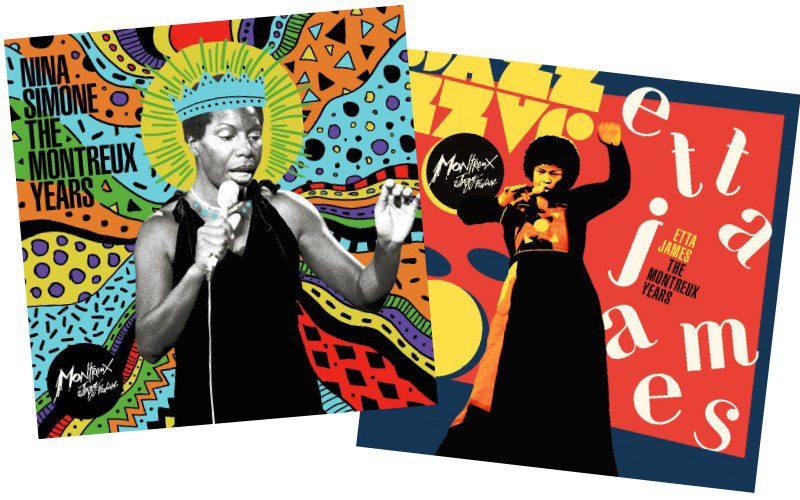
“The Montreux Years” is a new series of recordings launched by the Montreux Jazz Festival and BMG, celebrating the many artists who’ve performed at the Festival, and featuring rare and previously unreleased material. And the first two releases in series are by some true legends: Etta James: The Montreux Years and Nina Simone: The Montreux Years.

James’ album draws on concerts from 1977 to 1993, with the CD version also including her first appearance at the Festival, on July 11, 1975. “I can’t speak French,” she explains to the audience at the start of the set. “The only thing I can say you might be able to understand is ‘Get down.’ Can you say that? Get down! Get down!” Having won the crowd over, it’s straight into a steaming version of “Respect Yourself;” sterling performances of the blues standard “Dust My Broom,” a slow and soulful take of T. Bone Walker’s “Stormy Monday,” and James’ own decidedly bawdy “W-O-M-A-N” follow. The album also features sizzling renditions of some of her best known work, like “Something’s Got a Hold On Me,” “Tell Mama,” and “I’d Rather Go Blind.”

Simone’s album features songs from each of her five performances at the Festival, including her very first appearance on June 16, 1968, the first time the complete show has been available on CD. It’s a riveting set, opening with Morris Bailey Jr.’s fierce “Go to Hell,” with potent lyrics that still resonate: “So you’re living high and mighty/Rich off the fat of the land/Just don’t dispose of your natural soul/Cause you know darn well/That you’ll go to hell.” You can never hear “Backlash Blues” too many times, and she reworks “Please Don’t Let Me Be Misunderstood” and “House of the Rising Sun” and makes them her own. Elsewhere, Simone covers Bob Marley’s “No Woman No Cry” and delivers an absolutely stunning version of Janis Ian’s “Stars,” which is mostly just Simone and her own piano accompaniment.

As a bonus, this month also sees the digital release of Simone’s classic 1959 debut album, Little Girl Blue (BMG/Bethlehem Jazz), in a new stereo mix that gives the music a fresh, crisp sound. This album introduced the world to Simone’s unique mix of classical and jazz influences; check out her breezy performance on “Mood Indigo” and her inventive reworking of the title track. The album comes out on colored vinyl in July, and black vinyl and CD in August.

Betta Lemme Celebrates Pride With Crush-worthy Anthem “Girls”

Photo Credit: Alexis Belhumeur

Pride and the LGBTQ rights movement as a whole often feel dominated by gay men, with some women saying they don’t feel comfortable or welcome at Pride events. It’s often an uphill battle for women who are attracted to women to be taken seriously amid stereotypes that their sexuality is a phase or a performance. In her latest single, “Girls,” Canadian pop singer-songwriter/multi-instrumentalist Betta Lemme challenges these narratives by celebrating those who love women romantically, sexually, and otherwise.

The concept for the song was born in 2018, when Lemme and her co-writers Jenn Decilveo (FLETCHER, Miley Cyrus, Marina) and Jordan Riley (Dua Lipa, Mabel, Sigrid) began talking about their first crushes. For Lemme, who identifies as sexually fluid, it was a tie: David Bowie and Princess Diana. Reflecting the proclivities of Lemme’s younger self, the song is written from the perspective of a young woman realizing she’s “in love with girls.”

“This was without a doubt one of my favorite writing sessions,” Lemme recalls. “Jenn is a brilliant lyricist and producer. Jordan was quiet, adorable, and full of heart. His background singing in church choirs gave the spirit of this song these godly soulful moments while capturing the cheekiness of my confession.”

The single was also loosely based on a letter Lemme wrote to her mom as a kid about the concerns she had for her future, including the fact that her sexual orientation fell outside society’s norms. “Realizing and identifying with fluidity at a young age and coming from a very traditional family, I wanted to give her a heads up on what both of our futures entailed,” she remembers. “I guess you can say I was a meticulously organized and anxious kid. I can confidently say nothing has changed.”

Lemme opens “Girls” with playful verses about realizing she’s in love with a woman and grappling with what that means, then grows increasingly confident over the course of the song, wondering, “Why can’t we just love who we love and have a good time?” The snappy percussion and dreamy synths give the track a fun, celebratory vibe that sounds like it’s made for dancing to during Pride parties (and parties all year round).

“I wanted the listener to feel like they were about to be in on a secret that’s presented with butterflies and confetti, and leave them with a smile,” she says.

Through her lyrics, particularly the infectious, repetitious chorus — “girls, girls, think I’m in love with girls” — Lemme hopes to destigmatize the act of saying you’re in love with the same gender — for women, particularly. “I find it baffling that it’s controversial to say the words ‘I’m in love with girls,'” she says.

In fact, Lemme’s desire for more people to unabashedly discuss their love for women extends beyond romantic or sexual feelings. “Regardless of whether that is of admiration, respect, love, or attraction, the act of loving women at all is still hard to grasp for some,” she explains. “I hope this song is so catchy that literally everyone around the entire world starts singing about how much they love and appreciate women and girls.”

Lemme released her first EP Bambola in 2018, followed by a string of singles, and is gearing up to release her second EP later this summer. It includes “Girls,” her recent singles “Cry” and “Ce Soir,” and several not-yet-released tracks. “Cry” is full of electronic elements and catchy repeated lyrics reminiscent of ’90s dance tunes, while “Ce Soir” is sassy and poppy, with high angelic harmonies.

Influences ranging from Lady Gaga to Abba are evident in the danceable sounds and lyrical themes. All in all, Lemme considers the EP to be about “the dangerously delicious perils of fantasizing, celebrating catharsis whilst relinquishing shame, moments of talking (or in my case, dancing) yourself off the ledge, as well as the duality of wanting to enjoy life but sometimes not knowing how to.”

Despite the lighthearted nature of her songs, Lemme feels the heaviness of some of the subjects she sings about, particularly those relating to marginalized identities. She encourages LGBTQ people who are struggling and need a listening ear to reach out to the Trevor Project, and as far as her own role goes, she hopes that listeners gain strength from her music.

“The highlights of my career are genuinely the moments when listeners reach out and tell me that their music has helped them through a difficult time, helped them feel less alone, or even made them feel confident,” she says. “On days when I question the humanity in what can be an often gnarly and insidious industry, it’s messages and joy from listeners across the globe that literally fill my spirit up with strength and patience to continue.”

Follow Betta Lemme on Instagram for ongoing updates.
Dani Darling Premieres Wizard of Oz-Inspired Video from Psychedelic New EP The Future

Photo Credit: Doug Coombe

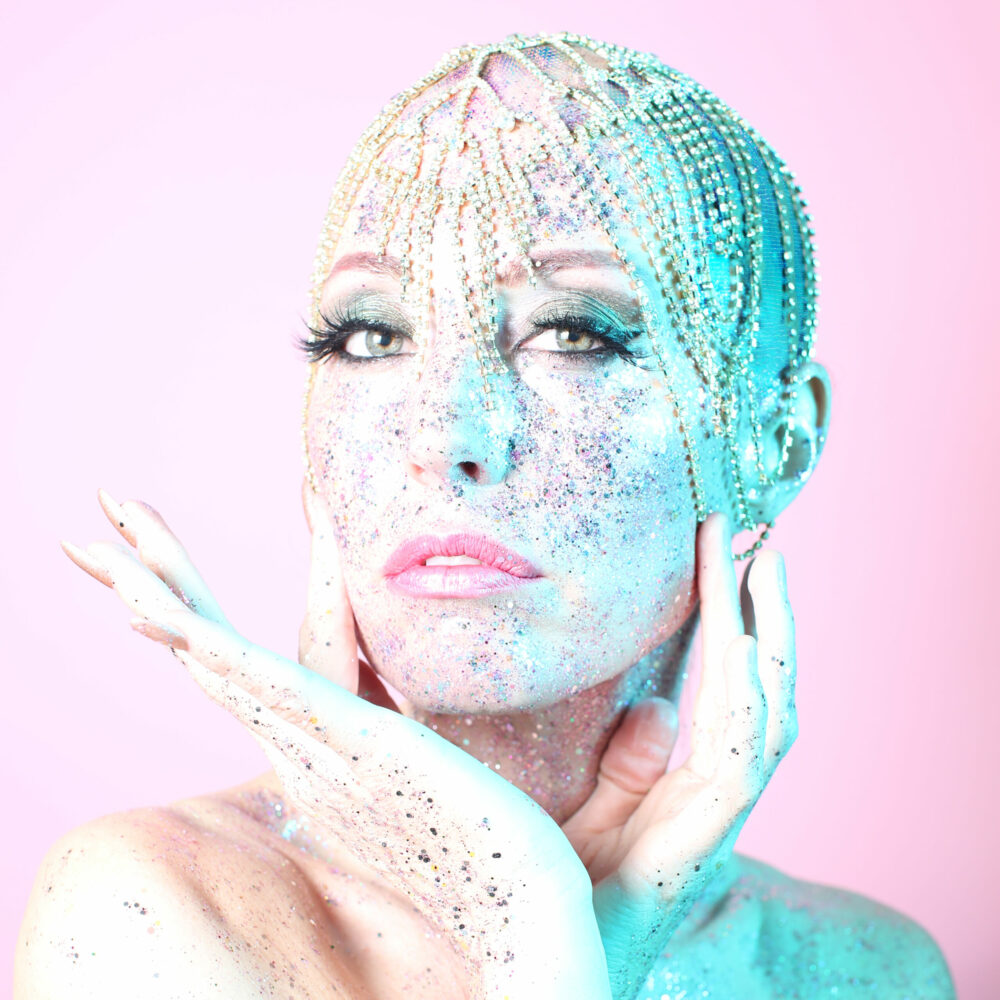
In the summer of 2020, Dani Darling headed to Lake Michigan with her best friend. On the drive there, they listened to Pink Floyd’s 1973 album The Dark Side of the Moon, an album that Darling had previously heard in part, but had never listened to in its entirety. Listening to that classic album for the first time in the midst of a summer marked by the COVID-19 pandemic and the racial reckoning following the murder of George Floyd had a profound impact on the Ann Arbor-based singer. Darling had a revelation. She wanted to make a psychedelic album. 

When Darling won an Amplify Fellowship, an initiative from Grove Studios and Leon Speakers for Black artists in Washtenaw County, Michigan, she was able to make that idea a reality. “Usually, I’m more of a lo-fi, bedroom pop artist because of the financial aspect of it,” says Darling, who was previously featured in Audiofemme last fall for the release of her EP Mage. She says that it’s been easier to learn how to record and mix her own music than to bring a whole band into a studio. The fellowship, though, allowed her to do just that. “It was really the last little ingredient that I needed to put the whole project together.”

The resulting EP, The Future, is set for release on June 25. Like all of her music, she says, it began to take shape in her living room, where she jams, plays with her pedals, makes “little soundscapes” of ideas and starts devising lyrics. The first proper session, though, convened on December 21, 2020, the date of Winter Solstice as well as the Great Conjunctions between Jupiter and Saturn. Darling brought a folder with her that contained her ideas for the new material, but those quickly began to evolve as the group started to play. 

“Everyone was talking about the Age of Aquarius,” she says. That led to the recording of “The Age” featured on the EP. “I just kept singing ‘the Age of Aquarius’ and it was totally different from the lyrics that I had down and it just stayed that way because of the vibe,” she says. They liked the results and decided to book another session, an hours-long New Year’s Eve session that Darling describes as “wildly ambitious.” 

The hard part wasn’t spending the last night of 2020 in the studio, it was figuring out how to work with all the material that came out of the session. “We sat down and we had all these hours of music and I was like, how am I going to pull an album out of all this psychedelic craziness?” Darling recalls.

It was “hours and hours” of music recorded onto very large files. Darling sifted through it to figure out where the songs were. She estimates that there are probably another 20 songs that could be pulled out of that session, but she was looking for the ones that made the most sense with the vibe that she had been developing – a retro 1960s to 1970s sound that reflected her eclectic tastes; she’s into James Brown, loves Diana Ross and name-checks Jimi Hendrix’s album, Are You Experienced as one of her favorites. 

The cohesiveness of the EP began to take shape when Darling brought in flautist James Russell to play on “The Down,” which is the lead single for The Future. “When I thought of the ‘60s, one of the things that I really love about the ‘60s is the flute sound that you hear,” Darling explains. “That’s very vintage to me.” After working on “The Down,” she asked Russell if he heard anything he could play on the other tracks and the flautist ended up playing on much much of the release. “If the whole album is a trip, then the narrator is the flute,” says Darling. “It’s like we’re taking people through these different doors and different realms, but you constantly hear that flute sound.”

For “The Down,” which is already getting radio play in Detroit, Darling thought about The Wizard of Oz and how she remembered hearing in college that The Dark Side of the Moon synced up with the movie. 

“I also felt like, with the pandemic, a lot of the color had been drained out of life and out of me. I felt like life was very black and white, it was very static,” she says. “So when it came to the video for ‘The Down,’ I thought let’s try a Wizard of Oz in reverse. Let’s throw her in a black and white, pandemic world and have her trying to reach inside and find the color and find her tribe, the band.”

There’s a message in the video too. Says Darling, “When the color goes out in your world, you really have to look within and be mindful and try to find the light inside and bring that out and bring the color back into your world, through your own spirit.”

Follow Dani Darling on Instagram and Facebook for ongoing updates.
Self-Love is the Best Revenge in New Betty Reed Single “Karma”

Photo Credit: Taylor Napier

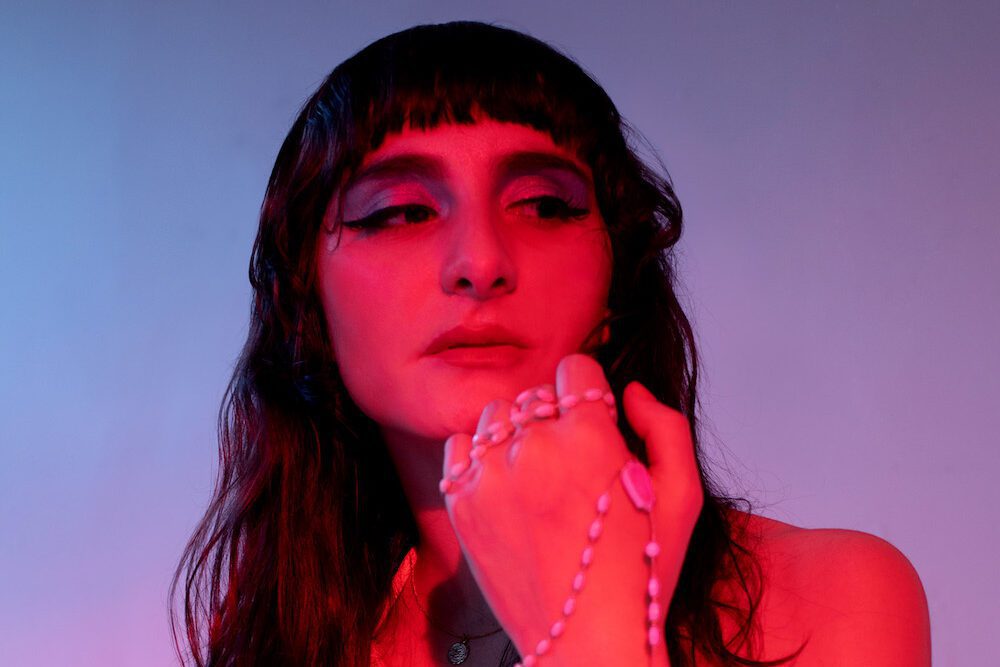
Betty Reed views karma through two lenses: the age old adage of “what goes around comes around,” and the tangible results of taking one’s happiness into their own hands and moving forward in life. It’s the latter definition that Reed embodies in her latest single “Karma” – premiering today exclusively with Audiofemme – from her upcoming EP, Mistakes Made, Lessons Learned, out September 3, 2021.

“The song is about the moment you break free from an abusive relationship and are living your best, and that’s their karma,” Reed describes. “It’s not something bad happens to them, it’s really you being able to love yourself and be happy without them.” Reed’s liberating version of payback is transformed into a modest pop number where instead of wishing ill upon her former partner, she finds freedom in personal happiness and self-love. The song opens with an introduction to the toxic relationship wherein Reed’s dignity is torn apart and her words are used as a weapon against her by a partner who gaslights her into thinking she’s constantly at fault. Throughout the song, Reed sheds the trauma of the past, turning the negative situation into a positive outcome for herself as she lets the relationship go once and for all.

“Getting the life you deserve, the happiness you deserve from someone that loves you or from loving yourself, it’s this whole turnaround of confidence. I feel like that’s some good karma right there – getting confidence and getting some love in yourself that you thought was taken from you,” she expresses. “I think that’s the thing about karma. I don’t have to listen to those words. I can create my own happiness as opposed to relying on a loved one or someone that you think you trust to make this happiness for you. It’s really overcoming this emotional abuse, understanding your self-worth, realizing your self-worth is the negative person’s karma.”   

“I learned that I’m strong/And my world keeps moving on/Got all this noise outta my head/Pushed the devil out of my bed,” she proclaims in the song’s triumphant line, reclaiming her own agency. The latter lines were the first that came to Reed’s mind as she was crafting the lyrics, setting the tone for the song and overall EP. “It became that theme of overcoming, and that’s what this whole EP is about,” the Berklee College of Music grad reflects. Reed notes that the half dozen songs all tie into female empowerment, facing challenges, and becoming stronger in the process. “Everyone makes mistakes, and mistakes are one of the most important things to do in our lives, and I am full of mistakes. I love making them because it’s really the best way I learn,” she observes. “There’s no such thing as not having redemption for it and becoming enlightened from whatever has been done.” 

As someone who was encouraged to make mistakes as a learning tool growing up in theatre, Reed has channeled that skill into living with depression and anxiety, using music to process her emotions in a healing way. “I’d rather write about trying to overcome it and my coping skills to make it better, because not only does that help me, but I feel like that would help a lot of people who go through the same things that I do,” Reed shares of her writing process, elevated by her mission of building bridges though her music. “I love connecting with people through lyrics and melody. It’s so diverse. That’s the thing I love about music the most,” she continues. “You can connect through music, you can understand someone through music, and I think that’s one of the most beautiful things and what I want to do with this EP and with what I write.”

Follow Betty Reed on Instagram, TikTok, Twitter and Facebook for ongoing updates.
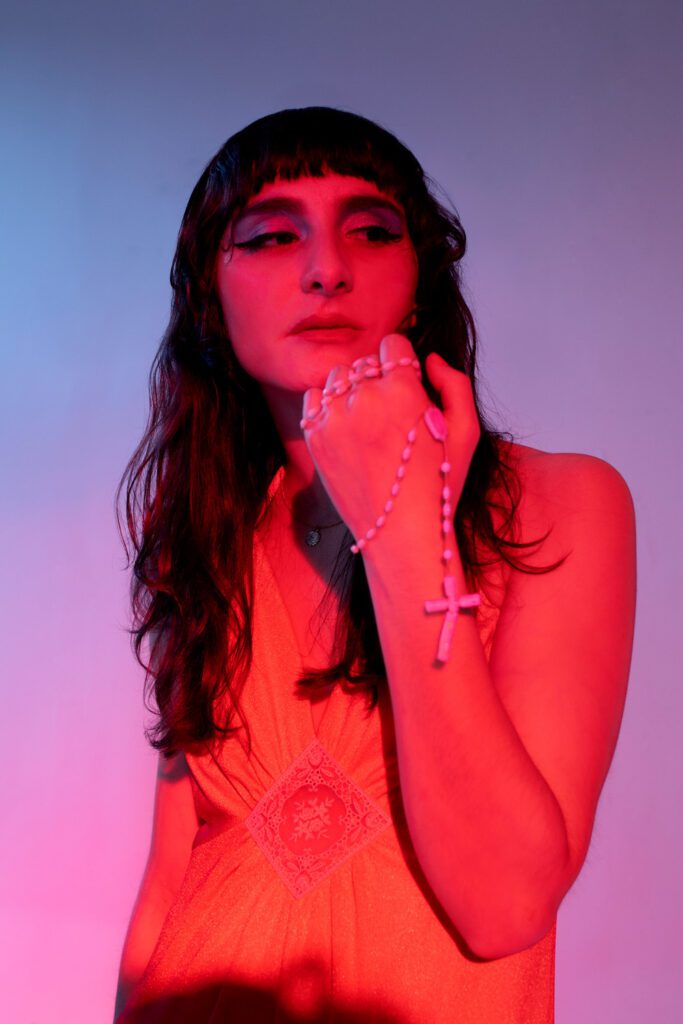
How a Woodsy Retreat Led to Debut EP from Detroit Indie Pop Outfit Lady

Some of the best music happens when you least expect it. Detroit indie pop outfit, Lady (Indira Edwards, Paris from Tokyo, Brian Castillo, Jacob Waymaster, Jojo Diaz-Orsi, Armand Boisvenue IV a.k.a Sleepyboiiii) found this to be true when they went to the woods together with no expectations and came out of it with an EP and what producer and songwriter Paris describes as some of the best music they’ve ever made. “I was like, let’s just make four songs – that shouldn’t be hard,” says Paris. “Then we ended up making the best four songs.” A short documentary edited by Paris and Tyler Jenkins goes into more detail on making the EP.

The band’s lead songwriters, Paris and Edwards, have been friends for years, but this was their first time working on a project together. They went into collaboration with only one thing in mind – fluidity. The result is in the woods, a cascading collection of songs that flow into each other with ease, premiering today on Audiofemme. 

“I feel like the name ‘Lady’ encapsulates everything that the band is,” says Edwards. “Sort of, like, this blanket feminine energy: there’s grace but also a hardness to it.” That dichotomy is found in the first single off the EP, “u and i.” Over a background of lush synths and smooth guitar, Edwards’ cutting vocals paint a picture of someone they used to know driving right past them as they hitchhike on the side of the road. A metaphor for loss and abandonment, the song hits hard for anyone who has seen someone they love turn into a stranger. Edwards begs the familiar question –  “Do you even really know I’m there?/‘Cuz I don’t think you even really care.” Whether it’s watching that someone drive away without acknowledging you or scrolling on their IG feed and seeing them look unbothered, Edwards captures the pain caused by apathy from a former loved one. 

Edwards explains that the songwriting process for “u and i” – and all of the songs on the record – was a deeply collaborative experience. Paris first wrote the chorus on a ukulele and brought it to the band, who then transformed it into something completely different. This improvisational energy carried itself through the entire process. “It really felt like a pass the torch experience,” says Edwards. “For the intro, ‘cudi hum,’ Indira made this beautiful composition,” says Paris. “I was fucking around and started humming like Kid Cudi because I thought it was funny and it would make everyone laugh. Then it became a song.” 

The band shifts effortlessly from loose instrumentals like “cudi hum” and “audio hypnosis” to a gorgeous cover of Charlotte Dos Santos song “Red Clay.” Edwards’ vocals shimmer over distorted bass and waves of sparkling synths pays homage to Dos Santos while shaping the song to match the band’s watery, ethereal sound. Where “Red Clay” and “u and i” give the listener a chance to ruminate on love lost, songs like “limeade” offer an avenue to escape altogether. 

Layered, distant vocals guide scintillating bells and synths along a river of calm and escape. Lush swells are followed by a sparse melody, allowing us to ease back into whatever reality surrounds us. Throughout the EP, there’s room for anger, longing, contemplation and rest. The music’s liquidity reassures us that these feelings are fleeting; that they can happen all at the same time or completely vanish for a moment. “Lady, in itself, represents fluidity and constant change,” says Paris. 

Follow Lady on Instagram for ongoing updates.

Mae Powell Savors Sensory Joys with “Scratch n Sniff” Premiere

Photo Credit: Grant Cluff

It already appears that summer 2021 will be unlike any that came before, in terms of the surreality of what we’ve experienced in the last year, the joy that it’s finally over, and the underlying anxiety of when the other shoe might drop. With that arises the need for appropriate new tunes, which is where Bay Area singer-songwriter Mae Powell comes in. Today she premieres the video for new track “Scratch n Sniff” on Audiofemme, off her debut album Both Ways Brighter, out August 20 on Park The Van Records.

Produced by Jason Kick (Mild High Club, Sonny and the Sunsets), the sunny acoustic indie folk evokes the feeling of someone like an Ingrid Michaelson, but updated for a more uncertain era, a little more akin to an Indigo De Souza. She wrote it when an ex sent her an unusual care package on a trip to visit her father in North Carolina a few years ago. “We were being pen pals, even though I was only gone for a week and a half, but we were just obsessed with each other,” she explains. “I think some people would probably [think] this is weird, but part of it was a piece of paper, and he had little circles on it and was like, this is my spit, this is my blood, this is my hair, this is a kiss. Literally had put pieces of himself on this paper.” It reminded her of scratch and sniff stickers, and the entirety of their relationship revealed to her the intimacy of analog communication. “Any time we were apart we would send each other postcards and shit, and it just felt like a piece of that person, because you’re like, oh you touched it! So even though it’s been in a bunch of hands since then, it’s still different than a text or a call or whatever.”

The song feels like the honeymoon phase of a relationship, but tempers it with a very current unease and the need to remain present, a certain brand of cautious optimism. “Clinging to the thought of unattachment because I know that everything will change/But clinging to the thought is still clinging to something/The way that works is strange,” Powell sings. She says this was intentional, that the album is as much about anxiety as it is about love.

“Normally when I play shows, I’m like oh my God, I’m putting everybody to sleep, because there’s a lot more slow songs, or I’ll write about anxiety. And sometimes when you’re at a show you’re like, do I want to hear songs about anxiety right now?” she says. “It’s the start of the second half of the record, and I feel like there’s a lot of contemplation and heavy themes and airing out the dirty laundry, and then you flip the record and it’s like okay, we’re happy! It’s chill! You have to have those moments of joy.”

What really sets it apart is the video itself, an animated short from Santa Barbara-based artist Emily Hoang. It’s all smiling celestial bodies and bright colors and flowers; the lens through which Powell observes her environment is somehow cute but not saccharine. The same way you can judge a book by its cover, you can judge Powell’s music by its visual elements, which adds an extra layer of thoughtfulness and intentionality to the whole package. “I don’t want it to just be an auditory experience, the visuals are super important to me,” she explains, “and I feel like I have a vision of rainbows and cute shit.” It coalesces to transport you further into Powell’s world, where the sun shines and mindfulness mutes anxiety about the future. 

Mae Powell plans to continue to experiment with animation on future videos, something she contemplates as she prepares for the album’s August release. After expanding her three-piece band to a five-piece, including a lap steel guitarist and a keyboard player, she’s preparing for her first show in eighteen months this Saturday, June 26 at the Red Museum in Sacramento. Besides that, she’s just easing herself into the new normal and “trying to figure it all out.”

All in all, she’s just excited for people to finally listen to these songs, a compilation of one-off tracks she wrote and refined over a period of years until she felt she had enough material for a cohesive whole. “Now it’s been two and a half years of the recording release process, plus the year since I wrote the songs, so it feels like old news to me, but I forget that most people have not heard these songs,” she says. “Things change when you share them with people, and I’m excited to have them exist in a world that’s not just like, in my head, or whatever.” Based purely off this small taste, it doesn’t seem like that’s such a bad place to be.

Follow Mae Powell on Instagram for ongoing updates.

New Chance Blurs Lines Between Digital and Physical Realms with “Two Pictures” Premiere

Photo Credit: Yuula Benivolski

In this digital world, the lines of intimacy and consumption can cross over and over until they blur into a single continuum – especially in the last year or so of global isolation, when millions took to the internet as their only means of connection or meaning. Victoria Cheong of New Chance meditates on the nuanced intersection of physical versus digital, meaningfulness and the meaninglessness in her new video and song, “Two Pictures,” premiering today on Audiofemme. The single will appear on New Chance’s forthcoming record Real Time, out July 16 via We Are Time.

The Toronto-based artist explores her relationship to the outer world by removing herself from it completely. Her face painted in skull makeup, she narrates her observations as w post-Earth version of herself, recounting the way she used to move through the world and the things that stimulated her. She reflects on her connection to the digital realm and the way it shaped her everyday life. “I woke each day to pass through the gate to relate to other people,” Cheong sings over extraterrestrial synths and sparse drums, letting woozy saxophone (courtesy Karen Ng) take over the bridge. Viewing the internet as a gate to an endless web of connection is a perfect way to represent it’s duality; the positivity of connection and closeness mixed with infinite opportunities to spar hate or sadness. 

Cheong explains that “Two Pictures” was inspired in part by social media algorithms. “There’s no meaning between images that follow each other on a feed,” says Cheong. “It’s actually de-stabilizing, because we can’t make meaning between images. Like, if you see someone celebrating someone and the next image is some horrible thing in the world, it’s like, ‘How am I supposed to feel?’”

She juxtaposes this esoteric phenomenon with the concrete sensation of physical touch. “How do we integrate this image culture into the realm of the senses and the realm of how we perceive or how we project and relate?” asks Cheong. When digital and physical intertwine, what does that mean for our relationships, and what if the two become unbalanced? If all of your intimate connections are formed online, you’re missing out on the essential human need of touching and being touched. But in a world where everyone is online, having no digital footprint can feel close to being non-existent to some. 

Cheong’s out-of-body voice contemplates this binary when she sings: “Two pictures/I got stuck in between/I couldn’t tell what either should mean/I knew I had a body/And I knew what it could do/And I could tell it just how to move.” In the wake of algorithmic-fueled confusion, Cheong turns to the simplicity of touch and physical intimacy to ground herself. The observations of her “future self” serve as a sage reminder to find stillness and peace in the things that can’t be found online – the warmth of the sun, a hand to hold, a deep breath.

Follow New Chance on Facebook for ongoing updates.
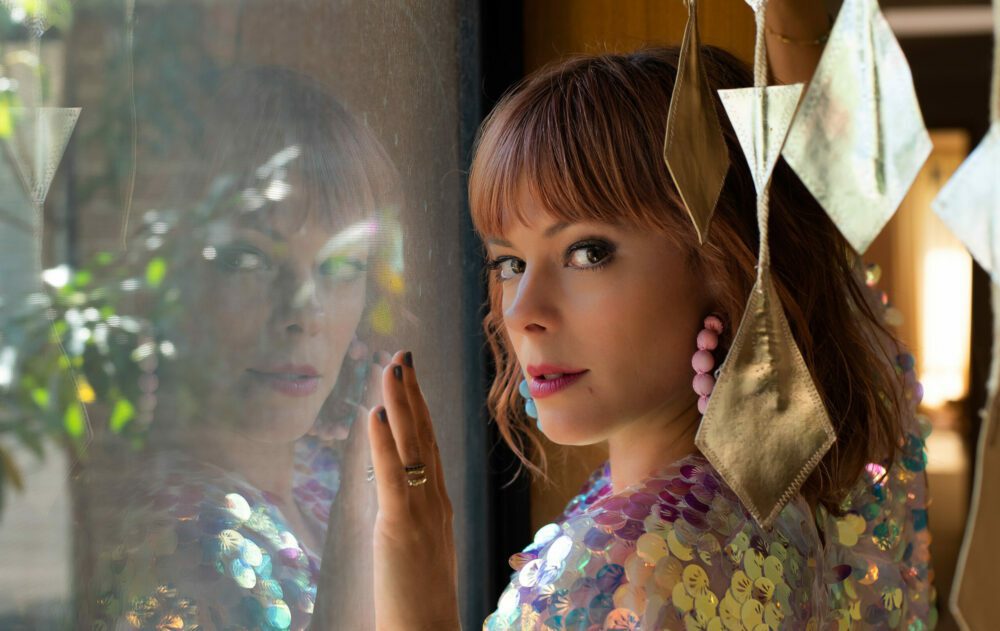
Azure Ray Return with a Remedy More than a Decade in the Making

From the first notes of the bright, blissful “Sleep” on their self-titled debut, it was clear that Orenda Fink and Maria Taylor had tapped into something angelic with their indie folk project Azure Ray. Forming in Athens, Georgia in 2001 and eventually moving to Omaha, Nebraska to immerse themselves in the Saddle Creek scene, the duo was rather prolific until their 2003 hiatus. After a brief reunion in 2010 produced another album and two EPs, the project once again went silent, though Taylor and Fink kept busy with other creative pursuits. Now, Azure Ray returns with its fifth full-length and first in over a decade, Remedy, which sounds both new and reminiscent of Azure Ray’s early classics.

In the usual vein of the band, the songs have a mellow, minimalist vibe. In “Bad Dream,” they sing against dreamy synths about the dissolution of a relationship: “Would you even know a bad thing when you’re stuck inside a bad dream?” In “Already Written” — perhaps the track most reminiscent of older Azure Ray songs like the wistful, reflective “November” from the 2002 EP of the same name — they sing about working through difficulties in a relationship, Taylor and Fink’s voices harmonizing with almost no instrumentation.

The title track, “Remedy,” uses acoustic guitar and folky, almost whispered vocals to reflect on the process of facing demons during self-isolation: “I visit my old tendencies/A secret grave in a cemetery/A yellow rose for my old heart/I feel it stop, I feel it start.”

The concept for the record was born during the 20-year anniversary of the band’s formation, when Fink and Taylor went through old photos of themselves together over the course of the past few decades, which inspired them to celebrate themselves as a band by making another album.

“We felt so strong back then, but looking back, I just see how fragile and frail we were,” says Taylor. “We dealt with a death of someone close to us, and writing our first Azure Ray record and starting Azure Ray was a way for us to process our grief. It just brought me back to how powerful music is and how powerful and healing it can be, and how powerful it can be when you combine music with friendship.”

“The record was written and recorded entirely during the lockdown period this last year, so the themes reflect the feelings a lot of people had during this last year – fear, isolation, hopelessness, but also hope for a better future,” says Fink.

They titled the album Remedy with the hope that it could serve as such for some of the psychological travails of the pandemic. “I think that’s just what art does,” says Taylor. “We all went through similar emotions, and so we put them to music and put them into words so that maybe someone can relate.” In the spirit of the album’s theme, the vinyl version of the album is sold alongside a custom essential oil blend.

Taylor, Fink, and their producer Brandon Walters worked remotely from three different locations during the pandemic to record the album — a process that challenged the band’s previous notions about the music-making process.

“We’ve always gone to a studio and slept in the studio and lived and breathed the whole recording process, so this was a complete detachment from that,” says Taylor. “I was afraid it was not as cohesive, but I think the process gelled together, and it felt like we were in a room together even though we weren’t.”

You can hear the band’s usual influences — which include Cat Power, Elliott Smith, and Nick Drake — and iconic whisper-like vocals, but with a stronger electronic component, evident in the prominent percussion tracks on songs like “Desert Waterfall” and “I Don’t Want to Want To.”

The duo gave Walters their voices and allowed him to add guitar lines, string samples, bass, and drums, without much instruction other than to maintain Azure Ray’s signature sound. “We wanted to be true to our sound, but we also wanted a fresh new approach,” says Taylor. “It’s a little more dense — I feel like there’s more depth and there’s just more going on — but it still has the intimacy. The music was kind of secondary to our harmony and our voice.”

Fink and Taylor created several campy videos to match the group’s simple, wholesome sound. “Bad Dream” is an amalgamation of TikTok-style clips of the band and their friends doing silly dances to the song, while “Phantom Lover” encapsulates a mystical, vintage aesthetic, with the two members swaying in white clothing and bull horns alongside glimmering trees and people dressed as wolves.

Currently, the group is busy making more videos and promoting the album and hopes to play outdoor shows in the near future. As they weather all the changes the world is going through, their friendship and history hold them together and provide a constant.

“Every record’s going to differ, especially one that’s ten years apart from the past ones,” says Fink. “As humans, we change. Our perspectives change, and the things we go through are reflected in our art. But ultimately, I don’t think [the album is] a huge departure form the older Azure Ray. I think it’s a more modern, updated version of Azure Ray.”

Follow Azure Ray on Instagram and Facebook for ongoing updates.
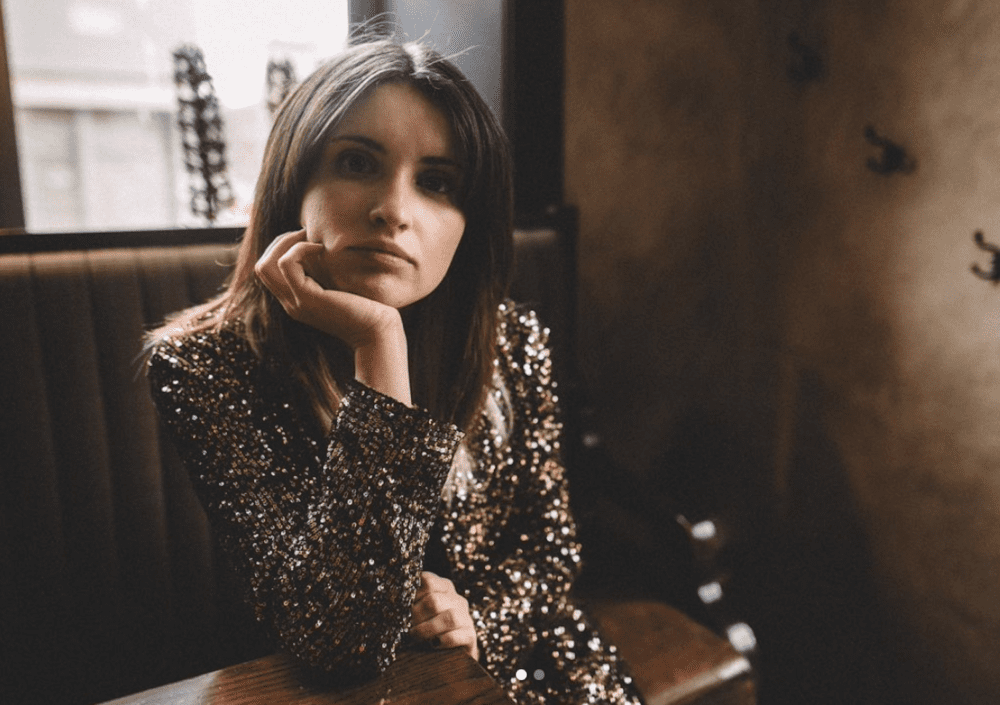
Andrew Weatherall Gave New Life To ’90s Indie Rock with Timeless, Epic Remixes

When Andrew Weatherall passed away in February 2020, there was little fanfare beyond radio stations playing an (abridged) ode to him, then moving on. Abridged, mostly, because Weatherall’s legendary DJ sets were epic in length, lasting hours upon hours. He just loved music. He loved a party. He was of the 24 Hour Party People era, lovingly transforming tracks by the Happy Mondays, Primal Scream, My Bloody Valentine, New Order and more into glitchy, gothic, dancefloor manna. Listening to his layers of acapella vocals, the hum and hiss of human and synth sounds, tropical percussion and dub-infused, somnambulant atmospherics is almost a religious experience. So hypnotic is the slow-build, the lushness of the soundscape he builds, that you may find yourself seeing the sun rise and set in the lifetime of just one track.

His name has arisen this month thanks to the double vinyl Warpaint mixes he masterminded, released as part of International Record Store Day on June 12. Weatherall mixed Warpaint’s debut album, The Fool back in 2010; both “Undertow” and “Baby” appeared on the official album, but much of his work on the record remained unheard. As announced on Warpaint’s Instagram, the new vinyl edition has arranged the tracks according to Weatherall’s design. While it’s wonderful that Warpaint fans may discover a new take on The Fool‘s master tapes, it would be a shame if the enormity of Weatherall’s career was not acknowledged and – hopefully – celebrated anew by music lovers globally. His remixes were, after all, legendary for good reason.

His 1990 remix of My Bloody Valentine’s “Soon” gave it primal drums, angelic harmonies and a slightly Calypso beat. It propelled a dreamy, angular indie track into club fare worthy of the eclectic 1990s UK rave and party scene that was embracing the sounds of trance, indie, weird and experimental electronica (ahem, Aphex Twin) and the post-romantic, New Wave/No Wave. My Bloody Valentine’s Loveless remains a classic of the time, recently reissued in all its moody glory. Weatherall was ahead of his time with this remix, as with many of his unexpected remix picks – knowing they’d stand the test of time even if the bands themselves weren’t known beyond their particular fanbase.

Weatherall’s love for Primal Scream made sense. Both Bobby Gillespie and Weatherall embraced the seemingly unfeasible mish-mash of indie rock, angular guitars, psychedelic pop with searing synths, the whip-snap drum machine, and vintage samples only true vinyl lovers could appreciate after digging through dusty boxes for the love of the find. His mix for “Higher Than The Sun (A Dub Symphony In Two Parts)” layers Gillespie’s exhale into a harmony of its own, sending dubby synths swirling in various shapes as the pace and mood change every few minutes. There are robotic bird noises, there are lasers, there are rattlesnake moans. It could be several songs, but the cohesiveness remains over almost eight minutes.

Perhaps his thrill at sculpting New Order’s music was similar to his love for Primal Scream. Both bands embraced the junction between angular indie rock and dance. His remix of “Regret (Sabres Fast’n’Throb)” turned it into a trance-like beast, with intertwining bass lines, a throbbing rave beat and barely any vocals. It’s art. It recalls Aphex Twin’s most beautiful, ambient works, and my personal favourites, “Polynomial-C” and “Didgeridoo.”

To appreciate his all-encompassing love affair with music, it’s necessary to understand that he wasn’t a musician or born into the rock industry. He was a regular, British, middle-class lad. Born in the early 1960s, Weatherall spent his Berkshire childhood surrounded by the emerging sounds of poppy balladeers, folk, anti-War protests, rock, and metal. His teenage years, towards the end of the 1970s and early 1980s were – as is often the case – formative in shaping his passion for particular bands and genres. The UK rave and club scene was emerging, party drugs were all the rage, and staying up all night dancing until the sun rose and the bleary streetlights appeared like salvation angels was just… growing up.

It sowed the seeds for the tastemaker he would become. He’d left home in his early twenties but was working odd jobs as a tradesman. Not until the late 1980s, when he’d moved to London, did he become known for spinning new indie records along with classic Northern Soul. He also established himself as a journalist and founder of Boy’s Own; initially a fanzine dedicated to fashion, music, soccer and culture, by 1990 it has morphed into a record label, representing electronica acts Underworld and The Chemical Brothers.

Like Weatherall himself, these acts carried the same spirited dedication to an experience. There is no need to be able to name either of The Chemical Brothers, nor any members of Underworld, to know what they make you feel when you hear “King Of Snake,” where if you close your eyes, neon lights splash around your inner vision until the percussive rave beat snaps all your synapses awake around the one-minute mark with its relentless pulsing stomp. Or the Chemical Brothers’ “Hey Boy Hey Girl,” with its repetitive, unforgettable hook “Superstar DJs, here we go!”

The acts he remixed are the sugary icing on the fudge cake. Weatherall is the dark chocolatey, addictive matter that coats your fingers as you dig right in. He was more than the cliché of a remix DJ, noodling away on software in the lonely confines of his bedroom while chopping up songs and changing the time signature. To assume his remixes were workmanlike is to not get him, or his art, at all. Rather, Weatherall’s remixes were new creations. He took the material and made it more than the sum of its parts; he heard the intention, and the passion, and it was these ephemeral qualities that he wove into his own makings.

If I’ve succeeded in whetting your appetite, and not just for chocolate fudge cake, then take this fork and plate and settle in for 900 hours of Weatherall’s archival mixes via The Weatherdrive. It remains a free resource, but in light of that, if you’re able to, consider making a charity donation or actually purchasing some of his work.

Where to begin, with 900 hours of material? I’d suggest two things. Either, at the beginning (of course), or with the BBC1 Essential Mix 1993, one of the earliest mixes in this longstanding series. Epic, relentless, genius and fabulous, it is the closest we can hope to feel to that first time of hearing a song and knowing you need to be in it somehow, melding it to your likeness, creating your own shapes within it and returning it to the world, anew, changed but fundamentally exactly what it’s meant to be.

How a Red Wig and the Madonna Inn Led to Latest LVXURI Single “Consulate Lust”

Photo Credit: Kristin Cofer

When Sera Beth Timms came across a long, red wig at a store down the street from her home, the components of what would become LVXURI began to coalesce. “When I got the wig, I wanted to know who the character was,” says Timms by phone from Troy, New York. One thing was clear: “This isn’t Sera doing LVXURI.” Instead, the project centers around the character Aurora Dawn, a fierce and flamboyant woman with a mystical streak, who dispenses the tales of her life over slow, slithery grooves. On June 18, Timms releases her most recent LVXURI single, “Consulate Lust,” premiering exclusively on Audiofemme today.

At the time of LXURI’s inception, Timms lived in Los Angeles and was best known for her work as Black Mare and in the band Ides of Gemini. Where her previous projects had been heavy and more rock-oriented, Timms grew inspired by hip-hop beats, and was yearning to make something lighter and more danceable. She considered exploring different themes in her work as well. Somewhere in her notes, maybe a year or so earlier, she had written down the name Aurora Dawn. “I didn’t know who Aurora Dawn was or what I was going to do with Aurora Dawn, but I knew it had to do with the sun and some incarnation of solar energy,” she explains. 

Timms had written one song and played it for two close friends— one of whom was photographer Nedda Afsari— and they decided to film a video for it on a planned trip to The Madonna Inn. “There are so many bands I know that have filmed in different rooms at the Madonna Inn. It’s such a great set,” says Timms of the hotel on California’s Central Coast that’s famed for its themed guestrooms. Timms found the wig right before that adventure and Aurora Dawn first came to life in the resulting clip for “Decussata,” released in 2019. 

The video prompted an invitation to open for performance art rock outfit Stuntdriver at Los Angeles venue Zebulon. “I always need motivation to finish things because I’m always doing a million things at once,” says Timms. This show, she says, was a great opportunity to push herself to write more songs. 

With her previous project, Black Mare, Timms made her own beats, but LVXURI required a different approach. “The beats for LVXURI are supposed to be a lot more sleek than the drums for Black Mare,” she says. “I started getting into that and realized that I didn’t have the chops to get as many songs done in that short amount of time to be ready for a show in a month.” She then turned to her friend Dylan Neal, from the band Thief, to collaborate with her. 

Aurora Dawn and LVXURI continued to evolve in 2020, albeit not necessarily in a way that Timms anticipated. “I had all these grand ideas about performances that I was going to do and couldn’t do any of that in 2020,” she says. Instead, she began to incorporate mystical elements into Aurora Dawn’s personality and performance. As Aurora Dawn, Timms read tarot and sold crystals on Instagram.

She shot a few more videos as well. The clip for “Headlights” was made in the midst of the March 2020 lockdown in Los Angeles and was directed by her then-roommate Sean Russel Herman. “Aurora Dawn, the character, she loves to be directed and told what to do,” says Timms. 

By the time Timms made the video for the song “Aurora Dawn,” her own life was in the midst of transition. “I was definitely living in a very intuitive zone,” she says. Timms left Los Angeles, initially to move in with a friend in Florida. On the drive east, she stopped in Las Vegas to film a video, without knowing which song she would shoot or, really, how she would do it. As a former video editor, Timms relied on her iPhone with a lens attachment for footage. “I was traveling by myself, with my cats, and I didn’t know anybody in Vegas,” she recalls. “There’s no real budget behind LVXURI, it’s just out of pocket for everything. I didn’t have the time or budget to hire a fancy camera person, so I just decided: let’s go with it. Let’s see what we can do, what we can get.”

“Consulate Lust” will be the last LVXURI single for a while, as Timms has plans to finish up work on a full-length release, which she says will include some of the previously released singles. Still, Aurora Dawn continues to have a hold on her creator. Timms shops specifically for the character, even when she’s not actively trying to build Aurora Dawn’s ultra-glam wardrobe. She says, “I go into an Aurora Dawn trance and I don’t even know what I’m doing.” 

Follow LVXURI on Instagram and Facebook for ongoing updates.
Ambient Artist M. Maria Debuts Otherworldly Sound with Premiere of “There’s A Spirit In My Body”

Photo Credit: Dana D // Hair/Makeup: Zina Gladiadis

“It’s cool to depend on yourself and come out the other side and be like ‘cool, I did that.’” So says Ridgewood-based ambient experimental artist M. Maria. She is on the cusp of dropping her debut EP Saturn Returned, from which she premieres single “There’s A Spirit In My Body” on Audiofemme today. Entirely self-produced and recorded, it is yet another example of a project only dreamt about pre-pandemic but actualized once we were forced to stay home.

“Before the pandemic hit, I really wanted to make an album, but I hadn’t spent enough time in it to where I really understood how to record music, how to produce it,” M. Maria explains. “I feel like as soon as we had time to be by ourselves and shut the world out, I was able to just go straight into Ableton, just progressing and getting better until I had actual results.”

Though she began learning Ableton Basics and tinkering with the idea of making music two years ago or so, it wasn’t until she turned 27 that the urge really took over, in alignment with the astrological phenomenon from which the EP gets its name (the infamous Saturn Return is when the planet reaches the same celestial position it was in when we were born, approaching in our late twenties and making its impact felt through our early thirties). “It’s supposed to realign your life in a way, and make you go through these extreme changes, to be on a path that can better serve you,” M. Maria explains. “As soon as I hit 27, I was like, I need to do something. I need to make music. I felt this astrological push, and everything around that period going in a direction that felt more real, and more like it was supposed to be, you know? Sorry if I sound insane.” She laughs.

The resulting music is darkly ethereal, with M. Maria utilizing her high-octave voice as an otherworldly instrument, layered over darker, industrial elements. “I like that contrast so I like playing with it a lot,” she says.

“There’s A Spirit In My Body” begins sparsely, with only vocals and a light beat, and slowly different beats and vocal elements are introduced to build into a heavier, layered sound. It brings to mind the likes of Grouper or Holly Herndon, though M. Maria lists shoegaze bands like My Bloody Valentine and A.R. Kane as her greatest influences. The influence is there, but the creative decision to use the voice more as an instrument than a vehicle for delivering lyrics takes the sound to another world. The emotionality lies in the delivery, not the words themselves.

“I feel like I have trouble expressing with actual words,” she explains. “When I’m feeling something, I start singing, and just having the sound of my voice be an expression, even when it’s not saying something. I feel like the voice can express so much with noise.”

Having mixed and produced the EP, each song is a creation all her own. As she preps for release later this summer, and for her first live shows, M. Maria expresses some apprehension around releasing her first creative endeavor into the world. At the same time, though, she recognizes that Saturn Returned is only the beginning, and confidence in her potential provides some relief from that pressure. “There’s going be so much more to build off of it,” she says. 

Follow M. Maria on Instagram for ongoing updates.
313 Acid Queen and SickBoy Create Soundscapes from Skyscrapers on Buildings EP

Over the last ten years, Rebecca Goldberg – a.k.a 313 Acid Queen – has completely immersed herself in the city of Detroit. Unlike some transplants who come to the city to take, Goldberg, born and raised just outside of Detroit, came to learn, appreciate and contribute when the time felt right. Starting out as a student of Detroit house under the tutelage of legendary DJ Bruce Bailey, Goldberg cut her teeth spinning all around the city and slowly training her ear as a producer. Nearly a decade and five albums later, Goldberg pays homage to the city that has shaped her on her collaborative EP with Sardinia-based producer SickBoy (Stefano Piseddu), Buildings, out June 20 on limited-edition vinyl pressed at Archer Record Pressing. The record serves as a sonic map of the structures that portray Detroit’s beauty, oppression and resilience.

Today, Audiofemme premieres a video for EP opener “Guardian,” a bold and expansive track encapsulating the depth and complexity of the stunning, hundred-year old Art Deco-inspired skyscraper for which it is named, with its vast vaulted ceilings and tediously crafted mosaics. Goldberg and Piseddu use booming percussion to reflect the sturdy stone foundation and tie a rainbow of synth textures to symbolize the kaleidoscopic designs that gawkers can get lost in for hours. 

The project began to take shape when Goldberg responded to a call from Detroit Underground label founder Kero for producers to work on a “Detroit Map Series.” The series includes three other parts – highways, roadblocks and rivers – and prompts producers to make sonic representations of these staples in the form of Detroit house music. As a member of Detroit Underground, someone who spends a good amount of time sneaking into abandoned buildings to take photographs, and regularly takes friends on tours of the Guardian Building, Goldberg already had an intimate connection with the sights and sounds that accompany Detroit architecture. She says when she was assigned “buildings,” it was a no-brainer.

“There’s just something about Detroit and the creativity that comes out of here and it’s either in the water or the landscape or the people or all of it together,” says Goldberg. The main challenge was to communicate this magic across space and time to her Italy-based collaborator. Goldberg spent hours taking photos and videos of buildings that inspire her and sending them to Piseddu, who was deeply moved by the imagery. Though the two never met in person, they bonded over a shared obsession with Detroit techno. While the language barrier was considerable, the producers were able to communicate through Google-translate and an innate, shared sense for beats and textures. 

This wasn’t the first time that Goldberg made an unlikely connection through her passion for music. She explains that her foray into DJing was based solely on a love for the music and a desire to be around it as much as possible. “Like many people who are into stuff like this, I’m just a fan of this music. I’m a fan of dancing,” says Goldberg. She got her foot in the door by using her graphic design chops to create flyers and merch for Bruce Bailey, then later took matters into her own hands. “I was like, ‘Listen, if I’m gonna keep doing your flyers, I wanna be on the flyer. I also wanna play and I think you should put me on and give me a chance.’”

Then began what Goldberg describes as an apprenticeship of sorts, learning from Bailey and other well established Detroit DJs. “It would be me and all these house heads that had been in the game forever, and they loved me,” says Goldberg. “We loved each other, those people are my family. They wanted to teach me about the music and the culture of it and the history.” After years of collecting records, Goldberg decided it was time to contribute her own soundprint. “Eventually, you start hearing things that don’t exist yet, and that’s how music production started for me,” explains Goldberg. “I’ve tuned my ears now so well with DJing that I think I can play things that I would want to DJ and dance too, and that’s a whole ‘nother wormhole of obsession.” 

Buildings speaks to Goldberg’s years of soaking in sounds and stories from Detroit techno legends, while adding her own inspirations into the mix. After cascading through a series of dreamy soundscapes, the EP ends on “Renaissance,” a track that distills the futuristic aura that surrounds Detroit’s architectural centerpiece. “The Ren Cen is so crazy if you look at it,” says Goldberg. “It looks like a spaceship from the ’80s that’s supposed to be the future about to just take off.” The building’s corresponding track is full of laser-sharp synth sounds and swells of air, making it easy to imagine the entire structure blasting into space. 

The EP is as much of a love letter to the city as it is a testament to music’s power to transcend across oceans and bring people together. Just as techno has brought the people of Detroit together for years, it allowed Goldberg and Piseddu to make an entire EP together, even separated by an ocean.

Follow 313 Acid Queen on Instagram for ongoing updates.
Lenka Critiques Extreme Greed with Kitschy Video for Latest Single “Ivory Tower”

While the pandemic derailed tours and scrapped recording plans for many musicians, there’s one performer that actually found a freeing feeling in the midst of this past year – Australian pop wonder Lenka Kripac, better known mononymously as the purveyor of hits like “The Show” and “Everything at Once.” Kripac is the matriarch of a busy Australian home; between crafting with her children and jamming on her ukelele, she somehow managed to release twin EPs Discover (six original songs) and Recover (six covers of classics ranging from Pat Benatar to Bob Dylan). She also put together a video for follow-up single “Ivory Tower” via DIY means. “I shot the footage of myself on an iPhone in my five-year-old’s bedroom. The effect of the lockdown on creating content with whatever resources you have at home was actually quite liberating,” she tells Audiofemme

She sent her DIY footage to her old pal Mitch Hertz to achieve the lo-fi animation style she wanted. “We were going for an aesthetic somewhere between ’80s video art and Monty Python-like animations,” Lenka explains. “I had attempted to create a collage of the photocopied buildings myself first, but when I realized it was beyond me, I asked him to create that kind of thing for me. He went way further and made this whole revolving world.”

With lyrics like “I know your heart is torn, I know you see the difficulty/Do you save yourself?/Or do you like humanity?” the song is her attempt to get inside the heads of powerful capitalists hellbent on profit above all else. “It is a message to the evil, greedy types at the top of the heap,” she explains. “Like, surely they see that the choices they make are bad for humanity as a whole. Do they hate humans except for their fellow white rich? I assume they must feel some entitlement to protecting their own kind, otherwise I just can’t understand it.”

Since her earliest forays into music as a member of electronic rock band Decoder Ring, Lenka has recognized the value of collaborating; she recently released a cover of Future Islands’ “Seasons” re-envisioned with the help of Cleopold and Animal Feelings. “Doing it all alone is not fun for me. I like a bit of that but I also really love to do the whole process with others, from writing to production to touring,” she reveals.

As a young actress, Lenka had an a-ha! moment while performing in a play in her early twenties. “My character sang a song and each night I was inundated with people after the show saying I should be doing more singing. So, that was the shift, realizing that I could just work on my music at my own pace,” Lenka reminisces. 

From that moment, she went into the music industry as a performer, music writer, and even started a label, Skipalong Records, to self-release her work. She might add “mentor” to her long resume, but for now she is all about releasing music as it comes to her. “The pandemic and lockdown changed perspective for myself and a lot of creatives I think,” she says. “I no longer feel like I need to make an entire record before releasing something out into the world. It’s the benefit of the whole streaming and playlists phenomenon. I’m happy to just go one track at a time!”

Follow Lenka on Facebook and Instagram for ongoing updates.
Darity Emphasizes the Importance of Relationship Boundaries with Pop Anthem “Out of It”

Darity Out of It
Darity Out of It
Photo Credit: Corynne Staresinic

With her haunting new single “Out of It,” Darity teaches a masterclass on asserting boundaries. The dance-y track combines what the Cincinnati singer-songwriter is best known for – thoughtful lyrics and hypnotic vocals – while delivering a personal message about independence and family. 

“The chorus of ‘Out of It’ was originally written about a rough patch that my dad and I went through while I was in college. I went away to school, and it was really easy to just not engage with the conflict and our differences,” she tells Audiofemme. “After re-writing, it became more about a pattern I had noticed in myself. The verses are reflecting on other situations where I had left people out of things in my life to spare myself the trouble.”

“It’s just easier to leave people out of things. Relationships are complicated. When they get tough, or I feel like they are in my way or not constructive – I tend to just withdraw,” she adds. “It’s just a self-preservation coping thing.”

The accompanying video, aesthetically shot at Cincinnati’s Taft’s Ale House, marks a full-circle moment for Darity, as it stars actual members of her family.

https://www.instagram.com/p/CPJh1r5BX-i/?utm_source=ig_web_copy_link

“I am one of eight kids. So, my real parents, boyfriend and a few siblings were in the video,” she explained. “It truly meant a lot. I’m the only one who is pursuing music as a career, so it is kind of foreign to them and to have them a part of it was special.”

“Filming with them was great,” she added. “They were all in good spirits, except my youngest brother, but he is 11 and just wanted to play his Nintendo Switch, which I totally get! There was a lot of laughter and [director] Nick Starensnic was really efficient, which just made it fun.”

Several of the shots feature Darity by herself – sometimes appearing lonely; other times looking empowered. The song works in the same dichotomy, with Darity sometimes reveling in her independence, and other times feeling the weight of her isolation. 

“Autonomy and individuality are very important to me. I want to be free and fully myself,” she says. “I really wanted to figure out my own values and become more of myself, and that definitely resulted in me putting myself out of familiar spaces.” 

“Meanwhile, growing up, and the relational growing pains that came with it, felt really lonely. I think growing up puts you on an island for a while until people know what to do with the adult version of yourself,” she continues. “Because of that, ‘Out of It’ really feels like a bittersweet coming-of-age film for me, personally.”

Darity has dropped a handful of singles this year, releasing “Six Feet” back in March and the uplifting “Everything” this January. “Out of It” continues her momentum, as she gears up to release a new EP. 

“The EP has been less collaborative and more something I’ve been crafting alongside my producer, Jeremy Steckel. It doesn’t have a release date yet, but I’m excited and just taking my time,” she says. She’ll test out some of her recent material during a live show with Leland Blue supporting Michigander this August at Fountain Square.

“The other thing I’ve been working on is launching a Patreon. It’s going to be more personal to me as a songwriter. It’ll feel like a songwriting journal, which will be a look into me as a person – something I haven’t explicitly given people access to,” she adds. “My hope is to form relationships with the people that enjoy my writing.”

Follow Darity on Instagram for ongoing updates. 
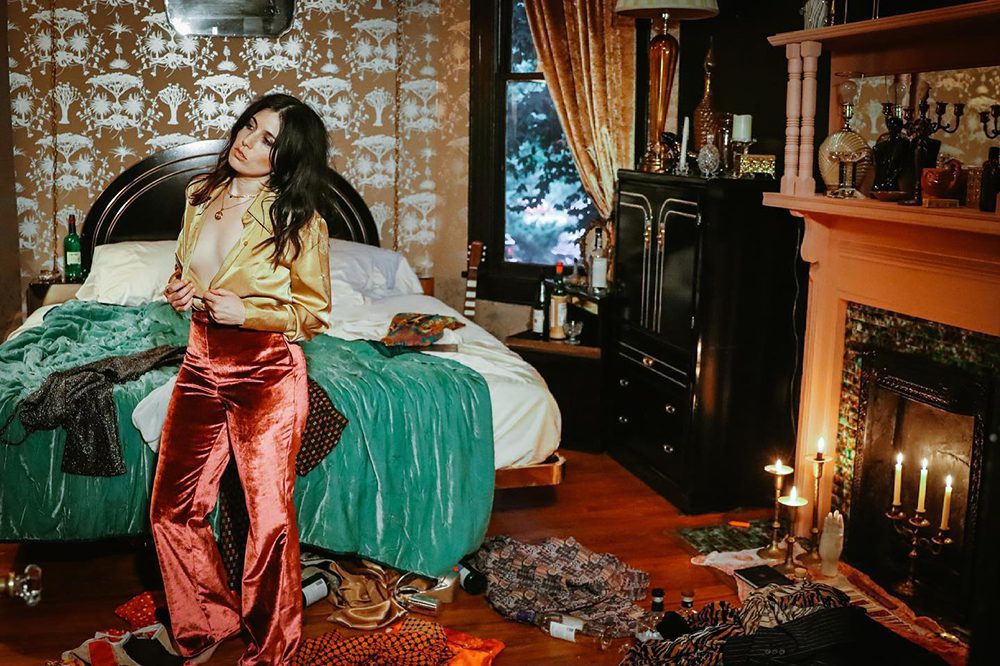
Teenage Joans Resist Sweetness on Bristling Pop-Punk Debut Taste of Me

Joan of Arc? Joan As Police Woman? Joan Jett? Any of these Joans, and all of them, have the unrepentant, independent spirit that sustains the indie-punk vibe of Teenage Joans. Adelaide duo Tahlia Borg, 18, and Cahli Blakers, 20, have been making ‘90s-style garage punk-pop under the moniker since 2018. Their sound recalls the pioneering musical style of The Pixies, with enough sass and bravura to conjure Kathleen Hanna and Bikini Kill. When this is suggested to them, they’re thrilled but honest.

“We’re influenced by Bikini Kill and The Pixies but they’re not core influences,” says Blakers. “One of our biggest shared influences is 5 Seconds of Summer [Australian pop band now named 5SOS]. We used to be a bit embarrassed, but now we own it. We grew up listening to them, and bringing guitars back to pop music is something we enjoy doing. Another one we share is [Melbourne band] Camp Cope – [they’re] girl bosses, we agree with everything they stand for, [and] we really look up to them. For me, I really love Yungblud’s individuality and style, The 1975, and Catfish and the Bottlemen.”

Since winning Triple J’s “Unearthed High” competition (a nation-wide hunt for the best high school act, which in previous years has championed Gretta Ray and Japanese Wallpaper) in 2020 with their track “Three Leaf Clover,” they’ve released singles “Ice Cream,” “Something About Being Sixteen,” and their latest, “Wine.” They’ve also performed at festivals (Yours and Owls, Summer Sounds and Mountain Goat Valley Crawl), as well as co-headlining shows with fellow Adelaide duo TOWNS and supporting The Chats.

Their debut 5-track EP Taste Of Me, released May 28, bristles with oodles of unbridled teen energy; it’s a riot. Along with their previously released singles, killer songs like “Therapist” and “Apple Pie” round out the tracklist, all sufficiently drizzled with fuzzy, grizzled guitar and sardonic humour. Like a sailor-mouthed Dr. Seuss, the duo are hilarious on top of being impressive musicians.

“Apple Pie” opens with the line “Give it up, you’ve got a bucket list that makes you scream fuck;” to paraphrase the lyrics, they can be sweet, but they’re not just dessert – and anyway, they “don’t wanna be the apple of your eye.” Blakers admits they don’t play that song much live. “It’s our weirdest song. It’s about someone wanting to be in a relationship with you, or be around you, romanticising the idea of you because they don’t see the less fun, less energetic side of you,” she explains. “It’s about navigating human connection when two people aren’t actually the right people for each other.”

Navigating human connection, especially in the midst of a global pandemic, are topics close to the bone for both Blakers and Borg. While Blakers finished school in 2018 and chose to work in a café while pursuing music (“the band took off a little bit”), Borg’s initial plans to focus on music and touring took a pummeling at the onset of the pandemic, so she opted to begin university studies last year.

“I said to myself that I was going to take a year off, just to see what happens with the band, but then when COVID began, I started Behavioural Science at university and I work in a music store,” she says. “It’s a lot of work, but I pace myself and I can do the course over a few years. When we’re on tour, I bring my laptop with me and do work on the plane. I’m balancing everything; it’s working so far.” 

Taste Of Me was recorded with audio engineer Jarred Nettle at House Of Sap recording studio in South Australia over two weeks. “We love Jared!” they both enthuse at once.

“We call him J-Nett,” says Blakers. “He’s the best. He took every idea we had on board – nothing was too stupid, too out of the box. At least if something didn’t work, we tried. He took our stories and took good care of them.”

Perhaps he recognised, as their many new fans do, that the duo were born to make music. Blakers’ initial foray into violin from the age of 5 lasted until 10, when her passion for rock music and her pleas with her father for a guitar were answered.

Borg’s story is similar. “I actually started ballet when I was 6 and thought it was so boring, so I quit ballet and started drums when I was 7,” she recalls. “I used to go and watch my cousin play with his band; he’s a drummer too. I wanted to be like my cousin, who’s really cool, and while I did give it up for a few years like kids tend to do, I picked it up again and I love it. It’s a fun instrument.”

Her major influence embraces – as does Borg – controlled chaos when it comes to drumming with a band. “My biggest influence, drum wise, is emo band Mom Jeans because they do stuff that’s out of the box. They use wacky time signatures, they don’t always follow the guitar riffs. They do, but they kind of don’t.”

For Australians who want to see Teenage Joans bring raw guitar pop punk to the stage, their national headline tour is intended to begin at the start of June. With Melbourne under a lockdown at the time of interview, there is speculation about whether all states will be open for performances. “If COVID stays chill, then the tour will be going ahead which is very exciting,” Blakers says.

She’s just turned 20, but still feels like she’s not “100% an adult just yet,” and hasn’t abandoned the spirit behind the tracks she and Borg wrote as teenagers. “I feel like there’s a lot of youth in just being a human,” she says. “There’s a lot of things that excite us as if we were children, so I feel I can still relate to [the songs].”

Follow Teenage Joans on Instagram and Facebook for ongoing updates.
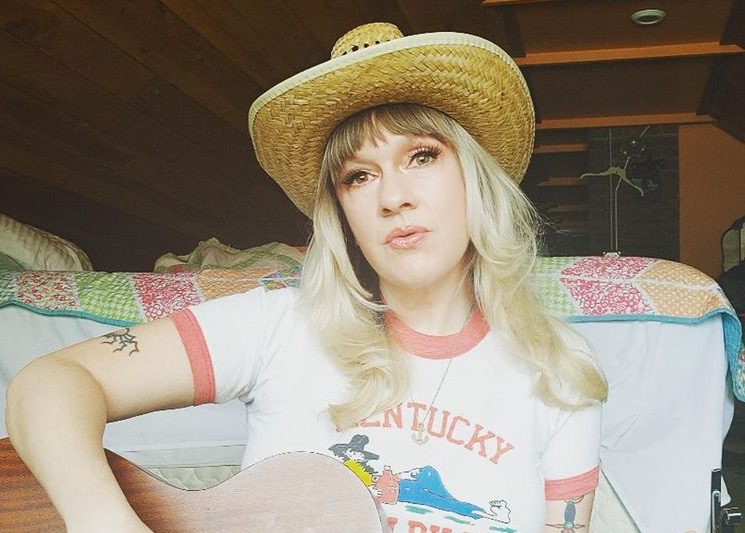
Debut Single from THEM “Bad 4 U” is Good for the Future of Seattle Music

For a many years now, the future of the Seattle music scene—one that has long been defined by the vibrant grunge and DIY rock scene of the 1990s— has been in question due to Big Tech money and the extensive forces of gentrification overtaking the city. As Bandcamp Daily recently wrote about the status of the Seattle scene, “Flannel-wearing, granola-eating punks were pushed out of the way by the formidable income of North Face-wearing yuppies who could afford $20 bowls of paella as an appetizer.”

Sure enough, many artists have moved away due to the skyrocketing Seattle prices, irrevocably altering the Seattle music scene and sending many Seattle music fans scrambling to establish new nonprofits and venues that could help preserve what’s left. What’s more, many of the issues the scene was facing before have been exacerbated tenfold by the COVID-19 pandemic.

But when you hear THEM, a brand new band of Seattle-bred teenagers, you hear hope. Their debut single, “Bad 4 U,” which dropped on June 5th, is the natural continuation and expansion of what Seattle music has always been about—gritty, honest, and unique rock brought to life with the help of the local music community that’s rallied around them.

THEM is named for the first letter of each multi-instrumentalist member’s name: 16 year-old Thompson, 16 year-old Hudson, 19 year-old Ellie, and 19 year-old Maia. The foursome met when they were put in a group class together at West Seattle’s Mode Music Studios, a mainstay local music school that opened in 2014 and is operated entirely by working Seattle musicians. Over the years, the school has boasted such notable teachers as Jen Wood from The Postal Service, solo artist Maiah Manser, Rat Queen’s Jeff Tapia, and KEXP radio host and The Black Tones lead vocalist and guitarist, Eva Walker.

All four of the girls started taking private lessons at Mode Music Studios years ago—Ellie, in fact, was one of the school’s first students. “Mode is mostly one-on-one private lessons. That’s how all four of us started,” says Ellie. “But we got recruited to do this Sunday night rock band class which we all four were in and that’s how our group formed. We were in this Sunday night class that we’re paying for, just us four, collaborating, really just covering our favorite songs.” That was four years ago; initally, local singer-songwriter and drummer Heather Thomas taught the rock band class before Eva Walker took over. From there, the group began to play gigs around Seattle.

“Once the pandemic started [we couldn’t] really do a virtual class and we were starting to write our own songs,” Ellie continues. “So we just took it into our own hands and went to each others’ houses and continued the weekly group.”

As the pandemic went on, THEM pulled back from playing shows and instead worked on writing music until they had enough for a debut album, which Ellie says will be released sometime late this year. “Bad 4 U” is the first single to be released off the forthcoming record, and it’s based on the rest of the group’s reaction to one band member’s bad boy crush.

“Hudson brought it to the band actually in probably April or May 2020,” says Ellie. “Hudson pulled this song out of nowhere and played it for us and we loved it—we all related to it differently because it’s basically about liking somebody who’s not good for you, or liking somebody who you know is bad but it doesn’t matter.”

As Hudson shared more about the song, the rest of the band realized they knew this crush—and agreed it was probably best she steer clear of him. For that reason, the group decided to have Thompson, who’s close friends with Hudson, echo Hudson’s vocals at the chorus with sound best friend advice: “You know he’s bad for you.”

This creative choice—and the song’s refined rock sensibility— underscores just how mature these girls are, despite their youth. They perform with soul and heart, they add call and response, they play with sound density and form. Their professionalism reflects their hard-work and talent, as well as the ample mentorship they’ve had along the way—both from the teachers at Mode and from other cultural institutions in Seattle.

“We have kind of grown from Seattle Theater Group education program. We were in Moore Music at the Moore last year and we’ve been in STG songwriters’ classes for like the past four or five years,” explains Ellie. She’s also spent several years beefing up on music business and social media management, primarily by working at Mode Music’s front desk and eventually becoming The Black Tones’ social media manager.

“Eva saw my work at Mode and… saw that I was interested in studying music business so she asked me to do their social media,” says Ellie. “I started off posting for them and that work has spread. I started doing social media for [the band] Warren Dunes as well, and then [for] Seattle Secret Shows. I’ve done a few things for Seattle Theater Group, too, and now I’m about to start with Naked Giants and a few local LA bands because I’m actually moving to LA in a few months.” There, she’ll finish up her Bachelors degree in entertainment business at LA Film School.

Ellie’s applying what she learns to the promotion of THEM, and no, the group has no plans of breaking up while Ellie finishes her schooling. Instead, they plan to leverage Ellie’s change of locale to broaden the reach of THEM, and Ellie says she will definitely be flying back and forth this summer to play the shows they have on the calendar.

When asked about her perspective on the future of the Seattle music scene, her perspective is sunny—noting that the pandemic hasn’t been all bad because the time helped THEM get inspired and create. She expects other artists have had similar experiences.

“I think we’re going to bounce back just fine,” she says. “I think during the pandemic people were kind of M.I.A. and got really inspired. We wrote a whole album’s worth of songs. I think the fans are really going to benefit from that when things open up and see that the growth that some of their favorite artists have done during the pandemic.”

Ellie sees talent in her age group simmering and swelling, ready to lay down some tracks and make it big. The list of local artist peers that inspire THEM is long—and includes her boyfriend Destin Mai of Ambient Village, who produced, mixed and mastered “Bad 4 U.”

“We’ve met so many aspiring young artists. King Sheim—everything they’re doing right now is amazing. Amy Hall, she’s also amazing,” says Ellie.

In Ellie’s eyes, too, there’s a new “Seattle sound” bubbling up among the next generation of artists, born from the combination of the DIY rock/pop sound the city’s long been known for and Seattle’s vibrant underground hip-hop scene and wealth of talented producers and emcees.

“I definitely think that there’s some inspiration from new pop music that’s coming out, like Olivia Rodrigo—she’s got a full band but there’s 808 [drum machines] in her music. It’s kind of a mix of that hip-hop and pop sound,” says Ellie. “It’s like a full band like us, falling into the hands of a hip-hop producer, like how we’re working with Destin and he’s putting in automated drums in our music—I think that that is itself a new sound for sure.”

Follow Them on Instagram for ongoing updates.
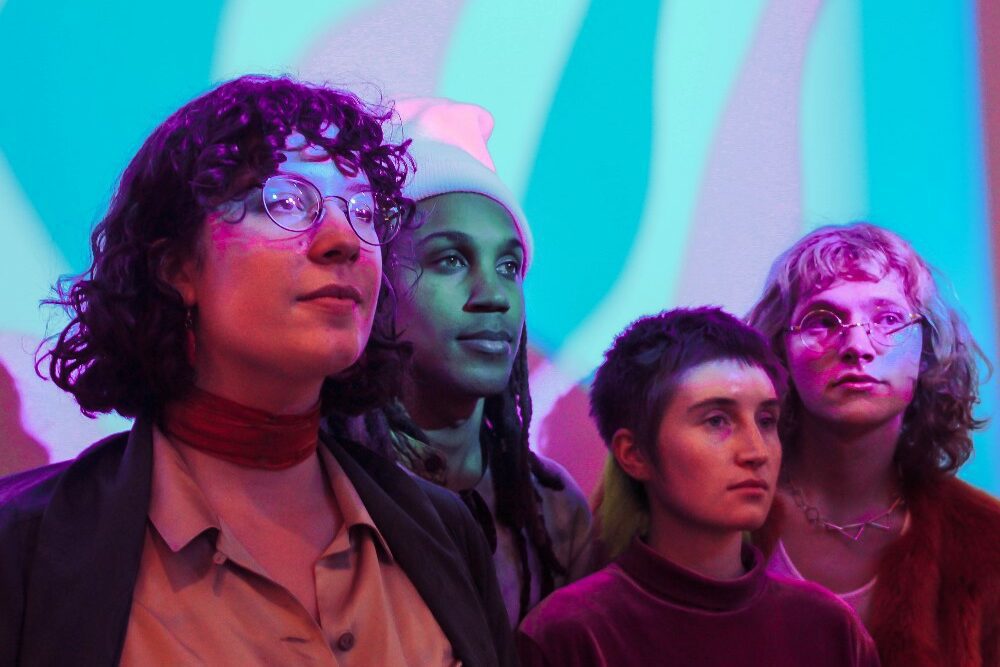
Amy Darling Does Rock ‘n’ Roll Justice With “Nasty Habits”

Photo Credit: Amanda Stone

It’s safe to say that Amy Darling was born with a hippie’s spirit. A native of the Bay Area in California, the Nashville-based rockstar was raised on a nourishing ’60s musical diet, where early inspiration came from the likes of Jimi Hendrix, The Beatles, Janis Joplin and many other legends of the era. After studying musical theatre and living briefly in Los Angeles and London, Darling’s path eventually led her to Music City, where she released her appropriately titled debut EP Rock ‘n’ Roll Woman in 2018.

Balancing humor with her eclectic sound of rock and blues, with hints of pop, punk and disco mixed in, Darling continues to carve her own lane of rock n’ roll magic with her new single, “Nasty Habits.” She delivers a monologue through song as she recalls her early days in the trenches living around the corner from the notorious Skid Row in LA with nods to the “junkies, bankers, hustlers and whores” who ruled the streets.

The singer describes the song as “an anthem for escapism” that’s akin to the “electric pulse” of the city, a feeling she translates into the music with screeching guitar riffs and her sultry voice backed by a bluesy choir. “On the corner of 5th and Spring/Lies my dignity and clothing on the floor/Working, eating, fucking/In my minimal existence/I ask myself/If these habits are so nasty/Then why do they feel so good?” she growls in the funk-infused track, proudly proclaiming “everybody’s got nasty habits.”

Darling’s music has a distinct way of resonating, her marriage of words and melodies constantly turning over in one’s head. She proves this on the four-song Rock ‘n’ Roll Woman. The title track sounds like a classic one would hear on an old-fashioned jukebox, traveling back in time to the golden age of the genre. Her alluring voice masterfully emotes retro vibes and modern grace as she unabashedly details “dancing with my self-destruction” while “trouble was my only friend.” The listener is hit with an ear-catching saxophone on the opening of “Candy,” a lively ode to a woman from a wealthy family who moves to the big city to chase her dreams — only to fall victim to the dark side of town and ultimately abandon her ambitions.

Darling raises a middle finger to modern society in “Flip the Bird,” running with the devil and singing with the saints while embracing all of life’s most exhilarating aspects. “Never learned to listen what I’m told/Flip the bird to ever growing old,” she declares, not so much trapped in Peter Pan syndrome as she is a free spirit journeying through all of the darkness and light life has to offer — as told over a banjo plucking, porch-picking-friendly melody that fits as naturally in the Americana realm as it does rock.  She closes the project with the revival-leaning “Jamie,” accentuating her clever lyricism as she shares the experience of being with an untrustworthy lover. “I got one foot out the door/And I’m not turning back once I’m found,” she warns alongside spirited instrumentation lead by electric guitar and jazz piano. 

What’s intriguing about Darling is the way she approaches the gritty nature of life, fearlessly exploring her desires and the debauchery that surrounds her, a key factor to what makes her music so enticing. There’s a level of comfort to the way she thoughtfully embraces elements of darkness, wrapping them in imaginative characters and stories to match that solidify her as a rock ‘n’ roll goddess.

Follow Amy Darling on Instagram, Facebook, and Tik Tok for ongoing updates.
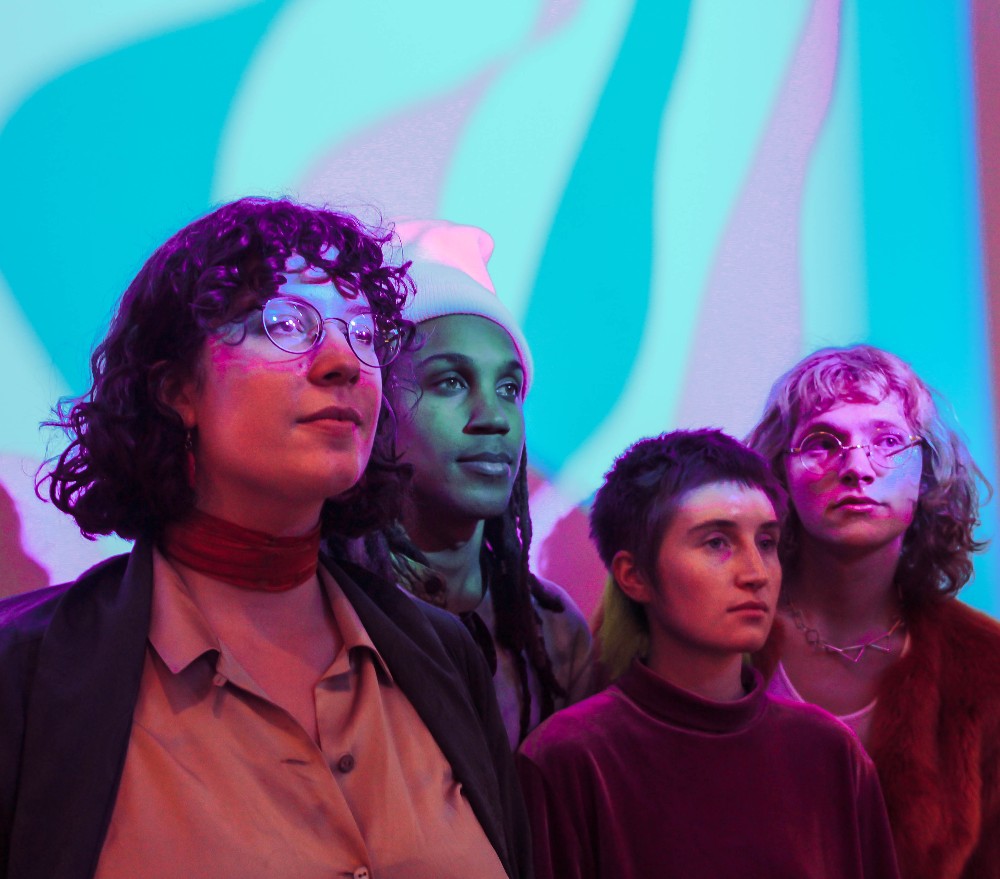
Kelly Jean Caldwell Returns to the Outer Limits Stage to Celebrate Birdie LP

Kelly Jean Caldwell is not dead. The singer, songwriter, and owner-operator of Hamtramck’s Outer Limits Bar and record label laughs as she tells me a rumor of her death has been swirling around town. “The other day, someone at the bar was asking what’s the next show coming up,” she explains, “and they [the bartender] were like, ‘oh it’s the Kelly Jean Caldwell/Loose Koozies record release show, and the person was like, ‘Oh, I thought Kelly Jean Caldwell died.’” Conversely, Caldwell is one of the liveliest people I’ve ever had the pleasure of talking to. A mother of two, she gracefully floats between answering my questions and ogling a unicorn drawing made by her daughter, Birdie, the namesake of her latest record.

Although Birdie was released in December of 2020, the record never received a proper release show due to the pandemic. So, this Saturday, June 12, Caldwell will finally play the record live at Outer Limits, joined by Monica Plaza and best friends and label mates, the Loose Koozies. Originally scheduled for last July, Caldwell explains that this show feels like a triumphant return after a year and a half of playing alone or to a computer screen. In a similar way, Birdie feels like a triumphant return to the studio after her last album release, Downriver, in 2016. She says that this record finds her at her strongest as a musician, person and a mother. “I am getting older I’m getting stronger, I’m a better musician, I’m a better lyricist,” Caldwell explains. “I feel like I’ve definitely come up as a musician. I’m more confident than ever.”

Part of this transformation is owed to Caldwell’s deeper exploration of the flute over the last few years. “My flute teacher changed my life,” she says. Though she’s played flute for years, Caldwell says taking lessons completely changed her perspective on the instrument and songwriting in general. She was pushed to go outside her comfort zone and learn things she hadn’t tried before, like reading music and playing classical songs. After months of practicing three hours a day, Caldwell’s lessons culminated in a classical flute recital at Outer Limits where she donned her wedding dress and played a full classical repertoire accompanied by friends.

This transformative experience, in tandem with all the frightening and beautiful events that accompany motherhood, helped shape the colorful sound that characterizes Birdie. The album’s title track opens with swooping layered flute melodies, reminiscent of the magic and innocence of childhood. “All those ’70s rockers have songs about their daughters but you’re not sure if it’s about their lover or their dog,” Caldwell laughs. “I was like, ‘I wanna write one like that… a creepy song about my kid.’” But, honestly, the song leans more towards tear-jerky than creepy, especially when guided by Caldwell’s instinctively poetic lyrics.

She opens the song with a dreamy description of motherly love – “Sunshine follows my flower all the time/Blue eyes water my dreams ‘til summertime.” The song then opens up into a ’60s rock-type tempo, seemingly mirroring the fast-paced and sometimes chaotic rhythm of parenting. Bright guitars and Caldwell’s vivid depictions welcome the listener into a world of vibrant colors and endless possibilities. You can imagine Caldwell running around in the backyard with her daughter, blowing bubbles and creating their own world together, especially when she sings, “She’s got glitter in her hair/She grows flowers everywhere.” She’s able to capture these moments of pure happiness like a firefly in a jar and distill them into a few simple lines.

But, ever the honest songwriter, Caldwell makes room for both the precious and ominous sides of motherhood in Birdie. She explains that “SIDS,” one of the most musically upbeat sounding tracks on the record, is about being terrified that her son was going to pass away in his sleep. “I was really obsessed with Sudden Infant Death Syndrome,”explains Caldwell. “This was about my son and he obviously survived. But, when you have a new baby, you really, or at least I, felt like they were so close to death. I really felt like they could just switch back to the other side at any moment.” 

Unless you’re really listening, you wouldn’t notice the somber nature of the song, and that’s exactly how Caldwell meant it to be. “I didn’t want it to sound sad because I didn’t want people to worry about me,” says Caldwell. “So it’s probably the most upbeat rockin’ song I’ve ever written.” She explains that channeling her worries into music was the most natural way she knew how. The song’s fuzzy guitars and punchy chorus melody beget a story of hope and tenacity while Caldwell’s trepidatious lyrics ask the morbid question: “Does it call you back/Do the stars attack/Or will the dark dream continue?” 

As a musician who has never been anybody but herself in her songwriting, Caldwell’s vulnerable lyricism allows listeners to connect on a deeper plane. Even if you haven’t experienced motherhood and the anxieties that come with it, you can relate to the paralyzing fear of loss and the euphoric happiness of being with someone you love completely. “I think that, weirdly, the more specific you get about things, the more people relate,” says Caldwell. “The more personal that I make things and the more truthful, the more people feel it.”

Follow Kelly Jean Caldwell on Instagram for ongoing updates.
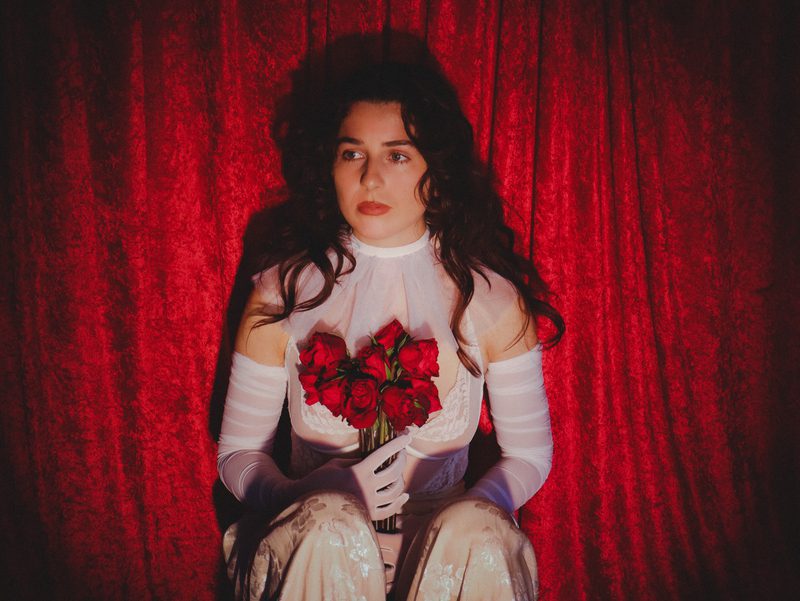
Goo Tease Debut LP Return to the Garden with Single “Animal”

Psychedelia-inspired indie quartet Goo began with endless college jam sessions; post-graduation, they morphed into playing regular shows in the Brooklyn DIY scene, describing their project potently on Bandcamp as a “slow-burning nebula of lovesickness and hopeful/less crooning into the void.” On June 16, the band – Eriq Robinson (bass/vocals), Leah Beck (keys/vocals), Anders Johnson (drums) and Beck Zegans (guitar/vocals) – is set to release their first LP, Return to the Garden, nine tracks which invoke the lo-fi atmosphere of their live show and previous EPs The Squeeze and Under the Electric Blanket, while also using hi-fi production to sharpen the expansive musicality throughout the album. In the lead-up to the album’s release, Goo have shared three singles so far: “Fur,” “Fruit,” and “Animal.”

Zegans wrote “Animal,” the third single off the record, during a moment of “utter despondency” while sitting on her bedroom floor. As a writer, she tends to start with a chord progression that feels close to what she’s trying to convey and then gradually pulls lyrics from her journal which she stitches together and then brings to the band. Unsure if this particular song was right for Goo, she let “Animal” take a back seat until playing it for a friend. “We were just hanging out and playing guitar, I had a bunch of candles lit and it was all super vibey. He was like, ‘Oh my gosh, I love that song so much – is it about killing God?’” Zegans remembers. 

With lyrics like “Hope is a cannibal thing, an all-natural gnaw” and “That was a time of odd myths and prayers/And of him who was spinning it all,” there’s a poetic examination of purpose, fate, and joy, that contrasts the bright background instrumentation, leading to a delicate but optimistic balance. The religious subtext on “Animal” reflects the spectrum of extreme emotional intensity within the song lyrics. “I was feeling a really big lofty emotion and I think the drama and scale of the lyrics, where it could be about a personal relationship or God or poetry, makes sense in that context,” says Zegans. There is a certain openness in “Animal,” creating space for listeners to explore the multifold concepts as they relate to their own individual experiences.

Although there is a darkness to the lyrics, the light guitar strumming and fluttering drums bring a levity to the drama. Keys that mimic church organ  rise up into the atmosphere of the song’s simple chorus: “Now I’m a dead animal/I hold my tongue, tongue, tongue.” The brief moment of silence prior to the chorus leaves listeners leaning in, piercing through the vocal reverb which casts a hazy sheen on the track. The tone in Zegan’s voice is Dylan-esque, passive and cool, a certain style of singing which isn’t quite smoky, but tonally familiar to Courtney Barnett. Goo uses a big fuzz pedal on the track to keep the depth alive. “This song is kind of about throwing your hands up and saying fuck everything,” Zegans says. “The fuzz is the fuck everything pedal because it takes the signal and explodes it and blows it out.”
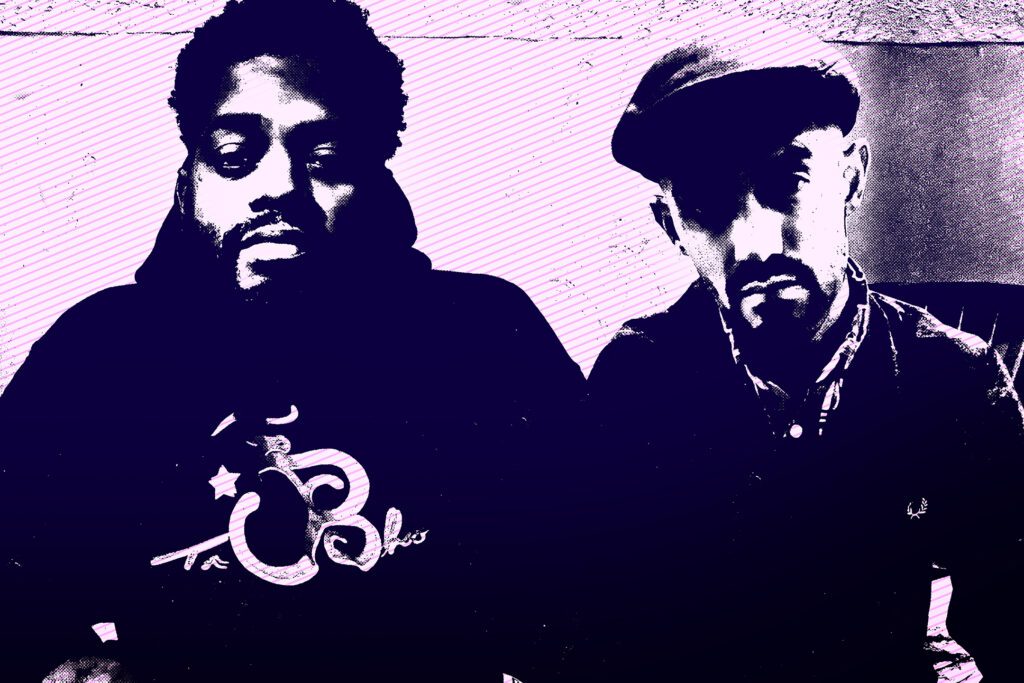
About a third of Return to the Garden was recorded in quarantine, with Zegans holding the sound together through a careful balance of guiding her bandmates and allowing them room to freely explore. Each of Goo’s members had a home recording set-up substantial enough to record from their bedrooms, and as demos started coming in, Zegans was able to shape the album along with producer John Roland Miller at RE Recording in Red Hook. This unconventional (but very 2020) recording process allowed the band to experiment and then refine, collaborating relatively easily over Zoom after having played live together for so many years. “We talked about the types of things I might want in there, but really what happened was a bunch of improvisation over the track,” Zegans says. “We tried out a bunch of different things and people sent me their different ideas.”
While writing the record, she was working at Roulette, an experimental venue in downtown Brooklyn, where she digitized concert recordings going back to the ’80s. The philosophy behind experimental music inspired the plethora of instruments used on the record, such as the theremin, flute, and trumpet. “As long as you’re expressing yourself, anything is fair game. It’s best to not feel confined by the expectations of the genre,” Zegans says.

“Fruit,” for instance, abounds with sonic allusions to ’60s psychedelic folk à la Nick Drake and Donovan, which Zegans describes as “this time of being able to have really deep and emotionally expressive songwriting while also having lots of weird stuff happening around it musically.”

With all of the effort that went into molding these songs for a comprehensive recorded piece, there’s a tangible excitement around how it will sound once the band is finally back together again. Once the LP is out in the world, Goo is looking to retake the stage; after almost a year and a half of not playing due to COVID, they’ll play a rooftop album release show at Honey’s with Cut Outs and Ok Cowgirl. “I’m excited to finally be releasing a full album and so excited to be able to start playing live again,” Zegans says. “That’s really our favorite thing. Before COVID we were always playing – I miss it so much. I think my main focus right now is getting to play these songs for people again.”

The way that this album was recorded, separately yet together, reflects the experiences of the DIY scene over this past year. And Goo certainly picked a relevant album title for their debut; getting to see the artists we’ve grown to love in our headphones take the stage again feels like the holiest way to celebrate the world reopening – a Return to Garden of musical delights.

Follow Goo on Facebook and Instagram for ongoing updates.

Alexandra Riorden Reflects Noir Pop Transcendence with Premiere of “Dirty Mirror”

Photo Credit: Paige Strabala

Healing is not linear. It doesn’t come in a specific shape or form and it happens differently for everyone. Santa Barbara-based noir pop artist Alexandra Riorden knows this, and harnesses her own experience with darkness and healing in her new single “Dirty Mirror.” The title itself brings to mind the lack of clarity and blurred reality that can come in the wake of trauma while dramatic strings, starry guitars and Riordan’s smoky vocals tell a story of pain, reflection and healing. 

Riorden explains that she wrote this song – and all of the songs off her debut LP, Angel City Radio, out June 25 – in a state of delayed processing. After experiencing a home break-in while living in Los Angeles, she says that she lived in a state of heightened alert and mistrust for years, without really realizing what was happening. “Since everything is so fast paced out there, I didn’t really feel like I had room to process such a tremendous trauma,” says Riorden. “So, a year and a half or two down the line, I started not doing well so I had to just step away.” She made the move to Santa Barbara and started writing. 

What ensued were dark vignettes of past wounds, bubbling to the surface and slowly healing. “Dirty Mirror” explores the complexity of being in a relationship that’s built on a flimsy foundation and the surreality of watching it crumble. “I was reflecting on how difficult it is to be in a relationship with someone when you’re both kind of not solid in yourself,” says Riorden. “Everyone’s a mirror to you, so if you’re looking in a mirror and getting a hazy reflection… things get twisted easily.” 

There’s a rawness in Riorden’s voice that feels especially vulnerable. She explains that when recording this song, she had lost her voice at a show the night before and had to get the vocals done in one take. The emotion and honesty is palpable. “It felt very direct for me, like from the pages of my journal to singing it,” she says. Phrases like “I gave you the key/You gave me the reason to leave,” feel like late night scribbles coming to life from the page, releasing her from the resentment that they held. Similarly, her vibrato reverberates like ripples from a rock thrown into a pond, letting the pain and heartbreak flow out of her and dissolve into the universe. 

But, while Riorden lets us into the dark cracks of her mind, she doesn’t allow us to dwell there for long. “I never like to leave a song in a space of suffering,” she explains. “For me, the process of writing a song is like climbing a ladder out of this dark place.” After a few minutes of painting her story in black and ruby hues, Riorden offers listeners a white light of hope to reflect on: “Is it a king who gives you wings? Apparently only when he leaves/There is no one looking out for me/I have never felt so free/Ironically.” Finding safety and inspiration in her newfound freedom, Riorden fills the cracks left by her lover with sparkling rivers of hope and catharsis.

Follow Alexandra Riorden on Instagram for ongoing updates.

Tr38cho of Old City on How to Be a Man (Read: Good Person) in DIY Communities

Old City is a Philadelphia/Buffalo-based hip-hop/punk collective composed primarily of the eponymous producer Old City and rapper Tr38cho, who bring in other members of these musical communities for collaborations. Their latest release is “Class Act,” an explosive tribute to women in punk featuring Shawna Potter of War on Women as well as backing vocals from Melissa ‘Winter’ Hurley (BadXMouth, Pissbath) and Nastya Pavlov (Messed Up). The song premiered on BrooklynVegan in mid-May, and it combines a few of my favorite things – a good hip hop/punk mash-up in the style of The White Mandingos (rapper Murs’ 2012 collab with Darryl Jenifer of Bad Brains) or Ho99o9, and men policing other men in DIY scenes – so when they approached me for an interview, I couldn’t say no.

The intersection of these genres goes back as far as the genres themselves. The origins of punk in Britain in the 1960s owes heavily to reggae and dub, and by the 1970s, punk and hip hop were flourishing simultaneously. But because they attracted an “outsider” demographic, they relied heavily on a DIY ethos. “In one group you have a bunch of poor white kids, and in another group you have a bunch of poor Black kids, the misfits,” Tr38cho explains. “Black people weren’t going to clubs in Manhattan in New York city, in the Bronx, you know? They were going out in the park. They say, there’s the classic line, ‘Power from the streetlights made the place dark.’ We couldn’t go to the clubs so we brought the clubs to the street.” He noted too that basement shows have existed as long as punk, and even once you reached clubs with more legitimacy like CBGB, you might find Blondie on stage with Fab 5 Freddy.

“Class Act” offers classic, irresistible basement show energy, with Tr38cho dropping lines like “Pardon me/I don’t mean to alarm you/I just think it’s dope how you redefine normal” over a tight beat sampling Pennywise’s “Society,” produced by Old City. He goes back and forth with Potter, set over a visual video that sews together clips of all of contemporary punk’s best female artists.

Tr38cho explains the idea originated from a deep respect for the courage and “special something” these women bring to the genre. “I was, I don’t want to say envious, but had always fangirled women in punk,” he says. “You can hear a thousand bands that are like Black Flag or Dead Kennedys, and then as soon as you throw a woman’s voice into it, it’s immediately a very interesting sound vocally. So my appreciation for that came out. Let’s try to write a song that’s not like, I want you to be my girlfriend, but it’s like, let me be that girl.”

This is a refreshing take from a man in the DIY punk community, one that is often plagued by sexual misconduct and struggles to live up to the progressive ethos that once defined the genre. This thought process is crucial and necessary, because at least from my personal experience, men tend to get defensive when women tell them the many ways they’ve wronged them (we all remember #NotAllMen, yes?). A lot more progress can be made a lot more quickly when men stand up to police the behavior of their fellow men, a belief Tr38cho is quick to confirm.

“I feel like every white dude in these types of scenes, when they hear stuff like this, they immediately go to punisher mode,” he says. “You add the layer of toxic masculinity where somebody’s friend was groped or whatever, and the guy comes out of nowhere and is like ‘I’m gonna kill that dude!’ And it’s like okay, hold on, before you go, you could stop the situation but I don’t need to hear your theories on how all rapists should be killed. Just handle the fucking situation at hand. And be aware that some of your actions may mimic those [same people who wronged your friend].” He adds that it has to be an “everyday” thing, and that men should constantly be checking themselves in terms of how they react to volatile situations such as these, or even something as seemingly innocuous as why they are attracted to a certain woman and how they treat her as a result. 

Tr38cho also notes the intersectionality of it all, that as long as one group of people is oppressed, everyone is oppressed. “As a Black person I have a perspective, like I feel this way as a Black man, [so] this could be a thing that women feel like,” he says. “I grew up with women, I got a lot of cousins, my sister, my mom, I’m married. With all these women who surround me, you get those perspectives, you hear them and sometimes you have to be wrong for a second… And I do with LGBTQIA communities and feminist communities, what I would like done from white men towards the Black community.” 

While he would definitely like Old City to release a “party song” sooner or later, their work lately has focused primarily on thorny issues. In addition to “Class Act,” they’ve written a few songs dealing with police brutality, and hope to drop a song soon in the vein of Blink 182’s “Adam’s Song.” “It’s not just women who bear the weight of toxic masculinity,” he says. “It’s men. That song particularly brings out male vulnerability between two men, and how vulnerability between men is just not promoted enough. Without some sort of gaze of football, or sports, you have to have an extra layer. Men can’t just be vulnerable with each other without a reason for it.”

In the end, I share the world of Old City with the Audiofemme universe not only so you can rage to some good, old-fashioned punk rock this summer, but also that we might all find some hope in the fact that there truly are some good guys out there doing the work. For a lack of a better phrase than #NotAllMen, some of them really do want to heal these tender spots and make DIY communities, and the world at large, a more positive place for everyone. And Old City is it.

Follow Old City on Instagram for ongoing updates.