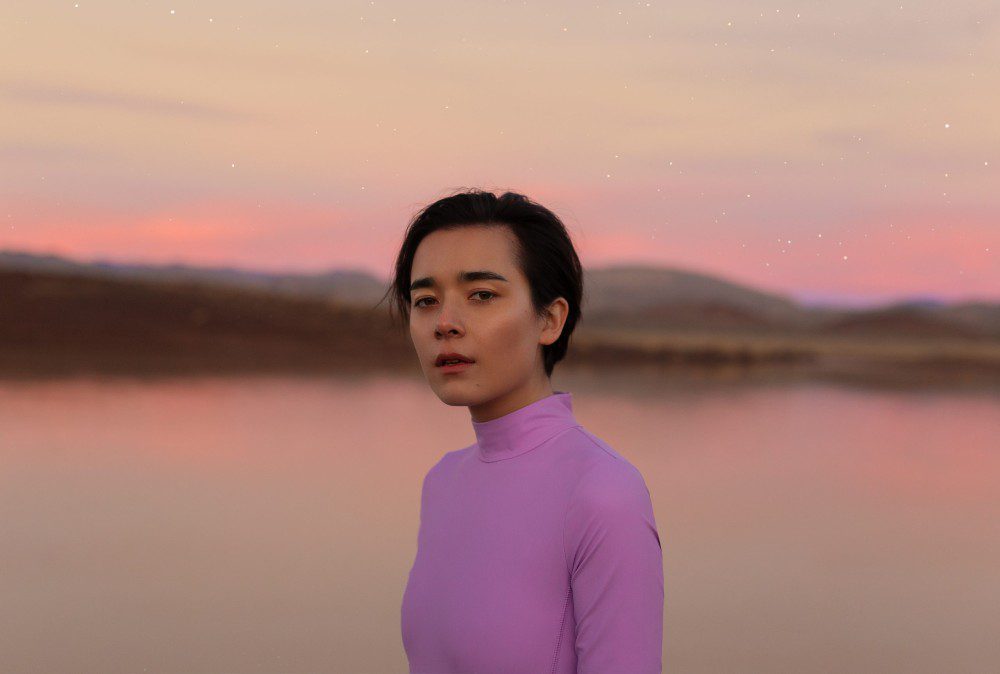
Miss Grit Shreds Guitar (and Self-Doubt) on Imposter EP

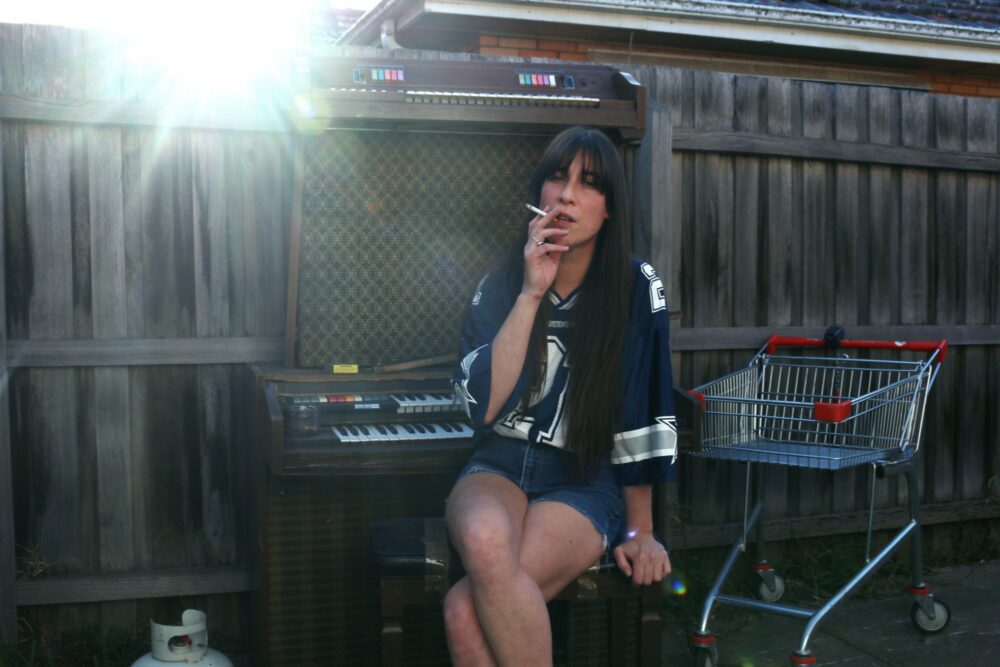
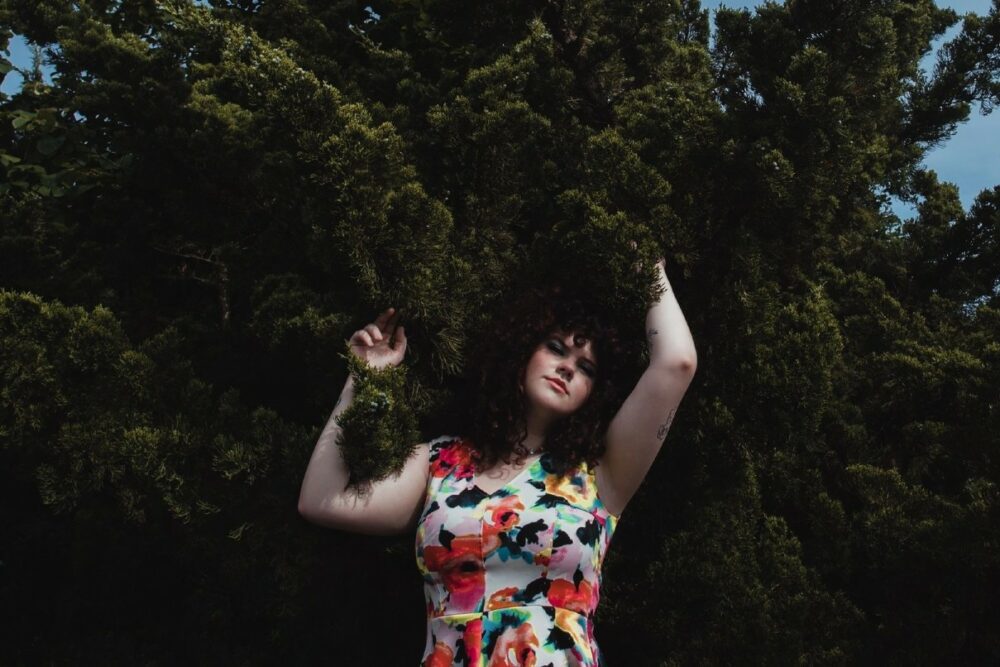
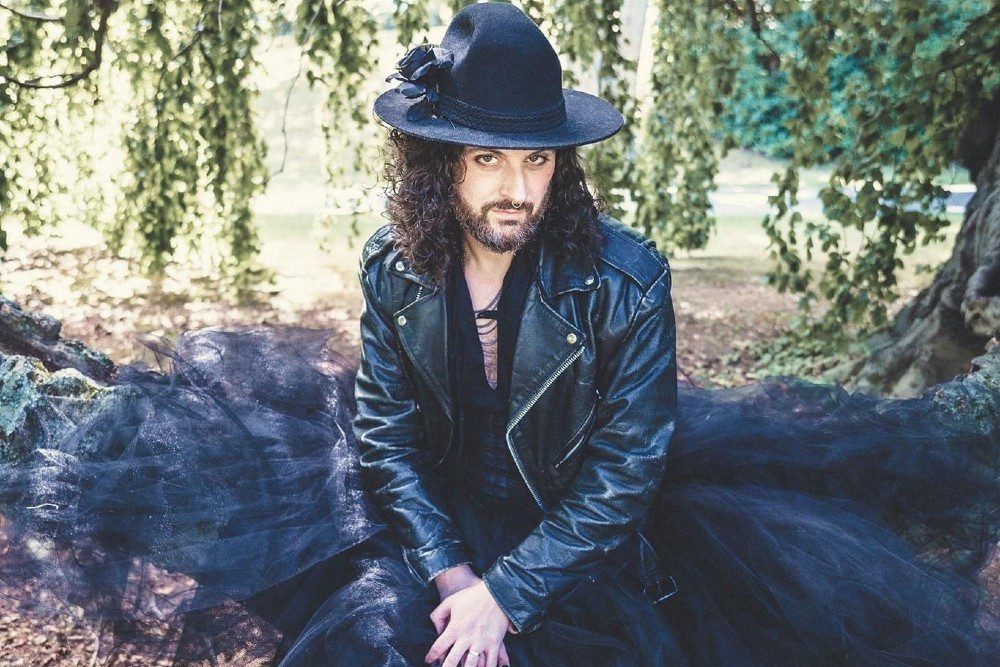
Photo Credit: Natasha Wilson

Listening to Margaret Sohn’s virtuosic, inventive guitarwork and incisive lyrics, it’s hard to believe she’s ever doubted her talents. But Imposter, her second EP under the moniker Miss Grit, explores those pervasive feelings of inadequacy as a means of exorcising them, drawing on her experiences as an emerging musician charting genre-defying new territory. It also interrogates social norms from a variety of angles – pressure to fit in, the repetition of the daily grind, arrogance-laced small talk – a dense six songs that never feels like a slog thanks to Sohn’s bold sonic palette.

“I’m definitely an introvert. I think I wrote about social norms a lot on this EP because I started to resent them a good bit – they were really digging into social anxiety and imposter syndrome for me, kind of inflating that in my mind,” Sohn tells Audiofemme. “I was trying to overcome that; the EP was a way to release some of that resentment.”

Sohn grew up in Michigan and started playing guitar in first grade; her father bought she and her sisters a microphone and Cubase software so they could record songs at home. “That was actually my first experience working with a DAW and engineering, at like a really basic level,” Sohn remembers. She headed off to NYU to study music technology – a program that encompasses everything from video game sound design to engineering to electronic composition – though she took a leave of absence around the time she released her debut 4-song EP, Talk Talk, “basically just to focus on music,” she says. She also had a growing interest in building pedals. “That was kind of like, my other dream, I guess. But I started contemplating what a degree from music school would really get me, especially for the price tag,” she adds. “I decided just to take a break and see what I could do in the meantime until I needed to go back.”

Sohn had recorded Talk Talk in a nearly abandoned dorm while the other students were on winter break, but with NME touting it as an “essential listen” upon its release, the bubble in which the project existed had been popped. For Sohn, familiar self-doubt started to creep in. “The Talk Talk EP gave me confidence to keep on writing and gave me the boost to start Impostor, but impostor syndrome is something I have always felt my whole life in everything I do, basically,” Sohn admits. “I think that period of time just highlighted it a lot and made it more present than it’s been in my life. Writing the Impostor EP was kind of a way for me to recognize that it’s there, and be able to identify and put a name to it and try to move on.”

“There’s no more reward for winning/There’s a bigger toll for missing/Reaching out, reaching out for your own hand/But how can you trust where you stand?” she asks on opening track “Don’t Wander” over meditative synth, before the first muscular riffs of “Buy the Banter” interrupt. “If they think you’re somebody/You’ll have to prove you’ve got what they want/And they want,” she warns, in a slow-burning critique of music industry sycophants.

“Not that I wrote this about any specific situation, but I was getting frustrated with certain surface-level conversations, and how music is talked about in different settings and different circumstances,” Sohn says. “I feel like recently, I’ve been getting so many comparisons to St. Vincent, and I can’t help but feel it’s like maybe they just can’t think of another woman-identifying guitarist.” Sohn admits that Annie Clark – and other early-aughts indie acts like LCD Soundsystem – were formative influences, but Miss Grit feels like a different beast altogether, hinging on the build up and release that plays out across each track, while Sohn’s monotone provides bracing commentary. Fuzzed-out effects lend another layer of ’90s alt moodiness – think Elastica, Garbage, and other acts that skirted the line between grunge, industrial, and electronic sounds.

However cool the delivery, Sohn’s minimalist lyrics pack unexpected punch. “Blonde” offers an apathetic glance at the shallowness of conformity (“I’ve got nothing to say,” she repeats), but viewed from her perspective as a half-Korean girl growing up in a predominantly white suburb, it becomes a poignant impression of Sohn’s fatigue at working harder to fit in; expansive reverb illuminates the emptiness of the gulf between herself and her peers.

“[It’s] not that I literally wanted to be blonde, I just had some of those wishes, like, oh I just wanna fit into this white space that I’m surrounded by, I just want to be able to relate to these people and not be seen as an outsider to them,” she explains. “The song ends with ‘I’ve got nothing to say’ because you get to a point where you realize that people will end up seeing you how they want to see you and there’s nothing you can do. Trying to adapt to them isn’t gonna really help change their minds.”

Now, Sohn stands out it another way – her guitar and synth textures truly shine, their interplay communicating turbulent emotions the way a siren singer might belt out an emotional line. “The pushes and pulls, the tensions that build up and the releases, are the most gratifying parts for me. They can be more powerful to me than any lyric or riff. This EP was really focused on [that] energy,” she says, adding that she makes mood boards for each song that include color, fashion, architecture, and photography. “It helps me get into an environment and place the sound to a visual.”

In particular, “Grow Up To” crackles with the electricity of a triumphant guitar melody and booming percussion, which builds and bounces over Miss Grit’s stop-start nursery rhyme: “When I fall dead/I’ll still crave/The next place/All the same/And in the morning/I will wait/’Til it’s late/For my fate/Resuscitate.” Its repetition is meant to resemble being stuck in a rut, while the riffs are always reaching. Release from it comes not in the form of soothing lyrical retort, but jittery distortion that clatters to an abrupt halt. “The song is about never being satisfied, and the guitar is kind of the like tantrum that I have at the end that just collapses and falls off the edge,” Sohn says.

Miss Grit’s sound is so big, it’s hard to imagine Sohn composing music in a Brooklyn apartment, headphones on. She did write Impostor with a live backing band in mind – the album includes bass contributions from Zoltan Sindhu and drumming courtesy Gregory Tock, Sohn’s schoolmates from her NYU program – but the pandemic has provided her with the time and isolation she had when creating Talk Talk as she continues to write. The difference, she says, is that she’s grown as a songwriter.

The album’s final tracks represent that growth best – exuberant early single “Dark Side of the Party” zeroes in on over-confident shmoozers while Sohn wonders why she can’t have it that easy, and the title track closes the album with a note of disbelief: “They’re clapping awfully loud/For no tribulations or trials.” While her words express hesitation and anxiety, there’s no mistaking the unbridled wail of her guitar and the fearless decisions she makes with it.

“I think with anything, there’s a balance – being able to have those insecurities in imposter syndrome is sometimes a good thing, because it can ground you to a certain extent,” Sohn says. “But at the same time, being able to be confident in your decisions and your abilities is definitely helpful.”

On the last minute of the EP, Sohn finally lets all that tension unspool; her guitar settles into quiet strumming over twinkling, dreamy synth. But far from resolving the issues that inspired it, Impostor is really about acceptance. “Imposter syndrome is kind of a ghost that keeps following me around. I can’t always see it or know that it’s there. I think writing the EP and ending with ‘Impostor,’ they’re all just ways to help me see the ghost a little bit better,” Sohn says. “Being able to put a name on certain thoughts and feelings, and understand that some doubts in my abilities might be my imagination, just tied the bow on the box. Now I’m able to leave it and move on to the next thing… the most important part is contextualizing it and realizing how to move on from it, grow from it, shine a different light on it.”

Follow Miss Grit on Facebook and Instagram for ongoing updates.
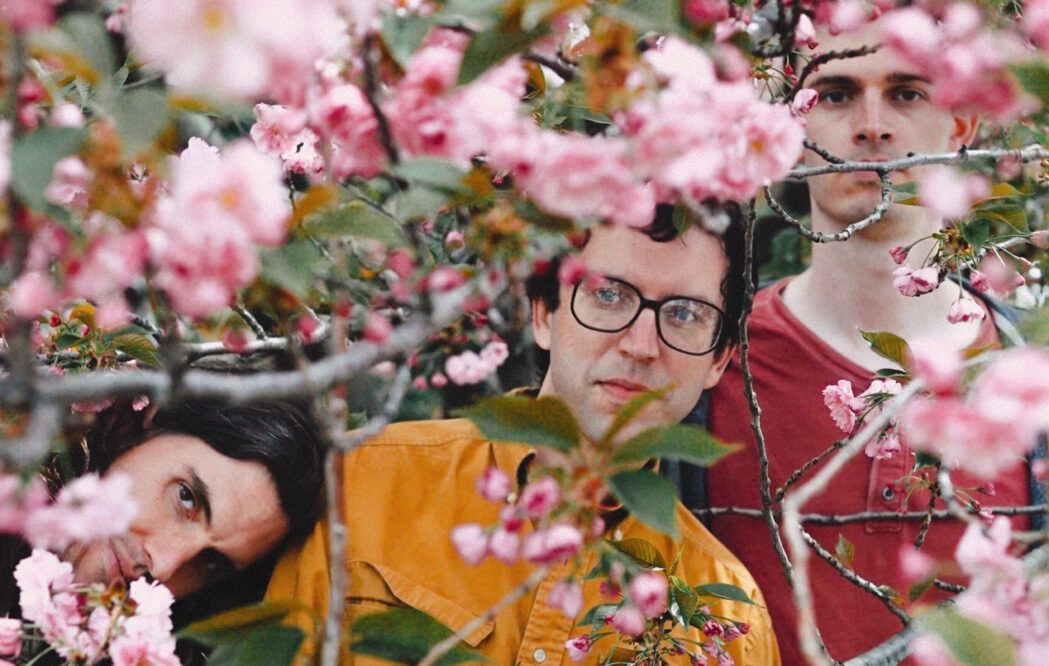
Ohtis and Stef Chura Team Up to Take Down Toxic Dudes with “Schatze”

Alt-country outfit Ohtis enlist the voice (and production skills) of beloved Detroit artist Stef Chura for their audio-visual fuckboy call-out “Schatze,” released digitally at the end of January (a 7″ vinyl is available for pre-order ahead of its February 26 release via Saddle Creek). Starting out like a guided meditation accompanied by Fred Thomas’s ambient track “Backstroke,” the brief moment of Zen is promptly squashed by the unrelenting, familiar chimes of an iPhone. The messages come rolling in, narrated by lead singer Sam Swinson – “I do/do what I please/it’s my Shatze/it’s my treasure/it’s not difficult, I do it with ease.” Chura replies to Swinson’s apathetic admission with an appropriate “Fuck you very much sir!” – a line that serves as a mantra throughout the song. 

It’s an appropriate and timely catchphrase for the past few years we’ve had as a country, bleeding from the effects of men who think they can get away with anything. But recently, we’ve also seen slow steps towards a reckoning – lies coming apart at the seams, survivors stepping forward to bring their abusers to justice, and the grand finale of a bigoted predator being removed from office. And although the villain in this song doesn’t exactly sit in that rung of evil, he serves as a symbol of that one guy – or guys, and the toxic culture that enables them – we all know that just really, really sucks.

“It’s a story about a fictional character and his faults. As I see it, crafting this song as a cultural commentary, but through the lens of humanity and humor, makes for a more accessible listening experience,” explains multi-instrumentalist Nate Hahn (pedal steel guitar, guitar, bass, keys, trombone). “We hope that this encourages more people to listen and reflect on the issues explored.” Those issues range from binge-playing video games, cheating on your significant other, and just having a general air of entitlement and indifference to one’s surroundings. “The title is a reference to a friend’s cat who’s a vicious beast of the same name,” adds multi-instrumentalist and producer Adam Pressley. 

Granted, an unruly cat is arguably a much easier beast to tame – or at least tolerate – than the character than Ohtis creates in “Schatze” – a self-obsessed, vape-loving, mask-hating gamer blob that admits things like, “I’m a piece of shit/I just think I’ll get away with it.” Chura’s gritty vocals are the perfect counter to Ohtis’ Frankenstein douche and serve as a sort of accountability angel. She says that the collaboration came together naturally, as Pressley was playing in her band at the time and the two had talked about working together. “We kinda jokingly tossed the idea around about the collaboration,” says Chura. “I really like Sam’s singing voice and was down for it. Then one day they just kind of hit me with the actual song. The rest is rock ‘n’ roll history, baby.” 

Hahn adds that having a female voice on the track was essential to rounding out the song’s message. “From the beginning, it was clear that the story needed to be told from both sides of the relationship,” he says. “We loved working with Stef because she’s a friend of the band and she’s the rockinest.” Aside from contributing her voice, Chura also co-produced the track and prevented the band from “keeping some silly digital DJ Khaled style vocal chopping we had in the track early on in the process,” according to Pressley.

While the song is a slight departure from Swinson’s deeply personal lyricism on Curve of Earth, the character in the song serves as a self-aware caricature of what we can become without actively checking ourselves. “I think it’s incredibly important that everyone takes stock of the way they might act in relationships and how actions could affect other people,” says Swinson. “Hopefully it can bring about some self-reflection in people as to how they could be better to the people around them.”

Outside of the commentary on personal relationships, the song also nods at the fact that white men have historically gotten away with doing evil shit, and a lot of them still do. It also nods at the role – however divisive it can be – that the internet has in unveiling the truth (or spreading lies) about people. The video even sneaks in a text from “Ohtis” reading, “do you liek ariel pink?” a reference to his troubled reputation and recent “cancelling” after he was spotted with John Maus at the pro-Trump rally preceding the insurrection. And while the members of Ohtis are galaxies away from being caught at a MAGA gathering, Swinson admits that they still have work to do when it comes to deconstructing the patriarchy. “There are definitely lingering bits of toxic masculinity from our conditioning that we can still identify and ultimately hope to carve out of ourselves in the process,” he says. “ [We] have no problem being self-deprecating about that.” 

Whatever your opinion on call out/cancel culture may be, this song and video serve as a relevant reflection on the moment we’re in – a chaotic e-landscape swirling with accusations, accountability, and assholes. For the listener, maybe it’s an opportunity to reflect on how you act in your relationships. Maybe it’s just an excuse to say “fuck you very much sir” a lot. For me, it’s both, and I’m better for it.

Follow Ohtis (via Facebook, Twitter, and Instagram) and Stef Chura (via Facebook, Twitter and Instagram) for ongoing updates.

Cincy Rapper Swooty Mac Releases Sunday Morning LP in Collab with Devin Burgess

Swooty Mac
Swooty Mac
Photo Credit: Guy Nee Whang

Swooty Mac and Devin Burgess have gifted fans their first joint project: Sunday Morning. The eight-song offering houses some of Swooty’s most honest and direct lyricism ever, not to mention some truly excellent beats by Burgess. The project also includes an ample amount of vibe-y bangers (opener “Function” and “Twenty” are my favorites) and the boo’d up “Bath Water – Extended.”

Cincinnati rapper Swooty and rapper/producer Burgess first linked up on Swooty’s 2018 debut EP, Jolie: The Swooty McDurman Project. Since then, Swooty says he and Burgess have teamed up together on roughly 20 songs – some released, some still in the vault.

“It was different [making Sunday Morning] mostly because [Devin] didn’t rap on the project. Usually we’re trading bars, but he didn’t rap on this at all or even do a background vocal. That was the biggest difference,” Swooty explains. “We have a pretty good chemistry, though, so it’s kind of hard for us not to come up with something.”

The beat Burgess made for “Bath Water – Extended” is what kicked off Sunday Morning. After hearing the instrumental, Swooty co-wrote the sensual cut with JayBee Lamahj and set out to make a full project with Burgess.

Swooty explains that initially, Sunday Morning was set to be a four-song EP. But, it was Burgess – who also mixed, mastered and engineered the project – who wanted to turn it into an album. Swooty agreed to record four more songs, but then he learned he was going to become a father for the second time.

“I’ve got a 7-year-old and [now] a 1-year-old and, you know, I had to handle my responsibilities before I dive too much into being a rapper,” he says, taking some time off to focus on his family before returning to finish Sunday Morning. “But, it worked out,” he continues, “because two years later we came out with a dope ass project.”

Learning he was going to have another child also made finishing Sunday Morning “even more special,” Swooty said. The album tackles several vulnerable topics that the rapper had previously steered clear of, for the most part.

“The stuff I was going through, the stuff that I was talking about on the project, it [took] time for me to express that stuff,” he confessed. “A lot of my music is personal, but it’s like surface-level stuff. This was, let’s get down to the nitty-gritty and see what’s going on. Like, I feel this way, and now I’m telling you why.”

Swooty dabbles in love on the pleading “Teach Me” and insecurity on the self-reckoning “blue af,” but he pushes his boundaries the most on “Neo.” On the stripped-down cut, the rapper examines co-parenting and juggles anxiety with ambition in an intensely personal, yet sharply relatable way, making it a standout track. Amazingly, though, it was almost cut entirely from the project.

“[‘Neo’] was just me being open and it’s one of the most vulnerable tracks on there,” Swooty says. “I wasn’t really rapping; I was kind of just talking and saying how I feel. Me and my daughter’s mom were going through some stuff at the time – arguing, breakups, and that’s pretty much what I was talking about on that record. And the reason everybody likes it is the reason I almost didn’t put it on there – I was thinking, don’t nobody wanna hear me be all sad and shit.”

Because of the song’s success, Swooty said he’s become more comfortable being vulnerable in his music. “I can do more stuff where I’m being sensitive,” he says. “I don’t gotta stick my chest out and be the big bad guy all the time.”

“I’m extremely proud of Swoot for delivering and executing such vulnerability and emotion,” Burgess adds. “I know how much that can take out of a person.”

Looking ahead, fans can expect some visuals from the project – possibly merging with companion clips for Swooty’s 2020 offering, Do4Luv. Devin Burgess, on the other hand, is set to release his live EP, 2018, on Valentine’s Day, followed by his rap album, That’s Unfortunate, next month.

“I really put thought and effort into other people’s music as if it was my own,” Burgess says of Sunday Morning. “I try to make everything as special as possible and this felt special to me.”

Follow Swooty Mac and Devin Burgess via Instagram for ongoing updates.

Sasha and the Valentines Cast a Spell With Premiere of Silent-Film Inspired “Witches” Video

Photo Credit: JB Bergin

With Valentine’s Day fast-approaching, love is in the air… or is it? Austin-based quintet Sasha and the Valentines want you to consider those feelings as carefully as they have on their debut LP, So You Think You Found Love? out April 16 via Oof Records. They’ve released one song from the project so far – existentialist dreampop ditty “Tears for Mars” – and today, they’re premiering a soft-focus black and white video for woozy new single “Witches.” Shot on 8mm film by Valentines bassist JB Bergin, the video sees the band (Bergin, guitarist Alex Whitelaw, drummer Billy Hickey, and aux percussionist Tim Zoidis) made up like mimes and bewildered by the spectre of singer/songwriter/keyboardist Sarah Addi.

The band met while attending the University of Massachusetts Amherst, relocating to Austin to hone their sound in the live music capital of the world. So You Think You Found Love? expands on the blissed-out Motown-inflected art pop that comprised their four-song debut EP Green, with Addi’s lyrics exploring the ambiguity of human relationships, as well as her personal experiences with codependency and queer identity. “Sasha” (a Russian nickname for Alex) acts as a genderless persona that can be embodied by any and all of the band’s members, as well as the listener; in keeping things vague, the focus shifts from each song’s particular narrative into full-on mood.

“Witches” opens the forthcoming LP with evocative synth and beachy, reverb-drenched guitar, unfurling into its languid chorus as Addi attempts to console a tempestuous lover. It’s easy to fall under her spell as she conjures the ghosts of Clara Bow, Theda Bara, and other doe-eyed stars of the silent film-era in a diaphanous gown and crown of stars, locked in an enigmatic waltz with her bandmates. Check out the video and read on for a Q&A with the band below.

AF: How did the band form? What other musical projects have you each been involved with? How did you all make your way to Austin and what’s it been like being part of the thriving music scene there?

JB: Our musical projects are a tightly woven tapestry. All of us play or have played in a few groups over the past few years while also playing in Sasha, which began booking live shows formally in summer 2018. Sarah, Billy, and John played in Calico Blue (2015-2020). John and Billy played on Christelle Bofale’s debut EP and in their live band. Billy has played in Hotmom and Holiday Music; Alex also played in Holiday Music for a while. Tim played in Petting Zoo when we all first met. Alex is the artist behind the band Spirit Ghost (2012-present), with John, Billy, and Tim supporting him for live shows.

We all ended up in Austin on each other’s heels; first Sarah, Alex, and Billy, then me, then Tim. It was really just a “pick a place on a map and go” sort of decision. The music scene is vibrant! It’s been important to be in a place where live opportunities abound, where we could really cut our teeth and define our live sound/live presence very comprehensively.

AF: What did you learn between the recording of your EP Green and putting together your debut LP? How did you get involved with producer Erik Wofford/Oof Records?

SA: I think the EP was a way of getting our music out there while we played live around Austin; I had written most of those tracks a while back and wanted to give live fans something to listen to online. When approaching the album, I wrote demos of these songs over the few years we’ve been in Austin playing live, so they were very seasoned and pretty fleshed out by the time we were ready to record. Going into it, personally, I had a very clear vision of what we wanted everything to sound like and we decided to spend the time and funds to really amp up our production, and Erik Wofford was a big part of that. Working with him was the only way I could have imagined this album going. He really understood what we wanted and just got our sound right away. It was an honor working with someone who has worked with such great artists.

JB: Erik saw us play in July 2019 at a Hot Summer Nights show at Cheer Up Charlies; we had just gotten back to Austin after a run to California. He emailed us that week to see if we wanted to come into the studio, so we scheduled a day and recorded Witches. Fast forward a couple months; we spent a lot of 2020 pitching the album to different labels, and we were introduced to Oof by seeing a tweet from our friend Tyler Andere. We sent an email, they responded, and now we’re here!

AF: How do you approach your retro pop sound in terms of songwriting and influences and how does that play out in the band’s overall style, musically or otherwise?

SA: I’ve never really written in a way that tries to be something, if that makes sense. So our sound is just a very authentic, subconscious amalgamation of all the artists we love and listen too. With SATV specifically, I wanted to write what I wanted to listen to. Growing up I listened to a lot of Motown, Stevie Wonder, ABBA, Blondie, Prince, Elton John, Tears for Fears, Cranberries, 80s pop, etc. etc. and that later translated to a love of Unknown Mortal Orchestra, Tennis, King Krule, Beach House, and other kinds of warm vibey indie pop. But I’ve also been directly inspired by musicals, TV shows, movies and music that stretches outside of what I normally listen too. I just have a lot of love for melodies and sounds that are catchy, nostalgic, and make you feel something honestly and shamelessly.

AF: I like how the album stays relatively vague yet plays with the idea of love and expectation in ways that go beyond romance. Can you talk about some of the deeper concepts you wanted to explore on this record, and how couching them in the form of love songs helps you process?

SA: One concept that I think shows up again and again is just the overall idea of giving and taking. In relationships, romantic or otherwise, sometimes we give so much to a person and they could potentially give you nothing. And sometimes we do everything for someone, not out of selflessness or love but to make ourselves indispensable and needed. In this record, I touch on a lot of my past relationships and those moments of manipulation, or rejection, needing, giving, taking. I think it’s me coming to terms with my place in relationships. Most of the time, I am a giver. I let people take everything I have emotionally and I’ll still smile and want to make them feel better. I’m facing my fear of rejection and being alone and being open about my sexuality and the shame that comes with it. It’s easy to be the giver when in the past you’ve felt like you didn’t deserve the affection or attention given to you. It’s also easy to make someone need you/want you so that you don’t have to be alone. That sounds so crazy, but it’s true.

AF: Even the title of the record is subtly daring, like a challenge to the idea of fragile relationships and fickle feelings. Who is that question addressed to and how does it relate to the overall concept of the record?

SA: I think the question is for yourself, myself and the listener. I’m asking you, everyone and myself “So you think you found love?” It’s super easy to interpret it in kind of a challenging, condescending way, that could mean maybe you feel defensive about your relationship or your innate desire for love. But you could also interpret it as a very genuine question. Do you know what love is? Did you find it? Is love actually what you are feeling? Or are you desperately clinging to the feeling of being needed? It’s not really meant to be cynical. I believe love is real. But those other feelings – insecurity, not feeling good enough, the need for validation, or fear of being alone – can also be love in disguise. So through processing all my relationships, mirrored through the album tracks, I am and have always been asking myself, did you find love? Is this what it is?

AF: You tackle some big ideas that can be sort of heavy, like codependency, coming to terms with queerness, etc. but the songs have a feather-light feel. Can you talk about the benefit of approaching weighty topics with airy melodies? How did you sonically capture that floaty feeling of falling for someone?

SA: I think humans are really funny. We’re very dramatic and we feel very hard. We love hard and we hurt hard. But when you zoom out it’s also kind of comical and very trivial. So I started writing these melodies and chord progressions that contradict the feelings and ideas that drive the lyrics. Because even though love and other relationships can really hurt and fuck you up, that feeling of falling, or butterflies or being really seen and understood by someone is always worth it. So why not wrap these themes in a warm, bubbly package? Make them sweet and easy to swallow, because each time no matter how broken we get in love we’d do it all over again the next time because it feels that good.

AF: What inspired the song “Witches”? How does that symbolic, evocative title play into the meaning of the song?

SA: So the concept of “Witches” comes from past relationships where I have wanted to get so close to a person, and know everything about them in an effort to be the one they find the most comfort in. If they could tell me anything then I am their confidante, which means they can’t leave me. But that’s not true, and that’s borderline manipulative on my part. So I came up with the idea that I was like a witch: I cast a spell on my lovers and they bare their souls to me so that they’ll always need me and be worse off without me; they’d be under my spell. It’s kind of a creepy reminder that even selfless-seeming acts can have weird manipulative intentions. Especially in relationships.

AF: Have you had any personal brushes with witchery? Does anyone in the band practice magic, rituals, etc.? What kind and for what purpose?

SA: I don’t think so. I mean, we’re all from Massachusttes, home of the Witch trials. But no, not witchery or witch practice in particular. Even though I am a huge fan of spooky things, Halloween, magic and the paranormal in general.

AF: Can you talk about what you were going for in the video? I get silent film-version of The Love Witch vibes!

JB: The Love Witch was one of our visual references for the video, actually! We tried to create a similar mood to The Love Witch, but if Marcel Marceau and The Addams Family were directing it. Sarah also had this very specific, very weird Russian children’s movie scene in mind when it came to Alex’s costume.

AF: Were there specific production challenges you faced in making the video, due to COVID or otherwise?

JB: COVID didn’t put a damper on making the video, since all of us were living together by the time we filmed it. However, it was my first time using an 8mm film camera (I’ve been shooting professionally on film cameras for a few years but had never used movie film before) so the entire filming process felt like a shot in the dark. We had no guarantee that the camera was still in working condition; I only knew that it was my grandpa’s and that he took excellent care of his belongings.

AF: How about any challenges with making the record or just existing as a band in general right now?

JB: Existing as a band right now definitely poses some challenges. Without live shows, we’re left with a lot of free time, which can be positive: a way to re-assess what we’re doing, a chance to structure a practice routine that isn’t only in relationship to when our next gig is, a break from the emails and social pressure of playing live. The downside is we’re faced with this endless existential question mark – why are we doing this? Is this fulfilling us, answering the questions we had when we started? Playing live was often the uplifting answer to those questions. So it kind of becomes a question of, are we really doing this, when no one else is watching? When it feels like no one else cares except us? I think that’s the ultimate question for any artist, and I don’t think we were expected to be confronted with it so abruptly.

SA: I second that. It’s also, frankly, hard to make a living as a musician if you can’t tour. Touring can be very lucrative and fulfilling so it’s disheartening that we can’t do it right now. But at the end of the day, we just want to share what we’ve made. We’re proud of our songs and we hope other people emotionally connect to them like we have.

AF: What are your plans for the album release and beyond? Livestream shows, etc?

JB: On release day there’s a plan that involves karaoke… but the rest of that idea a secret.

AF: Last one: what does it mean for y’all to find love – not necessarily in a traditional sense, but as a band, amongst each other and/or with fans?

JB: I think love boils down to trust and mutual benefit. Are we sharing with each other and growing/transforming from that exchange? Are we putting our vulnerabilities on display and believing that whoever is watching (the others in the band, the audience) will hold us closer because of it? To me, finding love is exploring what types of ways we’re held.

SA: It’s very special to meet people that believe in you and your musical instincts. I have been incredibly blessed to feel loved and supported by my bandmates and our fans. And I hope each of them feels how much I love and support them. Even as an audience member, I hope you feel that when I’m singing you my songs, I am offering a piece of my heart to you, everytime. And I hope in those moments when you’re looking for love or questioning if you’ve found it, you can find solace in the fact that someone else is looking too. Even if it’s not romantic, we all look for love.

BH: I think love is about trust, being able to express your true self without fear. Band-love is a very special kind of love, because we have to come together to express a shared self. You love your band mates because they’re a part of you and your ability to express yourself to the world, they’re my emotional microphone that allows me to express myself as part of a whole. It’s nice to be a slice of Sasha pie.

Follow Sasha and the Valentines on Instagram for ongoing updates.

Ladytron Ushered in the Sound of a New Generation with 2001 Debut LP 604

By 2001, I had already fallen in love with an innumerable amount of albums. Some became fleeting moments of obsession. Others evolved into long-term relationships. None would resonate with me quite like the debut full-length from British electronic pop band Ladytron, 604. 

Listening to the album for the first time was revelatory, but it wasn’t music that caught me off-guard. Probably like plenty of the band’s early fans, the release of 604 was something that I had anticipated. Ladytron had released three EPs between forming in 1999 and 604‘s release on February 6, 2001, all of which included tracks that would appear on the full-length. My own fascination with the band started the previous year. 

I don’t remember what I was doing at KXLU on some random weekday in 2000, as it had been a little over a year since I graduated from Loyola Marymount and left my show at the college radio station. But, for whatever reason, I was there, talking to a friend who mentioned this new band Ladytron. They had an EP coming out that was going to be added to the station’s immense collection. He thought I would like them. 

On first listen, Ladytron reminded me a bit of Stereolab or Broadcast, two bands I adored, but with a more pronounced dance beat. I fell for them instantly and, luckily, I was able to find a copy of the EP Commodore Rock at an L.A. record stores that no longer exists soon thereafter. Since my friend hipped me to this band, I now had to pay it forward and start evangelizing to everyone else I knew. I started dropping “Playgirl” in my sets at Bang!, the Saturday night indie dance club where I was a resident DJ. Week after the week, the crowd grew on the floor when the tune was played. Fairly quickly, it became one of the hits.

“Playgirl” might be the jam on 604 that everyone knows, but in the album’s era, there were multiple songs that got the crowd going at various different points in the night. “Discotraxx,” “Paco!” “The Way That I Found You” and “He Took Her to a Movie” all turned up in my own sets with some frequency. As the songs played, the girls with pixie haircuts and the guys wearing skinny ties scurried to the dance floor. It was a moment that reminded me of Diane’s infamous line in Trainspotting: “The world’s changing. Music’s changing.” The 1990s were over. The 20th century was over. This was music that was ours, for this specific pinpoint in time. 

My own social circles consisted mainly of people born between the middle of the 1970s and the very early 1980s. We were technically Generation X, with some of our young pals skirting the Millennial line, but not really a part of either culture. The big youth movements of the late 20th century – punk and hip-hop – had already happened by the time we were old enough to form memories. Most of us were too young for the original raves, too young for most of the clubs that the folks pushing 30 would mention on the smoking patios. By the end of the ’90s, there was this sense that people like my friends and I were born at least five years too late, missed out on all the good shit and were trying to make up for our bad luck by piling black bendy-plastic Madonna bracelets on our arms and sifting through record store stacks for castoff Joy Division vinyl. 

With Ladytron, it seemed like there was a band from across the Atlantic who was coming from a similar place as my friends and I were in Los Angeles. There was their name, a reference to Roxy Music from the Brian Eno-era. Their look – stark, all-black clothing and choppy haircuts – resembled the style that was starting to permeate the club scene. Then there was the sound: an amalgamation of early synth pop, Warp Records-style weirdo electronics, Can-influenced indie pop and the funky psychedelic rarities that crate-digging hip-hop DJs coveted. Yet, it didn’t quite sound like any of those things. On top of that, they referenced both the British TV show Are You Being Served? (on “Paco!”) and Kraftwerk (on “He Took Her to a Movie”) in the course of the same album. 

In the decade that followed, as heavy synths came back into vogue, Ladytron and their contemporaries, like The Faint and Scissor Sisters, gained popularity in art punk circles while being awkwardly lumped into a so-called ’80s revival by the mainstream. But really, it was just music made and embraced by a strange, often-ignored half-generation whose musical memories likely began with Bowie or Blondie or Prince, who spent their ’90s teen years hopping between music scenes that had already been well-established and discovering new ways to appreciate it. All this would coalesce into the music of the early 21st century and, for me, that era kickstarts with 604.

Odette Explores Accountability on Lush, Powerful Sophomore Album Herald

Photo Credit: Giulia McGauran

Georgia Odette Sallybanks – better known simply as Odette – set a high benchmark with her debut album To a Stranger, which peaked at number 13 on the ARIA (Australian Recording Industry Awards) Albums Chart and was nominated for a Best Adult Contemporary Album ARIA in 2018. But her sophomore album Herald, out February 5, doesn’t disappoint; the layered, atmospheric instrumentals, dance-friendly beats and bright, resonant vocals is a formidable combination. “I Miss You I’m Sorry” adopts quirky stop-start rhythms, flourishes of strings, and ultimately feels like a glorious auditory collage of cut ‘n’ paste euphonics. The title track lands a throbbing beat over rattlesnake percussion, harp and handclaps building to a stadium-sized banger. At just 11 tracks, it’s not outstaying its welcome, and every minute is killer, no filler.

Born in Bath, England, Odette moved to Sydney soon after and began songwriting aged eight. Her music is almost diary-like, revealing and articulate by equal measure, and incorporating ballad, spoken word, instrumentals and pop melodies within each song. Back in 2018, Odette admitted to The Sydney Morning Herald that “you can’t just sing a song and all your problems go away.” With its seemingly cathartic nature, Herald plays almost like Odette’s attempt to challenge that sentiment.

The most talented artists can weave their pain and traumatic experiences into their creations, but that doesn’t relieve them of the emotional resonance or the memories and how they’ve become ingrained under the skin. In her early 20s, Odette is still so young that the intensity of adolescence is still a snakeskin she’s barely shuffled out of. The combined impact of troubled relationships, the pressures of a professional creative career, and trying to manage a diagnosed mental health disorder under the stormclouds of pandemic conditions might be too great for some young women to handle. Odette has more than handled them, though. She’s created an album that speaks of hope, resilience and evolution.

To A Stranger was released by record label EMI, which signed Odette at 17. She was 20 when the album came out, featuring collaborations with songwriters Charlie Hugall (Florence + The Machine, Ed Sheeran), Jason Cox (Blur) and Sarah Aarons (Zedd). “Those songs were written over the course of a few years, when I was aged 14 to 18,” recalls Odette. “It was a time capsule of my adolescence. It was me just figuring out what I was experiencing. With the new album, I’m coming to a new awareness.”

Herald sees Odette “taking accountability” for her actions during a recent mental illness which was only diagnosed last year; this period of sickness informs the album. “I had to work out what was me, what’s not me, and I had to work out how to regulate my emotions. There are lines in the album where you can hear that it wasn’t written by a well person,” she tells Audiofemme.

Though Odette is reluctant to speak too much to her own diagnosis and personal experience beyond what she shares in her music, she does impart her opinion around admitting to pain, owning it, and taking the measures to be well. “There’s no choice to be troubled – it’s okay to be pained or mentally ill. It’s not okay to shirk your responsibility to get well,” she says. “Honestly, if you leave it up to fate, I don’t believe in fate. If you believe ‘the universe has got me,’ you can hurt people a lot. We are human beings, all having the same experience, but when your problems hurt you and other people, you have to do something about it. There are people that care and safety nets.”

“Feverbreak,” Odette’s collaboration with Hermitude, appears on Herald and offers a startling glimpse into her state of mind as she reaches out for help. “She’s a body, not herself, not a lover but a service…just a scream amidst the reeds tangled around and around her legs…” she sings. “Can you help me break the fever? Never needed anything more than your real love.” Hermitude, the Australian electro-meets-hip hop duo, have been well established in the local music scene for 20 years, receiving countless ARIA Award nominations and touring widely through the US, UK and Europe, but they encouraged Odette to express herself on the collab. “They said to take the reigns, figure out the structure of the track, and it was a really cool experience, actually,” she remembers.

Hip hop wasn’t a major influence on Odette’s sound though, so the collaboration was a step into a new environment. Rather, Odette’s earliest inspiration for songwriting was 2004 album Sound of White, by Australian artist Missy Higgins. The pared-back, emotionally raw and beautiful work launched Higgins onto the world stage. Both Higgins and Odette are skilled storytellers, unafraid and willing to traverse difficult memories and emotions to find where their scars have begun to heal and what they’ve learnt, gained and developed as a result of grief. Their songs are not miserable in the slightest, but hopeful, nuanced and mature. More recently, Fiona Apple has been Odette’s major inspiration, along with Tori Amos, Joanna Newsome, Björk, Kate Bush, Macy Gray and Conor Oberst, best known for his work in Bright Eyes.

Odette’s own sound has echoes of her influences in its melodic catchiness, the skilled balladry and insightful lyrics. These qualities are all amplified on the single “Amends,” which is about choosing kindness. The song speaks to perseverance in the struggle with mental health and how it affects relationships. Produced and mixed by Damian Taylor, it is enriched with musical arrangements by Kelly Pratt, who has also worked with well-established international artists Beirut, David Byrne and Arcade Fire.

Odette nominates “Mandible” as her favourite track, though. “It’s closer to my headspace now, it’s more relatable to me now,” she says. “There’s hope in the track, it’s not fueled by rage. It’s a yearning for connection, stability and love.”

These are common desires, especially as the uncertainty of pandemic life has meant border closures, the end of live performances and the huge pressure on artists to make a living or seek government support. There’s the added pressure, for Odette, of preparing the people around her to see reflections of their relationships to her in her songs. “I talk to people before I release songs about them,” she says. “They know that it’s not necessarily about them, it’s about me processing my own emotions rather than being about them.”

For those who don’t know Odette personally, their first impression may come from the beautiful, disturbing aesthetic of Herald’s album cover, designed by Melbourne-based artist Eben Ejdne. “I wanted to make sure he captured that sense of morphing into something new. He knew exactly what to do. It was our first time working together,” Odette says. “Everything to do with this project…I really cared about detail. I worked on editing and treatments, I made puppets for the ‘Amends’ video.”

There are tentative plans to tour with Herald; though it’s too soon to lock anything in until borders reopen, Odette played New York, LA, and SXSW back in the good old days of international travel. “Texas was great, it was so good. I played at a few different places, but the best was an indoor show where it was very dark and there was a solid 200, 300 people having a great time,” she recalls. “I would love to go back… I’ve got a keyboardist, a drummer, and ultimately it would be us playing mostly from Herald and a few [songs] from the first record.”

Until touring can commence and life resumes some normalcy, Odette has been applying her creative skills to gardening and working with clay. She jokes, “I’m fickle with my hobbies!”

Follow Odette on Facebook and Instagram for ongoing updates.
RSVP HERE: SaraJazz streams via Twitch + MORE

Artists are expected to pump out content non-stop now that most of the connection with their audience is digital. Twitch variety streamer SaraJazz got a head start toeing the line between content creation and musicianship after switching from full time touring to streaming in 2018, back when most people thought of Twitch exclusively as a gaming platform. As a seasoned jazz saxophonist she came to Twitch with a resume including full time touring, radio play, and a feature on Supermans Feinde single “Shine,” which now has more than a million views on YouTube.

SaraJazz’s channel quickly grew though her quirky blend of music, comedy and gaming while speaking three different languages – German, Portuguese and English. She streams on a weekly basis and co-hosts the talk show Music Exposed with fellow streamer TheSilenceNoise on Saturdays at 5pm EST. We chatted with SaraJazz about the changing digital landscape, dealing with burnout, and the future of live performance for her career and the industry as a whole. 

AF: How did you get started as a musician and what got you into comedy?

SJ: Music has always been part of my life. I taught myself how to play basic piano as a kid. In early college I picked up the tenor saxophone as a hobby and taught myself how to play it. One day I wanted to buy an alto saxophone from a professional saxophonist – Michael Ausserbauer. When he heard me play he said I’d be dumb not to pursue a career as a full-time musician and invited me to play with him in his band. And because I’m very conscious about being dumb, I listened. And so my journey as a musician began.

Much later I started broadcasting on Twitch and discovered that people enjoyed my goofy sense of humor. I developed a passion for comedy and started not taking myself seriously. That was very refreshing for me because I came from jazz – which is a typically very serious scene. Slowly I started planning out comedy bits and started working on visuals that fit memes and jokes on my stream.

AF: When did you start streaming on Twitch and where did you get the idea for your channel?

SJ: Twitch was a gaming site in my mind. But I always thought, wouldn’t it be cool to play the sax live for people online? I never got around to doing so until July 2018 when I had a full month free of gigs. I saw WaxWaneMusic’s stream and was immediately hooked on the idea to also start streaming myself. So I researched basic streaming software, started the webcam on my gaming laptop, plugged in my USB mic and played some sax. I grew pretty fast and noticed people enjoy my comedy, so I slowly built my stream around it. My channel is always the result of a constant evolution of my state of mind. And being variety, thankfully my audience is very forgiving of me having different moods, ideas, or even switching content for a while. But comedy is always the root of my channel.

AF: Is SaraJazz a persona you’ve created, and alter ego? Or is she more a reflection of your true self? 

SJ: SaraJazz is basically Sara on crack with a shield. It’s what I have inside of me and is part of me – but SaraJazz is much more obnoxious, talkative, and loud than Sara. Sara is an introvert who likes the quiet. SaraJazz was always part of me – it’s the part that got me through hard times in life, where I had to toughen up. It’s the part of me that doesn’t give a fuck. SaraJazz is one of the dudes but in a hot girl’s body. She has the humor of a horny trucker, is loud, and will tell you off if you piss her off. Lately I’m trying to show more of Sara to my audience, though. And I’m still figuring out if that’s a good idea or not.

AF: When did you switch from full-time touring to full-time streaming and why?

SJ: I switched pretty much three months into streaming. I know that’s very unusual. As an introvert I felt extremely comfortable streaming from my own studio at home and being able to just goof around. My stream grew very fast and I had a lot of big supporters who believed in my art. Since I had just left my main band half a year before (because I just didn’t identify with their stale jazz style anymore) and I was unhappy with the bands I was playing with, I canceled all contracts with bands and producers towards the end of 2018 and went solo on Twitch. It’s what saved my ass in 2020. I would’ve starved in the pandemic if I still relied on gigs and tours to pay my bills. Which is why I made videos to help musicians get started on Twitch to help them pay their bills.

AF: How has Twitch changed since you began your channel and how do you feel it’s changed positively and negatively in 2020?

SJ: Twitch has changed a lot since 2018. I feel like discoverability got worse but also more talented streamers joined. I’m not the biggest fan of how Twitch handles themselves. I do see a trend of Twitch becoming more and more corporate and PG, with more labels joining, content being forced into a more ad-friendly environment and Twitch implementing more child-friendly rules. As someone coming from jazz bars with mature humor I don’t feel as at home as I’d like and used to.

AF: Who are some of your favorite streamers?

SJ: To be honest I don’t watch as much Twitch as I should. In my free time I watch more YouTube. But when I do I watch people like TheSilenceNoise, NorthboundMatt, MoraisHD, Kaceytron, AliceTheLittleAlien, TheManChildShow, and JohnWolfe.

AF: How do you see the audience and culture of Twitch shifting as more musicians turn to it in place of live shows and touring?

SJ: When I joined Twitch I immediately understood that online live performance is the future. Especially coming from a pretty much dead scene: jazz. I do think professional musicians should turn more to online content, although with the pandemic in 2020 I predict there will be a higher demand for live shows and tours again once the lockdowns are over.

As for the Twitch culture, plenty of viewers still don’t realize there are music and art categories. Most people view Twitch as a gaming platform. The more gaming streamers support musicians and artists on the platform, the more viewers will understand there is a whole creative world on Twitch.

AF: When did you start Music Exposed and who have been some of your favorite guests?

SJ: Music Exposed started in March 2020. The idea was to support musicians on Twitch – regardless of their size – in a format similar to Saturday Night Live but with live audience interaction (chat). TheSilenceNoise and I had the idea at the same time and started working together.

What I love about the show is that we ask questions that are very “real.” We tackle topics like drug addiction, mental health, financial distress etc. DarthRipz for example told us he had to threaten a club owner with a gun to get paid after a gig. Then we have other guests who talked about how music helped them with addiction. Or Hammeta who was homeless while busking. Musicians are extremely interesting people. One of my favorite episodes didn’t even have me in it: Episode 25 with Existence130 and NorthboundMatt.

All episodes are available as podcasts on streaming services and also as video on YouTube, btw.

AF: As a variety streamer and content creator you have so many more things to keep updated on top of being a musician/artist. How do you stay organized and are there any social platforms you wish you didn’t have to be on?

SJ: Variety is extremely difficult. Someone once called doing variety on Twitch committing content suicide. And it is kind of true. When you do variety you have a lot of fluctuation in viewers and regulars. Which impacts your revenue. As a variety streamer you have to make sure people stay for your personality. Which is also one of the reasons why comedy is so important on my channel. If I did only one type of content I would be bored out of my mind, though. My mind is racing constantly and I get easily bored. And if I already work a job that is difficult and unsatisfying financially, then at least I want to have as much fun as possible.

I try to be on top of the newest games – especially horror, since that’s my specialty – and gaming news. I also talk about politics when important things are happening in the world. So I also research articles and info about that. I also try to be on top of what happens on Twitch and talk about that. Plus trying to keep up with the newest memes. All of that plus trying to make fresh jokes and coming up with new topics. The music part is the easy part. That’s what I trained for for years and I can play or improvise over any song. It’s basically a 24/7 job.

I wish I didn’t have to be on as many platforms as I do to try to stay relevant. The sheer amount of platforms is what takes all my time away: Twitter, Instagram, TikTok, Twitch, YouTube, Discord, etc. You need to be everywhere at all times to not be forgotten. The internet works fast. A year is ten years in internet time. A meme that was popular today will be old news and lame in three days.

AF: I’m new to streaming and it sounds so sterile being called a “content creator” – did you feel like this at first? Do you think there’s a better title for what you do?

SJ: I agree, it doesn’t really reflect anything. I prefer “content creator” to “influencer” though. “Influencer” sounds condescending to me. Although I hope I influence people in being kind and creative. On Twitter I call myself a professional troll and fabulous bitch. Let’s go with that as a title!

AF: Do you have any self-care routines or strategies to deal with burnout?

SJ: Ha, I wish. I’m slowly learning how to slow down and not work myself to death. I was always a workaholic. And the last two years have been hard for me mentally – so I dove into work like crazy. I worked nonstop. Built a community and never stopped. Now that I have a supportive partner who has gone through health issues due to being a workaholic himself, he helps me calm down and work less. Currently I’m working on recovering from my burnout in early 2020.

My biggest advice for streamers who start feeling tired: turn off viewer count! That’s very important for your mental health. Your performance is not gonna change if you’re performing for 20 or 2000 people – so just ignore the numbers and interact with chat as usual. As online creators we get caught up in numbers because that’s all that seems to matter: followers, likes, subs, viewers, growth. It’s part of this horrible mentality of “grind to get successful.” And I’m pretty sure many of us are tired of hearing stuck up business men in fancy suits say we need to work more to be more successful. No, motherfucker, we need to work efficiently. And if it’s not working, try a different strategy. Don’t work yourself to death! Don’t take the advice of “stream for 12 hours every day” when you have 3 viewers. That’s terrible advice.

AF: What would your advice be for someone who wants to become a full-time streamer now?

SJ: Don’t do it because you expect money or fame. Because you most likely won’t achieve that. Do it if you have a burning passion for your content and can handle the financial and mental tolls it takes.

Don’t quit your stable job just because you had a good month or two. Twitch fluctuates a lot and people run out of money. Try to go part-time with your regular job first, see how that works for a few months and once you have some money aside to survive a few months without any income and make enough on your platform to pay all your bills and more – do it! Basically just like any self-employed business. Actually TheSilenceNoise and I are thinking about offering courses on this matter, where we also review channels, help growth, and give business tips.

AF: Is there anything about the music industry as a whole that you would like to see change?

SJ: I will say the same as so many musicians will tell you: I wish it was less about money. The music industry is not an industry of creatives – it’s a lobby. It’s run by cigar smoking men in expensive robes who don’t even play a musical instrument. The gaming industry is slowly becoming that, too. Which is sad.

AF: Do you have plans to record and release any music in 2021?

SJ: This is where we go back to the question about burnout. Part of my recovery is writing more music again. By focusing on being a “content creator” so much I forgot to be a musician. I didn’t have time to write music anymore. And writing music requires quiet time for me, which I didn’t have since I started streaming. I am planning to release an EP with TheSilenceNoise in 2021 and once the pandemic is over I want to go on tour with him. My vision is prog rock with jazz elements, since we both have different backgrounds. But I imagine it working in a very unique and amazing way. I’m very stoked to go back on tour. We want to go on tour in both Europe and the US – anyone out there wanna book us in advance? I want to put together a band and a good show, so the audience has a unique and emotional experience. I can’t wait to start planning it once the world is back to normal.

More great livestreams this week…

2/5 Black Pumas via NPR Live Streams. 12pm ET RSVP HERE

2/6 “Black Laughs Matter” Virtual Comedy Show, 11pm ET, $0-20 RSVP HERE

2/6 Drew Citron via BABY.tv. 8pm ET, $5 RSVP HERE

2/9 Shakey Graves via Mandolin. 9pm ET, $20 RSVP HERE

2/9 JW Francis, Wendy Eisenberg, Haasan Barclay, Jolee Gordon, Raavi & The Houseplants via Twitch. 8pm ET RSVP HERE

2/10 Dead Leaf Echo via FIRSTLIVE. 5pm ET, $10 RSVP HERE

2/10 Snailmate via Twitch. 9pm ET RSVP HERE

2/11 Waxahatchee via Bandsintown PLUS. 10pm ET RSVP HERE

2/11 OHMME, AJ Marroquin, NNAMDI and more via The Hideout Online – a very special Valentine’s Day. 8pm ET, $10 RSVP HERE

Anna Fox Rochinski Champions the Effervescence of Pop Music with Debut Solo Single “Cherry”

Photo Credit: Eleanor Petry

Sometimes things coincide unintentionally to come together in a way that ultimately makes the most sense. Such serendipity is at play with Anna Fox Rochinski’s upcoming solo debut Cherry (out March 26 on Don Giovanni Records), of which she shared the title track and video last week. Rochinski is perhaps best known as a vocalist and guitarist for psych rock four-piece Quilt. Few sonic elements of that band remain on this latest offering, which is a product entirely of Rochinski’s own mind: plucky 70’s art funk shone through the lens of some very specific contemporary pop influences, among them Madonna, Midnite Vultures-era Beck, and Robyn’s 1995 debut.

Although Rochinski acknowledges that “lyrically my record is rather sad,” it doesn’t feel or sound that way. As evidenced by “Cherry,” it’s fun and funky, an amalgamation of futuristic sound effects, wiry guitar riffs, and the fizziness of pop music. “Honestly, pop music is something that I’ve always loved my whole life, and I kind of need it now more than ever, if that makes sense?” she says of this shift. “Pop music is almost medicinal in a way. Maybe not medicinal, but what I need. It’s an effervescence that I have to have right now. And it’s extremely fun. And I just recommitted myself to the pursuit of fun.”

Shooting the video itself became part of the pursuit. Shot in Arizona by director Alex LaLiberte (OTIUM) and styled by Dani Bennett, we’re presented with three different characters. One floats around her house wearing a flowing silk robe (designed and sewn by Bennett herself) and drinking a green juice, perhaps the idyllic version we all wish to embody during this time at home. Another is a business woman presiding over an empty conference room, her turquoise pants, scrunchie, and the furniture all mirroring each other by accident (there’s that serendipity again). The third dances around a semi-abandoned shopping mall in the sun, light and carefree in her yellow pants.

Rochinski acknowledges the difficulty of breaking out of her shell to embody these characters, recounting a dispute with the director over a black blouse she insisted on wearing. “I was like c’mon man! I’m so used to wearing black in New York City. It’s kind of a habit we fall into here,” she says. “He pushed me out of that comfort zone but I’m glad he did. He was like, ‘These are outfits that you aren’t going to wear in your normal life because we are making a music video. Like these are characters.’”

The production itself was the first time Rochinski experienced socializing in any capacity during the pandemic; the crew all got tested upon arrival. Despite the particular accommodations that had to be made in the interest of safety, Rochinski is quick to acknowledge the joy of “collaborating on a creative project in such a normal and free way with people. I had been missing that too. It was just great! But it’s ironic because in the video all you see is me. And like a shadow at times too.” 

But who are these characters, and who is that shadow? She leaves the characters themselves up to interpretation, keeping them abstract if only to say that she’s not really sure if they’re all her or not, or just different versions of the same person. It conveys a certain kind of isolation, the fragments of ourselves we present in different settings and social situations that mask the complete picture of who we are. “It’s kind of like this person at home, and then another version at work, and then another version out in a public space being more carefree, conveying different emotions and different atmospheres of emotion rather than conveying specific people,” she says. All of whom, it’s worth noting, don’t cross paths with a single living person throughout the whole video.

They’re chased only by a faceless shadow, which follows the characters throughout all the settings and portrays the distinct feeling of being watched. But not necessarily by another person, Rochinksi explains, as much as by yourself, the person we often hide from the most. While she says the shadow too is up for interpretation, she does offer some insight. “Maybe it’s something from the past that’s haunting you, but maybe it’s also an opportunity from the future that I’m resisting,” she says. “The song is about this push-and-pull feeling of knowing that you’re emotionally unavailable but being presented with chances to connect, and kind of wanting it but knowing it’s impossible. So you’re haunted by past trouble while trying to move forward into the future, but being stuck in the middle, just preserving yourself, out of the need to protect your heart.”

In other words, there’s a sense of choosing isolation because the possibility of anything else feels too vulnerable – a sentiment that shows itself in the first lines of the track itself: “I’ll never let him in/Because my guard is up for stormy weather.” The shadow, in a way, is that guard.

Rochinski penned Cherry, her first solo effort, after transplanting herself from the Hudson Valley to New York City following a tough break-up of a six-year relationship, starting a new life on her own without a partner or her band. Although she had written and recorded this album pre-COVID, isolation is already a major theme at play, starkly evident in the video itself. But in another example of bittersweet serendipity, our current circumstances offer the album a whole new emotional entry-point for listeners. We’re all alone right now, in some capacity or another. For many, the isolation on display in this video will resonate with the experiences of this past year, the slivers of our identities shaved off once we no longer saw coworkers in person, or that friend you have lunch with maybe once a month, or the barista from the coffeeshop. And for musicians, that extends to the part of their identities lost with the continued cessation of live shows and touring, something they must all contend with.

Rochinski remains optimistic. “I have high hopes for late 2021, but I’m not expecting anything,” she says. “I’m just keeping my ears perked up and planning on rehearsing a band and just basically being ready to play in whatever capacity we can play in, so there can at least be some documentation of live performances of these songs. I feel very excited about that actually. I’m keeping an open mind on how to show the world the performances.” 

In the same way the fun, funky instrumentals of “Cherry” add nuance to the song’s sad lyrics, the point here is to try to make peace with the difficulty of our present circumstances, to bask in the version of yourself living right now, and, lest we forget, to recommit to the pursuit of fun. As Rochinski has shown us with “Cherry,” it’s when you do this that things finally come together in the way that makes the most sense.

Follow Anna Fox Rochinski on Instagram and Twitter for ongoing updates.

PREMIERE: Andrea Clute Dials Up the Heat with “Red Light”

“There is nothing more intimate than giving everything that you are to somebody you love,” says singer-songwriter Andrea Clute. Her latest track, “Red Light,” zeroes in on her long-term relationship, simultaneously depicting emotional vulnerability, confidence, and the importance of sustained passion.

“I’ve been with the same person for a few years now. [When the song was written] we had been together for five years so the lyrics ‘even after five years, this is all I want dear’ literally means that no matter how much time passes, my love for this person is endless,” the Vancouver-based musician tells Audiofemme.

Growing up in the High School Musical-obsessed world of the late ’00s, it’s no surprise that Clute used music and performance as an outlet growing up. A self-confessed Belieber, the 23-year-old had her sights set on honing her craft, experimenting with atmospheric sounds and cinematic elements. “I’ve been learning how to write [songs] through trial and error and learning how to sing better by practicing every day and learning new techniques,” she says. “This is the only thing I ever want to do. Of course there are moments where I’m like, I don’t know if I can do this, this is not a stable path. But then I think, screw it! Just go for it and make the best of it.”

Through a combination of gaining more confidence with each single and the general increase in more time spent at home (courtesy of the pandemic), Clute has become more and more involved in the production process. “I was in a rush before, but this period has encouraged me to enjoy my time now,” Clute explains. “With my music, I’ve taken it one day at a time rather than thinking months in advance. I know COVID is stressful, and it has certainly taken its toll on me, but it has also made me appreciate life more and the process of making music is more fun now.”

Music runs strong within her family – her brother Chris Clute creates his own electronic pop, typified by tracks such as “Darkest Hour” and “Special To Me.” Naming her as one of his inspirations for 2020, the two share a supportive relationship which has led to a number of collaborations. “I was definitely inspired by Chris because he was already ahead of me in making music. I was always in awe as to how he came up with all those ideas,” Andrea Clute says. “When we do come together we always show each other the new songs that we made and share ideas. We have a couple songs together that we’ve written and I hope that we can write more together – it’s really interesting to see how we write differently and have different styles.”

Having a support base of like-minded friends, family, and collaborators has helped Clute push herself in more musical ways than she ever thought possible. Canadian production duo Sound of Kalima worked with Clute on “Red Light,” and she says her encounter with them helped demystify music production. “I’ve had more input on beats and I just feel more involved and more connected to the music that we’re making,” she says.

This connection shows in the final product – “Red Light” is markedly different from the singer’s past work. Previously released racks such as “Haunted” and “Xoxo” have a more upbeat pop feel, demonstrating the ways Clute experiments with her expression. With “Red Light,” she manipulates space, letting the lyrics breathe with each chord as the melody washes over the listener. Clute’s latest single opens the door to a new side of her personality, a harbinger of continued evolution as Clute enters into the alt-R&B realm.

“Red Light” begins with a melodic introduction that conveys an off-kilter feel before a sensual beat comes in – the effect is similar to waking up from a dream – and Clute begins to narrate intimate scenes from her relationship. Airy flutes, angelic harp, and sinewy guitar samples drift in and out of the production, cementing the track’s meditative, dreamy feeling.

Though “Red Light” can be taken as a quintessential slow jam, with Clute consumed by the emotions she’s experiencing and the vulnerability that loss of control brings, she embeds dual meaning into the lyrics, using physical descriptions to convey emotional feelings and thought processes. “The lyrics sound pretty physical, but the imagery is more spiritual,” Clute points out. “When I say ‘Imma take it all off for ya’ it can mean I’m going to take off my clothes, but in my head it stands for me wanting to be my true self. Everything has a deeper meaning in this song.”

By the close of “Red Light,” Clute repeats the line “I just wanna love you,” conveying a poignant, visceral yearning. The soul connection Clute seeks may be expressed by the physicality between she and her partner, but their bond seemingly goes much deeper, making “Red Light” a compelling study of human desire in the emerging singer’s catalogue.

Follow Andrea Clute on Instagram for ongoing updates.

Aaron Lee Tasjan Talks Most Personal LP to Date, Tasjan! Tasjan! Tasjan!

Photo Credit: Curtis Wayne Millard

Aaron Lee Tasjan can still remember watching MTV for the first time while on summer vacation with his family, introduced to the music network by the local high school student his parents hired to babysit him and his sister. “There were two videos that really got me,” he professes. One was Soul Asylum’s “Runaway Train,” which captured his attention with its acoustic riffs, the other being The Black Crowes’ cover of Otis Redding’s “Hard to Handle.” After watching those videos, Tasjan says, “everything in the house became a guitar.” Tasjan happened to find a guitar pick on the floor left behind by a previous guest, which he took as a sign. “I treasured that guitar pick,” he says with emphasis. “I was just so fascinated with it.”

Fate would intervene again four years later when Tasjan’s family relocated to Southern California. A young Tasjan was at Vons grocery store with his mother when he spotted a small guitar shop next door offering lessons (the first was free, a sign announced). The aspiring musician convinced his mother to let him take a lesson, furthering his passion for the instrument.

The family later moved to Ohio; at the age of 16, Tasjan was invited to sing a folk song he wrote about peace at his school’s Columbine remembrance day event. The song led Tasjan to a life-changing opportunity to perform at a safe school conference in Ohio hosted by Peter Yarrow (of Peter, Paul and Mary). Yarrow was so moved by Tasjan’s song that he invited Tasjan onstage to sing the Grammy-winning trio’s hit cover of Bob Dylan’s “Blowin’ in the Wind.” That same year, Tasjan flew to New York with the Columbus Youth Jazz program and won the outstanding guitarist award at the Essentially Ellington High School Jazz Band Competition & Festival. 

Each of these moments represent a seed planted in the music connoisseur, who’s since flourished into a genre-blending artist with his infusion of psychedelic-rock-meets-interstellar-pop. “My sound is informed mostly by what moves me. I never really thought of music in terms of genre,” he explains. “I have been touching all these different styles of music since I was a kid. It was just that way for me and always has been. All of these things are intentional and they’re done with purpose, and I think that’s why I seem to be able to do different styles of things that still connect with people.”

That’s evident on Tasjan’s brilliant – and most personal to date – solo album Tasjan! Tasjan! Tasjan!, out February 5 via New West Records. Introduced with a three-part video series that positions Tasjan as an alien lifeform kept awake by rock ‘n’ roll transmissions in “Up All Night,” searches the universe to fulfill his musical destiny on “Computer Love,” and takes stock of his journey, ultimately beaming his own unique sound into the cosmos with “Don’t Overthink It,” the record is a culmination of both Tasjan’s journey and his retro sensibilities.

Tasjan began honing his sound in earnest after ditching a scholarship at Berklee College of Music and moving to New York at the age of 20, where he met future pop hit songwriter Justin Tranter. The two formed Semi Precious Weapons, alongside Cole Whittle and Dan Crean, in late 2008. In large part to his connection to Tranter, Tasjan became immersed in queer culture, disclosing that he knew at an early age he was queer, yet wasn’t self-aware enough to understand it at the time. “I just knew that I seemed to be attracted to all different kinds of people and I didn’t know what that meant,” Tasjan remarks of having romantic experiences with men and women while in high school. “I never really defined that or thought of that as ‘I need to figure this out’ or anything like that. It was something that felt natural to me, to be able to fall in love with people that captured me in some way.”

Tranter was instrumental in helping to broaden Tasjan’s horizon when it came to queer culture; he’d watch in awe as Tranter orchestrated photo shoots while indie designers Tommy Cole and Roy Caires of fashion brand Alter (formerly known as This Old Thing?) designed the outfits the band wore on stage. The two also attended several drag shows together, Tasjan marveling at the art of performance – and later referencing his relationship with one of the queens in “Up All Night.” “They weren’t just doing this performance, they were living this performance. It gave you a whole new sense of what it meant to really be authentic within the context of whatever it is you’re trying to present in art, but to really come at it with intention and a desire to be seen,” he observes, adding that Tranter pulled inspiration from drag shows into the band’s live shows.

Tranter and Tasjan also experienced the discriminatory side of being openly queer. Tasjan recalls how Tranter would be chased down the street after coming out of a club in certain pars of town, and recounts a frightening experience when the two were chased by a man in his car. “That was not an uncommon part of [Tranter’s] life. Because I was his partner musically and we had this band together, those moments just broke your heart, largely in a way because they felt too common,” Tasjan reflects, adding that he’s been met with a fair share of disapproving looks that were “always interesting.”

In the fertile Lower East Side club scene, they met rising burlesque performer Stefani Germanotta, sharing bills in small LES venues with her as she developed her electronic pop persona Lady Gaga; Semi Precious Weapons would go on to open as special guests for lengthy stretches of her Monster Ball Tour, once her first singles catapulted her to fame. But by then, Tasjan had left Semi Precious Weapons to perform as the lead guitarist for New York Dolls, and formed his own band, The Madison Square Gardeners, before eventually moving to Nashville in 2013.

Staying true to his identity is embedded in Tasjan’s DNA, exemplified by the autobiographical single “Feminine Walk.” Describing the song as “the naked truth,” the song comes halfway through Tasjan! Tasjan! Tasjan!, which the artist says he recorded some 22 songs for, filtered down to 11 that “happened to be the ones where I was really singing about me,” he notes, adding that the subject matter of “Feminine Walk” “doesn’t leave room for guessing” in terms of its subject matter. Tasjan candidly sings, “I get one look, two look, three look, four, every time I’m at the bathroom door,” and though the track is ultimately celebratory in feel, he admits the song served as a “good opportunity to use my creativity to challenge my fear beliefs,” he says. “Everything kind of fell out because it was always there. It was like it was just waiting to happen the right way.”

Tasjan entered the writing process with a vivid childhood memory of walking down the street with his dad when he was no older than eight, donning a ’70s style bowl cut and an “androgynous” look that prompted an older child to stop the father-son pair and ask “is that a boy or a girl?” while pointing at the young Tasjan. He recalls another experience in a Denver airport as an adult, standing at the sink in the men’s bathroom washing his hands wearing jeans, a pea coat and hat when another man walked in and saw him, immediately walking out with a spooked look on his face. Moments later, he returned, laughing and saying that he initially thought he walked into the wrong bathroom. Tasjan laughs himself as he recites the memories, void of any animosity or bitterness. “My sense is more that they’re intrigued by it, and that’s what’s angering them more so than who I’m being,” Tasjan points out, using the song to investigate the curiosity of how people carry themselves and the impression it makes on others.

“I thought about that in my life and how some people have these qualities that seem to capture others in all sorts of different ways, but for some reason, people are captured by the way that somebody looks sometimes whether it’s for a good reason or a bad reason,” he muses. “I just happen to be one of those people. Everybody at some point in time has felt insecure about the way in which they’re perceived – we’ve all had an experience like that.”

“I like songs that I feel like are a part of the cannon, a part of the conversation of music that’s been happening for a long time. That song to me felt like it could be a part of that because I wasn’t sure that I had heard a song before where I had heard somebody say it quite like that. So that made me feel like ‘this is a good road to go down with this one,’” he adds. 

“Feminine Walk” allows Tasjan to explore the differences in perception that often translate into vulnerability – and that exploration doesn’t end with those anecdotes. Tasjan shares another distinct memory from his youth when he proudly invited his classmates on the playground to gather around as he attempted to do his impression of Michael Jackson’s famous moonwalk, feeling a sense of accomplishment when his peers asked him to do it again, only to realize they were actually making fun of him. It’s a moment that Tasjan says draws a parallel to his life as a performer, inviting people in to explore and immerse themselves in his wonderment – wholly accepting the genuine reactions from each individual.

“People’s perception of everything is going to be colored by their own experience, so you put yourself out there knowing that. It’s not really yours to create the experience for someone else – you have to allow them to have that experience on their own, which means it’s going to take on a different meaning than whatever it was that you intended, and I think you just have to be cool with that,” he observes.

“I seek out these moments purposely. There’s something about testing how far is too far, how much is too much. Something about that does inspire me creatively, or makes me feel like I’m pushing myself into a place that I haven’t been yet,” he says. “That’s my goal to do that on every record.”

Follow Aaron Lee Tasjan on Facebook and Instagram for ongoing updates.
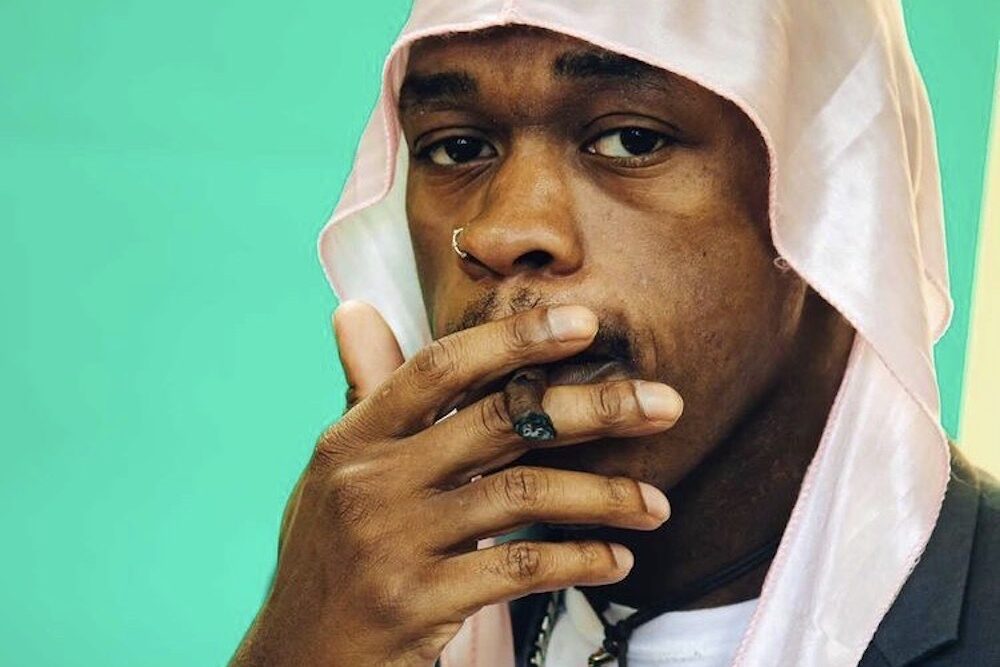
Buzzy Lee Won’t Cry Over “Spoiled Love”

Photo Credit: Julia Brokaw

Growing up as Hollywood royalty, Los Angeles musician Sasha Spielberg has always been able to indulge her creative streak, from playing bit parts in her dad’s movies to forming bands, like Wardell with brother Theo and Just Friends with fellow Brown University alum and longtime collaborator Nicolas Jaar. But since she’s stepped into her solo persona as Buzzy Lee, Spielberg has come to embody her truest form – beyond the caricatures and cameos in blockbusters – speaking the raw language of lost love and discovery of self. Her much-delayed debut LP Spoiled Love arrived last Friday via Future Classic, like a ray of warm sunshine or a timid coastal zephyr as the East Coast braced for a foot of snow.

At its heart, Spoiled Love is an authentic chronicle of past relationships. It opens up with three articulate, melodic vocal ballads. Tracks like “Strange Town” have Southern influences. And as the album progresses, “Circles” and “High On You” are more synth-heavy, not unlike Buzzy Lee’s 2018 EP, Facepaint, which Jaar also had a hand in producing. With all the different elements in the album, it comes together surprisingly well. Started in a café in Paris, then assembled throughout three seasons with Jaar (whom Spielberg affectionately refers to as Nico), Spoiled Love delivers all of the above.

First came the lyrics, entirely written in the City of Light. “I was on this European tour. I was also dating a French guy, which is very Emily In Paris. I was a complete parody of myself sitting in a café writing lyrics, holding a baguette,” Spielberg jokes. A couple days later, she headed home to Los Angeles to play the songs for Jaar. “The whole album started with just piano and vocals. The first one we started with in the studio was ‘Circles.’ We created a beat and I was playing keys, and then I came up with a melody in the room,” Spielberg recalls. “That was how we got started; this is how we always do it. We record a synth-heavy song with drums, and then we get into the deeper stuff.” 

After working with Spielberg on Facepaint, Jaar had moved to Europe, leaving her to search for another producer, but eventually she came to terms with the fact that no one else could help bring her songs to life the way he could. “When we get into a room together – I know this is so cheesy – it feels very magical,” Spielberg admits. She leaned on Jaar’s motivating guidance as much as his production ideas, particularly for the album’s title track, which Spielberg says she had been hasty about writing lyrics for.

“He was like, ‘Will you just read me the lyrics without the music?’ I knew that he was going to catch me in my bullshitting procrastination, like classic high-school, Sasha; I really plowed through and did not think about the meaning at all. I just was like, ‘The melody will do the work,’” Spielberg recalls. “Nico’s whole thing is like, ‘No. The melody can’t just do the work. The lyrics have to mean something, or else none of this is going to work.’ He put [‘Spoiled Love’] on a loop and left for a walk. For an hour and a half, I rewrote all the lyrics. After I read them back to him, he goes, ‘That’s it.’ Then we recorded ‘Spoiled Love.’”

Two tracks tie together the middle of the album. While “Mendonoma” is only instrumental, it reprises the nostalgic stomp of “Strange Town” like a ghostly, lingering memory; both bring listeners back to the salty air where Spielberg once knew love, or what seemed to be love, anyway. “‘Strange Town’ is about a Northern California coastal town, a place I would go with my ex. It was a place I could be exactly who he wanted me to be, without the distractions of my daily routine in L.A., which he did not approve of,” Spielberg remembers. “He really loved the person I was in Gualala, because we were walking all day, we weren’t on our phones. We were on the beach, we were in the forest, we were by the river. It was just so haunting there.” Even though it was a turbulent relationship, Spielberg stayed in it for four years, justifying her lack of resolve by revisiting these empyrean moments – a behavior anyone who’s suffered silently in a toxic relationships can relate to.

Leaving one harmful cycle, Spielberg found herself in a new relationship where she felt like she was trying on a different costume. “I entered this relationship with someone who I just felt just did not approve of me. I felt like I was working so hard for his validation,” Spielberg says. “I wanted him to love me the way he loved his other girlfriend. I wanted to be this dark, mysterious person for him. We got into a fight and I went to the keyboard – very, very 16-year-old me – and just started writing.” In a moment of swearing off men forever, the single “What Has A Man Done” was born. 

The release of Spoiled Love was pushed due to the pandemic – Spielberg had been hoping she’d be able to tour and humanely connect with her fans – but as time went on, she felt the album could not be delayed much longer. “I’ve had one breakup since, and I’ve fallen in love again. It’s just a different world, though the songs still mean so much to me,” she says. She’s already set to record her next album in the middle of February, and though it’s been a struggle to write new material while anticipating the release of Spoiled Love, she’s been playing around with songs and resurrecting old voice notes.

Spielberg has also been busy with her hilarious Twitch series, Gearhead. Streaming once a week, she interviews musicians on their favorite instruments, gear technology, mics, and more. “I do a lot of different genres. I’m trying everything. I want to do country at some point. I want to just interview everyone,” she says. “It is so fun being the interviewer. My whole character is that I know nothing about gear, but I make it seem like I know everything. And then once I’m challenged, I don’t know what I’m talking about. I’m someone who’s learning about gear through these interviews.”

She easily rattles off the vintage synths she’d love to add to her own collection: “I really want an OB-6, Oberheim. Dear Wishlist, I want a Prophet. Udo, U-D-O, super sick synthesizer. I want that too.” She plans to continue the series throughout the year, and has exciting guests joining at the end of February. To complete her gifted trifecta, you can also get an original Sasha Spielberg watercolor painting of your pet

With these multiple avenues for her unbridled creativity, she has found some internal validation. Many lessons were learned from her sequence of heartaches, her songs reading like a diary of deliverance. While writing the album was not a cure-all, these past relationships made her reflect on why she was doing the same dance. The time spent spinning her wheels cannot be taken back, but she doesn’t grieve over it.

There is still one thing she feels robbed of, though – live performances. “I do need that fix. There is something so exciting about going on stage,” she says. “There’s an adrenaline rush, and then if people are into it, it just fills you with so much. I can get lost in a performance – which again sounds so cheesy – but if I can get lost and I’m completely present, there’s no better feeling.”

Follow Buzzy Lee on Facebook and Instagram for ongoing updates.
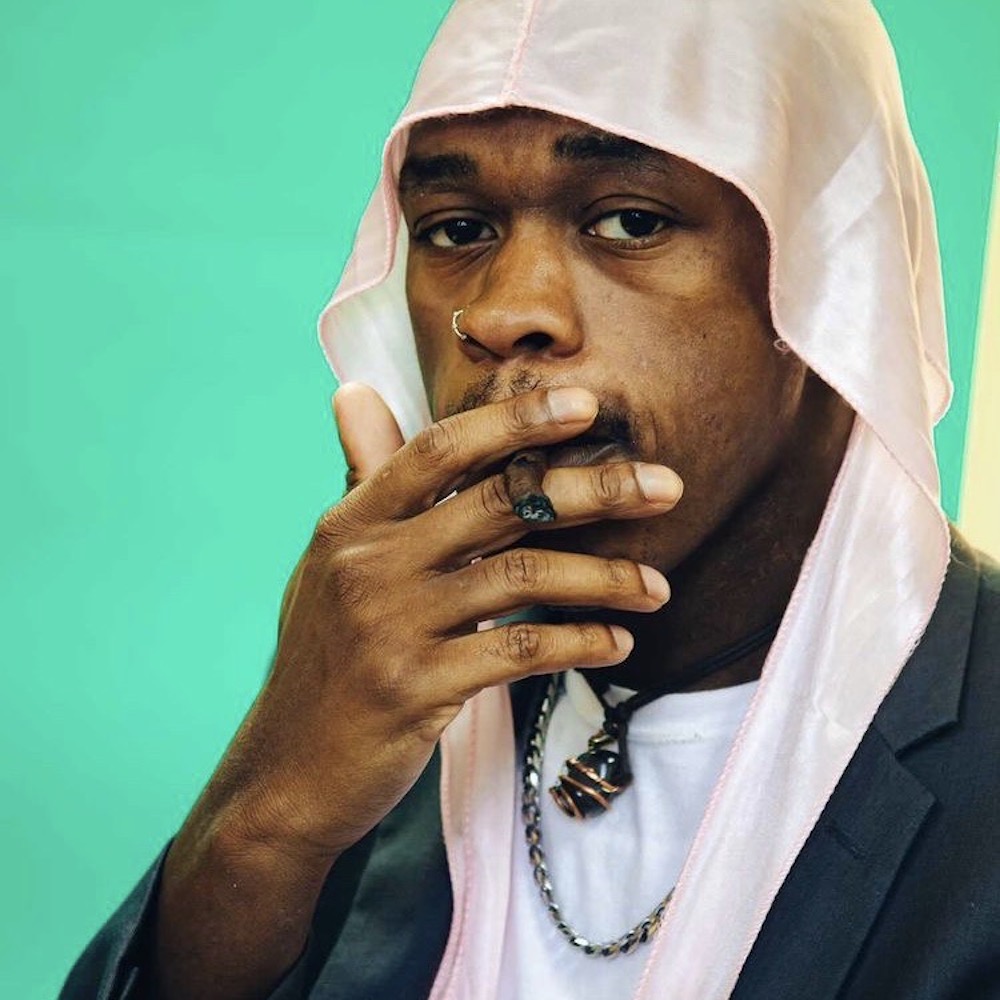
Latin Grammy-nominated Nathy Peluso Provokes Raw Emotion on Debut LP Calambre

The birth of Argentine trap exists as one of the most promising and evocative musical trends for 2021 – and at the forefront of the buzz sits Nathy Peluso, a queen riding on the worldwide embrace of Latin sounds spanning from rhumba, salsa, and Cuban ballroom styles, to its ’90s rebirth helmed by producer Sergio George (who worked with Marc Anthony, Jennifer Lopez, La India and more), to today’s Billboard-topping smash hits like “‘Despacito.” With a modern twist and a dramatic presence, Peluso’s in-your-face persona and genre defying repertoire will leave a mark on your musical memory.

On her bold debut LP Calambre, the Barcelona-based, Argentine-born artist exhibits stylistic versatility, including trap beats, retro R&B toplines, and a fresh take on old-school salsa. After moving to Spain with her family at age 10, she spent her adolescence discovering hip hop via artists such as Notorious B.I.G., Snoop Dogg, 50 Cent and Timbaland. She became enthralled by hip hop’s subversive attitude, although she wasn’t immediately able to translate the deeper meaning behind the lyrics.

Discovering her ability to freestyle, rhyme, and harmonize opened up endless musical possibilities for Peluso. 2017’s trap-driven debut single “Corashe” illustrates a modest Peluso, a vocalist and M.C. of wisdom and quick witted words. By 2020, she had evolved to a stylized, technicolor Y2K pop icon, drawing comparisons to Lady Gaga with “Business Woman.” With a natural affinity for grand gestures, and performative characters, she hopscotches between styles, genres, dynamic accents, and cultural languages. “I don’t want to please. I want to provoke,” she explains.

A natural beauty reminiscent of late pop sensation Selena, Peluso is an accomplished performer who breaks the mold in the current Latin urban pop landscape with her unique flow and hyper magnetic energy. With the fusion of cutting edge sounds, fashion forward fits, and her ability to incorporate unique crossover elements into her music, she’s carving out her own sacred space in the entertainment industry.

“My influences go in many different directions because I’m a music-lover and I revel in discovering and fusing genres that wouldn’t appear to have anything in common but that I enjoy mixing,” she says, before rattling off numerous inspirations. “From Brazil, I listen to Antônio Carlos Jobim and Caetano Veloso. When I’m listening to boleros, I like to hear Celia Cruz and Antonio Machin. For tangos, Anibal Troilo. My favorite salsa artists are Héctor Lavoe, Willie Colón, Ray Barretto. I have always listened to jazz – my heart belongs to Ella Fitzgerald, Etta James, Louis Armstrong, Ray Charles. Of course, hip-hop – Dr. Dre, Timbaland, J Dilla; as well as female rappers like Missy Elliott, Lil’ Kim, or Foxy Brown who have contributed a lot to my way of understanding and challenging myself in hip hop.”

Visceral and vulnerable, sexy yet understated, onstage and in the digital arena, Peluso’s unique sensibilities have garnered her a cult following. Before signing with Sony, Peluso released two independent EPs that gained her acclaim in the underground urban and alternative scenes in Spain: 2017’s Esmeralda, a collection of singles; and 2018’s La Sandunguera, in which she ironically channeled a tongue-in-cheek version of a fiercely empowered Latina femme fatale. “I get really bored being the same person. I like to dig for characters inside of me,” Peluso explains. “Sometimes it’s for the drama, sometimes just to laugh. It’s all a reflection of what I have inside me, that intensity.” With the success of La Sandunguera, Peluso played in her native Argentina for the first time and made her North American debut at the Latin Alternative Music Conference (LAMC) in New York City’s Central Park.  

“My career is entertainment, not just music,” Peluso asserts. That fearlessness drives the overarching concept for Calambre, including its Grace Jones-inspired album cover.  “I’m the one who takes the plug and causes the shock – of passion, happiness, whatever it is, I want to stir people’s guts without them being able to contain themselves.”

Peluso made her grand debut at the 21st Annual Latin Grammy Awards in November 2020, performing Calambe track “Buenos Aires,” which was nominated for Best Alternative Song (Peluso also earned a Latin Grammy nomination for Best New Artist). Taking a step back from her modern M.C. persona, she was backed by Argentinian singer and pianist Fito Paez for soulful rendition of the single. Peluso’s sultry and expressive tone exuded true star power, while her seamless contemporary choreography was hypnotic.

https://www.youtube.com/watch?t=156&v=IyAmbm6Sd0k&feature=youtu.be&ab_channel=CALAMBRE

“I’ve always felt linked to dance even when I wasn’t consciously aware of it. I always intuitively moved my body when I sang,” Peluso says. “As a child I would watch myself in the mirror and dance for fun. As I developed my talents, dance became more intentional, and I began studying professionally. I’ve been preparing the fusion of these art forms since I realized this was my passion. It makes me really happy to share this with the world.”

In the Agustin Puente-directed video for “Delito,” the third single from Calambre, Peluso breaks out a full flashdance routine in a dimly lit tavern surrounded by unassuming poker players, though not a head turns in disbelief as the floor becomes her stage. Whimsical shots and Peluso’s dynamic energy illustrate the turbulence of hedonistic debauchery, while seedy settings and stark cinematography evoke Buffalo 66 or Bertolucci’s The Dreamers. The song describes the pure lust fueling an intoxicating relationship; its lyrics were written entirely by Peluso and the music was produced by her frequent collaborators, including Rafa Arcaute, Fede Vindver, RVNES (Kali Uchis), and Pearl Lion (Bad Bunny, Juice WRLD). While the young couple indulge in tension-filled entanglement, Peluso demands eye contact from the viewer – a recurring motif of agency and dominance.

Many fans experience deeper political undertones in Peluso’s songs relating to Argentina’s past and current economic crisis. Listening closely, those motifs surface within Peluso’s music, though it’s usually only after the track is completed that she realizes how closely her themes connect with the political climate of Latin America. 

“I learn a great deal about my songs after they’re written – it’s like there are hidden messages that are between the lines,” Peluso says. “In the end, I’m just another citizen. I’m a woman who lives my life and has situations presented to me. That is what’s most interesting to me – taking inspiration from regular daily life as a woman, an individual person in the world. I often learn from my audience who are on this same journey. Through their interpretation and thought process, I in turn learn from them. It’s fascinating.”

Empowering Calambre cut “Sana Sana,” full of bravado and infectious rhythm, couches Peluso’s viewpoints in symbolism from a classic nursery rhyme that parents sing to children when they’re hurt (sana translates to “heal”) with both its title and the appearance of an amphibian friend in the video. Peluso often takes inspiration from memories of her childhood. “I believe that childhood appears naturally in my songs because I admire its magic,” she says. “It inspires me to reconnect with that part of myself. It’s an essential element of the human experience.” She’s touting the importance of monetary agency, of protecting what’s rightfully yours, and it works on a personal level as well as in the grander scope of Latin American politics.

Ultimately, Nathy Peluso sees her blending of musical styles as political in and of itself. “I grew up listening to music in English and it captivates me; I’ve learned a lot from it on my quest as an artist, a composer and a lyricist. I truly believe musical styles can live together independently of the language,” she says. “As a lyricist, it’s important to study how I can make the sounds that we Hispanics are used to listening to with English lyrics, while still getting the message across in Spanish in a natural, unforced and beautiful way. Many of the genres that I listen to and work on are predominantly recorded in English. However, I really enjoy transforming and giving them form in Spanish. I feel that the more they mix amongst themselves, the richer the result, and the greater impact the music will make on the world.”

Follow Nathy Peluso on Instagram for ongoing updates.

Rowan Niemisto Returns with Relatable Sadboy Anthems on Once Again EP

It’s been three and a half years since Rowan Niemisto released his electro R&B masterpiece Gradient. In those three years, Niemisto says he was preoccupied with his first “big boy” job at Detroit’s NPR station, WDET, where he works as a sound engineer and the occasional cameo as a voice actor for various underwriter advertisements. The Rowan Niemisto who voices ads for the local pet daycare and arts university feels like a completely different person than the sultry singer-songwriter that authors and performs his latest EP, Once Again. But maybe that’s part of what makes him so appealing. Besides his universally loveable voice, relatable lyrics and nostalgic/soulful arrangements, Niemisto is just like us. He’s a regular adult with a nine-to-five job who doesn’t have any dreams of grandeur, but picks up the pen whenever he feels moved. 

“I just like making music and putting it out,” Niemisto puts it plainly. “I’m not trying to be the guy that makes it if that makes sense.” And it would, if his voice and guitar playing weren’t so goddamn angelic. Your everyday casual guitar strummer just can’t write the kind of music that Niemisto creates. With Once Again, he builds a world of hurt and healing, love and loss. His voice careens over a bed of masterful guitar playing and effortless live arrangements, which were recorded in a single studio session. 

After three years of writing and ripping up forgotten songs, pandemic downtime fueled Niemisto’s latest body of work. “I had an excuse to dig my heels in and get it done,” says Niemisto. “I had no real excuse about time commitments or whatever.” And while collaborating felt impossible to most of us during the pandemic, he says that recording with a few of his friends was surprisingly easy. 

They set up some glass walls so they could see each other, went into the studio, slapped on masks, and pretty much improvised the entire EP. Niemisto came in with skeletons of songs already written, but he credits the band – Jacob Sigman (keys), Junho Kim (bass), Huntley Chamberlain (drums) and Jonah Grey (synth on “Once Again”) – for helping shape the sound of the record. “I’ve been playing with these guys for years,” explains Niemisto, “so I kind of know their style and I had trust that they’d be able to put their own spice on it and have it come out the way I wanted more or less.” 

If the way he wanted it was Isley Brothers meets badbadnotgood, then they definitely succeeded. Once Again serves the listener an all-too-familiar cocktail of unrequited love, longing, and heartbreak. But there’s something about Niemisto’s soothing voice and nonchalant melodies that makes lost love feel it’s not the end of the road, but the beginning of a new one. It’s not that he’s constantly suffering from a broken heart, but more that the morose melodies are the ones that come most naturally to him when it comes to songwriting. 

“For some reason, I find it easier to write songs in minor or songs with melancholy feels,” Niemisto muses. “Especially with lyricism, if I try to write something uplifting… it always just feels a little tacky or forced to me.” Fair enough, especially seeing as warm fuzzy feelings were definitely in short supply this year. And even though Niemisto admits he’s “sticking to the clichés,” he has a way of writing about them that feels new. 

Like in the first few words of the record – “Tell me how long, how long has it been?/Since that night we took each other in?” – reflecting on a fleeting night of a romance as an act of care and compassion instead of a flippant act on desire. Especially during a pandemic, the idea of a “one night stand” can feel careless at best and guttingly consequential at worst. To think of a night of random romance as “taking each other in” is a refreshingly tender outlook, and one we can all daydream about in these solitary times.

Whether you’re ruminating on love lost or longing for that Tinder crush that you’re too scared to meet IRL, Once Again gives us plenty of possibilities to ponder, and reassurance that we’re not alone.

Follow Rowan Niemisto on Bandcamp and Soundcloud for ongoing updates.

Vivian Leva & Riley Calcagno Ruminate on Missed Connection with “You Don’t See Me”

Photo Credit: Brendon Burton

We all live with other versions of ourselves, identities we’ve outgrown that may suddenly—and uncomfortably—reemerge when we revisit people and places from our past. How we react to these seemingly inevitable encounters is another story, and the topic of the new single “You Don’t See Me,” from Portland-based folk duo Vivian Leva and Riley Calcagno.

Specifically, “You Don’t See Me” centers on the phenomenon of how someone who was once dear to you can become a stranger over time, which Leva experienced firsthand during a strange encounter she had while visiting her hometown of Lexington, Virginia.

“I got lunch one afternoon at a great little spot called Blue Sky Bakery. I sat on a bar stool, facing the large window and looking out onto the street. As I ate my sandwich, someone I knew from high school slowly walked by the window. I waited for them to look at me so that I could wave, but they never did. I wasn’t sure whether they just didn’t see me, or if it was a purposeful choice,” Leva recalls.

Leva, the daughter of celebrated old time musicians in Lexington, was especially baffled by this person’s aloofness because they were more than an acquaintance—they were an ex-boyfriend. “It was someone I really knew, and that kind of blew my mind. I actually saw him twice and he didn’t say hi to me,” she says.

Calcagno, who has collaborated musically with Leva since the two were in high school, remembers how profoundly this impacted her, and how quickly she turned to writing “You Don’t See Me” in order to process it. “She just sat down on the couch and I remember it coming out all at once,” says Calcagno. “I think I left the house – I knew when to give her space to think about it.”

Fittingly, “You Don’t See Me” possesses a sort of nostalgic introspectiveness—both lyrically and sonically. There’s a bittersweet quality in Leva’s crystalline voice as it lilts against a driving guitar and violin pedal that mimics the ticking hands of time. And, as intensity builds, Leva’s exploration of this awkward encounter turns into a larger lyrical conversation about growing apart from people as we grow up—and how weird that can feel.

“A crowded room of faces I remember/From a time before/I try to wave but they turn their shoulders/They don’t know me anymore,” Leva sings. “I’m living in your little box of secrets/Where you don’t see me/And you don’t care.”

Aside from the sting anyone would feel from being snubbed, it makes sense that this cold behavior would baffle the pair. Calcagno and Leva emanate easy warmth and kindness, even in the sunlit cover image of their forthcoming self-titled album. After all, the pair grew up in the same close-knit music community, where everyone is somehow connected and old and new faces are eagerly recognized.

“I grew up playing fiddle music in Seattle,” says Calcagno. “I was actually learning tunes and hearing Viv’s parents’ music growing up, but didn’t know about her.” He still remembers sitting in the crowd at a Leva family performance in 2016, and thinking that the way Leva sang felt so familiar. When the pair finally met, they were excited to know another person in their age group skilled at playing old time music, which isn’t all that common. “I think we were inspired and struck by the generational aspect that we were having these parallel experiences,” says Calcagno.

Leva had a similar reaction herself. “On the East Coast everyone was either a couple years older than me or a little bit younger than me, and so meeting people that were at the exact same stage in life, but you know, really advanced players, was really fun,” she says.

Quickly, the pair began playing music together in an country band called The Onlies. Leva’s acclaimed 2018 solo debut, Time is Everything, which deeply considered the concept of time, featured Calcagno – but the eponymous album as a duo is the debut that finally puts them on par with one another as collaborators. It considers the ideas of distance and separation, something the duo—who sent voice memo ideas for songs across the country via text message while they were still in school in different cities—is well-accustomed to. Unexpectedly, the idea is even more resonant as we all sit in lockdown during the pandemic.

“All of these songs kind of just inherently were about distance and separation and space,” says Leva. “It’s interesting because even though it we didn’t write them in 2020, it feels really applicable to this time. We were writing it in a unique long-distance situation but now I think a lot of people are separated from loved ones.”

Today, Calcagno and Leva are both freshly graduated from college and have been living together in a house in Portland during the pandemic. Their shared living situation has allowed them to play together and remain connected to their fans and community via livestreams, like the Quarantine Happy Hour concert series (they’ll plan to play a release show for the new record as part of this concert series when the album drops on March 12 via Free Dirt Records).

“That’s been a lifeline for a lot of folks in our little scene. It was started by our friends who play in a duo called The Horsenecks,” explains Calcagno. “That’s been a really nice thing to see people and hear from people.”

Clearly, this duo—like so many of us—run on their connection to each other, the music, their fans and their community. That’s evidenced in the nuanced questions they ask in “You Don’t See Me,” as well as their biggest hopes for 2021. “Best case scenario would just be for COVID to die down, us be able to play the gigs we were supposed to play in 2020, see some friends, go to some festivals,” says Leva. One thing’s for sure, if the quality of this self-titled debut means anything: Leva and Calcagno’s next live performance will be hard to ignore.

Follow Vivian Leva & Riley Calcagno on Facebook and Instagram for ongoing updates.
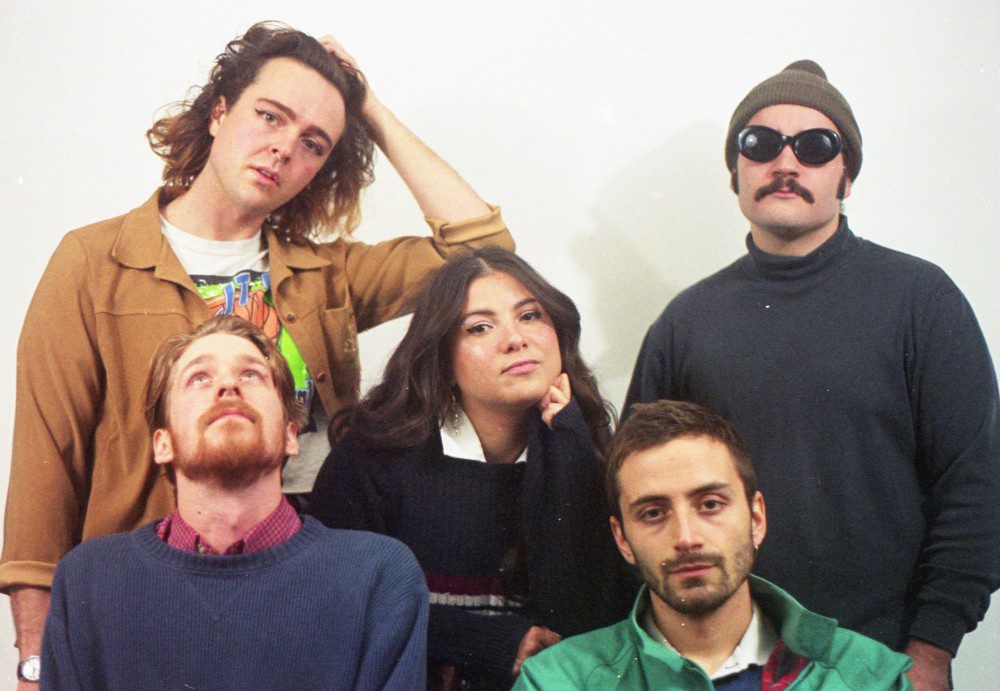
Erin Ivey Finds Inner Peace on Solace in the Wild LP

Photo Credit: Nicola Gell

Erin Ivey twirls a rose quartz that fits perfectly in her hand as our conversation begins. Gifted to her by friend and fellow artist Raina Rose, Ivey habitually takes the pretty pink crystal (meant to strengthen the heart chakra) into the recording studio with her to occupy her hands while her brain is emoting, at times holding it up to her third eye as she sings. “There’s something that just vibrates in a cool way,” Ivey says during our Zoom interview. “This one in particular has a lot of personal meaning to me because it came from a friend, and it fits. It’s like a worry stone.” Much like the reposeful stone she refers to, Ivey has long found sanctuary in music, a journey that’s reflected in her first recorded material in six years, Solace in the Wild.

Growing up as a self-described “ham” who satiated herself with a healthy artistic diet of musical theatre and live performances, Ivey was particularly drawn to the act of singing as a “self-soothing exercise.” Inspired by Debbie Gibson debut Out of the Blue, she wrote her first song at age 9 and can still recall the pad of paper on which she wrote it, emblazoned with a cat wearing a jazzercise outfit.

She discovered a deeper passion for writing in her teen years when she was gifted a journal by her friend, who filled the first page with inspirational quotes that motivated Ivey to keep writing. “I was turning to it to get my thoughts out,” she remembers.

What started as a hobby has become a prominent part of Ivey’s life – she rarely leaves the house without a journal in hand, as much a trustworthy confidant where she shares her thoughts and song ideas as it is a convenient place to jot down a to-do list. “If I don’t get that stuff out of my head, whether it’s creative or logistical, it clogs up the works and I’m very easily drowned,” she says of the “mystical” process of journaling. “It’s a way to process everything that’s going on inside and around you and also ways to capture a moment. It opens our eyes differently to translate things onto the page. That’s an everyday experience. Then you get to see what you think. It’s like a shift in perception that is so rich.” 

Ivey notes that she began songwriting “in earnest” after making the trek from her native Maryland to attend The University of Texas at Austin. She initially intended to study theatre before ending up in the business school, ultimately designing her own major – a combination of art, history and French. But songwriting “became a part of my coping mechanism more and more,” Ivey says, and by 2011, she had burst onto Austin’s legendary music scene with her Broken Gold LP. After working as a full-time musician for eight years, Ivey married husband and musician-DJ Cam Rogers and spent two years working a corporate job and a year and a half in the nonprofit sector at Black Fret. “I like bringing order to chaos,” the Austin-based singer observes of her business acumen and project management skills. “It’s a science and it’s an art.”

But fate intervened and reconnected Ivey with her musical calling when Black Fret awarded her a $10,000 grant that became the “sacred” seed money she used to make her exquisite new album, Solace in the Wild. ”I never feel more fulfilled than when I’m making [music],” Ivey says. “There’s nothing that can take the place of music and live performance. There’s no better, soul-filling endeavor than that. All of the negative parts are superseded by this magic of music, this need to have that in my life to remain sane and balanced.”

For the past decade, Ivey has maintained contact with producer Chuck Pinnell after they worked together on 2011 compilation Dark River, which features Civil War era songs reimagined by Austin artists. He’s contributed arrangements to the lyrics that Ivey has been crafting over the years, and during one of their routine Friday sessions, Pinnell presented her with the title “Lost Girl.” It immediately send a flood of images to Ivey’s mind: a young girl floating in Hamilton Pool, an ancient swimming hole in Texas; a forest on fire surrounding the girl as she peacefully floats in the sanctuary of the water.

The song’s defining lyric became the album’s title and embodied the message she wanted to share with the world. “In that context, it means there is solace in the wild when everything’s on fire. When shit is going wrong, you can still find your center,” Ivey explains. “It’s something that we actually have to do. We have to pay attention how we get there.”

Solace in the Wild comes to life in the form of 10 gorgeously arranged songs that showcase Ivey’s angelic voice. She holds enduring notes in the gentlest ways, as demonstrated on the relaxing “Joy” and the stirring “Jealousy” alike, while the album’s lyrics reflect her brilliant mind.

The album as a whole is drawn from a well of deep curiosity, creating a potent combination of profound thought and emotion that covers humanity’s plight through the ages. For instance, “Dust Bowl” sees the self-professed “history nerd” exploring the drought, displacement, and depression suffered by farmers in the 1930s. “I feel for those people and their stories, and the humanity in that is so palpable,” she empathizes.

But one of the album’s most reflective moments arrives in “Charleston,” a track that calls for healing in direct response to the racially-motivated church shooting that occurred in 2015. Each line is crafted in a way that causes the listener pause, particularly the thought-provoking probe of a chorus: “It is for the good not to be silent/We are all reflections of ourselves/We cannot sit by and abide violence against anybody else.”

Ivey reveals that she originally had misgivings about releasing the song due to its sensitive nature, comparing the subject matter to an “open wound.” But after some encouragement from friends in the South Carolina city, she weaved it into the album as an exercise in helping others reflect on where we’ve gone wrong in the past. “As worked up as people get about politics, I tend to try to be really careful about what I say and how I say it. I think it’s important so that we can keep having conversations even when we disagree,” she continues. “But it is very true that I believe those things. I wrote the song to comfort myself and to try and wrestle with this evil that continues to recur.”

For Ivey, “solace” is the “personal peace that is juxtaposed against something that would keep you from it,” which she finds through such purely simple acts as “dialoguing with my inner child” in her journal, gazing at a burning candle and cradling her rose quartz. “I wanted something that would remind me… that if I do not do that writing, if I cannot find that solace, if I don’t have a mug of something warm, if I don’t take a hot bath and light a candle, if I don’t prepare myself in that way for the world, I show up haggard and cruel,” Ivey says. “I wanted to show up for this album in a way that would allow me to have it show up for me.”

She hopes that, even if Solace in the Wild doesn’t always make listeners feel better, they at least feel something. “Sometimes I think it’s my job to help people feel their feelings, and then maybe to help me feel my feelings,” she explains. “I hope that people enjoy the songs and that they identify with pieces of them; that they are called back to listen again and again and make these songs a part of their life or part of their exploration.” 

Follow Erin Ivey on Instagram, Twitter and Facebook for ongoing updates.

Jocelyn Mackenzie Connects with Her Purpose on Debut Solo LP PUSH

Photo Credit: Ester Segretto

“Purpose is a feeling. It’s not a goal,” stresses Jocelyn Mackenzie. The New York singer-songwriter, formerly of acclaimed indie-folk trio Pearl and the Beard, speaks emphatically about her solo work and the long, winding road it took to get here. Her debut album, PUSH, splits open with gushing string arrangements, bound tightly like holiday ribbon around stories of pain, trauma, and eventually “radical self-love,” a theme she never expected to emerge.

With some songs dating back more than a decade, the process evoked plenty of anxiety about what it all would ultimately mean. Her psychic medium mentor (more on that later) was quick to remind her that one’s purpose is “how you feel, not what your goals are,” she tells Audiofemme. “PUSH has been a goal of mine, [but] the purpose of it is to feel connected to other people… I continue to do that through this music. The great thing about recorded music is that it’s timeless. It travels through space and time. Someone across the world can be listening to this 25 years from now. There’s an infinity to this process.”

Co-produced with Sam McCormally, PUSH is like thunder cracking across the sky. With the help of five composers, who were given total creative control over their arrangements, Mackenzie’s lyrics are given a life they may not have had otherwise. “Audubon Garden,” for example, gurgles with a Shovels & Rope swampiness, Mackenzie dishing up one of the defining vocal performances of the bunch. Composer Franz Nicolay leans into devilish rhythms that seem to inject a bit of crackling mysticism. Later, closing number “Little Islands” ebbs and flows, a dream-like quality rising like fog ─ owed to former bandmate Emily Hope Price’s fragile, stirring arrangement.

Mackenzie had been stockpiling demos for quite some time, “not really knowing what I was going to do with them,” she says. Once she got the itch to take that next step in the album creation process, she handed out 19 demos to a small composer pool to see which songs resonated most with them. “I was really letting the album create itself. I couldn’t be more thrilled,” she says. “For the most part, I wanted the composers to do their thing. They would send me a draft, and I would [sign off].”

Of course, she doesn’t undersell her personal expedition through pain to enlightened healing, and hopes listeners will relate to the catharsis she experienced in finally putting the songs to tape. “The album wasn’t really written in response to anything in the exterior world. It was a lot of reflections on my inner world,” she says. “Have I healed? You know what, fuck it, I think I have. I think there’s always new healing to be found. I also think healing, for me, gets more and more subtle the more layers you work through.”

One of the most traumatic layers Mackenzie sifted through was a miscarriage in her early 20s. “That was very, very painful,” she admits. Now that she’s done plenty of songwriting about it, namely with the gut-punching “Primate,” she “can’t say that wound is closed, and it’ll never open again. But it resurfaces in subtler and subtler ways. I’m 37, and sometimes, I’ll imagine: what if I had a 12-year-old kid? It’s not like it ever goes away and that healing is ever finished, but I think I’ve learned how to live with the subtleties of it in a more sustainable way… A big part of it for me is treating myself with love. If I have an emotional moment when something comes up, and I feel untethered, to go, ‘what’s the loving way to treat myself so I can move through this and not blame myself?’”

With “Look at Me,” she further casts out trauma, firmly confronting sexual assault but also learning to forgive. “It’s the kind of thing that happens all the time. I don’t really know a single female-identifying friend of mine who hasn’t experienced it, as well as some male and non-gender conforming friends,” she explains. Forgiving her abuser became Mackenzie’s way of breaking the cycle of generational trauma even further “by not resenting this person,” rather than be fueled by unbridled rage. “I won’t hold your pain, won’t turn it into mine/I’ll heal seven generations at the same time,” she crows through Price’s needle-pricking arrangement. She says she had to “make the choice to face the fear and the hurt” so she wouldn’t continue such a vicious, relentless cycle.

“It’s been scary, but it’s been absolutely healing. It’s not up to me to make that choice for anybody else,” she adds. “The way Emily treated [this song] with such love allowed me to look at my experience from an elevated standpoint and say, ‘Yes, I went through this thing that was completely horrifying. The person who did this to me went through horrible things themselves.’ And that’s not to say I condone that behavior. I do not… but I can forgive it because I understand… what I experienced was a diminished form of abuse of what they experienced. Forgiveness and condoning are two different things.”

As heavy as PUSH often is, Mackenzie makes sure to inject a bit of levity through some twisted, dark humor. “Sick & Suffering” is a prime example: “Oh the whisker I grow, it won’t bother me no more/When it grows six feet under ground,” she sings. “And the shoes that I own that pinch my big toe/Won’t pinch the toe the tag hangs around.” Over McCormally’s off-kilter string arrangement, Mackenzie “acknowledges that my brain is wired for the worst case scenario,” she says with a laugh. “It’s constantly telling me it’s the end of the world and I’m going to die alone. I’m incredibly insecure. Sam’s arrangement really made it funnier for me. Humor can be so important in healing.”

“There She Goes” swerves back to a more serious mood, handling a breakup with an ex who came out as transgender and was faced with ostracization from their family and friends. With Patrick Breiner’s unsettling, reality-blurring arrangement that feels like something out of a Tim Burton film, Mackenzie approaches the topic with the utmost care, focusing less on her own heartache and more on the pain her ex endured after coming out. “A lot of pain could have been avoided if our world and society supported transgender people in a better way, so they were never put into this position to begin with,” Mackenzie points out.

“I know this piece of you is true/So go and get her ‘fore she gets the best of you,” she sings, the tension slowly building. “Everyone is worthy of patience/Everyone is worthy of love,” she continues, not letting bitterness drown her words. “But love can’t come from anybody ’til you give it to yourself.”

“I was overwhelmed with glee when I heard this arrangement,” Mackenzie says. “Patrick is an incredible, nuanced composer. When I told the composers to do whatever they wanted, Patrick took the prompt and ran with it the farthest, and I was so excited he did.”

The whimsical follow-up, “Belly of the Beast,” comes out of nowhere, its throwback style quite a musical treat. Mackenzie was doing dishes one day when it hit her as a bolt of lightning. “I imagined it being sung by a gay barber shop quartet,” she remembers. Two gay friends, Anthony Napoletano and Mike Nelson, supply plush vocal work. Unlike the rest of the album, the string arrangement (courtesy of Nicolay) is kept sparse, giving the track an a cappella vibe.

“[This song] is really about the music industry eating you alive,” offers Mackenzie, adding that despite the amazing promise it holds for artists, the industry is “still feeding itself on souls,” she chuckles. “I believe music is our divine birthright, and the industry took it and commoditized it. It’s very challenging. We live in a capitalist society. There’s no shame in needing money.” 

Macknezie’s journey with PUSH is undeniably hitched to her spiritual awakening over the last two years. Growing up, she was always an extra-sensory kind of person, privy to feelings far beyond the here and now ─ but “there was a single day when I had my awakening, and it was a total shift for me, as far as being a human being in this world,” she remembers of the fateful day everything changed: July 28, 2019. “I’ll never forget it. It was amazing, but also really intense.”

Mackenzie says, “For years and years before that, I had experienced a lot of synchronicity” – from finding collaborators who would become bandmates in Pearl and the Beard, to meeting legendary musician Ani DiFranco (who would eventually release PUSH via her label, Righteous Babe Records). Mackenzie began a deep-dive into YouTube’s psychic medium world and discovered Nicky Sutton; one video in particular struck her, and Mackenzie sought out a local circle to entertain the possibility that she was a medium, as well.

She found a meet-up the very next day, two blocks away from her day job, and 15 minutes after her shift. Her destiny could not have been more aligned. “I had had plans that night that got canceled. So, I went and showed up,” Mackenzie recalls. “I sat down, and the teacher was like, ‘Okay, now you’re going to give each other readings.’ I raised my hand and said, ‘I’ve never done this before.’ She laughed in my face and said, ‘Not in this lifetime, honey.’ That night, I gave my first two readings. She gave me some tools and said, ‘Trust yourself.’ After that, it was like a light switch flipped on. I ended up connecting with a really amazing mentor who has really trained me. It’s been incredibly enriching and a beautiful gift.”

Humanity has a long history of seeking out such avenues to connect with the dead, the afterlife, and deeper, more sensitive emotional ties. “Music is something that does that for us,” Mackenzie notes of music’s innate divinity. “It’s not all that radical to say music is a spiritual experience. It’s immaterial. You can’t put a price on it. Even when you’re at a show ─ sure, you pay for the price of a ticket ─ but the experience… what’s the price you’d pay for your favorite song if it had never been written? You can’t put a price on that.”

Now, as PUSH flies wild and free in the world, Mackenzie takes stock of what the process of making the album has taught her. “I’m more patient than I realized. I’ve always thought of myself as an instant gratification person. But this album has been a labor of love,” she offers. “I always believed it was possible to do whatever I want. I’ve always drank the Kool-Aid of the American dream. And I’ve wanted this for so long, and now it’s really happening. So many people helped. I’ve learned how to ask for help and get out of my own way. Everything is possible. We have to let it happen to us.”

Follow Jocelyn Mackenzie on Twitter and Instagram for ongoing updates.
Lia Ices is Honestly Happy on the Mountain

Photo Credit: Renee Friedrich

In 2014, after Lia Ices released her third album Ices—her first time adorning her ethereal piano with electronic loops—she realized she needed to recommit to her intuition’s call. She took a break from recording and touring, but she hardly lay fallow. Instead, she got married and moved from New York to Sonoma, California’s Moon Mountain, where her husband, Andrew Mariani, co-owns Scribe Winery. They now have two young daughters, Una and Alice. On new record Family Album, released on Ices’ own Natural Music, the singer-songwriter celebrates the bounty she’s found.

As Ices fell in love with the landscape and her daughters, her new reality felt downright hallucinatory. “The more real it is, the more surreal it feels,” says Ices. “That sentiment came to me throughout pregnancy and right after I gave birth to [my first daughter] Una. It’s the most primal, mammalian thing you can do, birthing a baby, yet it was very psychedelic. After I gave birth I felt like I was on acid. The same goes for living in such a crazily beautiful, abundant place.”

In tribute to the motherhood and landscape that nourished Ices’ creativity, the singer-songwriter built a living altar. “I went to the garden and got all these roses and plums and made an altar for my living self,” Ices says. “There’s something to bringing in all these pieces from nature. There’s always been this motif of conjuring spirit. The meaning of the album keeps deepening after it’s done. The waves keep coming.” Family Album nixes the electronics, returning to songs that highlight her piano and vocals, with and without a backing band. The music moves effortlessly through Americana and psychedelia just as much as minimalist piano and vocals.

Returning to the piano also signified an assertion of creative control, one which led Ices and her husband to start Natural Music. There’s an easiness to her recent output, and it proves that being raw doesn’t always have to be heavy. “I couldn’t do anything but be totally honest. These songs started coming from a pure, organic place. My only motto was to let what happens happen naturally,” Ices says. “Sitting at the piano is something I hadn’t done in a long time. I abandoned it on purpose just to see what it’s like. This time I leaned into my surroundings and let them take over me.”

“Young on the Mountain,” the album’s third track, is the first one Ices penned for the album. With its upbeat tempo, lilting vocals, and spacious “oohs,” the song is a welcoming to Ices’ big new sky and the music birthed beneath it. Her songs are infused with spirit, with nature, with universal forces like synergy—and yet, she doesn’t even creep near New Age territory. Instead, these are the genuine testimonies of a woman preoccupied with the capital-M Mysteries of existence.

Among them are the synchronicities that kept piling up as she made the new record. “The more people I worked with on the project, the more I realized they knew each other. There were these crazy overlaps,” she recalls. Those working relationships included her producer JR White (best known as half of indie band Girls), who recently passed away. White heard the final album before his death, lending a bit of closure. “Now that JR passed during the cycle, it makes the album mean so much to me,” Ices says.

The fact that she feels White’s presence in the album deepens the mystery, not just of the music, but of the immortality of creative forces. Ices speaks often about the Muse, though her definition is always in flux. At present, she sees the Muse in more pragmatic ways than one might expect. “I think pregnancy and motherhood support the idea of the Muse. Being a mother and an artist at the same time, I can be more expedient with my means. I used to tinker and not trust my gut. But when you don’t have all the hours of the day, you can access what you need to access quicker,” she says.  The Muse also relies on dedication, she adds, saying that it’s “not a romantic thing. My biggest takeaway is that if I don’t show up, the Muse won’t show up. Showing up is more than half the battle. Even if you don’t feel like showing up, you have to do it and allow for the possibilities, which can be terrifying.”

“We’re on our way to go anywhere at all,” Ices sings on “Anywhere At All.” In her own life, she dove into that anywhere – it’s no wonder she had the confidence to follow her intuition, embrace risk, and sing honestly about beautiful, mysterious things.

Follow Lia Ices on Facebook and Instagram for ongoing updates.
Sarah Mary Chadwick Makes Friends with Ennui

Photo Credit: Simon J Karis

Multi-instrumentalist, visual artist and intrepidly candid singer-songwriter Sarah Mary Chadwick will release her seventh full length studio album, Me and Ennui Are Friends, Baby, on Friday, February 5th, via Ba Da Bing Records/Rice is Nice. Known both for her solo work and for a decade spent as frontperson of Batrider – which formed while Chadwick and her bandmates were still in high school in New Zealand – Chadwick has explored some dark places and difficult terrain. Going solo certainly sent her on a new trajectory – one that has kept listeners compelled to discover what she’s just done and what she’s doing next. Her latest album justifies plenty of curiosity and attention, not only for its exploration of intense emotions – she is, as ever, starkly honest, articulate and unfiltered – but also for the approach to recording it.

Ennui is almost entirely singing and piano, all recorded live in one day with Chadwick’s friend, bass player Geoffrey O’Connor. Chadwick and O’Connor recorded on a Yamaha upright piano in her friend’s studio. The upright added to the “bar-roomy feel of the record, which wasn’t intentional but definitely came through when we were recording,” Chadwick says.

It immediately follows 2020’s Please, Daddy – a painful, introspective work that, according to Chadwick, was more ambitious in terms of instrumentation. Though it seemed a logical trajectory to do something more complicated after its release, the stripped-down nature of Ennui is a result of Chadwick’s conscious desire to free herself of expectation. “The last record had Geoff engineering, a drum and four other musicians. This was just me and Geoff sitting in a small, intimate room for a whole day,” she says.

“In terms of doing it in one day, my thinking has always been that there’s only so good I can play and sing a song,” explains Chadwick. “It doesn’t get better if I do it 50 times. I think you lose a lot of energy if you iron things out. I wanted to capture a lot of energy in this record. I usually only record in one or two days, with only two or three takes of a song.”

It’s all part of Chadwick’s effort to retain some of that “demo energy” when recording songs for her albums. “My process is the same for music and visual art. Working fast, you’re not afforded the space to second-guess decisions, so you get into the habit of making decisions quickly; you just make choices to realise what you think is important,” she says. “For me, that energy is so important. If you’re doing it right, you’re making good decisions that enable you to realise what is important about art.”

Even while making choices that seem intuitive rather than heavily and lengthily considered, Chadwick is deliberate. One of those choices is the cover art for the album, revealing her parted legs in shorts that don’t cover everything. It’s quite brave, confronting even. “I wanted to free myself up from having to put my own artwork on the cover every time,” she says. “It’s a candid photo that my partner took. I like the colours of it. It works well as a cover and as an image. The album itself is quite earnest in parts, so it’s a nice counterpoint to have something a bit garish, a big vulgar, as cover art.”

Chadwick is very much in the practice of constant creation, always engaged with visual art and music. When putting together a record, she books the studio three months prior and works each week on new songs, which typically take half an hour to an hour. “When I was quite young, I was concerned with stagnant periods and writing block but now I don’t encounter that ever,” she admits. “Doing lots of work subsequently makes me feel not guilty for when I don’t want to work or can’t be bothered. It makes my downtime guilt-free. I have always been in the habit of having something ticking over.”

Having the deadline ensures she has selected songs which are in the process and refines them in preparation. She’s already working on the next album and is considering doing demos to prepare, in contrast to the off-the-cuff nature of Ennui. “I’m always writing,” she says. “Because we’re just about to put this one out, I don’t feel pressure to rush the next one, which means the next one will come pretty easily.”

Perhaps, for Chadwick, there is a security in constant creation and self-analysis, working hand-in-glove to keep her on an even keel. Readers, beware: the following discussion may be triggering or difficult; those struggling with mental health issues may want to take a breather here.

Both Ennui and Daddy are the continuation of a trilogy of albums, beginning with The Queen Who Stole the Sky, that focus on Chadwick’s attempt to take her own life in 2019, following the death of her father and a close friend, as well as the intense breakup of a long-term relationship. They openly explore the event itself as well as the trauma that precipitated it, and continue the healing process Chadwick has undergone in its aftermath, particularly her views on psychoanalytic therapy.

“I’ve always had, since a child, depression and anxiety, but it’s gotten a lot better in the past six years. I’ve always seen psychologists on and off since I was a teenager but never found it particularly useful and was disappointed by it no matter how much work I put into it,” admits Chadwick. “It became clear that it wasn’t my fault. I started psychoanalysis and that was far more rewarding. The more I put into it, the more it gave back.”

Rather than process first and write later, Chadwick made the writing of these albums part of her journey toward healing. “Did I want to explore it? Definitely, I did,” she says. “I was in treatment five times a week afterwards, and the experience only informed my creative process. I draw unconsciously and very naturally on day-to-day things.”

Chadwick has released her latest batch of records through Rice Is Nice, run by Julia Wilson and Lulu Rae. Chadwick met Jules through an ex-girlfriend. “Jules is a really, really dear friend and a great person,” Chadwick says. “We’ve worked together since 2015 and done over four records together. Jules works super hard on things for me and she’s not doing it for finance, since I’m a relatively small artist, so I’m really grateful for the fact she does so much because she loves me and she loves my work.”

Chadwick is scheduled to do a series of launch events, in which she’ll play music from the trilogy of albums for small crowds in Melbourne. The events will be live-streamed so international audiences can tune in.

Despite the emotional weight of Ennui, there’s something triumphant in its self-deprecating tone. Perhaps Chadwick’s Bandcamp describes it best: “On Ennui, Chadwick is free, there is nowhere for her or us to run from the need to very presently and repeatedly articulate her trauma until it is simply, ‘articulated out.'” Another brave choice from an artist who, decades into her career, still stuns with her bravery.

Follow Sarah Mary Chadwick on Instagram and Facebook for ongoing updates.

Delvon Lamarr Organ Trio Deliver on a Promise with Sophomore LP I Told You So

Photo Credit: Francis A. Willey

With the release of their newest album, I Told You So, which drops today on Colemine Records, Seattle’s simmering soul-jazz Delvon Lamarr Organ Trio deliver on a promise they made to their fans more than two years ago.

Shortly after the 2018 release of their debut album, Close But No Cigar, the trio’s long-time drummer, David McGraw, departed the band, leaving fans disappointed and worried that the trio would lose their quintessential in-the-pocket sound.

“David has such a distinct way of drumming. It was very pocket, very soul. It was like Motown-type soul drumming. And we’ve never really had anybody that played like that. So when David left the band it was a lot of people were worrying about well they’re not going to sound the same,” says bandleader Delvon Lamarr. “I told them, I will find the right drummer. The album is called I Told You So because I told you guys the album is still going to be good regardless of who’s on it.”

While the album’s title is tongue-in-cheek, it more than fulfills that prediction. Featuring Lamarr on organ, the incomparable Jimmy James on guitar, and their choice for solid “pocket” drummer on the recording, Grant Schroff—from another popular Seattle group, The Polyrhythmics—I Told You So has every bit the groovy throwback sound their debut had, with some fresh additions.

While I Told You So still has plenty of that nostalgic 60’s soul-jazz vibe they’re known for, the trio brings in more diverse influences that underscore and build on their unique sound. “I think we kind of broadened the musical spectrum, like our influences, into our newest album and it’s been progressing,” Lamarr says.

In fact, several of the tracks, including the notably more melancholic “From the Streets,” embraces a low-key hip hop feel and spacious guitar loop unlike other previously-released music. Turns out that was an intentional nod toward some other music Lamarr and company are into. “I love anything by J Dilla, stuff like that. Old hip hop, I listen to a lot of cats like Slum Village and Talib Kweli. That laid back, you know—way behind the beat stuff,—D’Angelo does that a lot. That’s my thing,” he explains.

As well, the trio lays down a cool version of “Careless Whipser,” a 1984 pop ballad written by George Michael that recently had a resurgence in 2011 after The Sexy Sax Man’s satirical performance of the song on YouTube became a viral sensation. In 2021, Lamarr and company reinvent the song yet again, making the schmaltzy pop anthem and internet meme into one of the album’s most impressive and listenable bangers. Funny, because Lamarr almost didn’t record it.

“It was a thing that we did at live shows and I thought, I don’t know if anybody wants to hear this on an album. But my wife Amy [Nova] was like, ‘Dude, you gotta record it man! I think it’s going to be a hit,'” says Lamarr.

This isn’t the first time Nova has had good instincts when it comes to her husband’s music. In fact, Lamarr credits Nova as the reason behind the trio’s formation in 2015. “She built this [trio] from the ground up,” Lamarr says. “She asked me for years to start my own band and I didn’t want to. She just watched me struggle so much as a musician and she was like, ‘You’re too good for this man. You get some guys together, write some music. I’ll take care of everything else.'”

Nova was also instrumental in getting the group signed to their Ohio-based label, Colemine Records, which has the perfect retro branding and roster to complement the Delvon Lamarr Organ Trio. “They’re great, man. What I really like about them is they’re two brothers that own it, Terry and Bob, and they have the same philosophy we have in this band – we always say we just play music we like to hear and when you do that people are going to love it,” Lamarr says.

Lamarr, James, and their new permanent drummer Dan Weiss, like most of the music industry, haven’t been able to perform live or tour since the onset of COVID-19. Being stationary doesn’t come easy for the trio, who usually tour throughout Europe and Japan for most the year and are so well-known in Europe they get called out in train stations. Hence, their biggest hope for 2021—aside from hoping that I Told You So is as well-received as their debut was—is to get back out there and see their fans.

“That’s our thing. That’s what we enjoy,” says Lamarr. “It’s great to be at a studio recording. But it is what it is. I got to be on the road, I got to be on the stage. That’s my dream and goal. It’s always been.”

Follow Delvon Lamarr Organ Trio on Facebook and Instagram for ongoing updates.
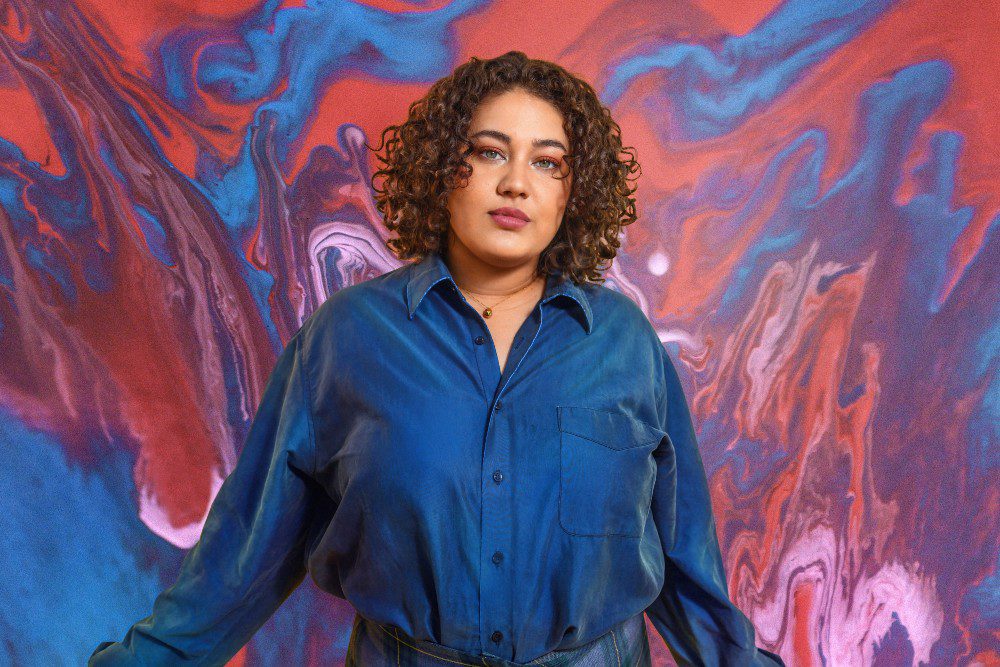
PREMIERE: Wrené Emerges From the Ashes with “Phoenix”

During a time when many are longing for renewal, the symbol of the phoenix is a beacon of hope, creating something beautiful from what seems to be destroyed. Toronto-based experimental artist Renée Mortin-Toth, known professionally as Wrené, employs this image in her latest single “Phoenix,” describing the experience of regeneration: “I’m a little songbird/if I shed the last tear, I’ve won!/My heart unlocks the cage/and I rise from the ashes.”

Wrené wrote “Phoenix” about the process of leaving an abusive relationship and “finding ways to empower yourself in these times of manipulation where you feel a lot of pressure is on you,” she says. “What I hope people can take away from it is that message of empowerment – so it can be for young women, it can be for people who are stigmatized, people who feel their feelings and worth are diminished by other people.”

The song combines an upbeat ’80s synthwave pop sound with darker melodies and lyrics, beginning with erratic synths, loud drums, and theatrically sung lyrics: “Sometimes it feels like I have no choice/and so I’m stripped of my voice/I can’t let my woes carry me through the wind.” She goes on to sing about finding independence and carving out a new life for herself.

Co-producing with her friend Joash Mendoza, she broke from her usual routine of using Logic and utilized the program Ableton, incorporating EDM elements. Many of the drum sounds are samples of organic drums that they sequenced themselves, but other than the vocals, everything is electronic.

Mortin-Toth has been singing her whole life, though she previously worked as an actor. After finding the roles available to women her age limiting, she threw herself into music and released her first album, Unharmed, last year. “Phoenix” is off her second album, Live Wire, which comes out in February.

The album is “an experiment with pop sounds and different pop elements,” she says. “But they all hold a common theme of storytelling, and a lot of them are quite darker in their tone, even if they sound more upbeat.”

The title is inspired by lyrics from “Psycho Killer” by the Talking Heads, which Wrené adapts for her album’s title track with the passionately sung line: “Don’t you fucking touch me/I’m a real live wire.” Heavy guitars create almost a metal aesthetic as she stands up to mistreatment from a lover. The song is a response to “the misogynistic pressure to be the perfect partner,” she explains.

The album as a whole, she adds, “was a project to explore the many colors of a malfunctioning mind. I’ve always been someone who’s felt like an outcast, who’s felt like I didn’t really have places to belong, and I’m kind of vouching for the people who are shut down because of that.”

Embodying this spirit, much of the album defies musical conventions. Several of the songs lack a chorus, sounding more like one long, drawn-out verse. And rather than record the vocals line by line, she went through each song in its entirety, making the vocals intentionally imperfect and rough around the edges in places.

The minimalistic “Unravel” mixes an R&B-like beat with theatrical, despondent singing — “it’s never good enough/everything is all out of place” — that focuses on the emotional impact of being shamed and gaslighted by a partner.

“Marionette,” a cinematic song influenced by ’90s rock, critiques society’s rise-and-grind mentality with powerful guitar riffs, atmospheric percussion, and lyrics like “I’m stuck in an endless search/my feet can’t seem to grow tired.”

The last song, “Secret Garden,” has an airy pop sound, using the metaphor of planting a seed to represent recovery from addiction and self-harm. “This album has a journey within each song, but as a collective, it starts off with being angrier and more defiant, and it comes around to being forgiving for yourself,” she says.

Even as she gears up to release Live Wire, Wrené is already at work on her next project, a self-produced concept album focused on string and synth sounds and aimed at creating a surreal landscape. “This one is kind of an experiment in melding the sort of classical organic sounds with very odd dark synth or electronic elements,” she says. “I like to delve into the area where lightness and darkness coalesce.”

Disparate as her music may seem, it all revolves around the central concept of self-empowerment. “I really want to get across the notion of finding empowerment within yourself,” she says. “Especially in dark times where you feel trapped, you feel weakened or invalidated, or you feel your most vulnerable, it’s really important for people listening to understand that, whatever hardship or difficulty you’re facing in your life, you have to be the one to overcome it; you have the power within yourself to do that.”

Follow Wrené on Instagram for ongoing updates.
Bel Holiday Conjures Up Healing Incantation With “Mama Mountains”

Bel Holiday needed to heal. While “dealing with insufferable loss and depression for ages,” the singer-songwriter hopped on a plane bound for Arizona, hoping to find solace within its rugged landscape. She soon “not only fell in love with, but felt an indescribably spiritual shift in self from hiking,” she says. “All motivation had magically returned, and for once, I had faith in my healing.”

However, that energy dissipated as quickly as it had come. Her new song “Mama Mountains,” featuring guitarist Mamoon, reads as a desperate “cry for help directed towards the mountains I hiked,” she tells Audiofemme. Its bluesy undercurrent gives Holiday ample room to showcase her undeniable vocal tone – honed over years spent performing in theatre – while carving out an exciting new musical path for herself. “In this song, I try to summon what I describe as ‘Mama Mountains,’ so that ‘she’ may heal me from my suffering as ‘she’ had seemed to before,” Holiday explains.

“Went to Mama Mountains/She said, ‘Take care of the limbs that you carry’/Took a mirror to glass lungs and told me that the life I been leading is scary,” Holiday sings. Every fear and ounce of pain guides her vocal acrobatics, often flying loose and wild. With producer Thalo, Holiday sculpts out a mesmerizing incantation about healing, self-awareness, and intense connection to nature.

“The [creative] process honestly involved bouncing files back and forth more than anything,” says Holiday. “Between this and being just kids, the record is definitely a bit dirty, but I see that as authentic in showcasing where I’m at as an artist and aspiring producer, as well as where I’d like to go.”

“Mama Mountains” serves as the first single to a new EP called Mess of a Mind, expected February 12. It’s a quick follow-up to Holiday’s Watermelon EP, released in August 2020. With “Mama Mountains,” the Fort Lee-based musician draws upon such influences as Hiatus Kaiyote and early (specifically +-era) Ed Sheeran, as well as multi-instrumentalist Becca Stevens. Holiday actually took a songwriting lesson with Stevens, a process in which “she provided thinking exercises and meditations that inspired me to finish the song.”

“I write at my best when I least expect it,” Holiday adds. “I’ve been dealing with some awful [writer’s] block lately, but just the other night I had a epiphany: I realized that the more I try and tell myself what to write about or how I should be writing before I get going, the less material I am able to actually come up with.”

The bridge settles upon a moment of enlightenment, and Holiday appears to regain, at least marginally, a sense of purpose and calm. “Weighted blankets heavier than if I tied you to my back,” she sings. “But in the absence of sound, I smell your dry air and I know that Mama Mountains is still there…”

While the song is explicitly directed to a mountain, Holiday hopes the listener can at least “hear my raw passion and lust for musical chaos, as this is probably the song that encompasses me best out of all that I’ve recorded thus far,” she says. “I also would really like this song to become a go-to for hippie dancing. I haven’t written super percussive, modern music like this for release before, but I would like to write more, as the thought of people letting loose and immersing themselves in my music through dance fills me with so much joy and pride.”

Follow Bel Holiday on Twitter and Instagram for ongoing updates.
PREMIERE: EVVAN Takes Pride in Individuality With “Wolf”

Photo Credit: Richard Gaston-Pierre

Long Island, NY-based folk singer-songwriter EVVAN always felt like the oddball out – a lone wolf breaking away from the pack. This used to affect her self-esteem when she was younger, but on her latest single “Wolf,” she celebrates the independence that comes from not fitting in.

“You are in a world so loud/Affected by the crowd/who don’t see you right/only want to fight,” she sings in a deep, rich voice over haunting guitars. The chorus is full of long notes containing drawn-out “oohs,” escalating into a wolf howl at the end, and poses the question: “What will you do/when the wolf comes out in you?” — EVVAN’s way of asking, “are you gonna follow the pack or be who you truly are?”

“Wolf” began as a “moody kind of soundscape song,” she says. When her drummer Jorge Balbi added a drum part, her vision for the song completely changed, and she had her engineer and guitarist Sean O’Brien laid down a lap steel guitar to help “give it that haunting spooky vibe with that flare of folk.”

The inspiration for the song began when EVVAN was watching a National Geographic documentary about wolves. “I was so fascinated by the howls and how, when you have a group of wolves, like a pack that just starts howling, it’s so musical and it’s haunting, and the song kind of builds off that,” she says. “I wanted to see what it would sound like if I put those howls to a melody, and I started crafting around that idea.”

The song also stems from EVVAN’s experience as a non-binary, pansexual person. “Ever since I was a kid, I was never one to kind of follow the norm, even down to the way that I dressed,” she says. “There were so many times I would get bullied because girls my age wore skirts and colorful clothes where I wanted to wear jeans or shorts and black.”

EVVAN’s debut EP Home, out April 30, deals in different ways with these themes of self-acceptance and belonging over the course of five tracks. In the warm, soothing “I’m Not Done Yet,” she sings about coming to understand her own gender and sexuality and open up about it even as the people around her warned her to “stay in the dark” or that “it’s not the right time” to come out.

“It’s never the right time to come out and say ‘I’m pansexual,'” she says. “We are either afraid of it or we want you to hide it. We don’t like that you’re different from the norm. And through this song, I was able to use what people told me to create this anthem [that says] keep throwing whatever you have at me, but I’m not done yet. I still carry who I am with me, and it’s gonna stay with me forever.”

Perhaps the catchiest song on the EP is bluesy single “Hurricane,” where EVVAN sings about a relationship that starts off fairly calm and then surprisingly blows up like said natural disaster. “You have that honeymoon phase and you think nothing could ever go wrong, but the doors were blown off, the windows were blown off, it was just a house in the middle of a hurricane,” she explains. “It was really just a song that allows me to express the kind of pain that I felt, but also the cathartic revelation where I’m actually okay with this — I have my moment of hate but I’m fine now, I’m refreshed, I’m over you.”

The influence of Fleetwood Mac is evident in EVVAN’s voice, while her love of Milo Greene is more audible in her folky instrumentals. Milo Greene, in fact, ended up co-producing the album after EVVAN emailed them and asked to work with them.

EVVAN got her first guitar when she was 12 and has been writing, playing, and singing nonstop ever since. She began her musical career performing under her given name Evan Petruzzi, releasing several singles, videos, and covers before changing her act’s name to EVVAN, a name that felt in line with her goal of promoting individuality.

“Evan for a female is kind of a rare name,” she says, “so I liked the idea of going with that, and I wanted it to be a little more unique, and EVVAN with two Vs is quite unique. So I decided on that, and once I did, it felt right and it felt like my full music persona was whole in a sense.”

As she channeled the resolve that went into this decision into her music, it began to sound more mature and confident to her. “I was going back and forth and there was that anxiety – should I even do it? Maybe this is just a silly idea,” she says. “And then I kind of just said, no, this is who I am. This is what I want. I should be able to do that.”

Follow EVVAN on Instagram and Facebook for ongoing updates.

Jessye DeSilva Heals From Traumatic Religious Upbringing On ‘Hover’ EP

Jessye DeSilva never intended for religion to emerge as a thread in their songwriting. With their new record, Hover, a five-track project bubbling with witchy incantations and soul, DeSilva was able to “channel some of that hurt” born out of their youth growing up in the church. “All the things that make you who you are end up coming out in your music,” the singer-songwriter tells Audiofemme.

DeSilva’s father was a pastor, and Sunday services were a natural part of life, if not an obligation. But DeSilva took full advantage of any opportunities to perform, from taking piano lessons to singing and playing in various services. “My relationship with the church has been really complicated,” they admit. “I really owe a lot of my growth as a musician to the church. I think church folk were the first to encourage me and show me that I had some sort of talent that was worth nurturing.”

However, many churchgoers were quick to turn on them when they learned DeSilva was queer. “I had been the talented preacher’s kid, and suddenly they were afraid for their children to be alone with me,” they remember.

DeSilva’s father rallied behind his child and “really did a lot of soul-searching when I came out. And he got to this place of radical acceptance and affirmation of me and the queer community, which is really a beautiful thing,” DeSilva recognizes. “I think to this day, my baggage isn’t with faith itself so much as what people have done in the name of their faith.”

As we’ve seen over the last four years, “religious extremism [has become] interwoven with politics and social issues,” and unlike ever before, DeSilva finds themselves reevaluating their upbringing, meanings of faith, and gaslighting.

A song like “Something Wicked,” for instance, referencing the iconic “something wicked this way comes” line from “Macbeth,” firmly uproots the “sense of collective gaslighting” that reared its head during the Brett Kavanaugh hearings. “For me, what was going on there triggered some religious baggage with me, even though the trials weren’t overtly religious,” DeSilva explains. “It felt very similar, the way that I was feeling, in how the public was being gaslit. It felt a lot like the religious gaslighting I grew up with. That whole period culminated in me taking the song and turning it into an anthem. I wanted to own what made me wicked in certain people’s eyes.”

“It’s coming for your vanity/It’s coming for your guns/It’s coming for your bigotry/No matter where you run,” DeSilva snarls, spooky harmonies rattling like chains around them. Later, they firmly regain their worth with this moon-bound creed: “A change is gonna come…”

DeSilva’s emotions run red-hot, particularly with the title track. Written around the fourth anniversary of their partner’s mother’s death, the Boston musician attempts to make sense of grief and the afterlife and whether we, mere mortals, can lift the veil between worlds; their mournful lyrics slip from their tongue: “Come and stay by my side/When the cold moves in/Nights are long, nights are long/And my mind’s prone to wandering.”

“It was the first time I had been so close to that kind of grief before. I’ve lost close friends and grandparents. I have yet thankfully to lose my own parents,” they reflect. “Being with [my partner] through that was really difficult. I wasn’t able to empathize in a direct way with him. I wasn’t able to fix it. I didn’t know what to say.” 

DeSilva had also been fascinated with a podcast called Unobscured at the time. The second season delved into the spiritualist movement of the 1800s, when mediums broke into mainstream culture. “I was thinking about whether or not we really can communicate with the dead,” they continue. “I think we keep people alive through our memory. Whether there is a literal afterlife, I don’t know how I feel about that.”

Hover also offers up a bit of encouragement with “Worry,” a personification of DeSilva’s mental health tug-o-war as a plucky, front porch tune. “Leave your key by the front door/Take your dirty shoes off my clean floor/Keep moving on,” they sing, encouraging themselves to look to the horizon.

“I have very few songs where I don’t remember the writing process that much because I sat down and finished the song in one go. It’s pretty rare, but it’s also really awesome when that happens. This was also one of those rare instances where I had a melody in my head before lyrics,” they offer. “I had this simple folk structure in terms of the melody and rhyme scheme I wanted to play with.”

DeSilva had recently read author Mary Oliver’s “I Worried,” a poem in which she speaks directly to her anxiety. “That whole idea really vibed with me,” says DeSilva, who then turned their own mental health struggles into a “semi-abusive lover” for the song.

Hover is DeSilva’s second project, the follow-up to 2019’s Hoarfrost and Crocus Shoots. The former is marked with palpable boldness in melody, lyrics, production, and vocal prowess. Yet DeSilva still wrangles with their songwriting gifts. “I think what’s difficult is letting it be enough. I have this tendency to worry, especially when something just comes to me, that it’s not interesting enough or that it’s too simple,” they confide. “I get really tempted to throw in some fancy, weird chord or to add another adjective or metaphor to the lyrics. I look at songwriters like Brandi Carlile who can say something so profound but say it in a way that’s just how people talk. It doesn’t always sound like flowery poetry. It sounds like a heart-to-heart conversation with someone. I still feel like I can’t do that.”

Still, there’s an intrinsic optimism to Jessye DeSilva’s music that adds buoyancy to the weighty topics they address. “I kind of write myself in my music the way I want to show up in the world. I find a way to empower myself through my songs,” they explain, citing Stevie Nicks as a big influence. “She has this way in all of her songs of dealing with her heartache but at the same time having this feeling that ‘things really suck right now but I know I’m going to be okay.’” 

Follow Jessye DeSilva on Twitter and Instagram for ongoing updates.
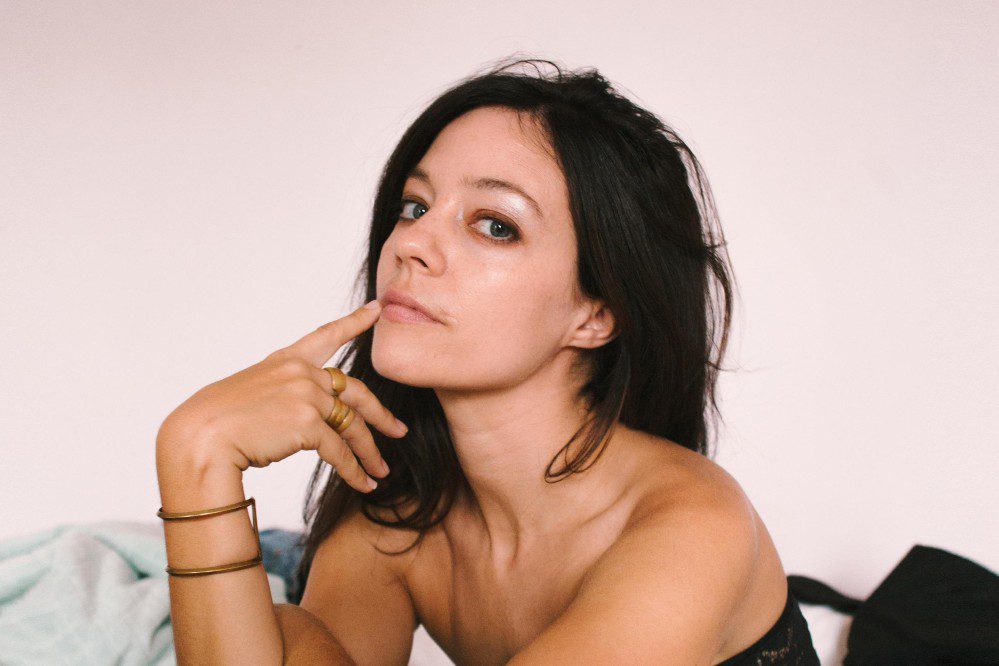
After the Heartbreak, Greya Will Still “Thrive”

With a bright red jacket and vibrant orange eyeshadow, Greya stands out against the desolate, vacant backdrops in a new music video for latest single, “Thrive,” about a one-sided relationship and the unrequited passion that comes along with it. “The song itself is pretty literal, so we wanted to accentuate the feelings that come with a toxic relationship and emulate them through various settings and emotions,” Greya explains. “You see me alone outside a gas station, going through a kind of mourning, contrasted with an ideal relationship, which we personified at the beach.”

Director and videographer Hannah Gray Hall shot Greya opposite Tony Woodland, who plays her love interest, at Percy Priest Lake and an abandoned storefront in East Nashville. Greya’s bold red jacket symbolizes dauntless energy; red is a color of love, anger, and in some cultures, death. Greya blooms like a flower in the grey landscape—one that, with some courage, will bloom again despite being beaten and bruised.

Extraordinarily, the entire process of making the video came together in the span of three days, including post-production. Greya met her director on set while shooting a video for her previous single “He,” where they instantly connected. “When the ‘Thrive’ video situation became a time crunch, my roommate suggested giving her a call and within minutes we had a shoot date and concept down,” Greya says. With help on set from Greya’s roommates (and a bottle of whiskey they shared to keep warm), the group had the shoot down in one day. 

A Philly native, Greya is no stranger to the music scene, having picked up a guitar at age 10 only to start writing songs a year later. She has learned to express herself fearlessly in writing sessions with the likes of Shannon Sanders, Sacha Skarbek, Flo Reuter, and her “Thrive” co-writers Jasper Leak and Chris Keup, resulting in the arresting debut singles she released last year, “He” and “All Hell Breaks Loose.” But self-expression wasn’t always second nature to Greya.

“Developing confidence really evolved all aspects of my music,” she says. “I spent a lot of time questioning myself, which of course pretty much affected everything I did. Getting past the self-doubt is both my biggest accomplishment and my biggest evolution in music.”

With her latest release, we see that the confidence extends to Greya’s personal life as she describes leaving a destructive relationship, finally realizing that her emotions came second to her partner’s selfishness and deciding to let go, while holding space for the heartache she’s suffered. She sings, “Why do I always do this?/Want the guy that always puts me through it.” It’s easy to say in these moments of self-awareness that you’ve learned your lesson, but it’s a lifelong learning process according to Greya. “On paper, I now know how important it is to be up front when getting into any new relationship, which I’ve never done in the past,” she says. “I was always so concerned with being the ‘chill girl’ who didn’t ask too many questions, but that becomes a really difficult hole to climb out of. Going forward, I’d like to be straight up, but that’s easier said than done.” 

Despite how many times our hearts are broken, we’re only human. For Greya, facing the sadness in one relationship doesn’t provide immunity for others to come – and that’s okay. “The short answer is yes, I’ve become aware of some things that could improve relationships in the future,” she says. “But the long answer is no, because I usually mess that kind of thing up one way or another.”

Follow Greya on Instagram for ongoing updates.