

Zilched Rekindles Love for Stevie Nicks with “Stand Back” Cover on New EP

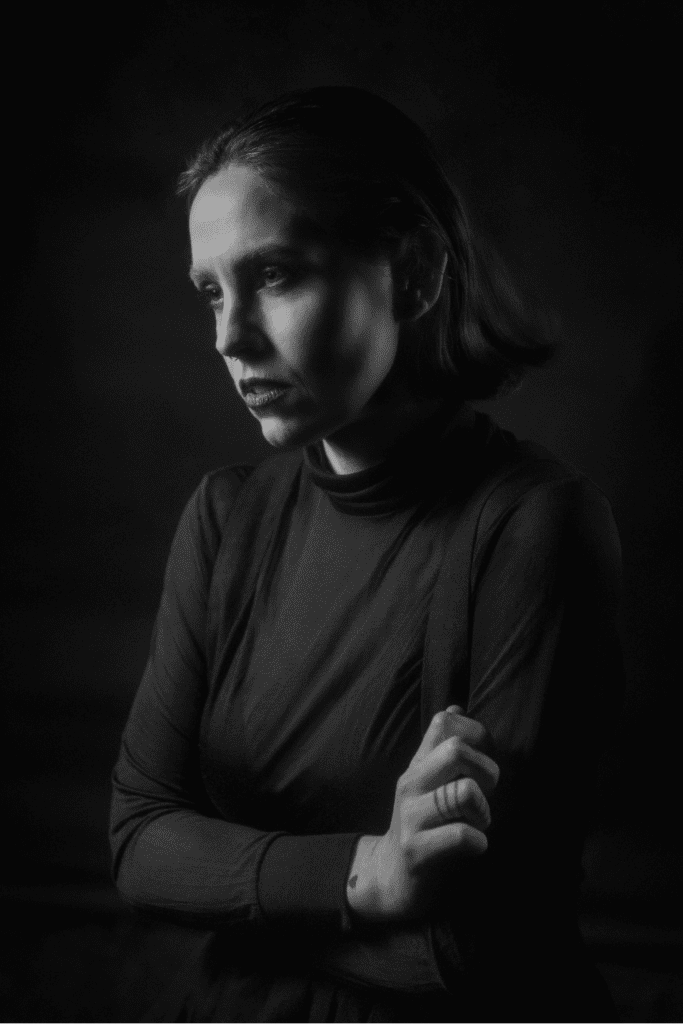
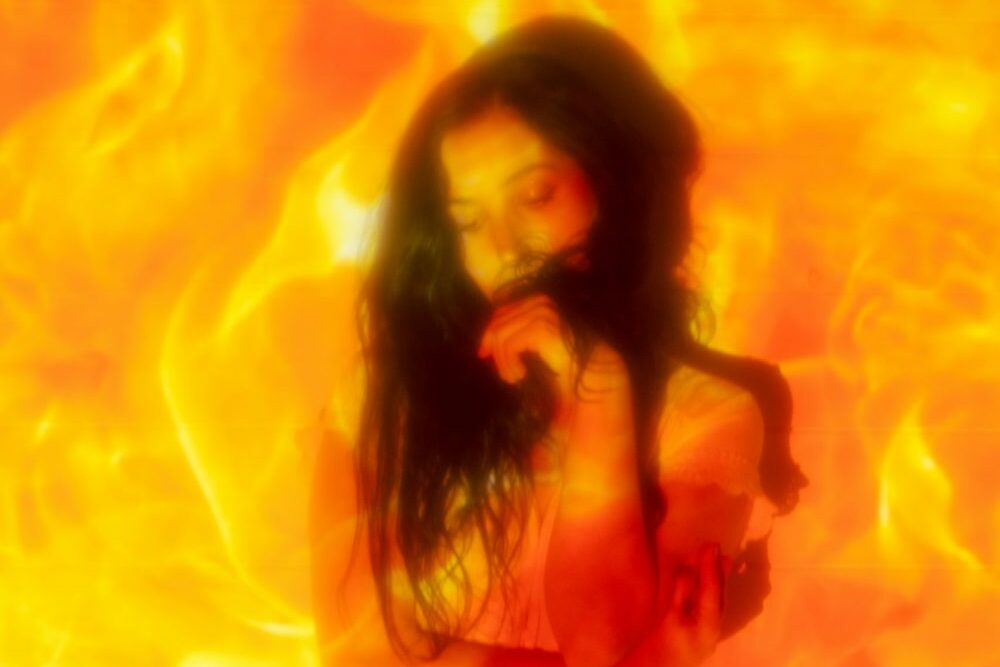
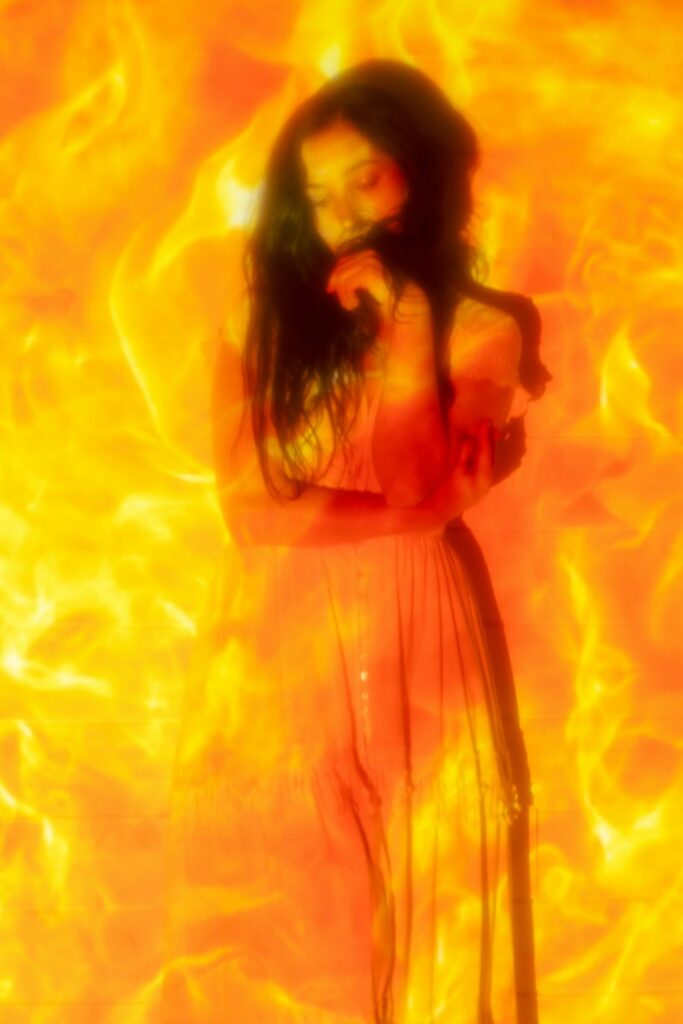
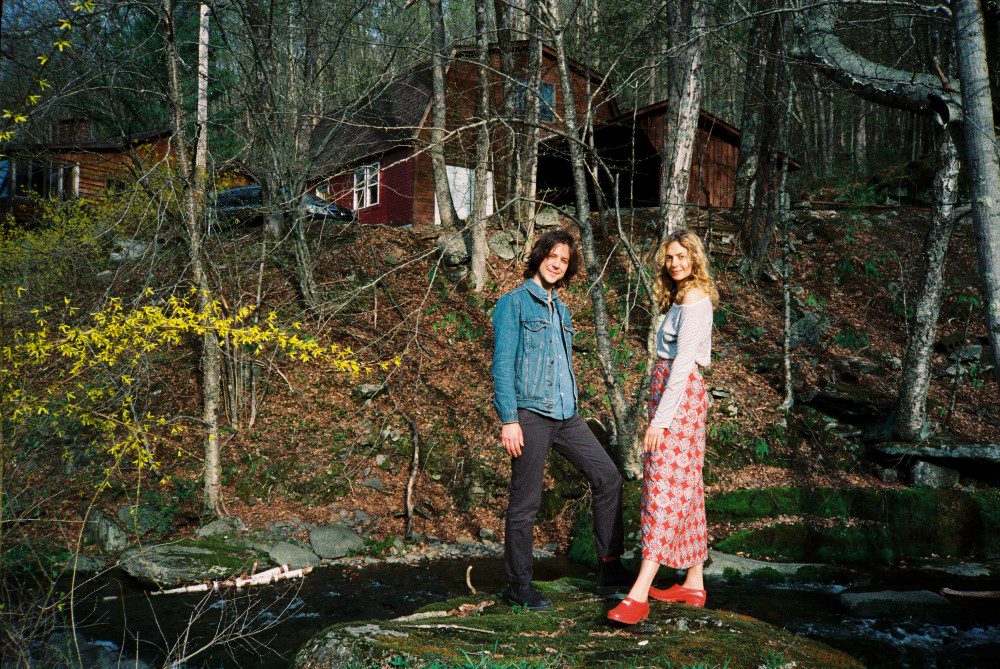
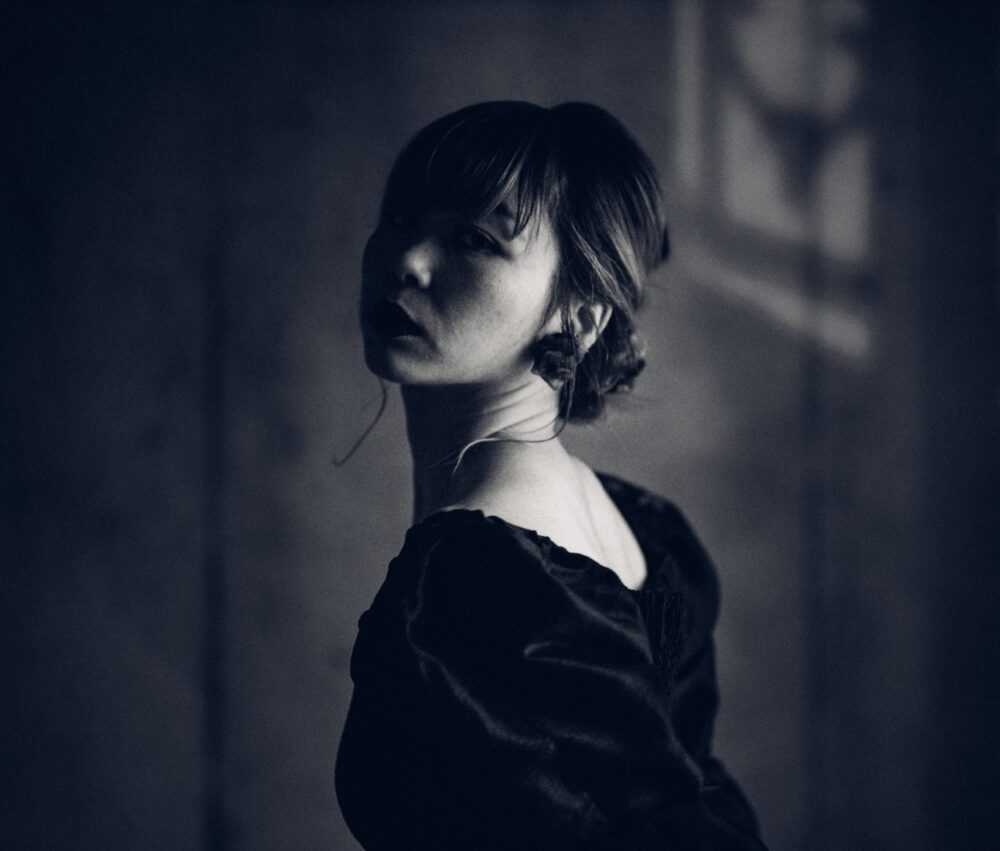
Photo Credit: Julia Koza

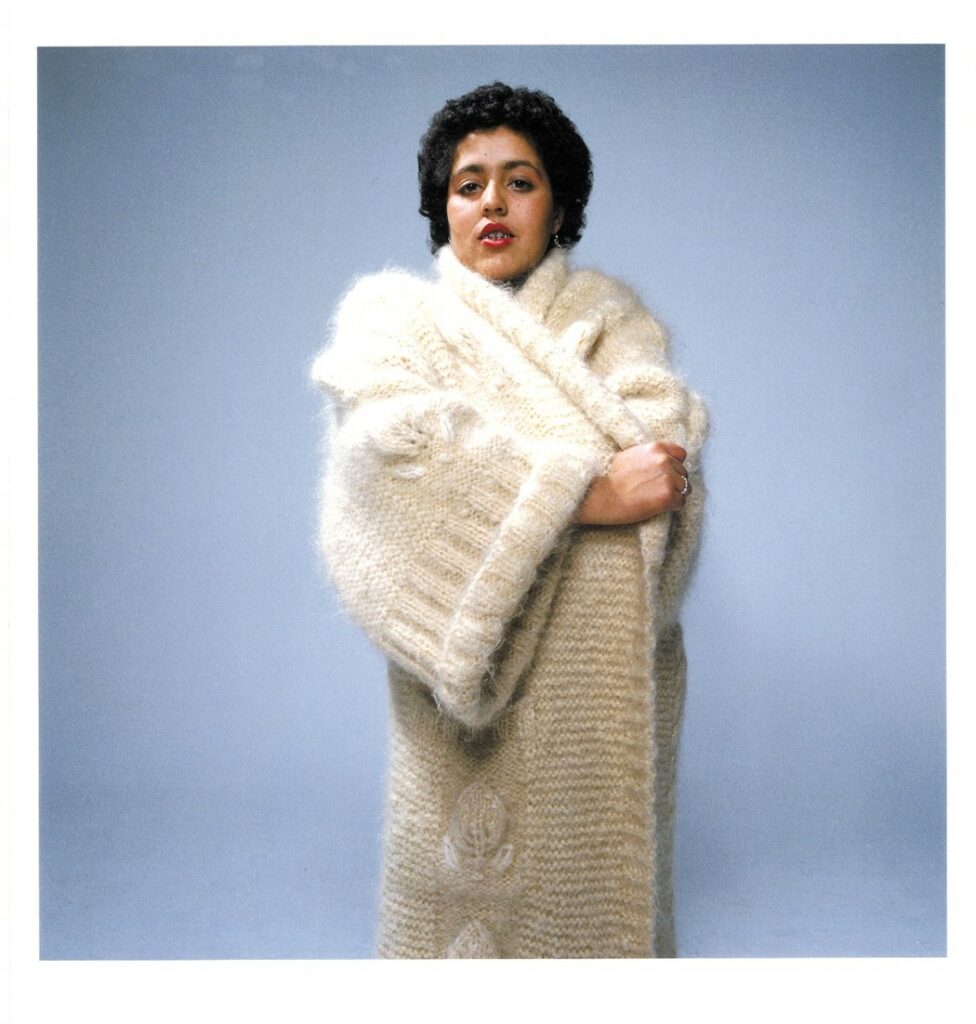
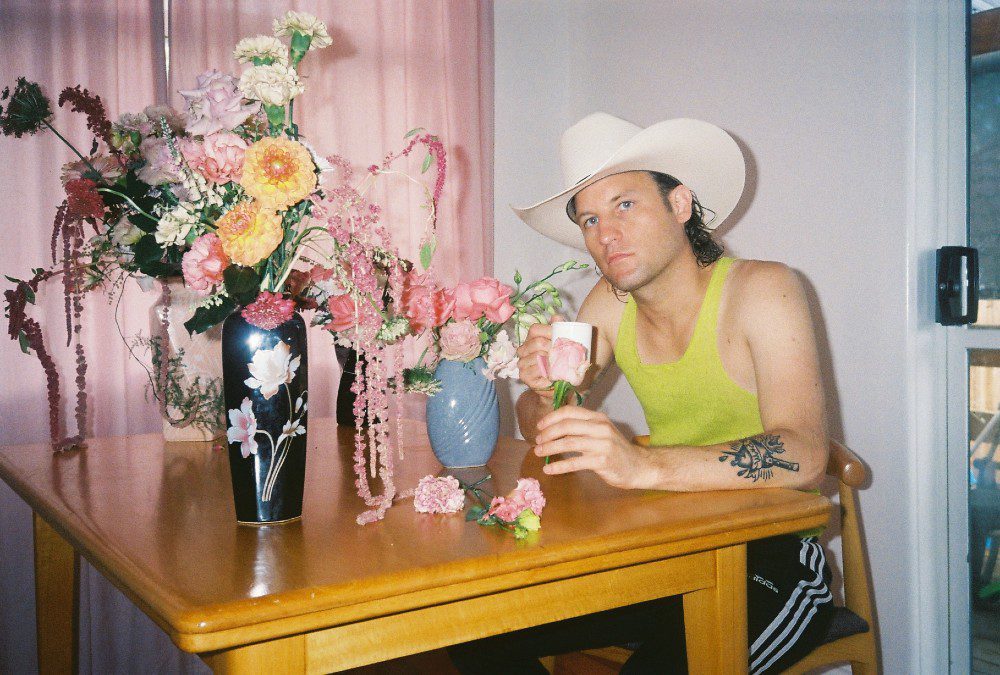
There was a time when Chloë Drallos – aka Zilched – was embarrassed that she ever loved Stevie Nicks. Growing up with a love for the classics and then rejecting them in the name of riot grrrl, Drallos has since found her happy medium in a cover of Nicks’ classic “Stand Back.” The cover is one of two songs from a special two-song EP, out yesterday, November 9th, just as Zilched wraps up a short tour with dates in Pittsburgh, Baltimore, and Brooklyn.

Drallos’ video references the original, as she dances in the dark under a spotlight. Except, in the Zilched version, Nicks’ dancing troupe is replaced by a shrine of the queen herself; Drallos makes her offering. It’s a celebration of youth, an acknowledgment of the music that shaped her, and a killer performance of her go-to karaoke song; she and her sister spent many nights early on in the pandemic with Ian Ruhala of HALA, the three of them doing drunken karaoke at his house. As a nod to those times, she got Ruhala to play guitar and bass on the cover.

Both “Stand Back” and the video for the EP’s previous-released single, “A Valentine,” encapsulate Drallos’ trademark DIY aesthetic. To be fair, it’s more than just an aesthetic, considering Drallos acts as her own merch designer, photographer, director, booking agent and producer. It’s not uncommon for budding artists to wear multiple hats at the beginning of their career, but it feels exceptional that Drallos mastered all of the above before reaching legal drinking age. 

Drallos knew early on that she had to be a musician. Not because she liked being on stage or because her parents did it, but because it was the only thing that seemed to make life worth living. “It was mostly me being like, ‘this is the only thing that I think would make me maybe like my life, or whatever.’ So I was just like, ‘This is the key to being happy and not having to go to college. So I was just doing it.” 

“Doing it” meant driving the 45-minutes from her hometown of Hartland, Michigan, to any show she could book in Detroit. The first show she played at Detroit’s El Club was the same week as her high school graduation. While other teens were thinking about college or prom or whatever teenagers think about, Drallos was planning her move to the city, and making sure she had a few friends when she got there. “I hear people say, ‘That must’ve taken a lot of guts,’ or ‘that must’ve been really hard,’ but I wasn’t thinking of it that way. I was like, ‘this is what I gotta do and I gotta do it now,’” she recalls. 

It helped that Drallos didn’t really feel engaged with any part of her hometown. There, she kept to herself; even her music was a really private part of her life. While she was booking shows in Detroit, she rarely ever played out in her hometown. In fact, it took her a while to feel comfortable on stage. “I didn’t really hang out with a lot of people in my town so I was really removed from everything,” says Drallos. “And I also had, like, crippling stage fright.” 

She explains that part of that nervousness stemmed from feeling like she wasn’t a good enough singer. Growing up listening to artists like Stevie Nicks, Bob Dylan, Joni Mitchell and the like, her idea of what a voice “should” sound like didn’t line up with what was coming out of her. Her early music education consisted of absorbing as much knowledge about the “greats” as she possibly could. “I would come home and watch VHI Classic all day and I would write down all the bands or songs that played, and then I would download them on Napster, listen to them for a few days, delete them so I had more room, then do it again.” 

This resulted in her early songwriting career to have a heavy folk-rock leaning. “For me, Bob Dylan was, like, my guy,” Drallos laughs. “I was obsessed with him and wanted to be him so I just wrote songs that tried to sound like him. But then I got into riot grrrl and grunge and I was like, I need a cheaper guitar to be cool.” She turned in her hard-earned Gretsch for a Danelectro and started to let herself sing. “My first practices did not include a microphone – I was sooooo shy,” she says.

Since then, Drallos’ deep knowledge in folk and rock has seeped into her smart and melodic songwriting style, delivered with the angst and honesty of grunge. In “Stand Back” Drallos pays homage to one of her heroes while inserting her own sonic personality. “She’s an artist I loved so much when I was in middle school. I thought she was like the perfect woman,” says Drallos. “In high school, I was trying to forget that I was ever like that and was too cool for that and then after I moved out, I went back to a bunch of those types of artists and was like, ‘I’m not too cool for these, they’re still the greatest.’”

Zilched may be cool as hell, but no one is too cool for Stevie Nicks.

Follow Zilched on Instagram and Facebook for ongoing updates.

Alt-Rock Duo Mediocre Exorcise Pushover Tendencies with “Mattress Bitch” Premiere

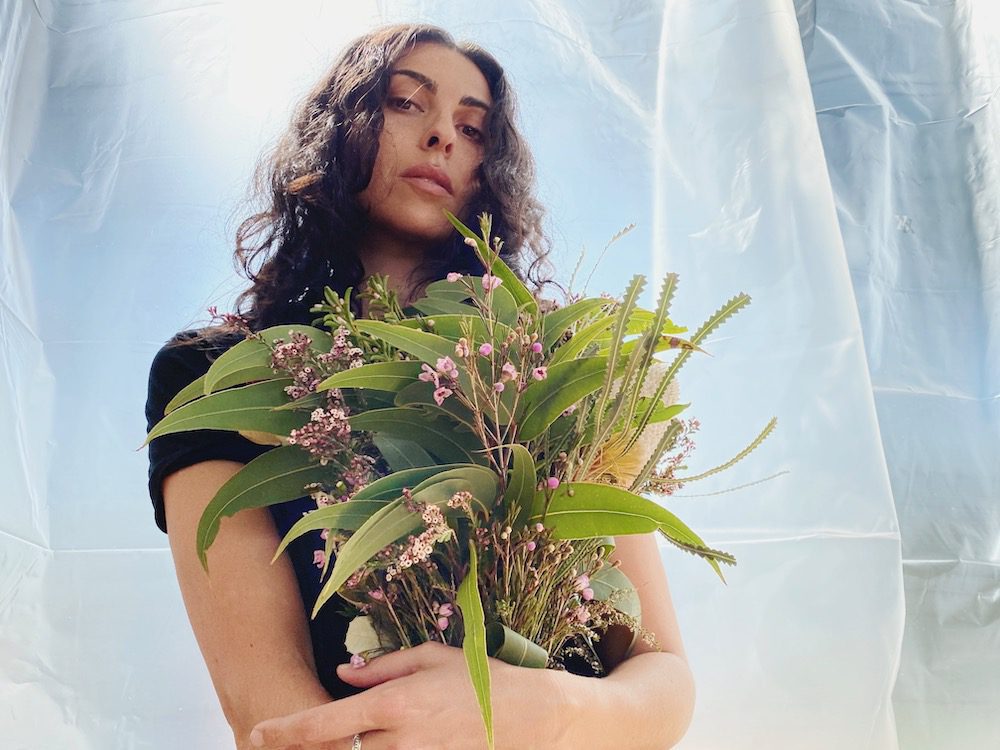
Photo Credit: Ginger Port

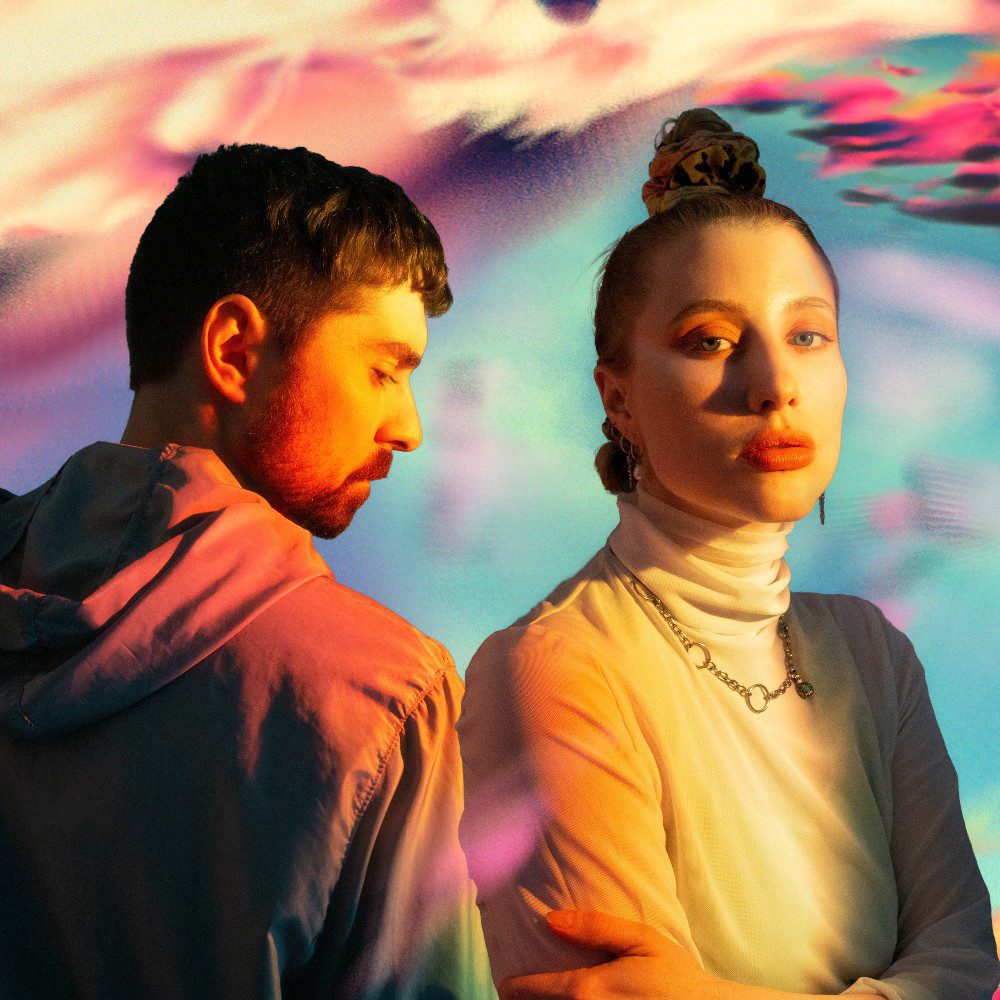
When alt-rock duo Mediocre showed up at the East LA warehouse they’d booked to film their latest video, the woman who let them in was shocked – despite the fact that the location is mainly used for film production, this was the first all-female crew she’d seen shooting there. But Piper Torrison and Keely Martin are used to doing things themselves (Martin is also one-half of Bowie Nix, the production team responsible for all of Mediocre’s videos thus far). Not only is their quirky DIY spirit built into their musical and visual aesthetic, it’s also attracted the attention of Dangerbird Records.

In 2020, after hearing Mediocre’s self-released EP Emotion Sickness, the indie label invited the band to participate in their ongoing Microdose Series. Normally, Dangerbird curates up-and-coming bands and sets them up with whatever they need to record a single and its b-side; sometimes they throw a free show to commemorate the release. Mediocre brought a handful of tracks to Dangerbird, who selected catchy, kitschy power pop number “Waiting For Your Heart” and reworked one of the band’s older songs, “Give In,” as a shoegazey daydream.

But while they were still in the process of deciding what to record, Martin and Torrison had been furiously writing a new song, reunited after a year of college spent on opposite coasts, not to mention the pandemic. They squeezed it into their studio time with producer Danny Noguieras at Balboa Recording Studios (his band No Win also works with Dangerbird) and the label decided to release all three songs. “They really gave us so much freedom to just do what we want,” Torrison says. “It was really cool to have them on board with what we were doing, and I think that also helped us just be like, we got it. We don’t need to appease anyone. We’re doing our thing and it’s working out.”

The third single from the series, “Mattress Bitch,” premieres today on Audiofemme, along with the video Mediocre shot for it in that East LA warehouse. One of the rooms in was set up with a neon cross and church pews, which ultimately dictated Martin’s vision for the clip. While it’s essentially a performance video, Martin and Torrison also play a variety of other characters – a frustrated teacher, awkward schoolgirls, disaffected goth kids. It feels like a fun take on the repeated chorus, “We’re only playing make-believe/but I’ll keep coming back around,” but it also mirrors the song’s cheeky examination of pretending to be something you aren’t for the approval of others.

Martin and Torrison started writing songs together soon after their friendship formed, when they were still in high school. “When we first started out, we were just practicing in Piper’s garage, as all DIY bands start – humble beginnings,” remembers Martin. They’d pass a notebook back and forth, jotting down lyrics about whatever they were feeling, even something as a literal as what foods they were craving (the initial basis for their first-ever tune “Milkshake”). “Before we even talked about being in a band or anything, I think our way of hanging out would just be creating the most obnoxious, total joke of a song, cracking [ourselves] up,” adds Torrison.

Though they spend most of the year 3,000 miles apart now that Torrison is enrolled at UC Santa Cruz and Martin at Emerson College, they still develop songs much the same way; over texts, videos, and voice memos, they share ideas, lyrics, and melodies. “It’s been really cool still being able to write stuff from afar,” says Torrison. “Even when we were together, I would start a song and kinda stop myself and be like, no, I wanna write this with Keely, and I know that it’ll develop into something different if I stop here and we do this together. So it’s been pretty natural to transition into that, to be like okay, I have this riff idea, I’ll send it to Keely, and then she’ll send me something back with a little bit added to it, just back and forth like that.”

“I sent Piper the first bit of the first verse that started us writing ‘Mattress Bitch.’ I wanted to make it like, kinda funny, and I was trying not to think too hard about it when I was writing it, but of course when you look back, you’re like oh, there is deeper meaning to this,” Martin says. “I do think that it is a sad song in a way, and vulnerable, but hidden behind that humor – which is very much a common thing that I tend to do, or anyone else does when they’re confronting a something or someone but they don’t want to reveal too much about their feelings. Compensating with humor, just that general experience of making yourself small and forgetting your worth, I feel like that’s very relevant to anyone’s experience.”

Whether it is the humor in the song’s nonsensical lyrics (“I am a mattress/You can get on top of me if you want to”) making its rawness more palatable, or simply the pair’s familiarity with one another, both agree “Mattress Bitch” came together quickly and easily. “We wrote it while we were apart, and then as soon as we came home to LA for the summer, that was like the first time we really heard ‘Mattress Bitch’ live together,” Torrison recalls. They had about two weeks to nail it down before going into the studio, but Noguieras was as eager to include it in the upcoming session as the band was. “We sent it to Danny and he was like, yes, we’re recording that. He was really stoked on it too. The energy was matched,” Torrison continues. “But I think the comfortability with writing it, especially, points to our future of writing together.” 

“I feel like that song is really indicative of the sound that the band is going toward. And of the bands that we had been listening to throughout these past couple years,” Martin agrees. “When I was trying to write songs in high school, I was like, okay, they have to mosh to something! And it was just this unnecessary pressure in my brain – when you’re young and you’re in a scene you want people to get riled up and stuff; I feel like I was in that headspace. That music is fun and I enjoyed playing it, it just wasn’t fully our style.”

“The bands we played with were very different from our sound at that time, very punk-heavy,” Torrison elaborates. “I think distancing ourselves from that, not having that pressure anymore, we can find our audience on our own. We’re not forced into this narrow punk scene. I think that expanded us to get more comfortable with our own writing and writing for what we like.”

That trajectory is evident comparing the Mircrodose singles to Emotion Sickness, which compiled much of their earliest songs. “By the time that we were able to release it, all of those songs felt very indicative of the past – in a positive way – but we wanted to get it out there fast as we could so we could progress to new things, you know?” says Martin. “We recorded the Microdose songs this past summer, so those two processes happened a year apart, but we experienced so much growth within that year. It was really cool to look back on the release date of our EP versus us recording these new songs. [Even] the songs we had written in the past, we were reinventing them now that we were more confident with our sound.”

Though “Mattress Bitch” may be the next tongue-in-cheek anthem of pushovers everywhere, Mediocre seems to have moved far beyond that mentality. Every step of the way, they’ve approached their songwriting, sound, and visual aesthetic with conviction. They’ve gone from “playing make believe” to believing in themselves – and we’ll keep coming back around, every time.

Follow Mediocre on Instagram for ongoing updates.

Donna Missal Shares New Sega Bodega Collab As She Embarks on First Post-COVID Tour

It’s just a few days before Donna Missal is set to leave for Houston to begin her stint opening for CHVRCHES across the United States. The L.A.-based singer has been busy with rehearsals, figuring out a cohesive way to bring together her body of work. There is new, unreleased material and songs that will drop while she’s on the road, in addition to her older music and the tunes from her 2020 album, Lighter, that she has yet to play live. This will be Missal’s first tour since the onset of the COVID-19 pandemic. 

“It feels like everything has changed so drastically about touring, as well as our environment,” she says over a Zoom call. Missal will be performing in cities she has seen before, but the experience could be something entirely new. “It feels like I’ve never done this before and I’m going on my first tour ever. It’s a strange feeling. I think it’s all very unknown still and I won’t know what I’ve gotten myself into until we’re out there doing it.”

Throughout 2020 and 2021, Missal had been staying active making new music. In fact, her new single “(to me) your face is love,” stems from this period. It’s part of a body of work that brings together Missal with UK producer Sega Bodega – he also produced her single “sex is good (but have you tried),” released in March 2021. The two began collaborating remotely during the pandemic, but this single actually stems from an in-person session, Missal’s first since prior to the stay-at-home period. 

With “(to me) your face is love,” Missal offers a dose of retro-futurism with a sound that recalls late 1990s breakbeat. The accompanying video is a fashion-forward clip where Missal’s wardrobe, both sculptural and ethereal, reflects the juxtaposition of the powerful, electronic beat with delicate vocals.

Over a year ago, when Missal, like so many others, was at home, she bought some equipment and started recording at home. It was something she hadn’t done before. “All the music that I had made at that point, even if I had started it on my own, was created in a studio environment,” she says. “This was the first time I was working on ideas with total autonomy. It was just me messing around at home with vocals.”

Missal had a goal in mind. She wanted to gain enough skill at recording her own vocals so that, when the time was right, she could go into the studio and better explain the sounds she wanted or, maybe, do it herself. “I just wanted total freedom to focus on voice and lyrics and melody,” she says. So, instead of recording to an instrumental track or writing music, she used a clicker when she recorded with Logic, singing to a tempo that she thought would work. 

The pandemic also prompted Missal to connect with people who could collaborate virtually. That was new for Missal too, as she’s typically worked on music with others in person. She sent her a cappella demos to Bodega, who composed music around the tracks and sent them back to her. “ It was the first time that I ever worked in that kind of process before,” she says. “We started making a lot of music that way.”

Flash forward to the summer of 2021: Missal flew out to London for her first recording sessions in a studio since the onset of the pandemic. The 10-day excursion was also her first longer stay in the city. “I wanted to finish everything that we started and I wanted to meet the people that had been working on this music with me remotely,” she says. “I had amazing support from my label to go do that.”

But Missal was able to do more than finish the tracks that began as remote collaborations. She and Bodega decided to spend a couple days writing new material together, in the same space. “It was so different from how I had been making music for about a year [at that point],” she says. “I was back in my environment, an environment that was very familiar to me, writing in a room with a person present and they’re producing and you’re doing your thing. It felt like a completely brand new thing, even though it was something that I had done before.”

“(To me) your face is love” is one of the songs that came out of this session. They wrote it in a matter of hours while in the studio, with Bodega working on the production and Missal handling lyrics and melody. “The song was really instantaneous. That’s always really fun for me, when they come together that way. Minimal effort, and you’re making choices based on what feels good and what you like,” she says. “You’re not thinking about how it will be perceived. You’re making music with someone in real time where both of your intentions are very pure.”

The experience in London proved to be eye-opening for Missal. “I also had this idea going out there that I wasn’t cool enough to hang out with those people,” she says. “It’s the most inclusive group of people that I’ve ever met. They were incredibly kind to me and brought me in like it was nothing. No one had questions about whether you were a visible person or whether you were worth it to engage with. That just wasn’t part of the way that anyone made their choices there.”

It was a chance to work on music without having to think about likes, followers, or whether or not it will sell or appeal to her fans. “I had a real revelation while being out there. I felt so much freedom that I hadn’t felt before,” she says. “It’s something that I’ll bring into my process moving forward with everything that I do, this openness to allowing yourself to be creative and make choices that feel good without worrying about all that other shit that tends to muddy the process and make music-making about something that it shouldn’t have ever been about.”

Follow Donna Missal on Instagram for ongoing updates.

Emma Ruth Rundle is at Her Most Emotionally Naked On Fifth Album Engine of Hell

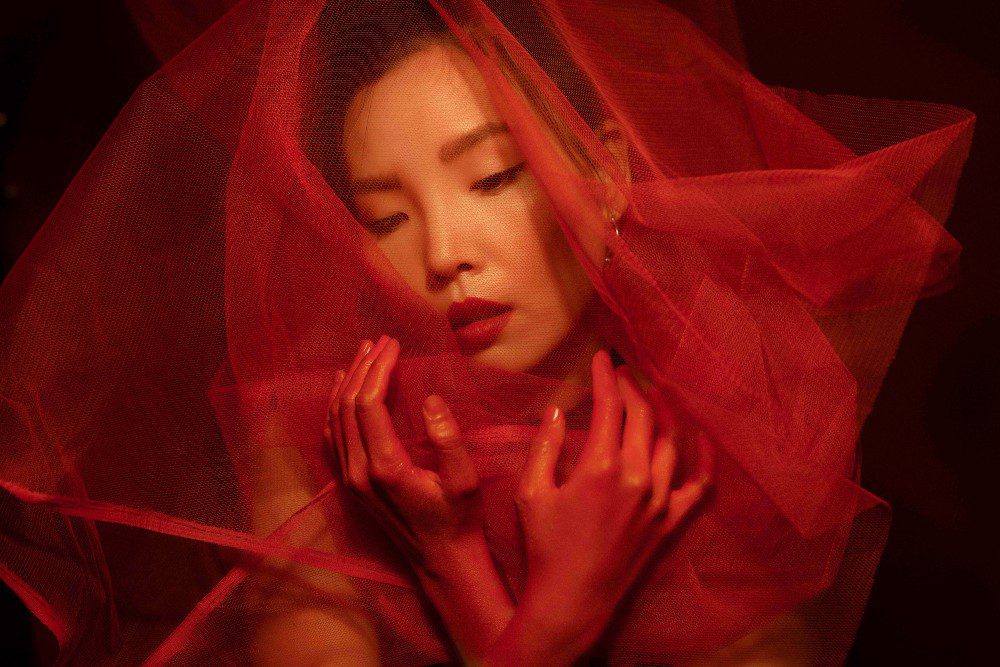
Photo Credit: Mason Rose

Emma Ruth Rundle documents a chilling musical catharsis on her latest LP Engine of Hell; in the first fifteen minutes alone, she’s “down at the methadone clinic” on “Blooms of Oblivion” or lamenting the sadness of the world and the grief of death on “Body.” Pairing her world-wearied voice with piano alone proves deeply moving. The instrument is a sympathetic body; it tinkles, thunks, sings, shrinks away from touch or yields to the warmth of Rundle’s fingers. As far as comparisons go, there’s something here of Patti Smith’s throaty, poetic spoken word-style delivery and Tori Amos’ early work: confronting but beautiful songs digging through the emotional violations of her past.

When we speak, Rundle has taken time away from her Portland home to stay in a cabin near Netarts, Oregon. It is a different type of being alone to the one that instigated Engine of Hell. “Isolation was a was a huge piece of this album,” she explains; she began writing it while living in Kentucky with her (now-ex) husband, far from her roots and her rock ‘n’ roll lifestyle. It was so alien to her that it sent her hurtling into a morass of memories and addictive behaviors. “The original title of this record was actually A Strange Midwest, which was about waking up in a weird place, alone, without any sense of self. The lockdown definitely pushed things further than maybe they would have gone otherwise. But I think a lot was leading up to this,” she says.

The album was recorded in Stinson Beach, California in December of 2020 at Panoramic House with longtime co-producer Sonny Diperri. “It was Sonny and I for ten days alone in the studio,” she remembers. “It was eerie, and intense and great. I did a lot of crying. We would track and then we’d listen, because we had to listen to choose the takes.”

All the guitar songs, and some of the piano, couldn’t be separated because Rundle had purposely recorded those songs as live performances. The process meant that Rundle would record several takes, listen back with Diperri, then do it again.

“The last few days, I added a bunch of overdubs with these keyboards they had lying around, only to decide that 90% of that was garbage and that the record didn’t need it,” Rundle adds. “It needed to be as naked as possible.”

It is the starkest of her records, the most bare-faced, openly wounded, humbling work of art. Sober today at 38, and grateful for it, Rundle’s formative musical influences make perfect sense – she recalls 1996 Tori Amos opus Boys For Pele as a spiritual sister to this album, along with Sibylle Baier’s Colour Green and Nick Drake’s Pink Moon.

“There’s also this record, Monotony Fields by Shape of Despair, a metal album that had so much despair on it, which gave me permission to just express that feeling and not be embarrassed about singing about how intense that state can be,” she adds. “Those were the records for me that set the ship sailing, got the boat in the water for this album.”

Her lyrics and her music have always felt emotionally genuine, candid and poetic, but not like Engine Of Hell. It follows her 2020 release, the deep, dark May Our Chambers Be Full with Louisiana metal band Thou, her third solo album On Dark Horses in 2018, and her harrowing 2016 sophomore album Marked for Death, largely informed by Rundle’s ongoing battle with adenomyosis – a condition in which damage occurs to the uterine wall, causing heavy bleeding and chronic pelvic pain, similar to endometriosis.

The LA-born and raised singer-songwriter’s musical career began in earnest when her mother took her to music store McCabe’s and allowed her to pick any instrument to learn. An adventurous choice – the Celtic harp – was swapped for a guitar, as well as the added bonus of 13 years working at McCabe’s thereafter. Her mid-twenties saw her enter a prolific period, self-releasing her first solo efforts Electric Guitar: One in 2011, and the darkwave-style Somnambulant, in 2013. Credited to The Headless Prince of Zolpidem, it revealed a new, disconcerting soundscape. She was also active in several bands at the time, with credits on four albums and two EPs across three projects: the Nocturnes, with Dave Clifford, Paris Patt and Julian Rifkin; post-rock quartet Red Sparowes; and Marriages with Greg Burns and Andrew Clinco.

But it was her official debut album Some Heavy Ocean (2014) that cemented her relationship with record label and management company Sargent House and its founder, Cathy Pellow. Rundle recorded it at the label’s in-house studio, taking up residence there during the sessions. It proved one of her most introspective, empowering experiences.

“I’ve been working with Cathy for over a decade. Cathy had my back and believed in me, in her way, since I was much younger. She took good care of me, she let me live in her house more than once… I’ve lived with Cathy five times because I’d been a mess and she’s always had the door open… that’s been invaluable in my life,” Rundle says. “For a long time, Cathy was my soul family – other than my sister, she was my person. I love her very dearly; our relationship goes so much further than business stuff.”

Rundle says Engine of Hell was hard for Pellow to hear. “It made her uncomfortable and she was concerned about how this might be received and if it would negatively affect my career, but she supported me,” she says. “Cathy and Sargent House never get involved… I make music, I turn it into them, and they have a reaction, which is incredibly supportive.”

While Pellow’s concerns are easily understood, Rundle’s discussions of mental health and revelations of trauma and addiction weave neatly into the cultural climate of the moment. Recurrent lockdowns and global fear and isolation have only amplified topics like these, already emerging in public forums and social media prior to the pandemic. To talk about these issues openly feels like a step toward recovering our collective emotional homeostasis. But to call the album cathartic would be too simplistic, not honoring its multi-tonal palette, its layers of memory, grief, healing, and suffering, and its deliberations of identity that can’t be neatly wrapped into lyrics and expunged. “I think it can be all the things without having to be just one,” she responds. “I feel like it has been cathartic. It was interesting writing it, then having finished it and listening to it now.”

She’s continued to expand on the album’s motifs by directing a pair of haunting videos: “Return” sees her playing both an Angel and Death; “Blooms of Oblivion,” co-directed with John Bradburn, offers some literal weightlessness to the song’s heavy subject matter. “There’s some catharsis there, especially making the videos and really getting to process these things in new and different ways,” she adds. Rundle’s been developing her own visual lexicon since she took up painting as a teenager; her most recent exhibition was part of a group show at London’s Parliament Tattoo commemorating the thirty-year anniversary of the release of iconic Hole debut Pretty On The Inside. One of thirty artists asked by Courtney Love to contribute work (which can be viewed in 3D here), proceeds from the auction benefit Treasures Foundation and Clean Break women’s charities.

No matter the medium, Rundle recognizes that achieving catharsis will be a lifelong quest for her. “I have some really intense trauma and tendencies towards some of the darker colors of the palette when it comes to mental health and emotional states of being that I don’t know will ever go away. It’s a thing that needs to be managed, and there’s maintenance involved… nothing is necessarily resolved,” she says. “I do think that making Engine Of Hell really helped me, in so many ways, transform my life. It was a quest to get back in touch with myself, where I came from, the context for my existence, because I lost touch with that, and I spent so long numbing myself out. I wanted to figure out what had happened and why, and why I was like this.”

Her candour on the album is liberating for herself and for this writer, and hopefully, for listeners too. The thrumming, pared back acoustic guitar on “The Company” is a plaintive ballad, wielding so much feeling in the spaces between notes, her sad humming lament. The guitar, melodically brighter and fuller on “Razor’s Edge,” is the tender caress to ease the sharpened edge of the lyrics, reflecting on the loss of youth, though it remains lyrically bleak. “There’s no need to check the weather as my winter never ends,” she sings. “I’ll be dancing on the razor’s edge, then.”

As they put the tracklist in order for Engine of Hell, Rundle and Diperri listened back to the songs once again. “It was startling to hear the album,” confides Rundle. “It was like, woah, am I really going to do this and let people hear this? It’s pretty intimate and a little bit uncomfortable to listen to. Later, I decided that’s exactly what I set out to accomplish, so that is a success. Whether it’s any good doesn’t matter. I had set out to do a thing and done it, without judgement. There was a goal, we set out to do it, we did it, there it is.”

Follow Emma Ruth Rundle on Instagram for ongoing updates.

Kult Kyss Nurture The Heartbeat of the Melbourne Dancefloor on Ultra Sound EP

Photo Credit: Zachary McSweeney

From the first lush sonic textures and waves of synth on Ultra Sound, the debut EP from Kult Kyss out November 12th via TMRW Music, it’s hard not to envision a smoke-filled dancefloor. Vocalist Rromarin (Claire Rayner) and producer Haxx (Jack Arentz) have crafted a throwback to the big beat, anthemic dancefloor bangers of the ’90s; the Melbourne duo’s music is a delicious, shameless montage of building beats, thrilling climaxes, snaky vocoder-edged vocals, boxy beats and dubby, trap sounds.

So Alive” epitomises their paean to the Melbourne dancefloor of the late ‘90s and noughties. The clever two-step foundation is fleshed out with a soup of synth bleeps and bloops, and a catchy vocal mantra (“I feel so alive”). Rayner traces their sound back to a surprising source of influence.

“Funnily enough, the closest thing to being my first formative dance banger experience was probably Savage Garden’s ‘I Want You.’ That track rocked my world,” she says. “I think there’s still parallels today, with my vocal sound and processing. You can hear things harking all the way back to that song.”

Since his partner is confessing to mid-90s crimes in musical coolness, Arentz confirms his own first album was from a series of trance mix albums that compiled relentless, ear-pounding remixes of well-known club tracks (think Bomfunk MC’s, Kylie Minogue, Craig David and Love Tattoo).

“My first CD was Wild Volume 13, during the Nick Skitz era of crazy mashup CDs. I remember rinsing it pretty hard! That was right around the time Da Rude ‘Feel The Beat’ and ‘Sandstorm’ were peaking. That High-NRG stuff,” he says.

Their tangible, deeper connection with dance music evolved more recently, with immersion into festivals and parties in Melbourne and beyond, explains Rayner. “The most formative years have been the last five to ten years of festivals and parties, and the experience of dancing as a collective. That’s the source of a lot of inspiration for Kult Kyss songs. Lyrically, you can hear that theme echo throughout our tracks – ‘Rituals’ specifically is literally that, the ritual of people coming together to dance. ‘God Is A Bassline,’ as well. A lot of Kult Kyss tracks are basically me worshipping at the altar of dance music.”

“Rituals” is a throbbing, bass-heavy groove number, in which Rayner’s croon slinks around the beats like an espresso martini on ice. There’s no sign of high-NRG, trance or Craig David, but the sexy smooth pop feel is – wonderfully – redolent of Savage Garden, though I wouldn’t have picked it if not for Rayner’s directive. There’s threads of more than one of Australia’s most commercially successful pop duos, though. Depeche Mode’s “Never Let Me Down Again,” with its boxy synths, slinky vocals and simple keyboard progressions paved the way, as did Roisin Murphy’s early band, Moloko. “The Time Is Now,” with its clever layering of vocals, hook-filled choruses and unexpected use of flamenco guitar and hand-claps heralded an adventurous spirit of dance music when it was released in 1999, in which synths and live instruments opened up a welcome blending of genres and musical experiments.

Arentz and Rayner are emblematic of this cross-genre experiment working wonderfully both creatively and in life, generally. Arentz’s background was in live bands, while Rayner’s school and university years were dedicated to training in classical music.

“I was very heavily involved in classical music throughout high school then I went on to do Bachelor of Classical Music at the Melbourne University Conservatorium of Music, but I’d always wanted to be in bands and make contemporary music – pop, electronic, dance. When I met Jack, he helped me cross over to the dark side.”

It was an easy move for Rayner, but she admits, “everyone was very disappointed that I wasn’t continuing with classical music.”

Her instrument throughout university was the bassoon.

“Since I wrapped the degree, I haven’t picked up a bassoon because I so wholeheartedly wanted to move into a different realm of music,” she says. “I feel so grateful for that foundation… The only claim to fame for the bassoon is Howard Moon from Mighty Boosh!”

Arentz recalls, “I moved to Melbourne in 2010 to be in a rock band, which I won’t name for the shame, but that’s when I met Claire – around that time – and we started making music together. Originally, before Kult Kyss, [our music] was a hybrid of guitar, piano and electronic music. But it became progressively more and more electronic. Then we started running a rooftop studio together; we were having more rave events on the rooftop and that coincided with the birth of Kult Kyss and our love for ravier, electronic music.”

That studio is Joyluck, based in the inner northern suburb of Thornbury in Melbourne. Throughout the pandemic, the duo spent their time renovating it into a multi-arts venue for production and performance. It is the culmination of years of organising events, producing for other artists, performing at festivals and DJing.

It was their DJ sets that first attracted the attention of one of Australia’s most prestigious dance music duos. Kult Kyss covered The Presets’ “This Boy’s In Love” at the end of 2016, attracting the attention of the Australian band, who inveigled them onto their national HI VIZ tour of 2018. “Shout out to The Presets, who were a huge influence, and particularly for me,” says Rayner. “Obviously, that’s why working with them and touring with them was a dream come true, because we’ve been listening to them for a very long time.”

That influence simmers away in “God Is A Bassline,” which is cinematic, throbbing along like a futuristic Batmobile heading into the night with heroics in mind. It’s the sort of pulsating beat that convinces a fluffy-slipper and tracksuit-panted Melbournian that they can swipe some glitter over their eyelids and bravely get out of their apartment. Perhaps to the dancefloor, as restrictions loosen.

“The place where I feel most connected to strangers is on a dancefloor,” says Arentz. “That’s what really drew us into dance music the most, having these friendship groups running their own raves and events around a fire or on a rooftop. You get involved in music because you want to be connected. At its best, it’s like a fantasy world where you make friends on the dancefloor… all these people you’ve never met before have everything that you need.” Adds Rayner: “I feel like we’ve been off dancefloors for so long, but the community in Melbourne has been incredibly loving, kind, welcoming and safe.”

Follow Kult Kyss on Instagram for ongoing updates.

Linda From Work Rail Against Soul-Sucking 9-to-5s at Cafe Racer Gig This Weekend

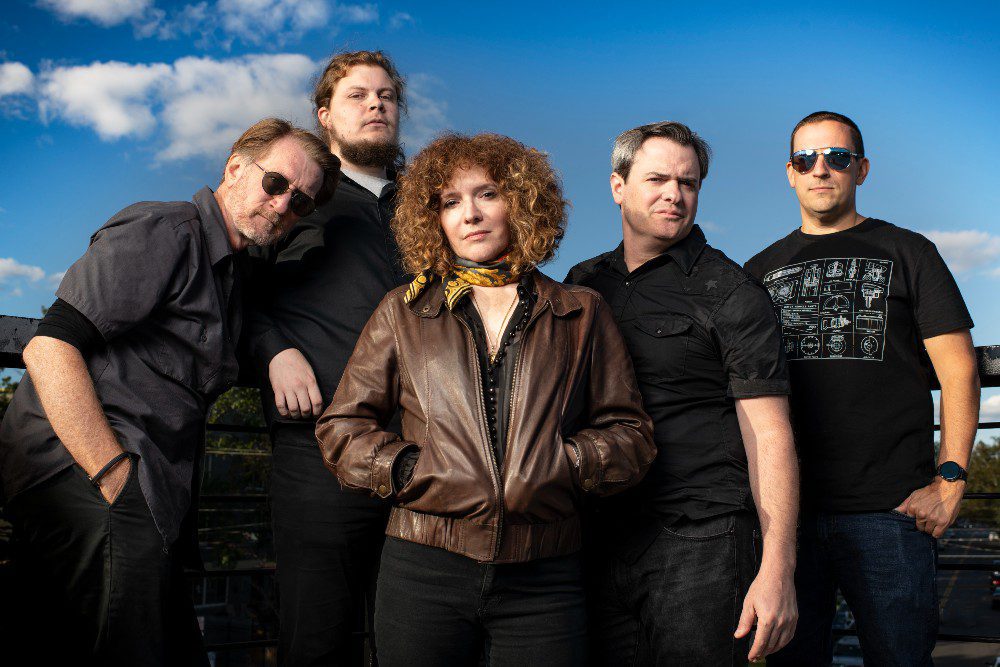
Like many of us, Hilary Tusick, lead singer and songwriter of Seattle band Linda From Work, has had her fair share of shitty, soul-sucking 9-to-5 office jobs. But while many of us can only continue to seethe with our unresolved job-related bitterness, Tusick’s found some catharsis.

Her years of lukewarm coffee, dull coworkers, and email cc’s have become the lifeblood of her witty garage rock band and their last two releases—2019’s Two Week Notice, and last July’s Burnout. This Saturday, November 6th, Linda From Work will be out-of-office when they play the new Cafe Racer in Capitol Hill.

Looking at Tusick’s account of her own childhood, her unlikely journey from desk to stage makes sense. Tusick, originally from Cleveland, Ohio, says the first thing she can ever remember wanting to be was a musician.

“Even as a kid, [I was] performing Disney songs for my mom and setting up stages to perform for everybody,” Tusick remembers. “I did a lot of musical theater once I was in middle school and high school, just to have an avenue to perform. I was also taking piano lessons, guitar lessons, from an early age.”

Still, despite her dream, she says she was fairly “introspective” about her music, and went on to study English at University of Texas in Austin. Even in the “Live Music Capital of the World,” she didn’t share her own work much because, as she notes, her vibe was different. “I enjoyed that area for a while, but really wasn’t as into the music scene down there. It’s a great scene but again, I was just not meeting the exact right people for me,” says Tusick. “Then I tried Chicago for a bit, but it also wasn’t panning out in the way I’d hoped.”

She did meet her husband (and drummer in Linda from Work) Sam Nowak at University of Texas, and eventually, they decided to give Seattle a shot. Tusick says it’s the best decision they ever made. “I’ve always been really big into Riot Grrrl—Bikini Kill and Sleater-Kinney —that whole vibe. I love a lot of grunge, too, like obviously Nirvana and Sound Garden and so I [already felt] connected to music scene here,” she explains.

Sure enough, things progressed fairly quickly once the pair arrived in Seattle in 2015. Soon after landing in town, Tusick and Nowak met and begun collaborating with bassist Mary Robins, who Tusick calls their “missing puzzle piece.” From there, the band played several shows in 2018 and released their first EP, Two Weeks Notice, in February 2019.

Still, all the while, Tusick was working a mind-numbing job as an office administrator in an architecture firm to supplement her music income—but it wasn’t going well. “I don’t feel like I fit very well in the 9-to-5 corporate world,” Tusick admits. “So the first album was all about a lot of the frustrations and anxieties and difficulties of having a job like that.”

Going into the writing of their newest album, their debut full-length, Tusick hit the breaking point while still working her office administrator job. She poured it all into 2021’s Burnout. “I was working this 9-5, I felt overworked and underappreciated and I have some pretty severe anxiety and so the combination of all of that, and you know, being an insomniac on top of it all, just led me to a lot of really stressed out moments, a lot of low moments, a lot of frustration, anger,” Tusick says. “This album is called Burnout for a reason.”

Her distress is apparent on tracks like “Teeth,” which begins with a lone and unsettling guitar line and builds from there. The song chronicles a particularly upsetting experience that happened to Tusick at the height of her stress. “I was in multiple bands, I wasn’t sleeping much. I was like, okay, once I’m less stressed it’ll go away. I’ll be fine. And I kind of ignored it which I shouldn’t have, because one night, as I was just about to fall asleep, I felt something hard, like a rock or something in my mouth, and I started to wake up and feel what it is – I had bitten my back molar in half,” says Tusick. “Luckily it didn’t hurt but it was terrifying. I immediately started screaming. It’s like all those nightmares you hear about where people are losing their teeth, but this was actually happening.”

“No” is another song that stands out on Burnout, particularly because of the force and direction of the melody and the clarity and self-possession apparent in Tusick’s lyrics. According to Tusick, that’s by design—this song is all about finding your voice and learning to set boundaries—whether with a coworker or a lover.

“I feel like that song’s directed to a lot of people in my life,” she says. “I feel like personally people don’t say ‘no’ enough. You try to be nice and you’re trying to acquiesce to people but there’s certain times where I think it’s really beneficial to put up those boundaries and be like, no, I’m not going to do that. No, I’m not taking care of you. No, I’m not doing this. So I wrote that song from that place, for people over the years that I felt like I should have been saying no to.”

Still, Burnout is anything but depressing and hopeless—it’s high-energy, relatable, clever, and up-lifting. It’s the kind of music you pipe into your ears for motivation during another monotonous day at the office, and it also offers the perfect ambiance for a beer-soaked house party. Actually, the latter circumstance is actually pretty close to how they conceived their band name.

“We were actually at a Christmas party with members of my family, talking to my cousins, and [we thought], you know, we might as well just open this up and see if anybody stumbles on something good,” says Tusick. “None of them are musicians so they just kept throwing out ideas that were really metal and not the right vibe at all. So, we were like, what is the least rock ‘n’ roll thing you can think of? And one of my cousins goes, ‘Well, okay, you just made me think of this story—so the other day, Linda from work…” I was like, ‘Stop right there, that’s the band name, we got it.'”

There is definite irony in the fact that they named their band after the “least rock ‘n’ roll thing” they could think of, because Linda From Work is one of the better rock bands performing in Seattle today. Tusick says the history of the name isn’t meant to be self-deprecating; she just wanted a name that encapsulated the mundane work environment that was inspiring her musical output.

“If you have a more traditional job and you’re working around other people, there’s almost always one coworker that you’re just like, ugh, okay, I don’t need to hear about your vacation, or I’ve already seen 16 pictures of your new dog. ‘Linda From Work’ seemed like it was something that is kind of a memorable name, and something everyone can relate to, like, oh, yeah, my Linda from work is named Gloria, or ugh, Mark,” says Tusick.

Still, Tusick says they don’t plan to write about the office forever. In fact, they’re in the process of writing a new LP as we speak, with new inspiration and direction. After all, Tusick is in a much different place now that she was in the summer of 2020, when she wrote the bulk of Burnout.

“I feel very much recovered. I actually quit that job about a year ago this month. I’ve been able to take the last year luckily to focus exclusively on music and we’re already working on our new album,” Tusick says. “I’m growing as a songwriter. I think we’re even more comfortable as a band in our sound that we kind of developed with the last album. And the material—I mean, I still have anxiety, I still get angry, I still have, all the feelings. But they are directed at different things, it’s coming from different places, so it’s really exciting to explore new topics in my songwriting.”

Follow Linda From Work on Facebook and Instagram for ongoing updates.

Quiet Takes Weathers Wondrous Dreams On ‘Weekly, Weakly’ EP

Photo Credit: Ali Happer

Sarah Magill has the strangest dreams. Quite recently, the Quiet Takes singer/songwriter imagined herself singing backup for Wilco, but “I didn’t know all of the words,” she recalls. Guitarist Nels Cline turned to her “with a big smile on his face and said, ‘It’s okay—we’re making music and that’s the important part!'”

Her dreams serve not only as a source of great amusement but thematic material for her songwriting. On “Guess Who Showed Up Again,” an essential cut on her new EP Weekly, Weakly, Magill pulls a recurring dream character into the real world. “Met you at the car wash/Trading Bisquik recipes,” she unspools. “Told me it was no loss/No one else I needed to be.”

“Mostly, my dreams are weird or disconcerting—but once in a while, I have dreams that are very reassuring,” she explains over a recent phone call. “So, this character just shows up, and we’ll do something really silly and symbolic, like we’ll be walking down a cobblestone street and we’ll stop and open up a little lockbox and there’ll be a key inside and it’ll hand me the key. It’s really kind of ridiculously beautiful moments. That character just shows up a lot, and I started writing that song after one of those dreams.”

Magill has been dream journaling her whole life, but she didn’t start chronicling her midnight reveries in earnest until early 2020. “I find my dreams really entertaining,” she laughs. When truly inspired by a dream, she’ll sit down at her computer and use the website 750 Words, “a fun idea based on Morning Pages,” she says, “so that every day you go in, they’ll tell you when you get to 750 words. It’s great if you have an actual writing project, and you want it to see the light of day. But it’s also really good if you just need to get all your stuff out in the morning.”

“So, now, I’ll wake up, and I’ll just type everything out real quick, if I can remember my dream, which is most days,” she adds. “It’s been a really good practice for me.”

Weekly, Weakly (co-produced with David Bennett) whirls round and round with dreamy arrangements and blurry-eyed production, casting the listener into a deep trance. Regret and loneliness vine together to culminate in a moody, sonically-seductive EP, born out of the weekly tradition, referenced in the title, Magill and Bennett started last summer. Each Friday, the two would meet up in the studio to play and tinker around with lyrics and sounds. “We basically did that for about 11 months, until this summer, which is not an efficient way to make music at all. But it was kind of necessary for the time we were in. It was efficient for mental health in having a place to go and a job to do.”

While the six songs drench in “the emotional and mental fallout of the pandemic,” as she told Dusty Organ earlier this year, she had already been in the throes of such probing work. “Some of the themes I was already dealing with were just heightened. I was already writing a lot about loneliness and social insecurity and trying to find where you belong before the pandemic.”

But the lockdowns put “all those feelings on steroids, and then all of a sudden, it wasn’t just me thinking about it. It became a topic where we were all talking about a lot more,” she reflects.

“Talking to Album Covers” crunches layers of percussion together, as if Magill is flipping through a crinkled, yellow-paged storybook. Within its flecked melancholia, she attempts to make sense of a world shrouded in the darkness and isolation. “I literally put up some album covers that feature full face photos on my vinyl shelf, and I would talk to them. It was a real low point,” she admits. “It’s not like I didn’t ever talk to humans, but in that first stretch of three or four months where I was being really careful, I would only see friends on walks.”

Her loneliness hung like a funeral veil, closing off her world with a somber, chilly tint. “I think what was difficult with this batch of songs was I was trying to finish them during the pandemic. I was living alone. Everybody had different challenges, and so I felt like I was just really struggling to communicate what I was feeling and doing that in a musical way that didn’t feel trite or overwrought or cliché.”

“It wasn’t writer’s block; it was writer’s sludge. I remember one day at the studio, I was sitting on the concrete floor and trying to rewrite some lyrics, and then finally giving up and being like, ‘Yep, I got absolutely nothing. I have no thoughts in my head today.’ And that’s okay. I just needed to go home.” Laughing, she quickly adds, “You can get in the habit of writing and journaling and going to the studio — but you also have to know when it’s just time to take a nap.”

Ultimately, Magill has achieved a kind of timelessness and universality with this body of work—any worry that it might sound trite or cliché proves to be unfounded with relatable, candid songwriting. On “What I Should Have Said,” she strives to find peace within herself from a mangling of regret and sorrow. “There’s a lot of layers to [this] one. The main emphasis being I wish that I would have said something to a friend that I never did,” she says. “And I think we all have those. We all have those moments of regret when we look back on a situation.”

“Funny, I was talking about regret with some friends this weekend. We were driving around and going to a show, and one of my friends is very positive. I was talking about regret, and I think she was worried that it was going to make me depressed,” continues Magill. “I fully believe in [having] regrets, because they teach you, if you’re willing to learn from them. I’m deeply motivated to not make certain mistakes in my life anymore. I have sat with that regret, and I know what that feels like. I see moving forward. I was joking, ‘That’s going to be on my tombstone 一 just regret.’”

Throughout the process, and in navigating the ebb and flow of mental health, songwriting has anchored a growing understanding of her emotions. “I’m basically writing so I remember something I need to remember. In ‘What I Should Have Said,’ I’m trying to remind myself to say what you need to say, be present, and don’t feel regret like this again. That’s how I’ve learned about myself. I’m hoping as I learn more and get deeper into the craft that it will hopefully not just be about me anymore, and I’ll be able to tap into the more universal experience. And I’ll get better at learning from other people, too.”

On a more technical level, Magill has become better-equipped in understanding what works in the recording studio and is honing her vocal technique. “I’ve started to add some little pieces to my own, so I can do better demos at home, like getting a good preamp and a compressor,” she says. “On this album, I’m continuing to learn how to sing in the studio better and finding what mics work for me. I think I’ll be learning this forever, but I’m learning how to give a technically acceptable take. I have a lot of mouth noises, and I’m trying to figure out how to get rid of my mouth noises.”

With Weekly, Weakly, Magill marks this time and season of her life with a strong, thought-provoking body of work and invites the listener to show up for themselves, even when times are tough. “This is to remind myself and other people that you don’t have to go into any project knowing what you’re doing,” she offers, “and you don’t have to go into it feeling strong. I’m definitely a perfectionist, and that can be a defense mechanism for me.”

“Even if you’re weak, even if you think you have nothing to give, showing up is the important part,” she adds. “If you just keep showing up, something will come of it. The discipline is showing up despite feeling like you have nothing to give.”

Follow Quiet Takes on Twitter and Instagram from ongoing updates.

Caroline Romano Captures Messy Teen Romance With “Ireland in 2009”

Photo Credit: Robert Chavers

Caroline Romano is a self-professed people watcher. “I do a lot of people watching. I’m a big observer,” she expresses. “Something that I don’t know that everyone else would notice, I like to write it down. Observing life, everyone has a different lens through which they look at it. If I journal my own experience there’s something unique to learn in that.” 

Growing up in Hattiesburg, Mississippi as a quiet, shy student who had difficulty connecting with her peers, Romano found sanctuary in her journal where she’d share her innermost thoughts and feelings. When she started putting these emotions to music, it became clear that she was a natural born songwriter. Her parents gifted the aspiring artist a trip to Nashville for her thirteenth birthday, and like a scene out of a movie, she booked a coveted slot at the famous Bluebird Cafe. “I fell in love with performing and I felt very called to do this with my life,” Romano recalls to Audiofemme of the pivotal trip. 

Her parents’ decision to allow her to leave school and pursue music certainly paid off, Romano finding herself inside the Top 15 on the Billboard Dance chart in 2020 with “I Still Remember (ft. R3HAB),” the video alone amassing over one million views. Her subtle writing draws the listener in with its tender renderings of everyday nuance, and she’s steadily released a string of alt-pop gems over the last year – most recently “Oddities and Prodigies” (with b-side “Lonely Interlude”), “The Hypothetical” and “PDA of the Mainstream.” She is actively working on new music, with plans to release an album in early 2022.

But for now, she returns with “Ireland in 2009,” premiering exclusively on Audiofemme. This time, the observant creator drew inspiration for the fanciful track from 2009 indie film Cherrybomb, starring Romano’s favorite actor Robert Sheehan, and Harry Potter star Rupert Grint. Filmed in Belfast, the movie follows the two on a journey of debauchery as they try to catch the attention of the same girl. Romano felt compelled to write a song around the theme of tragic teenage romance, a la Romeo & Juliet “if they hung out in parking lots and smoked cigarettes all the time,” she says.

Though Romano was just eight years old when Cherrybomb was released, it informed her perspective on romance, alongside other movies she watched at that age, like Notting Hill, Letters to Juliet, and The Notebook. “I wanted to write about the kind of love that doesn’t get written about in story books: the things that dissipate over time and probably only two people will ever even remember,” she explains of the song’s inspiration, noting that the setting of Cherrybomb “gave me everything I needed.” “I wanted to get in on that action of oversimplified, high school storytelling in a way that I missed out on because I was so young during that time, but it’s what I grew up watching and thinking about when I thought of romance.” 

Romano sets the scene of an ill-fated teen romance that will ultimately end in demise, yet is still filled with wonder and intrigue for the two main characters. She accomplishes this through lyrics that capture the messy, yet free-spirited nature of young love, like “Look at you asleep on the floor/By the mattress in the middle of the door/I just woke up from an all night war/In my school clothes from the day before.”

“When you’re young, everything is so dramatic and the end of the world and everything has so much meaning, but it’s all these small little things. I thought about how I could make these two characters and their lives in this desolate place in rainy Ireland sound deep and dramatic,” the Nashville-based pop artist explains. “This is messy, but it works, and it’s not going to end well, but it’s pretty to them.” The image-driven lyrics capture an imperfect love story that looks beautiful to the people inside of it. It’s a story steeped in youth, particularly as Romano chants, “Broken glass and empty bottles/Our 21st century fossils/Shattered dreams instead of dollars.”

“I think there’s a lot of expectation with every kid – you grow up with dreams and you think at that age that you’re going to be something really big, but at that time, everything is so small, and all you have are these literal fragments of dreams you’re trying to piece together to make life happen,” she analyzes. “When you look back sometimes on that, I think that whether you were successful, whether you had money in the future or not, those times of poverty and recklessness was the best it ever gets.”

Romano adds a personal element to the song with the line “for a quiet girl you’re awfully loud,” an observation a friend made about her. Romano recalls her friend telling her, “You don’t say a lot, but when you say something, it means a lot and it has depth,” validating the shy girl who also harbors a powerful voice that commands attention.

“I’ve always really cherished it and I wanted to put that in the song somehow,” she says of that compliment. “I think a lot of the times it is the quiet ones that say the most. I felt very seen. I felt that people do recognize that I’m quiet and reserved and shy, but maybe I do have something worth saying after all.”

“Ireland in 2009” also reflects Romano’s unique desire to live out experiences she’ll never have, crafting a narrative she can only live vicariously through her characters. “I’m someone who definitely has a fear of missing out on experiences and missing parts of the world because I realize that my world is so small and there’s so many people I’ll never love or know, and that scares me,” she confesses. “I find comfort in other people’s stories, or at least imagining other people’s stories. I think everyone feels that way, so writing about it definitely helps and gives me a taste of it.”

As someone who walks through the world with eyes wide open, Romano hopes that the song transports the listener to their own version of “Ireland in 2009.” “I find very ugly things beautiful a lot of the time, or very sad things beautiful. I write about love in its purest form,” she professes. “I hope that they see an ultra-specific place… that they’ve known in their own life. I hope they imagine certain people living that out. I hope it reminds someone of a past love that was similar in some way. I hope it brings them somewhere I was trying to create for that song.” 

Follow Caroline Romano on Facebook, Instagram and Twitter for ongoing updates.

Zzzahara and Ynes Mon Join Forces on Debut U.S. Velvet Video

Photo Credit: Robb Klassen

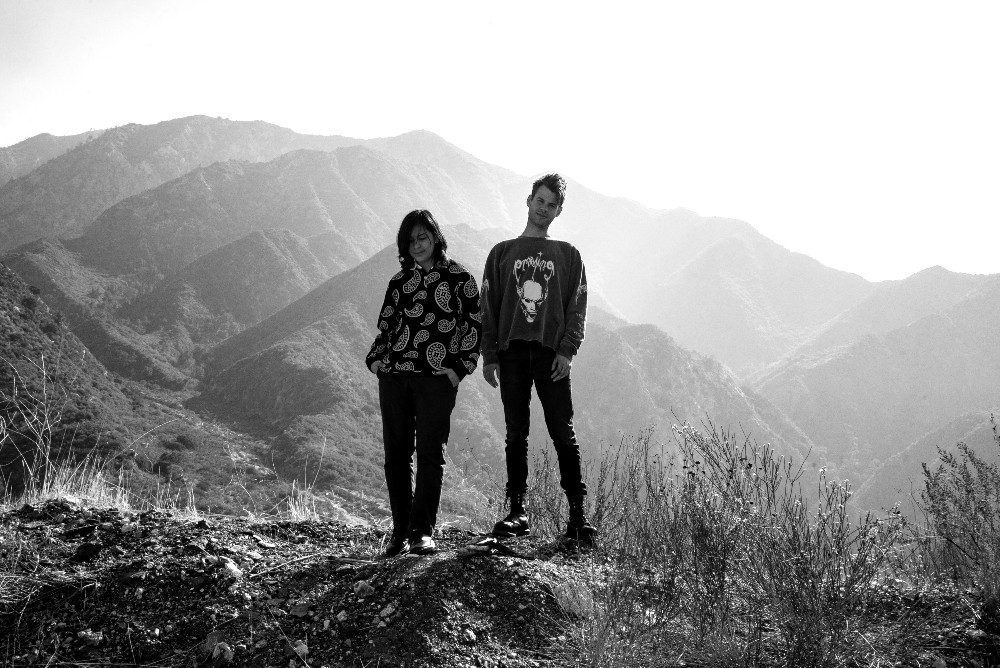
Like mixing baking soda and vinegar in a science fair volcano, L.A.-based musicians Zahara Jaime and Collin Davis couldn’t help but react explosively once their powers combined.

Jaime has been hard at work on their solo project under the moniker Zzzahara, as well as playing guitar with Eyedress and in The Simps (both with Idris Vicuña). Davis makes expansive ambient soundscapes as Ynes Mon, releasing his debut LP Holyhead in March of this year. But once the pair started bonding over drum machines and post-punk, their combustible collaboration as U.S. Velvet began to take shape, and last week, they released a video for their eponymous single, directed by Brother Adam Willis.

Angular dance punk guitars, disenchanted attitudes, and a skronky sax solo from the mysterious Folerio soundtrack the world’s weirdest pool-party, populated mainly by cardboard cut-outs that stand in for a bygone era of idealized Hollywood glamour. “To me, the song is this hedonistic embrace of nihilism in present day America and the video reads almost like the opening scene from Blue Velvet… playing into the white picket aesthetic of the MAGA ‘American Dream’ while exposing true darkness that is hiding underneath,” explains Davis. “Then there’s Z and I, subverting and wreaking havoc upon it, like the slasher in a ’70s horror flick.”

“We live to erase/Take me to a far gone place,” the duo shout-sings, building up an arsenal of surrealist imagery along the way. Their nihilistic critique of modern-day struggle comes from observing it first-hand in rapidly gentrifying Highland Park. Jaime was born and raised there; Davis migrated from the Bay Area after dropping out of college to pursue music. “Z and I both worked service industry jobs on the same block. I had known Z very casually for a couple of years and we would just give each other free drinks at our wack jobs,” Davis remembers. “I think Z thought I was Billie Eilish’s brother for a long time because he was also a regular.”

“Collin was so friendly – every time he’d come up to me and be super smiley, and I’m just like, dude… why are you so happy all the time? Like, I’m fuckin’ miserable in my life, why are you so cool?” Jaime says with a laugh. Davis suggested they go to The OffBeat’s regular Monday night drag open mic, and though Jaime scoffed at the idea initially, they both eventually wound up there.

“Looking back I was pretty persistent on hanging out in the beginning but now they are one of my closest friends and collaborators so I’m glad I did,” says Davis. “I just always thought they had such a cool vibe from afar and then my good friend booked them at a show so I knew they were homie verified.”

By then, Davis had started working as a producer and sound engineer at Stones Throw Studios, a job he got through a mutual friend after working in a couple of different studios around L.A. “Working with all the artists who come through has been a huge blessing,” he says. “I’m always peeping game in studio sessions and learning from other artists’ process.”

It was a blessing for Jaime too, who had been recording at home for years, to finally have access to a studio setting – and their musical chemistry was on point. “Collin has taught me so much about audio stuff,” they say. “He can just read my mind and that’s why I love working with him so much. He’ll be like, ‘I feel like you need to tap into a more emotional riff…’ He brings out the better musician in me and I think I bring it out in him too because we feed off of each other. We could put together [ideas] and it becomes this poppy dark wave instrumental and it’s so sick.”

Still, Davis says, he and Jaime had no intentions of starting another band at first. “We went into Future Music on York Boulevard to browse and I pointed out a cool drum machine. The next day Z showed up at my door with the same drum machine in hand. Within 48 hours we had recorded two U.S. Velvet tracks,” he recalls. “Z and I have pretty different taste in music but we both love late ’70s and early ’80s post punk and goth so even though it was never discussed I think that became a natural jumping off point for our sound.”

Last year, they released debut single “Sleep Paralysis,” which sprawls gorgeously into the goth territory of songs like The Cure’s “Lullaby.” While “U.S. Velvet” is decidedly more boisterous, making use of cool audio tricks like a chopped up, backward vocal, both provide a nice entry point for the band’s sonic touchstones. The version of “U.S. Velvet” posted to Bandcamp is a full minute longer than the cut used for the video, thanks to a chaotically transcendent guitar solo bridge that somehow conveys just as must angst as the song’s despondent lyrics. And yet, the overall sound is nervy, infectious, and perfect for an apocalyptic dance party.

Regardless of the darker influences and motifs they’re drawn to, Jaime and Davis clearly approach U.S. Velvet from a place of wanting to have fun with it, and they develop songs for the project on a rolling basis, not worried about where they’ll go. In the meantime, Liminal Spaces, the debut album from Zzzahara, will be out on Lex Records sometime next year; Davis says he has been working on “a good amount of psych-R&B where I’m singing, and at least two instrumental albums made in collaboration with a therapist for psychedelic assisted therapy.” He will also release a song and video called “Sun Eyes” as Ynes Mon soon, with “a couple full projects done waiting in the wings for the right time.” When it comes to U.S. Velvet’s prescient dark-wave nihilism, it feels like there’s no better time than now.

Follow U.S. Velvet on Instagram for ongoing updates.

Vakili Band Call For Compassion With Reworked “Dreamy Dreamer”

Photo Credit: Jacob Blickenstaff

Lily Vakili once asked her mother, “What do you want me to be?” She was never one to give “easy answers,” as Vakili recalls, and her response propelled the singer-songwriter to question her place in the world. “I want you to be a compassionate human being,” she told her daughter. Vakili’s mother died from Alzheimer’s disease, and in many ways, the long goodbye served as the catalyst to revisit a previously recorded song.

Dreamy Dreamer,” originally appearing as “Dreamy Dreamers” on the Vakili Band’s 2018 LP Oh Alright, wound itself around Vakili’s brain. “My mother was a dreamy dreamer, a deeply ethical and compassionate person,” she muses. “In some ways, she’s a catalyst for everything that I do, creatively – not the only catalyst, but a catalyst.”

With “Dreamy Dreamer,” Vakili and bandmates Ben St. Jack (guitar, songwriter), Joel Dorow (harmonica), Gordon Kuba (drummer), Jim Tyndall (bass), and Matt Jovanis (bass) worked with producer Dave Amlen, who suggested a back-to-roots adaption. “This is a great thing about collaborating with other artists and friends and just listening to people paying attention,” offers Vakili.

In their creative endeavors, she discovered a vocal approach “that changes the way I feel about it, and I think it changes the way the listener feels about it.” And “Dreamy Dreamer” exemplifies the best of Vakili’s work, often calling to touchstones like Patti Smith and Brandi Carlile. Her voice is as butter on a hot tin roof, just enough sizzle to drive home the emotional anvil.

Initially intended as a social justice meditation, the song’s transformation into a universal plea for love in all its forms, even the damaged and broken, was reaffirmed recently when Vakili read a piece on Ashley M. Jones, named the new Poet Laureate of Alabama, a role she’ll hold from 2022-2026. What struck Vakili deep in her soul was Jones’ description of love, felt like unshakeable tremor, that now guides every facet of Vakili’s life. “The biggest thing that I learned moving away is that love is a complete word,” Jones explained. “It’s not just, ‘I like this thing, it’s always good to me.’ Love means also understanding what’s wrong and committing to change for the better.”

In the last few years, she has been doing much of this deeply personal work in her life, confronting herself in the mirror with a searing honesty. “I guess, sometimes it’s about change, and sometimes it’s about honesty,” she says, recognizing “that there’s probably much more that I can do as an individual” and understanding “where I am in society and what I am able to do and contribute, so that I can approach people with a greater sense of compassion.”

The role of grief appeared as an integral thread to the song’s thematic fabrics of love and empathy, as well. “My son was diagnosed very young on the autistic spectrum, and had an underlying medical condition. That’s pretty serious. That puts you in a whole world that one never anticipates,” she reflects. “As with a lot of grief, you can either shut it off and proceed as if it isn’t altering you at a cellular level, or you wade in and experience it. There is one solution, and it’s exactly what I wanted to end up singing about in the song, which is love.”

“Within that world of great grief and exhaustion, there is the physical challenge of being a character,” she continues. “There are these extraordinary gestures of kindness and solidarity and compassion, and my son’s been the beneficiary of those things. So, I’ve witnessed the way any elder hopefully can teach someone else in how you do this. This is how you’re kind. This is how you ease someone’s mind for a little bit. This is how you show solidarity.” Those experiences served as the blueprint for the song’s rousing refrain: “I stand with you in your quest to believe in justice/Tempered by compassion/Yeah, truth without deceit/Where everyone can say without hesitation/Love is all that matters.”

Her father, an Iranian immigrant who became a plant geneticist in Honduras, and her mother, an Irish-American librarian, believed in the power of music, words, and dreaming beyond the here and now. Vakili first began writing poetry for her mother when she was only six years old, and despite not quite understanding the gravity of her work then, it became evident she was onto something huge. “I didn’t even characterize it as poetry. I loved her, and I was a writer, so I wanted to express myself. Then, I started to realize that the things that I’d written were all stories, fundamentally,” she recalls.

Spending part of her childhood in Puerto Rico, home life was filled with a “wild mix” of sounds which included the West Side Story soundtrack, traditional Peruvian music, R&B, funk, honky-tonk, and Merengue music. “These rhythms were just everywhere, and I was like a sponge. I love music. I love rhythm and percussion,” she says. “Of course, the acoustic guitar really is in its essence a percussive instrument.” She picked it up around the age of 14, when her older sister left for college. “I am a believer that strange things happen all the time. Sometimes, you don’t know until much later what that thing was that unlocked what you’d maybe been seeking or hoping to explore. Playing the guitar was a mixture of an escape of sorts and meditation, a way of being super present.”

Now a biotech lawyer by day and a musician by night, Vakili is more present than ever. With two previous solo records and one band LP to her credit, her love for words and music-making is only growing stronger and brighter with each project. “I love writing. I love words. I love intentionality. And I love listening. So, I try to make myself available,” she offers about her growth as a songwriter over the years.

Her favorite words? “You mean, other than curse words? I am embarrassed to say, but I just have a phenomenally filthy mouth,” she says with a laugh. “I think it’s because curse words are highly percussive.”

More seriously, Spanish, her native language, is home to many of her favorite words and phrases. “I love ‘te adoro’ — I adore you. Doesn’t that sound wonderful? Spanish itself is such an incredible language to listen to,” she says. “As my mother went further and further into Alzheimer’s, one of our favorite pastimes was, I would bring a dictionary or a newspaper, and I would read it to her. I would read simple things that I knew she would appreciate. She still loved words so much.”

“Dreamy Dreamer” arrives as not only an important marker of the past, its emotional messaging scrawled in acoustic tears, but a bellwether for the band’s future — one carved in compassion and musical excellence.

Follow Vakili Band on Twitter and Instagram for ongoing updates.

Transformation, Rebirth, and Unsolved Mysteries Inspired Latest Marissa Nadler LP The Path of the Clouds

Photo by Nick Fancher

Marissa Nadler binged Unsolved Mysteries during lockdown. Among other things, obviously – the Boston-based “dream folk” songwriter took piano lessons, and wrote, recorded and produced her ninth solo album The Path of the Clouds, out October 29 on Sacred Bones/Bella Union. These activities are less unrelated than you might think, as the long-running true crime show inspired several songs on the record.

The implied brutality doesn’t track at first, set against the notion of Nadler’s sparse acoustic riffs, carried higher into the heavens by her now-iconic mezzo-soprano. She notes, though, that the stories that inspired her most were not necessarily the most violent, but rather, perhaps, the most mysterious: the ones of those who disappeared, never to be found.

“That concept of starting a life again was something I found very interesting, and personally related to,” she explains. “Just the concept that maybe if these people did make it, that they were able to recreate themselves. In some ways, I’ve gone through some transitions in my life that made the overlaps kind of clear.”

That idea of transformation, of being reborn, plays central to the record. Acclaimed for her brilliant guitar playing and haunting vocals over the course of her nearly twenty-year career as a songwriter, she’s got some consistently big shoes to keep filled. Music critics (perhaps worth noting, male critics) frequently ascribe the siren narrative to her: Pitchfork wrote in a glowing review for 2004’s Ballads of Living and Dying that hers was “the sort of voice that you’d follow straight to Hades,” and in a 2006 article, The Boston Globe said, “She has a voice that, in mythological times, could have lured men to their deaths at sea, an intoxicating soprano drenched in gauzy reverb that hits bell-clear heights, lingers, and tapers off like rings of smoke.”

Without projecting anything onto Nadler myself, I can imagine that such consistent, albeit well-deserved praise, praise evoking the divine, might weigh one down with a certain type of pressure to perform, to repeat successes. Which, I think, is what makes The Path of the Clouds not only special, but perhaps Nadler’s most impressive album yet. Her yearning for transformation, for definition on her own terms, shines through with the experimental risks she took not only in the lyricism itself, but in the scope of the instrumentation too; the album features piano, woodwind and synthetic elements, what she calls “a return to some of the spacy stuff that I’ve always liked,” i.e. the Pink Floyd records she grew up on. It’s ambitious and complex, evidence of an artist in constant evolution.

Despite the inherent anxiety and downsides, the pandemic offered her space to try new things time to be “very creatively fruitful.” Thematically, it strays from earlier work. “A lot of these songs are more about personal growth and change, instead of some of my early records, [which] were lovelorn, heartbroken,” she says. “There’s a lot less of that on this record, and more about a personal journey.”

Meanwhile, her experimentation with other instruments played into the LP’s different sound. Though her piano teacher Jesse Chandler ultimately played keys on the record, she wrote much of it on a piano. “If you’ve been playing an instrument like the guitar for a long time you get stuck, or you gravitate towards certain chord progressions,” she explains. “But when you sit at a piano, your fingers go to different places. Chord progressions that are harder to play on the guitar are easier on the piano, and little things like that gave a lot of melodic inspiration to me.”

We are left with eleven songs about “metamorphosis, love, mysticism and murder.” While the fresh instrumentation is best displayed with the sweeping grandeur of tracks like “Elegy,” the lyrical storytelling shines on the Unsolved Mysteries-inspired tracks. On “Bessie, Did You Make It?,” she asks just that: “Did you make it on your own?” She inverts the traditional murder ballad narrative, one where victim becomes survivor in a stunning journey of resilience. Similarly, the title track tells the story of plane hijacker D.B. Cooper who famously hijacked a Boeing 727 in 1971, escaped by jumping out and purportedly faking his own death. In Nadler’s hands, it becomes a tale of mastering your own fate and going out on your own terms.

In many ways, perhaps that’s what the pandemic offered Nadler: the chance to disappear and start over. And she did, subverting our expectations to give us something fresher, fuller. This didn’t just apply to her musical practice – a RISD-trained fine artist, she’s honing her painting practice and seeking gallery representation as a visual artist, training she’s also applying to her music videos, while also exploring the idea of film scoring, an intuitive next step for music so cinematic and rife with drama. Considering what the first twenty years of Nadler’s career have offered us, I look forward to what she brings us with the next twenty, with each reborn version of herself.

Follow Marissa Nadler on Facebook and Instagram for ongoing updates.

Anna Lunoe Focuses on Inspiring, Hopeful Conversations About Creativity with New Podcast

Photo courtesy of Anna Lunoe

Need a little inspiration to get you started on your next project? Anna Lunoe has a podcast for you. Back in September, the DJ/producer launched Create/Destroy, a series of in-depth, process-centric interviews with fellow artists. 

Lunoe had been wanting to do a podcast for quite some time. “It’s been on my board, waiting for a window when it felt right,” she says in an email interview. “I kind of had the idea for a while, and then, after what was meant to be a really quick five-minute interview with Porter Robinson went for 45 minutes and got super deep, I really thought, damn, I have to do this! These conversations would be so crucial for people who want to make music and just generally live their passions! I have to do it. I will make the time somehow!”

At the time of this story, Lunoe had already released two episodes of the new show. The first featured British DJ and producer Chris Lake, with whom Lunoe had previously collaborated on the 2015 track “Stomper.” The second focused on an interview with TT the Artist, director of the documentary Dark City Beneath the Beat, whose work includes music, film and visual art. 

“I considered people from all avenues of music with different but incredible stories to tell who could shift perspective and speak to people deeply about creative life,” Lunoe explains. “This season I went for people I knew so I could work out the flow of a conversation like this, and make sure each chat was natural. But in the future I would really like to flex into all kinds of creative fields!”

Create/Destroy isn’t about pursuing music as a career. It’s not even really about music; the subjects tackled here could be applied across disciplines. Instead, Lunoe is digging into creativity as a necessary part of life. She says that talking about the connection between creativity and self-care, or “how linked creativity is with mental health and feelings of well being within ourselves,” really struck a chord with her. “We must constantly work towards it and realign with our values in order to maintain productivity and flow,” she says. 

Lunoe, whose career began in Sydney’s club scene of the early ‘00s, says that her own approach to creativity has shifted throughout the years. “I went from having a desire to create, lumped under a big pile of insecurity that was stopping my productivity, to learning how to ditch the load and be able to access and apply it with much more ease,” she says. “That process is heavy work and guidance is necessary!”

Even now, though, good things can take time. Lunoe’s recent single, “Back Seat,” which features Genesis Owusu on vocals, began to take shape back in 2019. “I had the core three elements – bass, synth motif, and defining beat groove – within the first twenty minutes, and the rest took nearly two years to fall into place!” she says. The track was put on hold for various reasons. In the meantime, Lunoe herself experienced a major life event with the birth of her second child right before the onset of the COVID-19 pandemic. “Perhaps I needed all those changes to find the version of the song that I have today,” she muses. “Genesis came on board this year and it finally felt done!”

Lunoe says that the pandemic has changed her approach to creativity in some ways. “It has allowed me a deeper dive into a few things that touring did not allow me,” she says. “I don’t have access to resources I once had, or at least not in the same way. It’s been good and challenging at times. On a personal level I’ve deeply investigated the other sides of myself that don’t apply to touring and performance, and what’s important for me to foster without that. Hence deciding to do this podcast!”

And the podcast comes at a great time, bringing a message of hope after nearly two years of pandemic-related upheaval. The hopefulness in Lunoe’s podcasts is part of the point of the series. “Life is challenging right now. We know that,” she says. “Hope is necessary to creation and vice versa.”

She continues, “There are many loud scary voices telling us there is no hope, so it’s up to those still with hope in their hearts to be very loud right now. If you have it, USE it. We need every loud voice screaming for  potential and beauty to make the world a better place to be.”

Follow Anna Lunoe on Instagram, Facebook, and Twitter for ongoing updates.

Dami Im Sheds Every Illusion on Sixth LP My Reality

Photo Credit: Glenn Hunt

“I feel like this is [the] dream album that I’ve always wanted to make since I was a teenager, so I’m really looking forward to having it out there,” says Korean-Australian pop singer Dami Im of her latest LP, My Reality. With five previous albums and a decade of music industry experience propelled by her success in reality television singing competitions, that’s no small claim. Each step of Im’s journey brought her closer to fully manifesting her artistic vision – honing her voice, sharing her views, building her contacts, and weaving the threads of her identity into one cohesive album. Along with its October 29 release comes a sense of liberation and empowerment, too.

“I needed to understand how to achieve it. I feel like now, I’m at a point where I do have the drive, the maturity and the skills to be able to create what I actually hear in my head, and to try to make the vision come to reality,” Im says. “You can know what you want in your head, but executing it is a different question… I didn’t know how to get there, and work with the right people, collaborate, and follow through with that vision to the end… I feel like I now have that confidence and the strength to do that.”

My Reality is musically-rich, multi-textured pop, drawing from Im’s love of electro, rock and dance and her background in classical and gospel music. Hip-hop and pop producers Andrew Burford, One Above (Hilltop Hoods, Illy), Andy Mak (Vera Blue, Tina Arena) and Konstantin Kersting (Tones And I, Spacey Jane) were all on board for the project. While the album’s title is a cheeky reference to her reality TV fame in Australia, it more importantly illuminates the contrast between knowing someone from the hour or so each week that you see them through a screen, and actually, really knowing someone.

“What I consider to be my reality may be different to how other people perceive it,” she attests. “It’s factual and a fantasy all at the same time. Because of all the television and reality TV shows, people assume they know me and they know me a certain way but I don’t think they know me all the way, all the different ways.”

In Australia, Dami Im first became a household name on the fifth season of popular TV show The X Factor Australia in 2013. In 2016, she represented Australia at Eurovision, becoming the highest scoring Australian entry ever with her “Sound of Silence.” Two years later, she performed at the Commonwealth Games Closing Ceremony. In between, there’s been five albums, a reality TV dance show (Dancing With The Stars) and a reality TV cooking competition (Celebrity MasterChef), and number one albums and singles.

But Im’s love of music stretches back much further, to her childhood in Seoul. “My mum was trained in opera and classical singing, so we always had lots of music in the house, lots of classical music. We couldn’t not play music, me and my brother. My dad loved playing a lot of instruments as well, and singing,” she recalls. She began piano lessons at the age of 5, later singing and writing her own songs. When the family moved to Brisbane, music provided a sense of belonging and connection in Im’s new and unfamiliar surroundings.

“Playing the piano was not only helpful for me musically, but I think that’s what gave me some kind of identity and confidence when I first came to Australia,” she says. “I couldn’t speak English very well, so I felt really dumb…[but] whenever it came to music, I could play piano and at that really tiny school, everyone thought that I was the best. I felt really proud as a little kid. Music gave me this other language that I could use.”

By age 11, Im began studying piano at the Young Conservatorium of Music program at Griffith University in Queensland, later becoming a national finalist in the Yamaha Youth Piano Competition. In 2009, she graduated from the University of Queensland with first class honours in a Bachelor of Music, and also completed a Masters of Music Studies degree in contemporary voice. Her formal schooling might have pointed towards a classical career – especially given her mother’s success in that realm – but the art and science of making pop music held heightened allure. Im’s thorough understanding of theory allows her to convey her vision to collaborators and fully realise it, knowing what is technically achievable.

“There’s a lot more to it than musical skills,” she counters. “I got thrown in to the industry pretty quickly through The X Factor and even though I had been making music all my life… it was different when I had to do it on a really big scale, and I had, suddenly, so much pressure… All of a sudden, I had to make something that would be played on radio, and what does that even mean?”

A condition of her X Factor win was signing to Sony Music Australia, which provided her with a recording and management deal after she won with the single “Alive.” She left Sony last year; last month, the label made national news in Australia for an investigative TV revelation on ABC’s 4 Corners of decades of abuse, harassment and systematically firing women when they were on maternity leave.

“I did watch it and yeah, yeah, that’s where I was,” says Im with a nervous laugh. “Whatever the staff experienced there, the artists also experienced…for me, I don’t think I’ve ever been silent about it. I’ve always said things about my experience and I guess people didn’t pay that much attention until now.”

It’s not surprising that artists have been less willing to talk about their experiences with Sony – especially those that still feel indebted to the label, whether emotionally or contractually. Im not only feels she’s paid that debt, but that Sony’s insistence on pushing her to record covers rather than originals sold her extremely short as a creative force, ultimately driving her to sign with competitor ABC Music. “All I can say is when I was at Sony I had some really great opportunities and really great experiences as well… [but] on a creative level, I felt that I needed to have more control,” she admits. “I learnt that I like to be the boss when it comes to my songwriting, so for me it was time to leave.”

There were certainly clues to her struggle in the first singles she released independently, beginning with 2019’s “Crying Underwater,” which addressed the pressure to look content while secretly suffering. Then, in January 2020, “Kiss You Anyway” revealed the more emotive route Im would be taking; she recorded a Korean version in November last year. The third single, “Marching On,” was a love song from a daughter to her mother, anchored by piano and hand-click-style percussion.

After signing to ABC and dropping “Paper Dragon” last year – a siren song that declares her newfound confidence – she followed up with the mid-tempo, sunshine pop of “Lonely Cactus.” A twangy bass line roots the song, layered over with synth claps, funky drums and Im’s lyrical paean to being alone, prickly and defensive. “I try and go to those uncomfortable problems and thoughts and experiences, because I think when I go to those dangerous places, people relate to it more,” she confesses.

All of these songs appear on My Reality, showcasing Im’s emotional versatility. But her latest single, album opener “Pray,” is perhaps one of the most powerful. Im’s literal faith has always been front-and-center in her career, but “Pray” is, perhaps even more poignantly, a celebration of Im’s faith in herself. Never faltering in that belief has resulted in an album of funky, rhythmic, danceable pop that both addresses and unites us in handling everyday injustices and micro-traumas of life – one that Dami Im has every right to be proud of, now that she’s made it a reality.

Follow Dami Im on Instagram and Facebook for ongoing updates.

Poly Styrene Battled Breast Cancer But it Wasn’t the End of her Legacy

Poly Styrene / Photo Credit: Falcon Stuart

As October—named Breast Cancer Awareness month—draws to a close, our thoughts turn to the extraordinary women in our personal lives and in the public sphere who’ve faced the disease. Musicians Minnie Riperton, Carly Simon, and Melissa Etheridge, designer Betsey Johnson, comedian Wanda Sykes, photographer Linda McCartney, feminist trailblazer Gloria Steinem, and author/advocate Audre Lorde, legends all, are just a few who’ve received this diagnosis.

Riperton, McCartney, and Lorde died of breast cancer—but not before sharing their remarkable inner strength with the world. Riperton filmed a public-awareness TV segment about her diagnosis in the late ’70s, speaking out to help other women at a time when public discussion of the disease was rare. McCartney attended one of her daughter Stella’s fashion shows toward the end of her life, in 1998; the physical frailty she allowed cameras to capture was nothing compared to the pride in her face and the message she conveyed: Until we die, we must live. And Lorde’s writing on cancer, such as in 1980’s The Cancer Journals, was so ahead of its time that it could have been published last week. She led the way in discussions of sexuality, environmentalism, and personal agency in relation to breast cancer, displaying power rather than victimhood even as she confronted a disease that would prove fatal.

And then there’s Poly Styrene (born Marianne Joan Elliott-Said), of punk band X-Ray Spex. Though she died of breast cancer in 2011, at the too-young age of 53, the marks she made on the world in her lifetime have proven indelible.

Styrene, who grew up in London, founded X-Ray Spex in 1976. She was the visual center of the band; her creative fashion sense and personal style made her hard to miss. Notably, she was also a woman of color—her mother was from England, her father from Somalia—in the primarily white and male punk world. But being an outsider was not new to her; Styrene’s daughter, Celeste Bell, has stated that the singer faced racism, poverty, and physical and sexual abuse during her lifetime; and some of Styrene’s songs explore these issues.

Wanting to branch out, Styrene left the band at its peak, in 1979. Next up was a solo album, 1980’s Translucence, on which she explored different musical styles—but as often happens, the world seemed to be expecting more of what she’d already done, and the album had only modest sales.

A few years later, Styrene took Bell to live in a Hare Krishna commune in the county of Hertfordshire. Her connections to the religion and to her spirituality lasted the rest of her life; her final album, 2011’s Generation Indigo, includes a track called “Electric Blue Monsoon” in which she honors Krishna traditions. 

Styrene recorded several more solo albums after Translucence. And she appeared with X-Ray Specs for a reunion performance in 2008, from which came a live album, Live @ the Roundhouse London 2008

Generation Indigo was written and recorded by Styrene in the years leading up to her death; her daughter and her sister provided backing vocals. Socially engaged throughout her life, Styrene included songs about racism, poverty, and protest on the album, which was released one month before her passing.

In 2018, Dayglo: The Poly Styrene Story was published in oral-biography form, cowritten by Bell and music journalist Zoe Howe. A documentary about Styrene, I Am A Cliché, is currently streaming in the U.K., Ireland, and Finland; it will be released in the U.S. and Canada in February 2022, with other countries to follow. Far from being forgotten, Styrene and her work are reaching even broader audiences through these projects, ensuring her legacy.

Her memory is honored; her light remains.

Author’s Note: Take care of your health by talking with your doctor about when you should begin breast screening, staying on top of the screenings that are recommended, and being aware of what is “normal” for your breasts. If you notice any changes, such as a new breast lump, a change in your breast shape, or any discharge from your nipple, make sure your gynecologist sees you promptly and that your concerns are taken seriously, regardless of your age; younger women can and do get breast cancer, but their diagnoses are too often delayed. This happened with my own breast cancer diagnosis, in 2008, which was delayed for several months after I found a lump. I wish someone had told me at the time to make more noise on my own behalf. But I have remained cancer-free in the years since my treatment—and I have learned that just as we stand up for all the causes we support, we’ve got to stand up for ourselves.

Sam Evian and Hannah Cohen Found Time to Melt in Their Catskills Artists’ Retreat

Photo Credit: Anna Burch

When Sam Evian and Hannah Cohen shifted their lives from bustling Brooklyn to the wilderness and open landscapes of the Catskills, it was with the vision of an artist’s sanctuary in mind. Their spacious and warm home, known as Flying Cloud, provided both a working space and a comforting retreat for their collaborators and friends. Only months after moving in though, pandemic restrictions forced the revolving door of houseguests to stay shut. Evian (producer for Blonde Redhead, Cass McCombs, and Widowspeak) and singer-songwriter Cohen used the time out from touring and hosting guests to work on their own respective albums, though never without the other’s input; Evian’s Time To Melt arrives first, on October 29 via Fat Possum Records, following his 2018 LP You, Forever and 2016 debut Premium.

When they talk with Audiofemme from their Catskills home, they are joined by their (very beloved) dog. Cohen is in the midst of baking. There’s a sense of ease to their conversation, in which they sweetly finish each other’s sentences and bat questions between them. The couple had become accustomed to the grind and hustle of city life. Evian’s touring and Cohen’s extensive travels as a model from the age of 17 had instilled a weariness in them.

“We were in Brooklyn before this, so it’s pretty much 100 per cent different,” says Evian. “We were living the city life and grinding and paying rent and just trying to survive day to day… It’s been amazing to have a space to open up as artists and bring other artists here to collaborate. Escaping the city, [we’ve been] getting out into the woods to reconnect with ourselves and nature, and how we want to live our lives.”

Cohen is currently working on her next album. It will arrive almost a decade after her 2012 debut Child Bride, though only a few years after Welcome Home (2019), redolent with folksy acoustic ballads that reveal bloody-edged truths about love and loss.

“Usually, I start writing something on my own and once I’m feeling good about it, then I’ll bring it to Sam. But I’ll work on a song for two weeks, I’ll send Sam a voice note, then I’ll run away or something! I’m like, ‘Is this cool, or maybe it’s not?’ Sometimes I’ll only have part of a song and then Sam will come in and help me pull together a bridge or a new verse. It’s very collaborative,” she says.

She will record it, as Evian did Time To Melt, in their home studio. The plan is to create a clearer divide between their home and work lives, though. “There’s a barn on the property that we’ll be moving the studio into, but we’re in the early stages of doing that,” Cohen explains.

“We’re renovating the barn so we can make a bigger working space for music and also separate work and life a little bit,” adds Evian. “We just need, maybe, fifteen feet of separation. It’ll give us more space to have multi-dimensional art projects happen. If anyone wants to do a retreat, it will be a good space for that.”

Their artist friends and collaborators have already begun to make the 2.5 hour drive from New York, or to arrive by plane, train or bus from elsewhere. Everyone they work with is vaccinated and when guests arrive, they are cooked for and cared for, only leaving the house to hike or forage for wild plants and mushrooms. But, it was during the lockdown period through 2020 that Evian found his footing as a solo artist and recruited Cohen as a collaborator, when she wasn’t writing for her own album.

He took a deep dive into the demos he’d recorded over the two years prior. The 60-plus instrumental tracks revealed the magic and majesty that the patina of time had enriched. Evian and Cohen began to mould the tracks into songs and gradually they amassed a cohort of friends to collaborate from their respective homes. Spencer Tweedy, Chris Bear, Jon Natchez and social media fans submitted their input. The resulting album, Time To Melt, is both a throwback to the soundtrack of good times and gatherings the couple missed, but also a lyrical inquiry into the many injustices Evian was witnessing via relentless news reports.  

“I’d always had the goal for this record of going down the rabbit hole by myself because I’d never let myself do that,” he says. “My goal with this record was to test myself and my abilities with the different studio techniques and get obsessive over arrangements for things, like the saxophones on ‘Knock Knock.’”

Evian describes himself as a “jack of all trades and master of none” when it comes to his instrumental skills. He undersells himself.

“I would play along to a drum machine and build from there. I did most of it alone, then I’d have certain musicians send me performances because it was the deep part of COVID when no one was seeing one other… I’d have a friend record some drums and send it to me and things like that,” he shares. “I play mostly everything on the record except for the drums… bass, guitar, saxophone (the instrument that I studied in school), keyboards, some clarinet…”

“Flute?” offers Hannah.

“I don’t play flute,” laughs Evian. “I wish I could play a flute! I’m trying to get instruments under my belt that people usually want on records. Music is a language and if you can hear it in your head and communicate it with your voice then it’s usually pretty easy to cross-communicate with different instruments.”

Evian was very specific with the sequencing of tracks, and it is the first five tracks that are his pride and joy. They are designed to seamlessly flow into each other, much like a DJ set. They are funky, downbeat disco numbers, slinky and sequined, sultry with a distinctive R&B soul groove to them. Cohen’s gorgeous harmony on “Dream Free” shows off her lovely voice, which is both smoky in the lower ranges and gorgeously warm and bright through the midrange. It partners perfectly with the deep, anchoring bass line and trembling, sunshine-blinding, woozy atmospherics.

Evian and Cohen want to perform live, but both have also had time to reflect on how touring could be a healthier endeavour. “It was interesting because we’d been hustling so much, Hannah and I, touring and having people here to make records…then everything stopped…” Evian muses. “Maybe going on a five-week tour is not the healthiest… it can be really destructive.”

“For me, touring has always actually been an expense that I write off on taxes, but touring has always put me in debt and Hannah too, has just paid off her debt from touring before COVID. I don’t think people realise how crippling it can be to tour,” he adds, rattling off the litany of travel costs, paying musicians, hotel costs, venue bookings, insurance and feeding everyone. “Touring is really for the 1% of the music industry. It’s for huge venues and stadiums.”

“Bigger artists in the industry do really well, but we’re not that big, so… we’d both end up going into debt,” he concludes. “We both love playing and it’s been hard not having that catharsis of just playing music and speaking that language out on the stage with our friends and sharing that connection with people.”

Evian does have some shows lined up in New York, Washington, Philadelphia and Chicago. In the meantime, he and Cohen are cooking, dancing and playing with their canine “pandemic baby” to the soundtrack of Time To Melt.

Time To Melt is like a party, a disco. It’s so funky… it’s such a fun record,” says Cohen.

Adds Evian, “Most records I usually get tired of, but this one I still get a kick out of listening to.”

Follow Sam Evian, Hannah Cohen, and Flying Cloud Recordings on Instagram for ongoing updates.

W.S.A.B.I. Radicalizes the Natural World with Red Hook Farms Mixtape

When’s the last time you considered your relationship to the land you live on? For those of us living in cities, it can feel particularly challenging to cultivate a connection with the natural world, given that in our context it’s been largely paved over. But to Brookyn-based artist and musician Jennae Santos, who creates under the moniker W.S.A.B.I., our urban setting is all the more reason to consider this question.

To Santos, there’s something radical and subversive about communing with the natural world on a more intimate level. W.S.A.B.I. itself stands for Warped Sanggot And Boss Interior, which she describes more specifically in an artist statement: “The Sanggot is a Visayan Philippine hand sickle— a farming tool and martial arts weapon that guides W.S.A.B.I.’s artistic, political, and emotional practice in the harvest of love, community, and subsistence, and the fight for the oppressed body. Our blade is warped from the ongoing work at hand: decolonization, abolition, and warrior pedagogy, fight songs against white supremacist patriarchal capitalism, love songs stoked in multi-sensory radical commitment. Boss Interior means inner strength through the work, and acknowledgment of both the oppressor and the spirit of resistance within colonized identity.”

Santos’ musical style is highly technical and at times jarring, a genre she’s come to define as “art prog.” And by that, she means to synthesize the angular, sometimes unpredictable acuity of art rock with the ambitious composition and repetition of progressive rock. Her most recent release is the Three Houses (Live) EP. Attributed to the WSABI Duo of Love featuring Alex Goldberg, live from quarantine, the three songs were written and recorded over what she describes on her website as “transient overhauls” at three different houses over the course of the initial COVID lockdown. Minimal and lacking the jolting angularity of her work with a full band, they reflect her newfound experimentation with field recordings that led to the walking mixtape, though they do have their heavier moments.

Like many musicians, her practice became more of a solo endeavor when COVID separated her from her bandmates, and her creations became more experimental. A winner of Audiofemme‘s 2020 Agenda Artist Grant, she took the opportunity to expand her artistic acumen to something new and different: a “walking mixtape” exploring the concept of harvest, made in collaboration with Red Hook Farms, where she is a CSA member and volunteer. 

She took field recordings to include sounds from the farm, plant meditations and personal accounts from the youth farmers she supervises – many of whom are neighborhood teens with little existing connection to the natural world – and converted the sound samples into beats inspired by the energy of the farm, creating a site-specific musical walking tour that visitors could access by scanning a QR code at the Saturday farmer’s market. 

“I have like 200 recordings on my voice memos,” Santos shares when I ask how she takes these field recordings. They require nothing more than an iPhone, allowing Santos to record sounds whenever inspiration strikes: for example, for a recent commissioned piece on climate change, she went out to Far Rockaway and Dead Horse Bay to document the sound of tiny bits of glass washing in on the tide. 

Santos began volunteering on the farm as part of her CSA membership, the first time she had ever harvested her own food, and found the practice grounding. She took to studying the larger socio-economic issue of food insecurity over the pandemic and became all the more inspired.

“It’s such a global issue, food insecurity, and the rights of farmers, from migrant farmers to just people of color having food sovereignty and land sovereignty, so combining that with my artistic passions has been something I’ve been trying to work on for the past year,” she explains. “It’s coming from this wanting to see how we can inform each other, and land is such an experiential element that a lot of humans in cities seem to forget, especially if you’re not having to grow food for yourself.”

Issues of food insecurity and the inaccessibility of fresh produce to underprivileged neighborhoods have always plagued major cities, and New York City is no exception. Even when you have the privilege of affording fresh foods, the hustle of living and surviving in a major city can often leave you reaching for whatever foods are the fastest and most accessible, regardless of how unhealthy or processed they might be.

“I’m trying to bridge those practices of taking time to connect to food and to your health and well-being, through land, and I think that art is an access point for that, if not food itself,” she says. “What I was saying before in terms of land being very experiential, sound is also very experiential. Both of those elements really inform the human condition and remind us that we’re not just machines in an economy, we’re animals — we’re humans of the earth.”

As a self-described “decolonizing Filipinx,” Santos found great inspiration in the agricultural heritage of the Philippines, particularly a rice winnowing song recording from the Kalinga mountain province, and folk dancing based on different baranguays’ (the native Filipino word for village, or district) agricultural specialties and goods. She notes that there has always been a sacred relationship between art and nature in pre-colonial cultures, something she hopes to revive in her own contemporary community of Red Hook, Brooklyn. She conceptualized the project from her own moral exhaustion with the capitalist commodification of both the music and food industries, hoping that she might begin to heal both by synthesizing them with an immersive experience.

By thinking so critically about these issues, Santos has led others to reevaluate their relationship to the land they live on, namely the youth farmers she works with. She references Braiding Sweetgrass by scientist and author Robin Wall Kimmerer, how “finding your own indigeneity is about getting to know the land you inhabit.” Her exercises ask the youth farmers to consider their relationships to art and land, and encourage them to explore their ancestral agricultural heritage by asking elder family members about the family’s historical relationship with land. This aims to undo some of the damage wrought by capitalism and colonialism, particularly the way the latter can limit the depths of ancestral knowledge for people of color. Ultimately, though, it’s meant to unify, a reiteration of Santos’s earlier point, that “we are humans of the earth,” which she does in part by recording these exercises with the youth farmers and incorporating them into the mixtape.

“It’s supposed to evoke a sense of grounding and wonder, as it relates to land, especially in an urban environment, [where] we tend to lose that sense. We have to venture out to go hiking, out of the city, when it really is all around us, so it’s meant to be a reminder of the importance of city ecology also,” she explains, describing the interesting juxtaposition in her field recordings of construction sounds coming from the Amazon distribution warehouses across the street from the farm with its own lush, peaceful sounds. She takes this vast array of sounds and imports into her drum kit and uses them to create the beats that accompany the other sonic elements of the mixtape.

“There’s a pulse to the city, especially when there’s construction nearby. There’s a rhythm to the different seasons, and life cycles of plants,” she continues, explaining how this rhythm is aesthetically similar to the guitar loop-laden durational pieces she typically works on. The repetition in these pieces, she says, makes you “feel time differently.”  

“I think I’m trying to bring that type of patience, that kind of patience [that] also happens when you’re on the farm, just the way that people interact with each other and the space that’s there. It just feels like time, the New York hustle, slows down a bunch, and is more present with this newer rhythm, which is vastly different than just navigating the city.”

While the pandemic has forced all of us to slow down in one way or another, the mindfulness and intentionality Santos brings to her Red Hook Farms project is very welcome as society slowly circles back to whatever version of the status quo will remain in the wake of our present turmoil. Many of us don’t want to go back to the way things were before, rushing through our days as we juggled a seemingly endless cycle of jobs, tasks and errands. 

Santos does want to return to normal in the sense that she misses playing with other musicians. On October 28, she’ll participate in a performance dubbed “The Great Rat Summoning” at the Sultan Room, with EVOLFO, Castle Rat, Reverand Mother, and DJ Miss Hap Selam. She’s also heading into the studio with a full band to record the first full length record for the W.S.A.B.I. project, but her connection to the natural world remains; she participated in a harvest ritual at O+ Positive Festival in Kingston, NY earlier this month. I’d imagine that once you hear the rhythm of the natural world around you, it’s difficult to unhear it.

Follow W.S.A.B.I. on Instagram for ongoing updates.

Ryan James Brewer Crafts Liberating Debut LP Tender

Photo Credit: Ryan Hartley

With his debut LP, Tender, Ryan James Brewer finds liberation from his past. 

Raised in a rural country town in Australia, Brewer admits it was difficult growing up queer in a conservative area. Brewer developed depression and anxiety at an early age that he is still working through today, with therapy and music serving as a healthy combination to help process these complex experiences. “I ran up against a lot of bullying,” Brewer shares with Audiofemme of his upbringing. “Especially as a teenager when you’re finding out about your own sexuality, the general ideals and values there didn’t really help with that. I think as a result of that it took me a long time work through a lot of that and I think I suffered a lot.” 

The budding artist eventually migrated from his small town to the bustling city of Melbourne, where he cut his teeth as a singer and songwriter. In need of a change of scenery and a desire to connect with his contacts in the alt-country and Americana realms of music, Brewer made the 9,000 mile trek to Nashville for a fresh start. It’s here he planted the seeds for Tender, a 10-track exploration of sounds as intricate as the stories they’re wrapped around that masterfully weave together in a avant garde pop masterpiece.

“The record does try to address my struggles as openly as I can possibly be with it all,” he expresses. “[I’m trying to find strength in vulnerability, and challenging the archetypal masculine idea that vulnerability is a negative thing, which I think it’s actually quite the opposite.”

Brewer rejects this norm in “Limits of the Heart,” wherein the song’s carefree spirit is backed by an intoxicating beat of synth pop sounds that create a dreamlike effect. The song is years in the making, as Brewer had begun writing the track inspired by “unsuccessful courtships” and the struggle of embracing his place on the spectrum of sexuality while living in Melbourne in 2015. After five attempts, Brewer tore the song down in order to build it back up again while writing with a friend in Nashville before he landed on the final adaptation. 

“I was definitely grappling with my sexuality and figuring out what sexuality meant for me at the time, coming to grips with my identity as a bisexual man – because in my past I had been conditioned to think that was a bad thing,” he explains. “Part of writing that song was working through a bunch of my internalized homophobia. It was a way of releasing that in a sense.” The line “one breath dispels the limits of the heart” is one of Brewer’s favorites – he drew inspiration from Arthur Rimbaud’s poem, “Ordinary Nocturne,” which he came across while fine-tuning the track. “To me, it speaks to a freedom within vulnerability,” he notes of Rimbaud’s work. 

“One Another” acts as a “companion song” to “Limits of the Heart,” addressing the push and pull Brewer felt between his own feelings and rural Australia’s close-minded views; trying to reconcile the two practically required multiple identities, and had an impact on Brewer’s sense of self. “I identify with that in a strong way, especially in terms of sexuality coming up against a negative association… that had been engrained from a super young age because of the place I grew up in,” he analyzes. “That song is working through that aspect.”

“Just Don’t Let Me Go” is a reflection on perfectionism, and “Ministry of Love” follows suit, serving as a tongue-in-cheek critique of social media where the narrator has an “erotic relationship” with an algorithm.

Like many, Brewer’s world started to shift with the onset of the COVID-19 pandemic. Just weeks before, Brewer was on tour with Nick Lowe in Australia and New Zealand. Soon after his return to the U.S., the shelter in place order was instituted. Initially plotting to make an album completely on his own, Brewer quickly came to the realization that a task that massive was beyond his capability and knew he needed help. “That prompted a mental breakdown of sorts that combined with everything that we’re all living through at the time, and still are,” he recalls. 

Soon after, Brewer followed his gut instinct to San Pedro, a small coastal community in Los Angeles, to work with producer Jon Joseph, the two building a body of work that is electric, yet moving and powerful. They pulled in unique elements to add texture to already vibrant songs. On “Taps/WMDs,” the moody instrumental blends bass guitar and crying trumpet with the sound of Brewer’s dripping faucet, recorded during an unusually cold night in Nashville when he had to keep a slow stream of water running to stop the pipes in his house from freezing. “Things like that excite me – something that’s sort of a plain and interesting rhythm in time that’s not something you would typically associate with music, like a dripping faucet,” Brewer says.

Likewise, “Chercher La Petite Bête” features snippets of a conversation between friends Brewer overhead on a train in Paris, enchanted by their accents and cadence. “That can be a really interesting rhythmic element that you don’t really associate that directly with music,” he muses. “I like those moments of tenderness.”

These effects bring moments of playfulness to an album that deals with heavy subject matter, like album opener “End of a Life.” Brewer describes it as a “direct confrontation with the idea of suicide or suicidal thoughts.” Partly based on Brewer’s own experiences, the song was also inspired by the death of Mark Linkous, the former frontman of indie rock band Sparklehorse, who had lived with depression for many years and committed suicide in 2010.

Admiring Linkous’ writing style and openness in talking about his mental health struggles, Brewer says he felt “seen” in Linkous’ work, and hopes listeners feel the same with his music. “End of a Life,” in particular, was written with the intent of inspiring much-needed conservation around the topic of mental health and suicide. Its free-wheeling sound cradles Brewer’s potent lyrics: “And I believe/I’m intimately afraid of the energy/Can’t make it work for me anymore/With the weight filling up my hands/In the shape of a lonely man.”

“I wrote it so that the depressive idea of suicidal thoughts is personified and structured like a relationship breaking down. I think that song is me working through suicide and the idea of that and trying to normalize the discussion around it. It’s important to be able to talk about that. That’s why I wanted to juxtapose a pretty heavy theme with an upbeat, sunny sounding track. I wanted to have some sort of accessibility there,” he observes. “That song is a way of working through those things. Hopefully in an ideal world you’d be leaving the listener with some insight so that they can identify with it on that front as it relates to depression and suicide.”

But Brewer intentionally ends the album on a “Tender” note with the title track that features him in a solo piano moment. It captures the spirit of freedom and vulnerability channeled into the album that sets Brewer’s past self free, while setting the path for a bright future ahead. “This is a super personal record and it’s my way of working through a lot of things for myself. But the ideal outcome is that I would leave whoever’s listening with some insight and something that they can identify with and carry forward,” Brewer conveys. “The final result is quite liberating.”  

Follow Ryan James Brewer on Instagram, Twitter and Tik Tok for ongoing updates. 

PREMIERE: CHYL and Melissa Brooks Team Up to Reclaim “Barbie”

CHYL

To some, the Barbie doll has come to represent many of the evils of patriarchy, from stereotypical gender roles to unrealistic beauty standards. But in her upbeat, danceable electronic single “Barbie,” electro-house DJ/producer CHYL reclaims the iconic toy as the symbol of a woman who goes on adventures and wears many shoes, both literally and figuratively.

Against a mix of heavy house and hip-hop beats, Aquadolls vocalist Melissa Brooks, who collaborated with CHYL on the bass house song, repeats the sassy monotone refrain: “I’m a real life Barbie.” Contrary to many people’s conception of the Barbie, she sings about flaunting her wealth, being busy with phone calls, and not needing a man: “Wanna talk to me now/You should call me later/You know I got a lot to do/And you should know that I don’t trade that.”

“When you listen to the first couple lines of the lyrics, you might think that me and Melissa are talking about being a pretty girl,” says CHYL. “But it’s not really about that — we’re talking about being a girl who is a badass but also really cute. Who says you can’t be a cute girl? Who says you have to be a cute girl but also be dependent on men? So we wanted to talk about being a girl who’s independent, who makes her own rules, who plays a lot of roles, and people can respect that.”

That’s a persona CHYL felt that Brooks represented, which was why she sought her out to sing the lyrics. “She’s a very independent, very strong girl but also looks good all the time,” she says. “She’s very cute in person, she’s very humble, and overall a very high achiever, so I love her style and thought she’d be the perfect person to be the vocalist on this song.” 

Featured “Barbie” vocalist Melissa Brooks

CHYL conceived of the song to fill a void in the male-dominated electronic music genre, where she noticed a lack of feminist lyrics. “There aren’t that may songs celebrating women and girls in electronic music,” says CHYL. “Most of the songs just talk about being in a club or people falling in love, and I wanted to break that boundary of having a song that celebrated being a woman.”

Given that under three percent of producers are women, she hopes the unabashedly feminine song might inspire other women to become producers.

CHYL, who grew up in China and Canada but is currently based in LA, produced the instrumentals first then collaborated with Brooks on the lyrics before recording the vocals with her, a process she says took several months. “It took me a while to come up with the bass line that I’m satisfied with, the beats that we’re actually comfortable releasing,” she says. “We recorded so many different versions of the song.”

The end product is a fun, choppy mish-mash of house drums, subtly auto-tuned vocals (she used a plugin called Fresh Air that brings out the high notes), and dreamy bells and sprinkling effects in the dramatic drop. “I tried to put a girly touch, and I feel like you can hear that,” she says. “The effects were very sparkly and fun.”

CHYL has released six singles so far, all this year, and is working on a number of others. She hopes to release an EP in the near future but for now is focused on two singles called “Bestie” and “Bitch Mode,” which she likes to think of as complements to “Barbie,” since they’re all “female-themed” and feature female vocalists she hand-selected.

CHYL — a moniker that came from the second syllable of her first name, Rachel — began listening to EDM while she was studying economics in college, but she didn’t think initially about doing music professionally; she went on to work on Wall Street instead. “I was mentally suffering a lot from the job and getting a little bitt depressed,” she remembers. “Over the course of two years in finance, I realized that electronic music is my true passion.” She began DJing at clubs but decided she wanted to produce the music herself, so she attended a year-long intensive music production program in LA, and graduated in April.

Having switched seamlessly between the roles of businesswoman, DJ, and producer, she’s a fitting model for a “real life Barbie” — something every woman has perhaps been in some way, at least by her definition.

“I just hope the song can reach as many girls as possible around the world, and I hope girls can feel empowered and uplifted while listening to this song and also have fun with it and dance with it,” she says. “It’s meant to be a fun, empowering anthem for women.”

Follow CHYL on Instagram for ongoing updates.

Lauren Dejey Evokes Major Goddess Energy on Debut EP Kali Ma

Some people find Kali Ma to be enormously fearsome and dangerous to mess with, while others find her empowering. South London-based Lauren Dejey loves the labyrinthine perspectives and possibilities yielded by a goddess so mired in myth and magic, and draws on some big goddess energy on her debut EP Kali Ma.

“She’s both [empowering and fearsome], like every woman. Creation, destruction… We are so powerful and that can be scary to some people, but we also bring life and warmth which is the incredible duality of her and us. She is the antithesis of people-pleasing, being walked over, fitting in a box and being polite and quiet,” Dejey explains. “I found out about Kali only after I’d finished this EP, [but] I was so drawn to the power she embodies. What a Goddess.”

The five-track album rumbles up from the pit of Dejey’s broken heart to emerge triumphantly into the world. Her themes are not new: opportunistic exes, friends who let us down, feeling misunderstood or maligned. And yet these experiences unite us. These are the timeless stories we share through music, literature, poetry and dance. The universality of the album is meant to excite the imagination, as Dejey describes.

“In my opinion, [the album is] very much about finding inner power, so I think that translates sonically in a lot of ways…” she says. “If you were to visualise this collection of songs, I’d say to picture blood red, broken plates, scorpions, sharp shadows on your walls, misty sunsets and maybe strobe lights too.”

Opening track “Headache” is a seductive, piano-and-bass R&B ballad. Dejey’s voice is confident, melodious and multi-tonal. She sounds like fellow London-born Martina Topley-Bird sometimes, and the production – muddy bass, gothic atmospherics, and slippery, throaty interludes – is comparable to Billy Eilish. That mood takes a brighter turn on “Just Because You Said You’re Sorry Doesn’t Mean You Are,” a deceptively upbeat pop number that addresses that slimy ex who suggests meeting up when he’s lonely.

“Why The?” takes a haunting, minor key melody and adds industrial, gritty sampled noise as Dejey tries to untangle whether she is to blame for a toxic relationship: “I know this feeling would last for a while/But I can’t wriggle out the chains/And then they’ll say that it’s all in my mind.”

This writer’s personal favourite track, the glorious synth drama of “Like A Curse” is immediately compelling. If Dejey is truly losing her mind, as she confesses, then it sounds wonderful. Layered vocal harmonies build to a one-woman choir. It’s a gorgeous way to kick off a song, and it suggests there’s multiple personalities, multiple women all in one body, one song. Perhaps, more than any of the other songs, this is the one that most speaks to Kali Ma’s scimitar, sword and trident-bearing vengeful goddess. “You made me feel so small, you know,” Dejey croons, sounding totally broken. “Do you know how we’d go, do you know how far?” comes the snaking, sweeping harmony in response, and that juxtaposition between broken girl and furious woman is redolent of Kali Ma’s nurturing, maternal spirit co-existing with her brutal, raging elements.

Outro track “Yours” brings a benevolent end to the album. It is melancholy and sweetly captivating. Gently understated piano chords float into the ether, a sleepy trap beat keeps time, and Dejey’s multi-layered harmonies build into a blaze of synth-samples and the sound of a cassette tape being chewed up.

“All the songs were written during the first lockdown starting in March 2020 and they were pretty quick to write, except for ‘Yours,’” says Dejey. “That song was the hardest to finish because, for a while, it just didn’t have an ending. I was listening to Bring Me The Horizon’s new album at the time and was completely blown away by their energy so I sent the unfinished version of ‘Yours’ to my friend Matt Brettle and was like, ‘We need to create some kind of BMTH drum pattern,’ and he absolutely killed it. We went back and forth with tweaks for a while but that song has such a sonic journey. It’s definitely the most proud I’ve ever been of a song so far.”

Arrangement usually comes first for Dejey, setting the melody and the mood as a foundation to build upon. “I tend to have a vocal melody down and then I’ll sing gibberish until I find a rhythm I like, then the lyrics come naturally,” she says. “I find it crazy how unintentional I am with lyrics, but I always end up writing exactly how I feel at the time. Maybe it’s the lack of pressure – my subconscious just brings up exactly what I need to say.”

Dejey has got a DIY set-up in her room, where she records everything. The vocals on the EP were recorded as first takes, intended for demo use, but Dejey liked them so much she maintained them as they were.

“I just ended up loving the energy they had,” she explains. “It’s hard to recreate that energy the same way again, so I just left them in. I love that, because I can literally hear myself writing the song as I listen back. Each song varied with how long it took. Sometimes you think you’ve got a solid idea down in a day, then you listen again and hear a totally different way it could go. Using Splice for finding samples quickly is really helpful for staying in the flow of writing which massively helps my productivity for sure. I’d recommend it to anyone wanting to start out with production.”

Having whet our appetites with this gothic, hooky pop, Dejey assures us there’s plenty more on the horizon. “I’m currently working on some new ideas, which I’m really excited about,” she says. “I’m also planning a gig or two, which would be my first show in like, three years? Playing music live? Wild!”

Follow Lauren Dejey on Instagram and Facebook for ongoing updates.
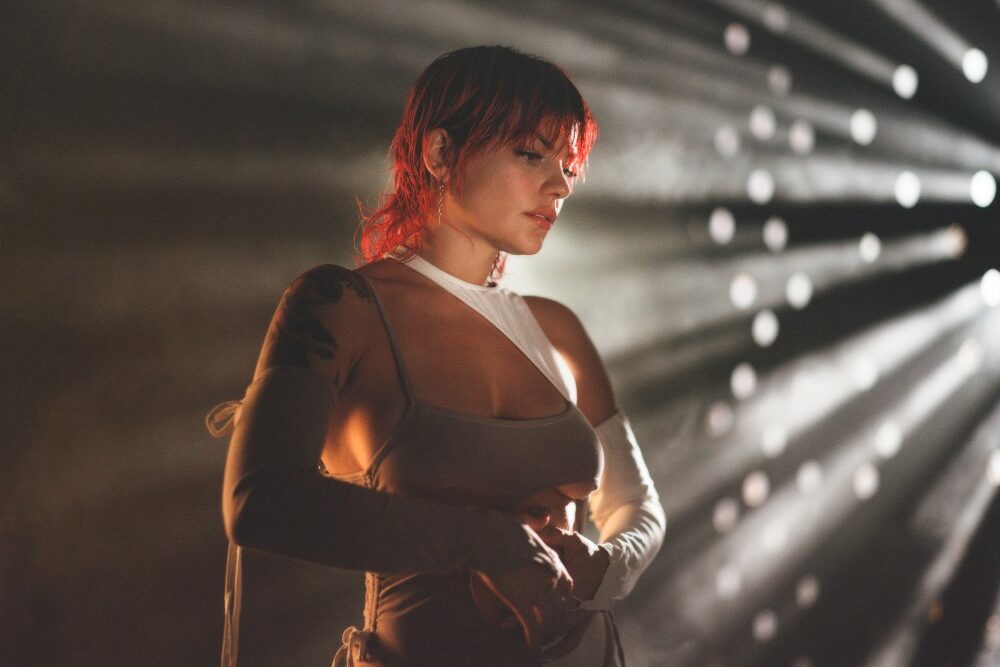
The Writing’s on the Wall for mmeadows in “You Should Know By Now” Video

In the early days of a new relationship, second guessing is second nature. Singer-songwriter Kristin Slipp, known for her work as keyboardist in Dirty Projectors, wonderfully captures the unease and doubt that creeps in like a sinister force with “You Should Know by Now.” As one-half of mmeadows, a creative collaboration with Cole Kamen-Green, who’s played trumpet on two Beyoncé records and worked closely with Lorde, Slipp approaches the emotional turmoil with vigorous delicacy.

“I tried to capture a tone that’s lovingly blunt, using language you might reserve for the ones you’re closest with,” Slipp tells Audiofemme. “I’m dreaming of a video montage of people playing this song for their crush and capturing the reaction, the crush having this aha moment, like ‘duh, the signs were all there, I just needed someone to spell it out.’”

Harp (played by musician Rebecca El-saleh) harmoniously intermingles with layered drums/percussion (courtesy of Ian Chang) to elevate the scalpel-sharp lyrics. “It’s when you’re looking in the mirror/And you find your light/And your reflection is a secret/In the darkest night,” sings Slipp over the crunchy soundscape.

“If I die before I wake, there’s one thing I want you to know,” she continues, unraveling the thematic frays, almost gliding with swan-like ease into the chorus – before an abrupt about-face with a trickling hip-hop cadence. “Every time I turn around/I’m ahead of myself and I’m falling faster.”

It’s an intoxicating, delightfully jarring switch-up — a syncopated vocal contrasting in explosive bursts against the harp’s tender tone. “The melody of the chorus centers around one note, hammered into over and over. It’s a bit of tone painting,” she explains, “hitting you with this note until it’s obvious. Then, jumping up to articulate the idea in a higher register, in case you needed to hear it another, sweeter way. Sometimes it’s not what you say, but how you say it.”

The accompanying music video, directed, filmed, and edited by Derrick Belcham (La Blogotheque, A Story Told Well), glows with a warm, vintage ambiance, almost acting as a time machine back to MTV’s music video heyday. “We spend our lives in front of screens,” remarks Slipp. “When faced with 2020’s stark reality, we decided to look inward and focus on writing; songs becoming salves.”

As such, the visual “recontextualizes the relationship between screen and viewer” with Belcham snapping in-studio performance footage of the band and then funneling it through an old school TV set and a giant screen projector, placed strategically around various NYC locations, including along the shoreline overlooking the sparkling cityscape in early evening hours. “Taking something that is often inches from our face and throwing it up on a larger-than-life space is sometimes the only way to read the writing on the wall,” notes Slipp.

Slipp and Kamen-Green released their first project together as mmeadows in early 2020 with the hypnotic six-song EP Who Do You Think You Are?. Over the pandemic, Slipp continued her work with Dirty Projectors, issuing the ambitious 5EPs compilation of five separate extended plays. “We’re excited to continue to release this music we’ve been cultivating and developing well into 2022,” she teases. Their next show takes place at The Sultan Room in Bushwick on November 6, and the duo’s debut long-player, Light Moves Around You, arrives in early 2022.

Follow mmeadows on Instagram and Facebook for ongoing updates.
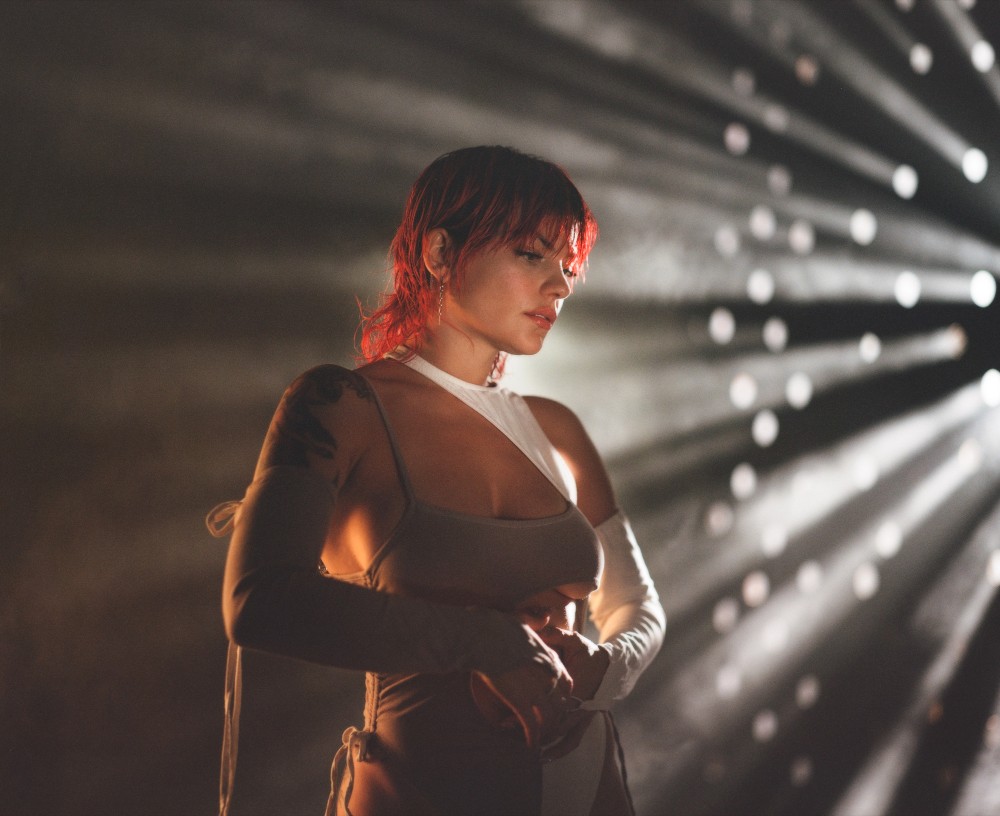
La Luz Embrace Their Glorious Weirdness on Self-Titled Fourth Album

Photo Credit: Pooneh Ghana

Last Friday, L.A.-by-way-of-Seattle surf-noir trio La Luz released their self-titled fourth album via longtime label Hardly Art, a representation of their lengthy friendship, combined and individual musical careers, and journeys both geographical and emotional. More than their previous releases, this album feels less like the product of their producer’s personality and much more attuned to the band’s essence. It seems fitting then that they should name the album after their own moniker. “In Spanish it translates to ‘the light,’” explains band founder, lead vocalist and guitarist Shana Cleveland. “We just liked the sound of it at first… now the name feels really right because I think the band has a lot of contrast between light and dark.”

Currently, Cleveland is joined by Alice Sandahl on keys and Lena Simon on bass (drummer Marian Li Pino left La Luz in 2019, while Simon replaced Abbey Blackwell in 2014). Though the original lineup has seen some changes since La Luz released their debut EP Damp Face in 2012, there’s a strong sense of identity on their latest album, perhaps even more so than previous full-lengths It’s Alive (2013), the Ty Segall-produced Weirdo Shrine (2015) and 2018’s Floating Features.

“We know each other really well as individuals and a musicians, and we have a certain kind of familiarity and almost ESP to our communication. We’ve made a number of records and this one has a special intimacy. It made sense to name it after ourselves,” says Cleveland. “I think that in the beginning of the band, there was a lot more of thinking about what other artists we wanted to emulate and now we’re at a point where it’s more self-referential.”

Still, it always helps to have the input of a talented producer, and when Cleveland’s partner suggested Adrian Younge, the idea seemed to stick. Sandahl lived in the same Los Angeles neighborhood as Younge’s studio, and had seen posters up for his Jazz Is Dead live performances. Both she and Simon were familiar with his hair salon-meets-vinyl record store Artform in Los Angeles.

“We were really open to working with Adrian on this record, and making it a true collaboration. Whereas maybe before there was an element of us being young and fresh, we were more confident coming into this record,” reflects Simon. “He’d never recorded or worked with a band before. He’d done a lot of film scoring.”

Indeed, Younge has 20 years of experience as a film editor and he’s mostly composed for soundtracks. His prolific work going back to 2000 is mostly with hip hop, jazz and soul artists. Earlier this year, Younge collaborated with Ghostface Killah on “12 Reasons To Die” (released in April on RZA’s Soul Temple Music) and also released the album The American Negro in March (the behind-the-scenes making-of film is a must-watch). He also produced the podcast “Invisible Blackness,” charting the development and evolution of racism in America.

Here, he has brought out the contrasts – the light and the dark within the band as a collective but also within each of the women – on the album. They’ve got stories to tell, they’ve been through things, and they have memories to unpack and explore, not the least of which was their traumatic 2014 tour van collision. While the shock was, understandably, more palpable on 2015’s Weirdo Shrine – with its tight but savage guitar riffery, layered harmonies and almost gothic beauty – the more melodic, upbeat and dream-like La Luz reveals spiritual release.

With the gentle chime and childlike harmonies of “Watching Cartoons,” the band have captured the essence of those early mornings eating sugary cereal. Elsewhere, the tidal sweep of “Metal Man” channels the Hammond B3 Organ into a jangly, surfer anthem.

While the B3 has featured on La Luz albums since the beginning, the sitar and a harpsichord that were sitting around Younge’s studio turn “Yuba Rot” into a divinely trippy, hazy instrumental track. Younge has expertly helped to translate emotions into arrangements, but it is fundamentally the women’s work; the album’s eclecticism reflects the band’s confidence in their sound, even if their novel way of writing long-distance (due to the pandemic) required strict scheduling.

“It’s so different to the way we’d ever done it before, in terms of writing and collaborating,” says Sandahl. “In the past we’ve written together in the same room fairly quickly, maybe in a week or two of intensive writing sessions and jamming out together. Being forced to be alone and writing our parts by ourselves…we were missing that element of playing together, discovering our parts together.”

Simon explains, “We had the names of the songs… so we said, let’s try to do two per week. It was like homework.”

Each of the women sent their parts to Simon via Dropbox and she’d get to work on constructing demos in her Florida-based home studio, adding bass and drum parts. It added up to some “pretty goofy” sounding stems and demos in the end, but they had the raw material by the time they got into the recording studio with Younge.

It’s hard to imagine, regardless of their individual geographical locations, that La Luz are not always together; even as we wrap up our phone call, they’re headed out to a dinner date. They admit they’ve been reflecting on their history a lot just in the past few days, especially.

“Our first tour, Shana was like ‘what have I got myself into?’” laughs Simon. “It’s been almost a decade. We were different people then. We’ve gone through a lot of changes personally and as a band, [and we’ve] developed and gotten really close.”

Follow La Luz on Instagram and Facebook for ongoing updates.
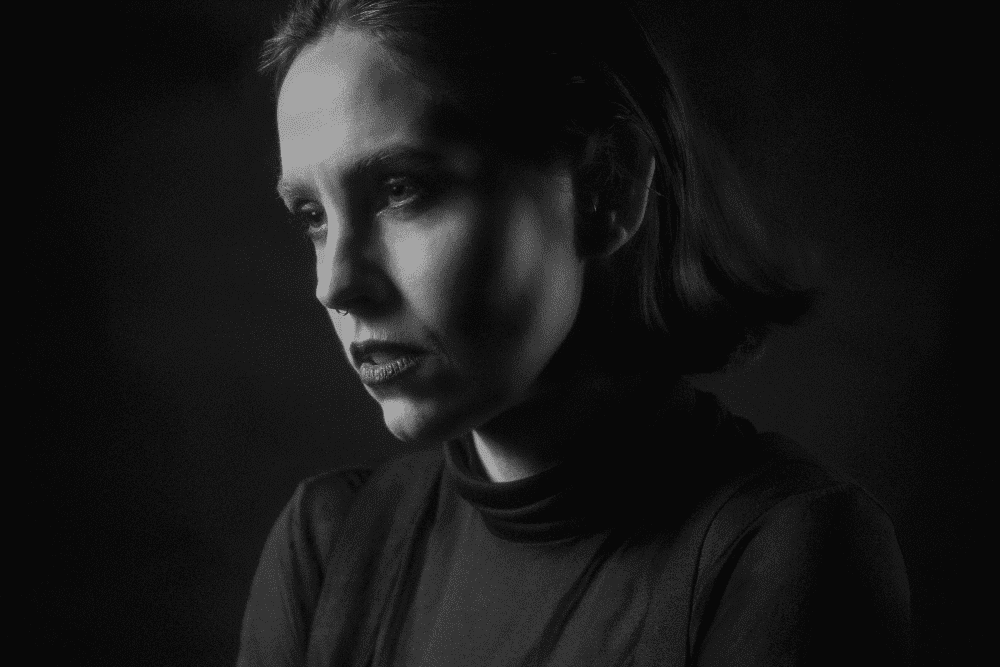
Tokyo-Based Experimentalist Noah Releases Fashion-Inspired Étoile EP

Étoile, the latest EP from Japanese musician Noah, is comprised of only three tracks and clocks in at just 12 minutes. Yet, the Hokkaido-born, Tokyo-based artist has packed in an album’s-worth of emotion that unfolds like a film score.

One of her influences in making this EP, out October 27 via Flau Records, was music for fashion shows. Noah considered how the music would sound as models walked down the runway while she was working on the transitions between tracks. 

Noah says that she did think of the transitions between songs in making the album. “I was wondering ‘Is this combination effective if used in an actual fashion show?’ Because there are various possibilities if so,” she explains in an email interview. 

“It’s a lot of fun to think about the composition,” says Noah. “I’m very interested in music which you enjoy with the visuals like you might see at a fashion show, versus a mix more suitable for dancing.” She adds that the atmosphere of Étoile, as well as making music that works well with video or live visuals, is something that she would like to further pursue.

One of Noah’s early influences is Readymade FC and she was particularly inspired by a Dior Homme fashion show from 2002 that used the French producer’s music. More recently, she’s looked to the work of brands like Chanel and Louis Vuitton. “They are not only elegant, but also deep and powerful. A mixture of tradition and new things,” she says. Noah has an appreciation for such juxtapositions. “I like the nuances with exquisite margins created by combinations. I feel that some of those things are what I want to express,” she says. 

That attention to both the classic and contemporary is evident on Étoile. She makes use of chorus-style vocals on the album. “The chorus helped build a more mysterious and romantic worldview. I tried to sing like an opera to create an old-fashioned atmosphere,” she says. 

She collaborated with designer Yuto Sugaya on the cover. “He was very intuitive and understood what I wanted to do and reflected it in the best way,” she says. In the process of working on the cover, Noah showed Sugaya Flexion, Readymade FC’s music for that nearly 20-year-old Dior Homme fashion show that influenced her. “He took the avant-garde spirit that was transmitted from the CD and made it into a beautiful shape,” she says.

In the end, Noah says that the individual songs that comprise Étoile weren’t terribly difficult to make. “I was in a state of accepting what I can and cannot do, so I think I was able to demonstrate my ability to be honest without overdoing it,” she says. “In fact, the working time was also very short. It took only a few months, including the completion of the three songs. This is a very short period for me.”

However, Étoile did come out of a time of creative challenges and revelations for Noah. “As I continued to work as an artist, it was getting more and more painful when I realized that I was pursuing my ideals and seeking results. I wasn’t motivated and even though I love music so much, I wasn’t able to enjoy it,” she says. 

“I’ve had a few years of wondering why I’m a boring person, why I’m not happy with myself, and I was feeling like I was getting lost in a maze with no exit,” Noah explains. “About two years ago, I started meditating and studying the spiritual world deeply, and gradually I realized that my heart was being left behind.”

She continues, “I faced myself thoroughly and I got to know myself little by little. Sometimes it was very painful to face the side that I didn’t want to see. Though I’m still in the process, gradually I learned to relax and take it easy. This isn’t just about behavior – the noisy voice gradually calmed down. I took a long time to rebuild the wobbling foundation.”

Part of Noah’s process has been to acknowledge and accept the myriad emotions that she experiences. “I was thinking that I was just a happy and fun person before, but I found hidden anger and sadness deep inside of me. I didn’t avoid those feelings this time because I learned that it is part of an identity, an important thing that shapes people, and that it is not bad at all,” she says. “I also learned that human thoughts and concepts can be both good and bad, so I began to love and accept my light and darkness. From there, Étoile was born when I wrote a song without hesitation.”

She adds, “I loved myself in the past when I was struggling, and it was an important time, and for it I am grateful.”

Follow Noah on Facebook for ongoing updates.
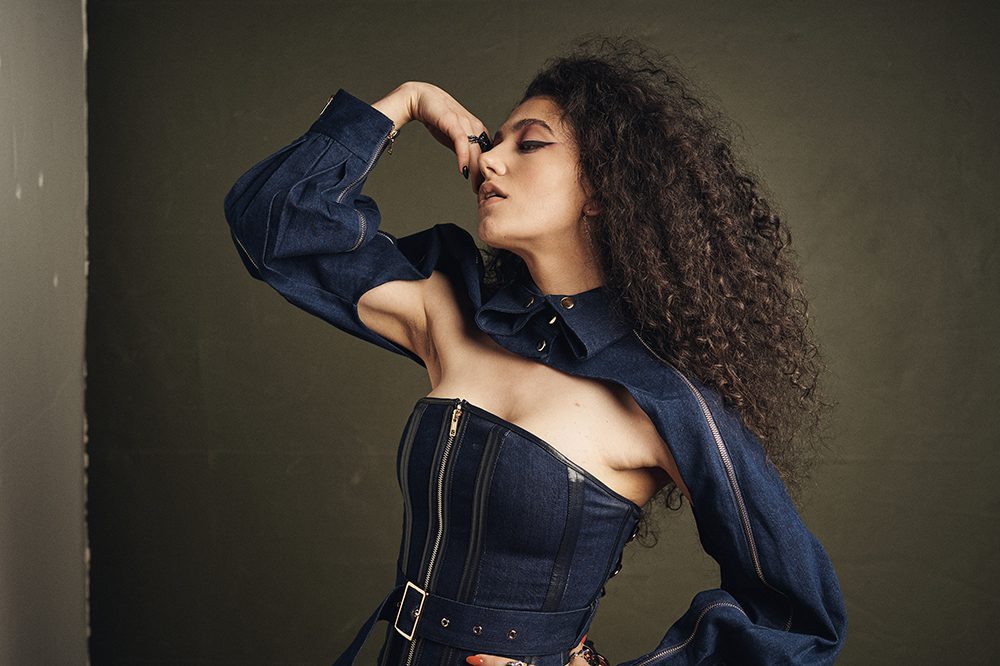
MUSIQUE BOUTIQUE: Alice TM, Sarah McQuaid, ONETWOTHREE

Welcome to Audiofemme’s monthly record review column, Musique Boutique, written by music journo vet Gillian G. Gaar. Every fourth Monday, Musique Boutique offers a cross-section of noteworthy reissues and new releases guaranteed to perk up your ears.

Alice TM is described as the queer, art-pop project of Alice Tolan-Mee, an artist who’s worked in experimental theater and performance art as well as music. Her debut album, Little Body in Orbit (Whatever’s Clever) is an album that delves into the twists and turns of love; new love, queer love, or as Alice vividly describes it, “Sticky love, tumbling and joyful love, slutty love, and violence in love.”

It’s a range in perspective that nicely bookends the album, which opens with the skittering, giddy pleasures of “Generous” and its celebration of newfound bliss (“I will bathe in you completely”) and concludes with a slow, sad unraveling in “Wedding” (“You don’t wrap your arms around me”). Tolan-Mee’s high-pitched voice gives the songs an ethereal cast. And though the music is electronically based — cool synths and percussive pops — it’s not austere or remote, but beguiling and seductive. From a relationship mired in inertia (the aptly-named “Passive”) to the erotic delights of “Contact Electric,” this is a record pulsating with the excitement of making new discoveries, and learning from them. Dive in.

When the pandemic led to musicians around the world cancelling their shows, Sarah McQuaid decided to capture a live performance without the presence of an audience. The St Buryan Sessions (Shovel and a Spade Records) is the result – sixteen songs recorded at a medieval church in St. Buryan, a village in Cornwall, England. It’s a place that McQuaid, as a member of the church’s choir, knew well. She and her producer, Martin Stansbury, decided to set it up as if she were playing an actual concert, following a setlist, and playing straight through, with minimal breaks.

Songs like “The Sun Goes on Rising,” from McQuaid’s 2012 album The Plum Tree and The Rose, have a new resonance now, with lyrics about holding onto hope through the bad times (“I’m marking down the time/’Til I can get to a better place”). Similarly, “The Silence Above Us,” from her 2018 album If We Dig Any Deeper It Could Get Dangerous, is a perfect depiction of the isolation and uncertainty that descended upon the world last year.

McQuaid’s voice is deep and slightly husky, imbuing her songs with a haunting melancholy, underscored by the spare instrumentation (she variously accompanies herself on acoustic or electric guitar, piano, and floor tom). “The Day of Wrath, That Day” is a lovely instrumental; the standard “Autumn Leaves” turns out to be perfect for her voice. Already a compelling release, the concert was also filmed – there’s a short doc about the making of the release, as well as live videos of each track, on McQuaid’s YouTube channel.

ONETWOTHREE (hereafter OTT) have the spare, taut sound of post-punk groups like the Delta 5, the Au Pairs, and Kleenex (aka LiLiPuT) — which is no surprise, as Klaudia Schifferle was a member of Kleenex. Fellow bandmates Madlaina Peer and Sara Schar were also members of the Swiss punk scene in bands like the Noknows and TNT. In cheery defiance of convention, they didn’t let the fact that they’re all bassists stop them from putting a band together. And they do work in other instruments on their debut album for Kill Rock Stars (it’s officially untitled, but the band’s name is on the cover); scratchy guitar, keyboards, the persistent beat of a drum machine.

“Perfect Illusions” opens the album with a touch of pop swing. The relentless drive of “Buy Buy” makes you think it might be a critique of consumer culture, at least until you’re thrown a loop with absurdist lyrics like “We want flowers from outer space!” This is an element that’s at the heart of OTT’s work. The songs might seem deceptively simple on the surface, but there’s enough of an edge (especially in the sharp, often tense vocals) to make you wonder what’s going on underneath the surface. “Give Paw,” for example, has a sinister synth line and stern demands: “Give paw! Obey! Do as I say!” “Fake” rages against all that’s fraudulent around us. This is an album that taunts and teases, and, at 35 minutes, leaves you wanting more.

Cong Josie is the Camp Cowboy Challenging Aussie Machismo and Colonialist Agendas

Photo Credit: Margarita Strateas

Cowboy iconography has long since morphed from being overtly-masculine in the spirit of spaghetti westerns and John Wayne to kitschy costumery. Behind the cowboy-hatted, snakeskin booted persona of Cong Josie is Nic Oogjes, a Melbourne music veteran whose latest project straddles the line between hyper-masculine and wink-wink-nudge-nudge camp. He’s just released his debut Cong! via It Records by way of introduction – ten tracks in which listeners are immersed into grimy synths, sleazy saxophone, and Oogjes’ modulating, punch-drunk vocals delivered in lounge lizard croons and faltering falsetto that adventures up, down, and around the tonal expanses of the lowest octaves.
The name Cong Josie is not so cryptic as it might seem, Oogjes explains. “It came from an anagram generator, from the shortened version of my name, Nic. In the spirit of the project, the first thing that comes up, go with it and don’t overthink things. It’s still me, but from another angle.”

No stranger to playing characters, Oogjes was the larger-than-life frontman for wonky funk-punk eight-piece NO ZU (currently on hiatus). The band is known for throwing synths, bass, relentless percussion and brass into highly performative outings that left live audiences feeling both ecstatic and exhausted. Begun in 2007 as a quartet made up of art school friends, the band – for all its raucous fun – intended to challenge the machismo and colonialism that still underpins all Australian systems of governance, culture, law and life.

A few years ago, Oogjes began therapy in response to the stresses of touring and performing, igniting an exploration of his own identity through his onstage persona. Giving that persona a name was fundamental to the investigative process. “[Therapy] really started off something and opened a Pandora’s Box kind of thing, where I started seeing things very differently,” he explains. “[Cong Josie] is really more of a process of unravelling a side of me, or parts of me, that have been building, especially over my musical life in the last few years. I am probably naturally introverted, I keep to myself a lot, I’m not hugely social. I like gardening and drawing and writing and solitary things, from an only child’s upbringing… Even in my first band, I found this other side of me that just became somebody I didn’t quite recognize on stage, but also felt like I was blossoming in a debaucherous way.”

His co-conspirator in writing the album was long-time friend and enabler, Cayn Borthwick, who also wrote and performed with Oogjes in NO ZU. “Cayn has a little studio in Brunswick and when we were allowed in there, I’d go in there…” says Oogjes. “The majority of the album was written with Cayn – he’s classically trained… doing his PhD in composition, and [he has an] incredible music mind. He can play so many instruments… He’s just so open to things and then brings so much of his own personality into play, but the cool thing is that we both understand what the projects are and the limitations, and he knows exactly where I’m coming from.  We can basically read each other’s minds.”

Oogjes told Broadsheet in 2017 that the foundation for NO ZU was the sense of absurdity and mordant humour in Nick Cave’s early post-punk band The Birthday Party. The same spirit of gothic, sarcastic wit exists at the core of Cong Josie. The sonic landscape of Cong! is the amalgam of Oogjes’ travels during the making of the album, from a Greek fortress where he recorded the vocals to “Leather Whip” to his own suburban Melbourne home, “using not much gear at all: a couple of synthesizers and a drum machine.”

The Grecian landscape also figures into the video for “Leather Whip,” shot in Mani, Greece. “It’s a beautiful place: really rocky landscape, the ocean is right there, and it’s got a fascinating history, a lot of fortified houses and towers, because there were a lot of clans and wealthy families shooting cannons at each other,” says Oogjes. He spent time there with his partner Margarita and their nearly three-year-old daughter Persephone, both of whom have namesake songs on Cong!.

Margarita’s parents live in Saidona, in the Peloponnese region of the south, not far from Kalamata. His in-laws had a little attic, so all he needed was an interface, a microphone, a little synthesizer and a computer. Though he had to work in his sparingly few moments along, two hours was just enough time to record “Leather Whip.”

Elsewhere on Cong!, breathy, romantic whoops on “Wedding Bells” emerge from a drum machine-sax solo-electronic keyboard funk. It’s a bit Serge Gainsbourg meets 80s goth-synth outfit Love And Rockets (remember “So Alive”?). Squelching, swampy synths sound like umbrellas pulling out of deep marshy pits in an attempt to escape an impending storm on “Lorelei.” The synths whip around like sheets of silvery rain and the faraway noodling of a lonely, electric guitar emerge now and again as if from a dream. “Lorelei” is perhaps even more gothic and bluesy than any of the other tracks, a particularly macabre way to end the album; it was inspired by the guardian angels who gave up immortal life for love in Wim Wenders’ 1987 film Wings Of Desire.

Oogjes, a fan of the later, funkier, stranger work of Gang of Four, thought he was wearing his influences on his sleeve when he began recording Cong!, “but when I listened back, I could hear so much of myself in it,” he says. “That first track [“I Want a Man”] set the template that there’d be a fantasy element in each track, but there’d be something real and vulnerable if you scrape the surface.”

Follow Cong Josie on Instagram and Facebook for ongoing updates.