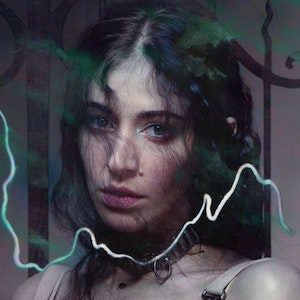
Forgiveness is one of those concepts that sounds great in theory but is difficult to practice, especially when someone wrongs us in a way that feels unforgivable. But whatever grudges you’re hanging on to, Jillette Johnson makes a compelling case for letting them go with her latest single, “Forgive Her” — not just through its sage lyrics but also through Johnson’s soothing voice and a sweet melody that spreads a message of love.
The Nashville-based singer-songwriter penned the song after reflecting on times she had trouble forgiving other people, as well as herself. “I feel myself put up walls and hold on to little shards of glass all the time and find myself having to remember that someone else is probably in pain, that there’s probably some insecurity happening or story that I don’t know,” she says. “Or, opposite to that, I’m certainly not immune to being hurtful to the ones that I love. And instead of doing what I usually do — get mad at myself, which then makes me do it again — it’s a process of trying to be compassionate to myself and understand what, maybe, is driving that.”
The song opens with gentle chanting and piano chords that pull at your heartstrings, then escalates into angelic singing reminiscent of a parent teaching a child: “Forgive her, she becomes a little kid/you never should have been treated that way.” The refrain, “It’s not okay but you’ll forgive her anyway,” speaks to the difference between excusing a behavior and forgiving it: forgiveness is a choice we make to free ourselves from the consequences of another’s actions, regardless of how inexcusable those actions are.
“‘Forgive Her’ is about compassion,” Johnson explains. “It’s about being able to see in yourself — or in this case myself, and in other people — that there are wounded children in all of us, and those wounded children usually need nurturing and can come out in ways that are hurtful to others. The song is about being able to find compassion in those moments where you realize you’ve hurt someone or someone else has hurt you, as a means to be liberated from the cycle of perpetuating that hurt and of putting up walls.”
A visualizer for “Forgive Her” repeats soft-focus shots of Johnson’s recording process, adding to the track’s soothing vibe. The song will appear on her third album, It’s a Beautiful Day and I Love You (out February 12), which was recorded live in the studio, aside from background vocals she layered over herself. Working with producer Joe Pisapia, she played piano and had other musicians come in for the guitar, bass, and drums. “It was very natural,” she says. “I made a record with some incredibly talented musicians who I really trust, and I just started playing, and everybody else started playing along, and it all kind of fit together pretty seamlessly without much intellectualizing of it.”
The rest of the album covers other poignant lessons Johnson has learned, like finding gratitude and joy in the little things and not comparing oneself to others. Four of the songs — “Graveyard Boyfriend,” “Annie,” “I Shouldn’t Go Anywhere,” and “What Would Jesus Do” — are available on Spotify already.
Johnson has been busy with one-off singles as well: “Cancel Christmas,” a somber holiday song that makes no effort to sugarcoat the sadness implicated by the pandemic; and a laid-back, minimalistic cover of 1995 Oasis classic “Champagne Supernova,” a song she listened to growing up that also seemed appropriate for these times. “To, me that song has always been about a loss of control and a reflection on mortality – how what we think we understand, we don’t really understand,” she says. “I know that the band has said in interviews that they don’t really know what the song’s about, but that’s been my interpretation of it.”
Johnson grew up in New York City and played her first live show at age 12, then moved to Nashville after releasing her first two albums Water in a Whale(2013) and All I Ever See in You is Me(2017). “I think I wrote my first song at eight, and that has kind of been my main coping mechanism/passion ever since,” Johnson explains. “In Nashville, it’s a different vibe than making music in New York, in a beautiful way – there’s a lot of community.”
At the moment, Johnson is focused on making DIY music videos – in her own backyard. The video for the defiant, country-influenced “What Would Jesus Do” features her singing on top of a friend’s car, and the candid, heartfelt “Annie” video shows her playfully strumming on guitar, playing a tiny piano, and hitting drums against a bright backdrop.
“I had the constraints of the pandemic work in my favor,” she says. “It was super DIY, but that was really liberating for me. I’ve come from being at a record label for ten years and doing things in a particular way, and being indie and scrappy about it was really exciting. It’s fun to release them into the world because people are connecting with that spirit of just trying to make art out of whatever you have.”
Follow Jillette Johnson on Facebook for ongoing updates.
“Who am I without touring?” That was the question most on Raye Zaragoza’s mind last year. Pre-pandemic, the folk musician had been on the road for three years, nonstop ─ and like many, coping with suffocating isolation in lockdown was a challenge. Forced to reckon with her identity off the road, and finding more time than ever to be creative, she looked inward to reassess her place in the world and what she had to say.
As jarring as it was to stay home, Zaragoza first learned the truth about how constant touring was wearing down her body and morale, Going forward, she says, “I definitely want to have more balance and more time for solitude, writing, and travel.”
This realization brought deeper understanding that her worth and value as an artist “isn’t just in the shows you play. It’s in everything you do,” she adds. “So often, as artists, we feel like we’re only working when we’re touring, releasing, or actively promoting something. We’re artists at all times.”
She then soon learned the beauty in songwriting and the liberation she felt when she wrote without purpose. “[It] became freer for me. Over the spring and summer, I was writing every day because I wanted to. I wrote so many quarantaine songs,” she says with a laugh. “I made writing a practice again. I fell back in love with writing and remembered why I started doing this.”
In October 2020, Zaragoza released her second record, Woman in Color, a provocative depiction of what it means to be a Japanese-American, Mexican, Indigenous woman living in America. She combs an anxiety-riddled childhood, during which she always felt isolated and alone because of her mixed heritage, racism that’s contaminated the folk music scene, and definitions of femininity. 10 songs encompass her entire life’s journey, and she’s finally taking up space.
“[This album] was so much a reckoning with my racial insecurities,” she shares with Audiofemme. “I felt disassociated from all my racial backgrounds and always very alienated. I didn’t feel welcome in any of the communities, and I wasn’t welcomed in mainstream American society because I was not white. I always felt really alone as a kid and like there was something wrong with me. I would wake up and wish I could be just one race ─ or white. It was tough.”
Along her journey, she soon “realized I was not the only young girl who felt that way,” she says. Woman in Color (produced by Tucker Martine) brims with all her blood, sweat, and tears and reads like a collection of “love letters to my 12-year-old self,” she surmises. She also calls to her mother’s story as an immigrant from Japan, who came to this country with a faceless passport ─ because she was also Taiwanese and “no country claimed her for their own.”
Such an inherited identity crisis is the lifeblood of Zaragoza’s intensely probing new record. “There is a part of [my family] that wants to be proud of who we are, but there’s a part that’s been pressured to fit in and assimilate,” she remarks.
She casts her family’s collective misery right into the flames etched out of her songwriting. Songs like “Warrior,” “Fight Like a Girl,” “Change Your Name,” “The It Girl,” and “Ghosts of Houston Street” ignite from the inside out, with Zaragoza’s imposing vocal presence glowing red-hot like iron.
Woman in Color also excels with its sweeping instrumentation and hooks that seem to crawl under the skin. Zaragoza admits she can’t take all the credit; although, the choruses are so wholly her own, they would never work in someone else’s hands. “I would have these little melodic ideas or snapshots, and the co-writer [would] help me bridge them to the full song. I collaborated with some really incredible songwriters [namely, John Lardieri, Joseph Pisapia, and Ben Wylen] who took my melody writing to the next level, while also letting me take the reins on lyrics. It was amazing to get pushed in both directions.”
Zaragoza’s journey has been a fascinating one. She first confronted her pain with 2017’s debut, Fight for You, and “In the River” was the catalyst for the introspective voyage. It was the self-inflicted shove she needed, and the floodgates burst open. “I’d written songs out of need before,” she says, “but in terms of this specific place of healing, it’s the first time I’d ever written a song where there was something big happening in the world and I was feeling very distressed about it.”
She knew that in “order to heal others, I have to first heal myself. I can’t write a song with the intention of ‘I’m going to write a song to make someone feel better.’ It doesn’t work that way for me.”
As she’s reached greater levels of healing, either through songwriting or meditation, she has gained confidence in not only her work but her willingness to have difficult conversations. In a TalkHouse piece with fellow folk musician Lizzie No, the two openly discuss what it’s like being women of color in folk music, and the harmful effects of tokenization.
Three months later, Zaragoza is floored by how “powerful and cutting” that moment was and is for her. “What makes it [that way] is the fact that me and Lizzie were so comfortable talking. We felt we had such a safe space,” she says. “To see it all in writing was like whoa. I’d never experienced this. We do experience these things, and we never talk about them. It was almost out of my comfort zone in the best way possible. I feel like I need to be talking candidly about this more and more.”
2020 also saw the performer writing music for a documentary called Gather, an intersection of indigenous wisdom and food. Director Sanjay Rawal (who previously helmed 2014 agricultural labor doc Food Chains) approached Zaragoza early 2018, and she quickly started studying transcripts to get a complete understanding of the project. “It was really powerful,” she reflects. “A lot of times in American culture, we have a lack of respect for the food we eat. We process it like crazy and are [always] looking for the cheapest way. This film is so much about this slow, meaningful way of harvesting, making, and consuming food. It’s really beautiful.”
For her part, she co-wrote a song called “Mother, We’ll Meet Again” with Ben Wylen and performs the moving number for the film’s credits. “[The song] is about food and my own experience of being a member of modern day society and learning how to return home,” she explains. “That’s how I feel as someone with indigenous ancestry ─ learning about what it means and returning home, whether that’s physically, mentally, or emotionally. Food is one of those ways of reminding ourselves what home is. We’re human beings. It’s us and Mother Earth.”
Zaragoza absolutely beams when talking about her work. Now, as she closes a chapter, she looks forward to a year full of promise, personally and professionally. She eyes a possible children’s book, honing her producing skills for her own music, and continuing her role as a composer for Netflix’s forthcoming Spirit Rangers, an all-Native fantasy/adventure animated series.
“I write songs for the characters. There’s a song in every single episode. There are so many characters, so I’m writing songs for so many voices and circumstances. It’s spectacular,” she says.
The show is greatly inspired by Indigenous stories with a “modern day twist,” she teases. “I’ve never composed for television before. I haven’t had a boss in music ever, really. I’ve always done things independently, so I have someone to answer to and I have deadlines. I have notes. It’s definitely a different pace for an indie artist.”
Follow Raye Zaragoza on Twitter and Instagram for ongoing updates.
If you’re sick of the winter weather and want to be transported to a summery beach, look no further than LA-based pop artist Anie Delgado’s “Daydream” video, which is as ethereal as the song’s title promises. In the spirit of the New Year, Delgado sings about “new love, new life/no pain, no life/new you and I” in an infectious, uplifting melody with Studio 54 vibes as she dances and poses beside the ocean.
The song is, paradoxically, about “staying grounded and rooted in your daydreams,” says Delgado. It was inspired by an experience where she wanted a relationship to work out but also knew she’d be fine if it didn’t. “Got everything I needed/whether you take it or leave it/honey, I’ll be on my way,” she sings with sassy, R&B-inspired attitude. “I’m always dreaming/my open heart is beaming/when the skies are turning gray.” Delgado aimed to show vulnerability in her voice in the song, while the production made it sparkly and twinkly.
For the video, she took on the persona of Venus, the Roman goddess of love, whom she felt fit the spirit of the song. “I feel like she’s underrated in that people think she’s just the pretty goddess, but I think there’s a lot of power to being poised, being graceful, and that beauty she possesses,” she says. “Venus energy is being really confident in what you have going on.”
The video opens with Delgado emerging from beneath churning waves and stepping out onto the sand, the same way Venus was born out of sea foam. In a reference to the famous Botticelli painting “The Birth of Venus,” she stands in a giant pink shell in several shots. In others, she looks into a mirror and combs her hair, plays with pearl jewelry, and lies besides artfully arranged grapes, another reference to Roman mythology.
Aside from the goddess imagery, the image of the sea itself is an ode to the divine feminine. “I think the ocean is powerful and mysterious and similar to women,” she says. “It has that kind of silent power; it’s there, it’s beautiful, it’s sparkling, it’s powerful, and it doesn’t immediately scream its power to you.”
Because it was shot during the pandemic, the video was intentionally simple, with no additional actors. With just Delgado, the director, the director of photography, and her manager on set, she picked out her outfits and did her own hair and makeup. “We had to go on the highest tide and make sure it would be okay to shoot,” she remembers. “It was one of the more fun shoots I’d done because I was playing in the ocean most of the day.”
“Daydream” is the first single from a four-song EP coming out in April. The next track on the EP, “Dancing When the World is on Fire” — which she describes as a commercial pop song with world vibes — comes out in February, followed by an EDM-inspired song called “Cloud Nine” in March and then “Something Beautiful,” which she wrote by herself on her guitar in her room. “Each song is so different,” she says. “We wanted to give them their own life and give them each a vibe.”
Raised in Florida, Delgado went to a performing arts conservatory in New York City, then got into acting before deciding to dedicate herself to music and moving to LA. In 2019, she released her first single, “Galaxy,” which is based on a talk her friend gave her after a breakup about how a whole galaxy of everything you need is right within you. The song’s heavy production provides an otherworldly, almost trippy sound, and her friend Bass Savage created a remix that gives it a dark edge.
“It was kind of fun to just let him be creative,” she says. “I gave him the stems and said ‘do what you want with them,’ and when he stent back the song, I loved it and thought it could give ‘Galaxy’ a life in a club.”
In 2020, she released “Kaleidoscope,” a poppy song that compares falling in love to looking into a kaleidoscope: “The more you look at it, you get details and imperfections and good qualities; you find more and more things you love about the person,” she explains.
Her voice is sweet and angelic but also confident and self-assured in the vein of pop princesses like Ariana Grande, whose production has inspired her, along with Taylor Swift’s lyrics and Tame Impala’s floaty soundscapes. Her earliest idol, though, was Gloria Estefan, who used to buy dresses from her great aunt. “Being Cuban-American and seeing another Cuban-American take mainstream pop by storm has always been really inspiring to me,” she says.
Though she can’t go on tour now, she’s currently working with a company called ColorTV to create a virtual tour, which will feature her singing against the backdrop of different locations, where residents will get discounted tickets. “It’s all from my home — basically, I’ll be turning my living room into a stage — but the company has technology they developed to create these virtual locations,” she says. “As much as it can’t be a large, fully produced show like I could do if I were to go on a physical tour, I’m going to make it as visually exciting as I can.”
Follow Anie Delgado on Instagram for ongoing updates.
Born and raised in Melbourne’s Eastern suburbs, Taylah Carroll recalls entertaining her family and friends with musical performances from an early age, often until her audience relented and sought escape. It was never Carroll who ended a performance. Now, larger audiences have started to take notice – Australia’s Triple J radio station, responsible for discovering and championing many new and upcoming artists, has likened her sound to Sharon Van Etten, Jeff Buckley, and Mazzy Star no less.
Carroll’s music is intimate, genuine and confessional. “I drink too much coffee, I don’t sleep enough,” she sings on latest single “I’m Not Sold,” revealing that she buys things just to have things to hold, but that it isn’t satisfying a deeper need. Without the rampant post-production polish that can remove all human fingerprints from music, there’s an old-fashioned vibe to Carroll’s songs. Not Victorian, mind you – but her gothic-edged romanticism is redolent of Nico’s Velvet Underground days, with the pared-back storytelling skill of folkie Joan Baez.
“I think I would describe my music as alternative folk meets rock. I think especially the stuff I’m writing lately leans more into rock. [It’s] a bit darker and I’d say there’s a focus on lyrics,” Carroll says. In 2019, she released two songs – “Sometimes Good People Do Bad Things” and “Vermont” – but there’s a lot more to come from this rising star.
Before Melbourne’s first lockdown, Carroll had been preparing to start pre-production for an album with producer Tim Harvey. It was essential to Carroll that she work with people who could honour her vision and enhance her sound rather than try to impose their style on her. Carroll reached out to Harvey (who has also worked with Jade Imagine and Gena Rose Bruce) through a mutual acquaintance. “We worked on the three singles I’ve so far released and we regularly catch up and talk ideas. He’s a very gentle soul. I can say very little about where I want a song to go, and he just knows.” The two worked together in Harvey’s home studio, in addition to Soundpark Studios in Northcote (in Melbourne’s inner northern suburbs). “It’s a really lovely space – really close to home, which is nice,” she says. Unfortunately, the ongoing pandemic has changed her plans for releasing the album.
“That was incredibly frustrating. I’ve had everything ready for a while now,” she shares. “We’re still fine-tuning what will end up on the album because I’ve been writing. I need to work out what fits with the theme of the album, to ensure it’s cohesive – the rest will be for the second album! There’s three [more] tracks ready to be mastered and released.” This includes her next offering, “To Please You,” a song about the challenge of making choices versus letting life happen, and sacrificing authenticity for the sake of not rocking the boat. Carroll has felt the struggle to maintain her own perception of the world whilst also loving and honouring the perspective of people around her.
“I’m Not Sold” was inspired by Carroll’s fear of failure, a quarter-life crisis of sorts. “I was in a long-term relationship that I’d been in since I was 17, so there was pressure building in that. I felt like 25 was looming. I feel like I should have done all these things by 25 and felt this pressure to have gotten all my ducks in a row by that age,” Carroll explains. “I’d also internalised this pressure that I felt from the music industry to be young, and I’d given myself a finite period of a year after my degree in psychology to do my music in before returning to do my Masters.” Though she hasn’t gone back to school yet, her music career is certainly picking up. Just as her childhood performances would continue until her audience finally left, Carroll is built for endurance. She believes work, faith and dedication will ultimately prevail.
“The way I deal with periods where I focus on something stressing me out or affecting me adversely, I focus and feel it, feel it, feel it and let go. Then it doesn’t evoke the same response in me anymore when I think about it again,” she says.
“I’m Not Sold” features Jade McInally on drums, Damian Meoli on bass, and Harvey on lead guitar, but her live band, which played the Corner Hotel in Richmond this past weekend, is shaping up to look a little different. Carroll met Ruby Whiting, who plays synths and keyboards in the live band, via bass player Sean Gage (also with Foreign National) whilst Gage and Whiting were dating. Cassie Kumashov plays drums – she had been in Hot Springs when Carroll first saw her and felt that her “emotive, feeling-based” drumming was the perfect fit for the band. Carroll and company will support Olympia at the Gasometer on the 20th of January, and are slated to play Federation Square towards the end of January, in Melbourne’s central city district.
Carroll’s intentions for the next video clip may challenge those close friendships, if the athletic requirements prove necessary to make art. She’s working on a video clip for the next single with Nick Mckk, who’s collaborated with Julia Jacklin, Estella Donnelly and John Butler Trio. “The ideas are still in the works,” says Carroll. “I really wanted to have the band in this one, but it’s a really fast song; I wanted to record in double-time then put it into slow motion, but that would mean everyone playing an already fast song twice as fast. So we’re nutting that out at the moment.”
Later this year, the album will be finalised, and in the meantime, her next three singles are scheduled for release in February, April, then July approximately. “Provided all goes to plan, which normally it doesn’t!” admits Carroll with a laugh. Whatever happens, we’re sold on the soulful folk singer, and can’t wait to hear what comes next.
Follow Taylah Carroll on Facebook and Instagram for ongoing updates.
“Listen to your heart (no)/keep on keeping on (no)/just say no to drugs (no)/eat a healthy lunch (no),” goes the chorus of “‘Listen To Your Heart.’ ‘No.'” It’s the first song on Emphatically No., the sophomore LP from LA-based indie rock trio Cheekface, out today via New Professor. Guitarist/singer Greg Katz half-sings, half-speaks in an almost monotone voice, his deadpan delivery amplifying the humor of the lyrics, which encapsulate the spirit of the album: quirky comedy, rejection of conventional wisdom, and defiance, sometimes for its own sake.
The fun, upbeat song, like much of the album, was written partly in earnest and partly as a joke. The earnest aspect was borne from bassist/singer Amanda Tannen’s difficulties saying “no” and drawing boundaries. “‘Listen to Your Heart.’ ‘No.’ came about from feeling this rise in self-care and all these people just telling you what to do, what’s best for you, and it’s actually okay to say ‘no’ to those things if you’re not feeling that,” she says.
The title of the song, however, first came from Katz. It had been lingering in his notebook for a while, then he blurted it out while working on guitar chords with Tannen, and she immediately identified it as the foundation of a song. “That response of ‘no’ just to this generic good advice that you would give anyone, and then the automatic impulse of disgust and refusal even though you know the advice is pretty good — it just has that spark of truth and humor that we try to find to build a song around,” he says.
It’s a silly yet oddly empowering message: no matter how reasonable, even irrefutable someone’s advice is, you still don’t have to take it. This is also the attitude behind the album title and much of the music on it. “We’re all always trying to be better about boundaries,” says drummer Mark “Echo” Edwards. “I have a hard time telling people no, and so it’s a reminder, it’s like a little mantra to repeat to yourself that it’s okay to say no, and a lot of times, it’s better to say no.”
The next song on the album, “Best Life,” has a similar theme of rejecting self-care culture, taking the listener through various scenes as the narrator laughs through therapy, declines to smile because it may be contagious (but “so is yawning”), and gets a Gucci logo stick-and-poke because “it’s cheaper than therapy,” melodically concluding, “it’s your best life if it’s the life that you’re living right now.”
“The concept of living your best life is something that I have always thought was sort of funny because there is no other life than the one you are now living — there’s no better or worse version of it; it just is,” says Katz. “The whole memeification of mental health and self-help by our generation, which distilled it down to meaningless drivel like ‘best life’ that has literally no meaning when you think about it, was sort of the jumping-off point for the concept of the song.”
Other songs on the LP examine heavier cultural and political issues, but still with the same absurdist humor: “Original Composition” addresses humans’ indifference to environmental collapse, “(I Don’t Want to Go to) Calabasas” calls attention to the hypocrisy of political discourse, and “Big Big Friend” mocks male privilege with lines like “I earned a dude’s degree/by buying a notebook and sneezing on my things/I come from a long line of people/a long line of people who procreated.”
Most of Emphatically No. was recorded and mixed by Greg Cortez at LA’s New Monkey Studio (which was formerly owned by Elliott Smith) between 2019 and 2020. The album incorporates electronic instruments like the Mellotron and eccentric sound bites like a dog barking, aggressive banging on a keyboard, and repetitive, chanted words like “everything is normal.”
“My goal musically is to make things feel good and make people want to move in a way that lines up with the larger philosophical approach,” says Edwards. “Despite the sometimes bleak subject matter, there’s still humor, there’s still joy.”
Katz considers Cheekface a mix of punk rock, power pop, and proto punk, citing the “great American talk-singers,” like Lou Reed and Jonathan Richman, as influences – you can hear it the way Katz sings the lines “we are writers! creatives! we work remotely!/I am furiously Juuling™ on the coffee shop patio!” in “Best Life.” The Talking Heads are also a band favorite; “Emotional Rent Control” incorporates the bass line and drum parts from “Psycho Killer,” an idea the members got after hearing these familiar sounds sampled in Selena Gomez’s “Bad Liar.”
Cheekface originated in 2017, drawing its early inspiration from Trump’s inauguration. After attending the Women’s March together, Katz and Tannen wrote their second single and most streamed song on Spotify, “Dry Heat/Nice Town,” about coming to grips with rising authoritarianism and violence in society. The band released its first album, Therapy Island, in 2019, and released an Audiotree live session in 2020. They’ve already written the bulk of their next album, though Katz warns his fans: “Just like everyone’s favorite band, we’re gonna get worse.”
Pretty much the whole world can relate to the words of NYC-based singer-songwriter Cindy Latin when the chorus of “I Am Looking” hits: “I am looking for something to help me forget/looking for a way to make the pain less/looking for a way to pass the time/looking for a way to make life bright.” And sadly, just like her, many of us have found candy, Disney movies, baths, and other remedies she tries in the song to be inadequate distractions against the state of the world and our own minds right now.
Latin actually wrote “I Am Looking” about a year ago, before the pandemic, as a general account of those times when you don’t want to sit with your emotions but realize there’s no way around them. “There maybe are ways you can distract yourself from it, especially socializing with other people,” Latin says. Now, though, the song has taken on a different meaning in the necessary solitude brought on by current events. “Having more time to yourself exacerbates that – when you don’t have other people around and you can’t think about anything else, those feelings are more dominant.”
Latin enlisted an 18-person band to help her tell this story – including a horn section along with guitar and piano players – which gives “I Am Looking” a decidedly jazzy feel, while the drum beat and vocals also draw from R&B influences. And despite the somewhat traditional nature of the band, the song also incorporates produced elements; when Latin sings “I get stuck with my thoughts/my least favorite sound,” you hear a deep voice echo her words, illustrating how loud our thoughts can be.
The duo Brasstracks, which uses brass and horns along with R&B and hip-hop production, was an inspiration for her, along with several funk tunes. “I just love when people combine genres in fresh ways,” she says.
“I Am Looking” is the third in a series of four songs recorded with a big band. The first two, the soulful “Running Out of Love” and the theatrical “We Don’t Get Along,” were released in 2020, and the another, “I Don’t Know What’s Worse,” is coming out within the next few months. So far, Latin has released a video spotlighting the band for each song in the series.
“It’s cool when you write something down, black ink on a piece of paper, and it becomes this huge sound,” she says. “The first time, I was nervous — it was a lot to lead — but the musicians are so wonderful and talented, and they all made me feel comfortable and were all patient with me. They were very quick to read what I wrote, and if something wasn’t clear, they let me know. We had a good relationship.”
Latin graduated from the Berklee College of Music just a year ago, but released her first album, With You, back in 2017, followed by more than a dozen additional singles since. Like her latest single, most of her music incorporates jazz as well as more modern R&B and pop influences, along with her signature singing, which gives off the impression of someone reflecting and daydreaming out loud. Though she plays guitar and keys and is beginning to learn saxophone, she often calls on a talented community of musicians she knows and went to school with – not only for recording dense instrumental arrangements (like in “I Am Looking”), but also for live performances.
In order to acquire and entertain fans, Latin makes use of social media. Her Instagram is full of little clips of her singing works in progress, with candid lyrics about things like being touch-deprived during quarantine, feeling stuck in her career, and dealing with the ending of a non-relationship. She posts the same clips on TikTok, along with clips of songs she’s already released, which she says has helped her get followers and Spotify streams.
“What I do is write in the morning, and whatever song I write that’s decent, I record it the next day and then I post that one, so it becomes a cycle of write, record, and post,” she says. “The more you do it, the more they help you out to get people to view your stuff.” She’s written many other songs that she hasn’t put out yet, so she plans to spend this year recording and producing her favorites.
It’s evident from Latin’s videos as well as her social media clips that she has a background in musical theater. The personality she infuses into her performances through her facial expressions, body language, and outfits makes them engaging and gives viewers an intimate glimpse into her life and thought process. Even if she can’t find “a way to make the pain less” right now, she can share it with her audience and help them feel less alone, and in the age of social distancing, that’s worth just as much.
Follow Cindy Latin on Instagram for ongoing updates.
Jacob Bryant, Trevor Davis and John Davidson owe a debt of gratitude to their high school history teacher, Mr. Johnson. Growing up as childhood friends in the small town of Pinson, Alabama (just outside of Birmingham), they often ditched history class to play music in the band room, fibbing to Mr. Johnson that they had “photography class.” When Johnson found out about their ploy, he took the three students aside at the end of the school year and was ultimately gracious, not taking any disciplinary action outside of scolding them for lying. Perhaps, if Mr. Johnson had been more punitive, the trio might never have formed The Brummies. “We gave him enough hell that we probably should give him a big old thank you,” Davidson shares in a phone interview with Audiofemme. “At the time, it felt like we were doing something cool – we just fed off each other’s energy. It just naturally happened.”
In November, with the release of their sophomore LP Automatic World, The Brummies showed how far they’ve come since those days skipping class – or even the ensuing years they spent playing in Davidson’s parent’s garage using his father’s hand-me-down equipment, becoming so invested in the music that they skipped prom for band practice. “We loved music and loved playing it, and wanted to keep doing it and get better at it, and try our hand at writing original songs and found out that we had a natural ability to be able to do that,” Davidson recalls.
Their passion and hard work translated into gigs at 21+ clubs in Birmingham when they were still underage. Yet it was these gigs that instilled them with the buzz for live performances. “That was our way in,” Davidson recalls. “As soon as you play in front of somebody for the first time, we were hooked. It’s just that initial feeling, that adrenaline rush that you get that makes you want to do it some more.”
In spite of their talent and live show appeal, Davidson admits they didn’t envision themselves playing music professionally until a songwriter cousin in Nashville set them up with a meeting at the publishing company where he worked, Major Bob Music. “I don’t think we ever knew we could do it professionally,” Davidson says of music. “It just morphed basically out of wanting to do it.”
Walking “blindly” into the meeting, the group decided that if they didn’t get a deal, they’d return to Birmingham and continue to be the band they were at the time, which admittedly didn’t have “big aspirations.” But as fate would have it, all they needed was two acoustic guitars, Bryant on trumpet and a batch of original songs to be offered a publishing deal on the spot, making Music City their permanent residence five months later. “It’s evolved into what it is today, which is somehow a career,” Davidson reflects.
Thus began the journey of truly honing their sound, pulling influences from The Beatles to Bill Withers to indie gems including Mac DeMarco and dream pop duo Beach House. But the haunting sounds of Bryant and Davidson’s harmonies began to take shape long before their days under Music City lights. Born into a porch-picking bluegrass music family, Bryant continues to lean into the bluegrass harmonies he was raised on. Meanwhile, Davidson received his own voice lessons through the Church of Christ that was strictly vocal a cappella, Davidson maintaining heightened awareness for ear-catching counter melodies. Eventually, the two would blend their distinct vocal styles to create the ethereal harmonies The Brummies are known for. “We just love singing together, and some kind of natural desire that I think we both have to sing harmonies and to figure out what kind of cool counter melodies or harmonies you can put on a main melody and make it a little bit more special. Or if it doesn’t belong, there’s also beauty in the silence too,” Davidson explains.
The Brummies introduced their eclectic sound to the world with their 2018 debut album Eternal Reach, which includes the dreamy duet with multi-Grammy winner and former tour mate, Kacey Musgraves. The project also taught them about the intricacies of producing, tying in their love of sonics while catering to what the song requires.
These lessons led into their latest album, Automatic World. The title acknowledges how we operate in a fast-paced world with constant access to resources at the touch of a button, the beauty of simplicity and human connection fading in the process. “Everything’s so quick and responsive now and it’s all tech driven… that I think working hard for something is becoming a lost art,” Davidson explains. “[The title says,] slow down and value the human relationships that we have and taking the time that we have here together.”
The album’s cover is a visual representation of this concept, as Bryant sits poised at a restaurant table draped in a yellow cloth, the camera focusing on his hands, holding a triangular folded napkin. “It represents us waiting at a table and having something served to us, so it goes along with the thought of Automatic World,” Davison notes. The project boasts several themes, but one of prominence is the concept of déjà vu that manifests as a lyrical thread across 13 songs, from the falsetto-sung “I’ve got the feeling that I’ve been here before” on opening number “Cherry Blossom,” a theme that’s echoed in the cinematic-meets-psychedelic “Been Here Before,” which comes after questioning “is déjà vu only a familiar feeling?” on the trippy “Fever Dream.”
Davidson says the exploration of déjà vu arose subconsciously after the group had an “experience” in Joshua Tree that led them “somewhere out in the universe.”
“It’s an interesting concept and there’s a lot of different theories, and you can believe whatever you want to believe and make your own assumptions or interpretations of what that is,” Davidson says. “We’ve had our experiences in different places and it’s fun to question things, but also ponder on what all is out there: have we been here before and will we be here again? It’s going to look at things from 10,000 feet every now and then.”
Automatic World was a direct result of that Joshua Tree trip, sparking the creativity that inspired the music. “It’s one of those coming-of-age stories where we’re all there together and we all learned something from it and took something from that experience together and we’ll never forget it. One of the most memorable and joyous experiences that I think we’ve all had – we were able to have that together,” Davidson professes. “Really, at the core of it was love. You prioritize and see things for what they are, and the overarching theme for me, and I think for everybody, was love.”
That love pours through in songs like “Sunshine,” which radiates positivity. Album closer “Island” harbors a transcendental vibe that Davidson says brings him to a “different place,” while “Call Me” ties back into the meaning of Automatic World through human connection and the desire to slow down. “I feel like the beauty of an album is that you gotta listen to the whole thing to take it all in,” Davidson observes. “Otherwise, you’re missing out on something.”
Many of us have spent pandemic isolation diving into books, movies and music; for Denton, Texas musician Dominik Kozacek, a survey of anime and manga classics inspired their latest batch of songs, while stir-craziness led to the formation of Famish, a loose group of tight-knit friends who left lockdown to help bring their vision to life.
“I had just been stuck in quarantine for so long that I was like, desperate for an excuse to hang out,” Kozacek says. They scheduled some recording dates at their friend Nathan Clark’s home studio, and brought along their roommate, Carter Lacy, who plays guitar. “Any time anyone had like a sniffle, cough, or anything, we’d be like, hold up – nobody come to the studio today. Normally when I go to the studio it’s with a whole band, so there’d be like five or six people. That isn’t really feasible right now – I don’t think that’s really a good idea – so we ended up just recording with me and Carter.”
Kozacek made sure Lacy didn’t hear the songs before they went in to record, so that his parts would have an improvisational feel, mirroring the off-the-cuff way Kozacek usually writes. “When I write songs it’s kind of just the first thing that comes to my head in terms of the melody and some of the lyrics and stuff. I kind of wanted that same thing with him, so he recorded pretty much the first ideas that he came up with,” they say. “That was the whole writing process for the keys and guitar, and I think that made it seem more raw, less overdone. Everything else, like all the percussion and everything, Nathan wanted to put stuff on top, so he recorded that in post.”
The songs they ended up recording had been largely written during the fall, each one a subtle ode to a different anime or manga series, though the dreamy acoustic vibe belies their subject matter. “I would finish a series, and I would have a riff already in mind, pick up my guitar and just start playing. Then I would come up with melodies and on the spot, improvise lyrics, and alter parts of the lines,” Kozacek says, in the interest of keeping things vague. The six tracks comprise Famished, the band’s debut EP, which is slated for release January 7th via Lonely Ghost Records and premiering today on Audiofemme.
The first single and EP opener, “Beck,” references manga (later adapted into a 26-episode anime series) in which a young boy meets a guitarist after rescuing his dog; the two form a band and name it after his canine companion (Beck, of course) and the story focuses on the relationships of the band members as they struggle toward recognition. You’d be hard-pressed to find these plot points in Famish’s song, but there’s an interesting parallel there; Kozacek has a long history playing in various bands in and around Denton, spanning genres from reggae to pop punk to shoegaze, who would play house shows for local crowds of fellow high-schoolers.
That’s where Miette Esteb comes in. Friends with Kozacek since middle school, she joined Famish as bassist after the EP was recorded, even though she’s still familiarizing herself with the instrument. “I played piano from a young age, but I didn’t get into the guitar and making music with my friends until pretty recently,” Esteb says. “I can’t just improvise on the bass, so [Dominik] pulled out their keyboard; I would play something on that and then they’d help me figure out where it was on the bass.”
“Miette lowkey inspired all the beginning stuff. The first-ever Denton house show that I went to, Miette was the one that knew about it and she was the one that got me involved in the scene,” Kozacek recalls.
Back then, Esteb says, “I don’t think we understood what a house show was yet.” She assumed the show would be at a pizza place, since the cover photo for the Facebook event page was a picture of pizza. “We show up and it’s someone’s house, and everyone was really mad at me ’cause they were hungry.”
“No pizza at all,” confirms Kozacek. Esteb adds, “I don’t think they even had frozen pizza.”
Though slices were sparse, Kozacek was encouraged to bring that DIY ethos to their hometown, nearby Flower Mound. “We would throw house shows in our parents’ garages and a ton of people would show up. In high school it’s so much easier to bring a crowd cause all the kids don’t have anything to do.”
Now finding themselves a little more grown up, but unfortunately with little to do thanks to COVID-19, Famish arrives without the “melodrama” of the high school emo scene that nurtured Kozacek’s previous work. “My whole musical career, basically, has been me writing stuff about being emotional or melodramatic,” they admit. “So one of the things about Famish is that I wanted to write something that was less situational and less serious – just write music for the stories, and not having to bare your soul.”
To them, the songs were written instead as a way to process that what-do-I-do-now feeling you have when you finish a book or binge-watch a series, but Esteb points out that Kozacek’s emotions are still there, just filtered through a convenient lens. “Hearing these songs, I definitely can tell they use not only the emotions from the show, but their own emotions, what they’re feeling, and their art as well, through the anime,” she says. But both agree that the inherent vagueness in the lyrics allows listeners to project their own meaning onto the songs.
As Famish evolves, Kozacek hopes that it will feature a rotating cast of musicians open to collaboration, bringing them one step closer to removing ego from the project entirely. “Another thing that I’m exploring with this kind of music is the concept of death of the author,” they say. “I wanted to try creating something that was less about me. Once someone hears it, it’s theirs.”
A few years ago, actress, songwriter and vocalist Aja Salakastar Dier was going to quit singing. After a slew of studio sessions where she was undermined, gaslit, and, as she puts it, “artistically abused,” she decided it wasn’t worth the grief. The problem was, she had an audition with the esteemed Detroit Opera Theatre lined up. “I was like, okay, I’m gonna go to the audition, but I’m not an opera singer,” Salakastar says. She ended up landing the role. And the next day, sitting in a room with four other professional, classically trained opera singers, she decided that maybe this was a sign that she should keep singing after all. That was one of the many steps along Salakastar’s journey to finding the strong, soulful and ephemeral voice heard on her first solo release, “December 22 (for Jean-Michel).”
The song was written after a particularly grueling experience in the studio. “I wrote this song after being in a really horrible studio session where I was being criticized in a way that made me shut down,” Salakastar remembers. “I couldn’t stand up for myself in that moment – I kind of just froze… so I wrote the first part of this song as a mantra to remind myself that I’m worthy… It was like me standing up for myself after the fact.”
Her lyrics serve not only as a mantra, but an armor and a warning to anyone – including her inner voice – that dares to criticize her. The mantra is introduced in fragments, alongside lush layers of Salakastar’s voice that sound almost Gregorian. For two minutes, the artist chants softly, indiscriminately to her higher power – herself – easing out the core message. Finally, Salakastar’s voice breaks through the hymnal ocean, delivering the mantra as sharp and clear as a diamond: “Watch your tone/When you call on God/Watch the throne/When I step on earth/Calling out her name!”
In a way, the song’s gradual progression mirrors Salakastar’s journey to finding her voice. Though she always loved singing, inner and outer criticism forced her to bury that part of herself deep within. “I felt shame around my voice and I’m not sure why,” she explains. “Maybe it was someone telling me when I was younger, ‘you can’t sing’ or being a Black girl from Detroit – there are a lot of girls like me who can really sing in a particular way, and I’ve always felt outside of that.” So, although singing and songwriting was a deep desire that Salakastar always held close, her younger years were more focused on her talent in acting. She went to SUNY Purchase in New York for acting and returned to Detroit with an index of Shakespearian language and an even deeper desire for self expression. That’s when she began writing songs.
“I moved back to Detroit and I started meeting musicians and writing more and it just happened from there,” explains Salakastar. “With my music… I’m not playing a person, I’m writing my own story. I’m used to telling other peoples’ stories. The process of telling my own has been incredibly scary but freeing.” Part of the story she tells in “December 22 (for Jean-Michel)” is of two of her greatest loves – the color blue, and Jean-Michel Basquiat.
Salakastar was re-introduced to the color blue very suddenly and all-consumingly. “I was hanging out with a friend psychedelically and I just all of a sudden I looked around and I just kept seeing the color blue so vibrantly.” says Salakastar. “It connected with me physically, like deep down within, in my heart and in my gut.” After that experience, Salakastar started studying how the color blue corresponds with the chakra system and found it represented speaking your truth, purification, using your voice, and transformation. All of this resonated deeply with Salakastar, who was dealing with depression at the time; she says that once she embraced blue, it was like a switch flipped. “Blue symbolizes the possibility of healing and coming out of that,” she says. “Not even being on the other side of it, but the possibility of being able to heal. And that’s really all you need.”
From then on, Salakastar only wrote or created from a space of blue. She painted her walls and doors blue, got a blue light, adorned her space with blue totems. The color became her creative safe space and eventually birthed an entire project: All Blue Part One: Majorelle. “December 22 (for Jean-Michel)” is the first single from this project, an introduction to her healing world of blue, and an ode to one of her other core muses, Jean-Michel Basquiat.
She remembers a distinct moment about three years ago at the Detroit Institute of Arts when she was deeply moved by one of Basquiat’s works. “I was taken in by this painting and I just felt so free and I was just thinking, if I could get to this place artistically, I could be okay,” says Salakastar. She explains how his paintings in particular have the power to draw her in, make her feel that she’s with him, or in the space he was in when he made the painting. The connection is not only artistic but cosmic. The two share a birthday – December 22nd. The song serves not only as a pledge to her own artistic freedom and worth, but an incantation for a kindred artist gone too soon. Bold strokes of piano, complex vocal melodies and distant percussion echo the complex makings of a Basquiat painting, where angelic harp, comforting horns and Salakastar’s sacral vocals aim to reach him where he is now. “I just think about how he never got the chance to fully heal because he lost his life so early and tragically,” she says. “I wonder what he would create today if he had the opportunity to heal.”
This song in itself presents an opportunity for healing, for sitting with emotions or words left unsaid, for reclaiming self-worth and warding off self-doubt. And it’s only the first chapter in the story of Salakastar.
Follow Salakastar on Instagram for ongoing updates.
January is not necessarily going to be the big refreshing escape from the year we’ve had, going by the news and the pandemic numbers. It won’t be the celebratory holidays we may have anticipated months ago. But what hasn’t changed, and what may bring some comfort, is that January is always prime reading time. That brief window – for most of us – between work ending in 2020 and starting up again in 2021 is just enough to get through at least one or two juicy reads that give you the energy and inspiration to return to work without losing your mojo.
Confession: I learnt piano for many years and I was pretty good, but I gave up – mostly to spend all my time smoking and drinking with a ragtag collection of fellow 15-year-olds at whoever’s house was devoid of parents. That’s about as close as I got to the rock ‘n’ roll lifestyle. I never was a girl in a band, but when I think to my life’s inspirations in regards to attitude, fashion, dedication to a creative existence, bravery and originality, they are women in music.
Chances are, if you’re an Audiofemme reader, you too are inspired and influenced by pioneering, persevering women in music. If there’s ever been a time we need to feel inspired by women to overcome the odds, deal with shit and continue to do what they love for the sake of it, it’s now. Consider this a belated Christmas present, then. This is a guide to the best books on modern women in music, in my experience.
Having mentioned girls in bands, let’s start with Kim Gordon’s Girl In A Band, which was released in 2015 and made it to the New York Times Bestseller list. Gordon was the co-founder (and sole female member) of Sonic Youth, a ’90s post-grunge act that fused dreamy fuzz with anthems to teenage lust and frustration. With her slash of red lipstick, tangle of blonde hair and too-cool-for-you attitude, Kim Gordon was the ultimate ’90s alt-rock icon. Girl In A Band covers her childhood, her first creative love – drawing, painting and sculpture – and her days in Sonic Youth, too often stymied by the men around her. She bravely confesses truths about her marriage to the revered Thurston Moore, frontman of Sonic Youth, and the disintegration of their relationship.
In October 2020 she released No Icon, a curated collection of images and scrapbook-style memoirs of Gordon’s Californian youth in the 1960s and ’70s, Sonic Youth in the 1980s and 1990s. In addition to previously unseen photos, there are also hand-written lyrics, newspaper cuttings and all sorts of Sonic Youth/Kim Gordon paraphernalia that make this a keepsake for fans and a treasure chest of discovery for fans-to-be.
The foreword to No Icon was written by none other than Sleater-Kinney’s Carrie Brownstein (also of Portlandia, bless). Brownstein’s 2016 memoir Hunger Makes Me A Modern Girl was so compelling, I admit I lay in bed reading it all day and had to force myself to leave the last chapter until the next day so that I didn’t miss it too much when it was over. Brownstein is candid in talking about the politics and sometimes fractious nature of working with a group of impassioned women, sharing rooms and weeks on the road in close proximity. Brownstein’s ability to tell a story, with a measured dose of hilarity and awkward truth, was evident in Portlandia, so it was unsurprising that her memoir had the raw, vulnerable truthfulness of a personal diary but the strong narrative of someone who is skilled in telling a story from start to finish without losing the momentum of fascination.
If Sleater-Kinney were the 1990s underground punk-rock phenomenon for so many U.S. girls, then Viv Albertine’s The Slits were the original she-punks. Emerging in the 1970s in the midst of a wave of angry boys on stage, Albertine’s no-holds-barred memoir doesn’t paint a pretty picture of being a girl in a band, nor a woman in the world. Clothes, Clothes, Clothes, Music, Music, Music, Boys, Boys, Boys is the ultimate inspirational read. It made me laugh out loud, take deep, reassuring breaths and reach for the tissues, grip my fingernails so hard into my fist I thought I’d broken skin… it made me react.
For Albertine, growing up in a council home with her single mother and sister, the only reality for her seemed to be watching boys in bands and – at best – dating them. She developed a love affair with the electric guitar, though, and taught herself how to play with the support of her boyfriend at the time. From those early days of hanging out in Vivienne Westwood’s SEX shop, getting raucous with Johnny Rotten and Sid Vicious in abandoned squats, and being belittled and degraded by roadies and engineers as inferior to male musicians while on the road with The Slits, the book traverses Albertine’s abortion, her struggles to have a much-wanted child via IVF later in life, her marriage and subsequent divorce, and her return to writing, recording and performing as a solo artist in her 60s. It’s no surprise this brilliant book is being translated into TV.
Memoirs are my favourite way to climb into a musician’s mind and poke about in their memories, finding the nuggets of gold that will sustain my creative soul for life. A good set of essays, or insightful analysis, when written with people and genuine experiences at its core, can also be food for thought. I’m currently reading Revenge of the She-Punks by Vivien Goldman, which was released in 2019. Goldman, now in her 80s, is on the cusp of releasing her first punk album in 2021. Known as “The Punk Professor” due to her transition from a music journalist/band manager/musician/broadcaster/biographer (and more) to adjunct at New York University’s Clive Davis Institute of Recorded Music, this is a woman who lives, breathes and creates punk rock music. She-Punks looks at the feminist history of punk rock, encompassing The Slits, Bikini Kill, and L7 all the way through to Pussy Riot in the 2000s. Consider her the expert.
Whether you’re actually a musician or an aspiring one, or women who make brave choices are your spiritual sisters, these books are likely to move you. They’ve certainly moved me, and fundamentally assured me that in my strangeness, my deep need to create, my ability to survive while making mere pennies for a living, are all perfectly valid ways to live in this chaotic, strange world that is not so friendly to women. I hope they’re nourishment for you, too.
Share your favorite punk rock reads with Cat Woods on Twitter or Instagram.
FeM Synth Lab’s Art of Synthesis Workshop, a collaboration with Femme House and Moog, in January 2020. Photo: Lex Ryan
Have you ever wanted to borrow a synthesizer for a few weeks, just to see if it’s the right one for you? In Los Angeles, FeM Synth Lab offers just that, with a focus on making otherwise prohibitively expensive synths available to people of marginalized genders.
Three years ago, Natalie Robehmed founded FeM Synth Lab with two people she met through Women’s Center for Creative Work. The new group held their first workshop in 2017. From there, the project expanded to monthly meet-ups where people of various skill levels could learn new techniques and familiarize themselves with various gear.
Sabrina Ketel, who had been teaching herself Ableton, saw a notice of that first event on Facebook. “Everybody’s just really willing to help each other learn or help each other experiment and just share what they know,” she says of her first impressions of the group. A little over a year ago, Ketel came on board to help Robehmed run the group.
A synthesizer lending library is something that had been on their minds for a while. While the COVID-19 pandemic forced many to put ideas on hold, it actually pushed FeM Synth Lab to make theirs a reality. After a few years of in-person workshops, FeM Synth Lab wanted to provide a useful, hands-on experience for people at a time when they couldn’t get together in person. They also had some gear available to make that happen.
“We had access to some instruments that were just sitting there,” says Robehmed. The project came together in collaboration with Felisha Ledesma, who founded the program Resource Residency and helped launch Portland’s Synth Library.
Though people may have had more time on their hands to work on creative projects this year, the multitude of financial blows that Americans have endured also makes music equipment potentially more inaccessible. “Our aim is 100% to make it affordable and accessible to learn how to produce electronic music by giving access to all these instruments,” says Robehmed. They ask for a deposit when you check out a piece of equipment – anything from $1 to $20 – but you get it back when you return your piece (there’s an option to donate the deposit, but that’s completely up to the user).
Robehmed and Ketel are the only two people running the library, so it’s open one week out of the month. They typically open for orders on a Monday and the first two days are the BIPOC Priority Restock. Everyone else places reservations beginning on Wednesday of that week. “Our aim is to bring more people into electronic music, and into music production, who aren’t white, cis, and male,” says Robehmed. The BIPOC priority window for orders is part of the mission and Robehmed says that it has worked well. The following Sunday, everyone can check out the gear that they’ve reserved at Women’s Center for Creative Work’s office in Highland Park in a pandemic-safe way. All of the equipment is sanitized as well. “I spend most of the drop off days sanitizing gear,” says Ketel.
In the few months since it opened, FeM Synth Lab’s lending library has already gained a following. Farre Nixon has checked out multiple synths from the library. She’s a longtime fan of electronic music had been wanting to experiment with synths and production for a while. “I had no idea where to start,” she says. Then she started pricing synths. “It’s just so insanely prohibitive,” says Nixon, an architect who finished school last year.
Nixon moved to Los Angeles in early March and found out about FeM Synth Lab through a friend. When the library opened, she checked out the Moog DFAM (Drummer from Another Mother). A couple other Moogs, a Make Noise piece and a Korg followed. “It’s amazing because you can actually really feel the difference between each of these machines,” she says.
Now that she has tried out a few different synths, Nixon has an idea of what she will want to buy for herself in the future. “That’s given me a ton of direction,” she says. “I feel like now I’m able to turn a dream into a small, growing reality.” Plus, through the FeM Synth Lab, she’s gotten to know other people in her new city. “I’m building community,” she says, “and I feel like that’s the most important thing.”
A lot of the synths FeM Synth Lab has on hand were donated by musicians, mostly people in the Los Angeles area. Resource Residency donated a few Moogs. They’ve also worked with a couple different companies, notably Make Noise and 4MS, who have donated to FeM Synth Lab. You can even check out modular synths as well. “They’re the final frontier of inaccessibility,” says Robehmed. Through the partnership with 4MS, they have two rows of modules for users to play with. “That’s an amazing, beginner way to learn, or a great place to start because you can just experiment and it’s not too daunting,” says Robehmed. “It’s not an entire wall.”
They have effects pedals, mixers and interfaces too, but Ketel notes that they want to beef up the inventory of accessories. “We’d love to get monitors up there,” she says, “Stuff that will help you set up your studio, because that’s also something that can be really expensive to do.” FeM Synth Lab does accept both monetary and gear donations. They’re also looking to building up enough of a stockpile in the library so that people can check out more than one item at a time.
Robehmed mentions that Women’s Center for Creative Work has a motto: We’re a process, not a product. “I think about that all the time,” she says, “especially with regards to this project. It’s not perfect. It’s going to be iterative. We’re going to learn and grow and add.” For now, FeM Synth Lab remains open during that process, allowing future synth whizzes to grow alongside its expanding Lending Library.
Follow FeM Synth Lab on Instagram for ongoing updates.
Remi Wolf is impulsive – not that it’s a bad thing. At the beginning of quarantine, she adopted a French Bulldog named Juno four months before dropping her appropriately-titled I’m Allergic To Dogs! EP. The 24-year-old Californian musician’s strong intuition follows throughout her music, from her stream of consciousness songwriting to the multiple career pivots that eventually led to a critically acclaimed EP, a coveted Island Records deal, and an iPhone commercial spot.
None of this is surprising, as Wolf has always been a natural entertainer. She discovered her love of performing early on, and by high school had formed a full band and met her current collaborator Jared Solomon, who goes by solomonophonic. The nearly decade-long friendship with Solomon shows in the music, and the two share a camaraderie that breathes with Wolf’s rollercoaster delivery.
To some extent, Wolf’s excitement is woven into the very fabric of her existence, both literally and figuratively. “Woo!” features sparkly interjections, like a childhood cartoon, that swell into an electrifying R&B pop fusion with punchy drums and tip-toeing piano keys. If that sounds chaotic, it is – in the best way. Much like the trippy visuals created by her trusted collaborator Agusta Yr, or the almost painfully colorful clothing she wears, Wolf’s music is an ever-changing kaleidoscope of pop music at its brightest. She exists right in the middle of current musical trends, featuring elements of PC music, dance, and sultry R&B-tinged pop to create something just as eclectic as she is.
Wolf possesses an intense confidence with a dash of self-deprecation bred from the early days of millennial Internet humor and a short lifetime honing her style and persona. She went from being an accomplished skier to a successful musician while growing up in Palo Alto, an incubator for some of tech’s biggest names, and is more than used to high pressure environments, but that does not mean she isn’t open about the stress either.
On I’m Allergic to Dogs!, her self-described “stream of consciousness” “ADHD explosion” style of writing bubbles to the surface. She explores risky unrequited love in the same breath as being prescribed painkillers by her dentist. Her songs tell stories of hippie frat boys at disco nights and her inability to commit. The magic of Remi Wolf lies in the merry-go-round of her mind that brings childlike wonder with an edge.
In a chat with Audiofemme, Remi Wolf opens up about mental health, childhood television shows, and creating culture on her own terms.
AF: When did you realize you enjoyed performing? Was it something you grew into over time?
RW: I started singing when I was in fourth grade. That was the first time I ever performed for people. I feel like I immediately loved it. When I was in sixth grade, I ended up being in a girl singing group, like a barbershop trio thing. That’s kind of where I ended up learning how to harmonize and the basics of how to sing and perform. We would perform at preschools and we did these little benefit concerts. I really love doing that.
Then, I picked up a guitar when I was probably a freshman in high school and ended up starting a little band with one of the girls from that trio, her name is Chloe. The trio kind of dissolved. We started writing songs and performing covers. We started busking on the street and doing open mics all over the place in my hometown, which eventually led to us starting a full band. That guitar player is now my main collaborator: solomonophonic. We’ve known each other for eight years at this point now.
Then I ended up going to music school for music and songwriting and singing, and now I’m here. So that’s been a lifelong journey.
AF: With the amount of people breaking out at younger and younger ages due to social media, do you ever feel weird about it?
RW: I mean, no. I’m twenty four years old. I’m young. There’s hella kids popping off now at 18. I’ve never had any insecurities about that, though. I don’t think I ever really felt pressure like that. During most of my childhood, I was either in school or I was ski racing. I think a lot of my mental capacity was taken up by that. I was a very active kid. I always say that I feel like I’ve been working since I was eight years old.
I would say I feel a little bit more insecure about that now, because, like I was saying before, there are a lot of people who are popping off at 18. I don’t think it really mattered when I learned how to play guitar. Like, I think it just matters that I learned it. And I’m here, you know?
AF: It’s interesting to see you’ve still internalized those feelings, whether inevitable or not.
RW: Yeah, I don’t know if it’s jealousy. It’s just crazy how the Internet works. People are just able to create their own careers from their bedrooms, you know? I think that that’s crazy. I didn’t really realize when I was young that that was an opportunity. I mean, it’s more of an opportunity now than it was then, but I think it’s cool that people are able to forge a career for themselves, no matter what age.
AF: Who were some of your biggest influences growing up, or your most unexpected influence?
RW: When I was younger and I was performing, I was listening to a lot of the Beatles, Stevie Wonder, Prince, Gwen Stefani, and Chaka Khan. This is always a hard question for me because I feel like I have a really big well of influences. They span all over decades and genres. I never talk about this one; I don’t know why, but I used to love Jason Mraz. Nobody ever talks about him as an influence. He has a lot of really good songs, and he’s a solid songwriter and seems like a nice dude. I’m team Jason.
AF: You said once that growing up in a city like Palo Alto, you had to get culture from other places since it was so tech-focused. Where did you look?
RW: Yeah! I grew up in Palo Alto, which is a very tech-focused city. Obviously, it’s like the birthplace of Facebook and Instagram and fucking Apple. It’s a small suburb. It’s very intense. There’s high pressure academics and stuff like that, which was never really my focus. I mean, I did well in school because you had to, but I was always way more focused on skiing and music and stuff like that.
I’m still learning things every day about the world. I think that for the most part, I was a pretty sheltered kid. I didn’t have the free time to really expose myself to a lot of things. In a way, I’m still growing up, and I’m learning things every day because I have the free time. I’m doing what I love to do now.
I feel like I’m still growing and still learning, even culturally. And I’m discovering new things every day. I want to create culture – I don’t think that it matters how much or how little I was exposed to at a young age.
AF: When you say that you’re creating culture, it almost feels like an unconscious response to not being exposed to many things and working from a different starting point. It’s kind of an advantage.
RW: That’s like a really interesting take. That’s cool that you’ve noticed that. I think that I’m really conscious of that for myself, but that could definitely be why I am so experimental with my music. Right now I feel the most free creatively I’ve ever felt which is cool. Maybe that is because I’ve been away from home for a while now. I don’t know. That’s interesting. I like that.
AF: Let’s talk about style! Have you always dressed the way you do now?
RW: I’ve pretty much dressed the same since I was, like, three years old. My parents would let me wear whatever I wanted to and I was a big pattern mixer like my mom. There’s this one story where my aunt wanted to take me out to eat at McDonald’s or something and I dressed myself. It was a crazy outfit. My aunt was like “I can’t take her out in this outfit!” and my mom was just like “No, she’s not gonna change. Just let her do her thing.” I’ve been pretty expressive with my style for a really long time.
I don’t think it’s anything new. I think now I’m definitely learning a lot more about fashion. I mean, we have Instagram now! You see all the trends and stuff going on. I’m a little bit more tapped into it than I used to be before, but I’ve definitely always been pretty expressive and colorful for sure. I feel like an adult baby a lot. I tell my friends I’m just a baby, like I’m a baby woman.
AF: And to clarify quickly in regards to the name of your EP, you are genuinely allergic to dogs?
RW: I’m truly allergic to dogs, and I have a dog. I love him a lot, and I’m looking into getting allergy shots. Getting a dog was a very impulsive decision for me, which maybe in retrospect, I should have thought about that a little more – I just kind of felt it and I went for it.
I grew up with two labs, so I’ve been around dogs my whole life. I think the allergy is actually a newer development. It happened probably three years ago where I was, like, wait, every time I’m around a dog, I am having sneezing fits! I also developed an allergy to avocados really late too. That was really shitty.
AF: Let’s talk about the retreat you went on a few months ago.
RW: It was a mental health thing for me. I was struggling a lot with my mental health, as I have for a while now, but in quarantine it was right there in front of my face. So, I felt like I had to get away and focus on that for a while. I’m glad I did. I’m doing a lot better now, like taking care of myself. I do therapy twice a week. It’s definitely a new journey for me and I’m just now kind of getting tapped into it.
As soon as my project started taking off and I suddenly had to start working all the time and really focusing on my career and stuff. I was like, “Okay, I can’t ignore this anymore, cause I’ve been ignoring it for a long time.” I want to be healthy and I want to be able to do the things I want to do and not be completely crippled by anxiety and depression, which I feel like I have been for a while. I’m still working through it. I definitely have a lot of anxiety and depression and stuff that I have to deal with on a daily basis, but at least I’m taking care of it now and and making active steps to better myself and be a healthier person overall.
AF: Where does some of that fear come from? Is it fear of being unable to control who is looking at you and how they feel?
RW: At first it was scary. The thing that still gets me is like, “Alright, when is this all gonna crumble down? When is it gonna be over?” I think that I have a bad case of impostor syndrome. It’s just vulnerable putting your art into the world. You don’t know how people are gonna react. I think that when my music first started getting out there, I had thinner skin than I do now. When people would say something mean or negative about me, I would internalize it and react poorly. I kind of just laugh at everything now because, like you said, I have literally no control.
I have no control over what anybody else is gonna do except for myself. Realizing that and realizing that the only thing that I can control is what I do and my actions, I think that’s liberating in a sense, because I don’t really have to fucking worry about how other people perceive me. That’s not my job. My job is to be myself and to do whatever the fuck I want.
AF: How does all this play into your songwriting process? Your songs feel so layered and haphazard and exciting.
RW: I think you’re kind of dead on with that. I start an idea and build it up until I think it’s where it’s supposed to be. We normally start out with a beat or a chord progression, and I pretty much just freestyle until I think it’s done. There’s not a lot of planning to it a lot of the time. I’m very free with my process. It’s hard to explain, but I write pretty fast. Most of the songs that I end up really liking I write in a matter of a couple hours, and I’m 80% done with the song by the end of the day. If that doesn’t happen, then normally the idea will just sit there for a long time.
AF: When you say you freestyle, is it just instrumentally, lyrically, or everything?
RW: Everything is freestyled. Everything is improvised from the melody – the lyrics, the chords, all the parts are made right there on the spot. There’s some songs that I write by myself on a guitar that I fully fleshed out and then I go back in and do production, but that hasn’t been my main process so far. That’s a newer thing that I’m trying out. But even with that, I’m still freestyling with myself and just stream of consciousness until I get something that I feel like is the right direction for the song. It’s kind of hard to explain.
AF: You’ve created such an immersive aesthetic that has become synonymous with who you are. Are there any specific things that stuck with you that helped you create this world?
RW: I think I’m really inspired by TV shows and movies from my childhood. I used to watch this Canadian series called Wee Sing in Sillyville when I was younger, and that’s always stuck with me. I’ve also always loved Teletubbies and this show called The Doodlebops and Spy Kids and Charlie and the Chocolate Factory. Basically all those psychedelic, crazy, weird kids shows that probably wouldn’t get made nowadays.
AF: Who is somebody that you would like to collaborate with – either musically or otherwise?
RW: I would love to collaborate with Michael McDonald. I know that’s kind of a weird one, but I’ve just always admired his songwriting and voice. He’s so talented and a genius, and I feel like I would learn a lot from him. He’s the GOAT for sure. Hopefully we can make that happen.
Over the past four years, I have grown to hate Twitter and its seemingly endless feed of bickering and bad news; since the pandemic started, that disdain has grown tenfold. However, on a Wednesday in late May, I watched and refreshed as Simon Le Bon tweeted the details behind Duran Duran’s landmark 1982 LP Rio. This was a social media moment, at least for someone who has loved Rio since the age of five. At a time where it’s starting to feel like we may never hear music in a physical space with other people again, Le Bon was guiding us through the now-classic album in a virtual space. He shared the people and places that inspired lyrics, stories from the recording studio and insight from 30-something years later.
There have been other moments that made me glad I haven’t deleted Twitter from my online habits: Miki Berenyi giving the history of Lush’s 1996 album Lovelife; Siouxsie and the Banshees drummer Budgie taking us through Kaleidoscope, which celebrated its 40th anniversary this year. All this is because of British musician Tim Burgess, known for both his work as lead singer of The Charlatans and a number of solo albums. (His most recent full-length, I Love the New Sky, came out in May and he followed it up with the EP Ascent of the Ascended in November.)
Since March, when it seemed like virtually the whole world had been grounded – no concerts, no dance clubs, no digging sessions at record stores – Burgess has been bringing together a global audience for journeys behind-the-songs of classic and contemporary albums. Tim’s Twitter Listening Party was the best thing – maybe the only good thing – about Twitter in 2020.
The roots of the project go back almost a decade. In an email interview, Burgess explains that he was inspired by seeing actor Riz Ahmed tweet about the opening scene of the film Four Lions as it aired on television. “It was a brilliant thing,” he says of reading the commentary on Twitter as he watched the film. Burgess thought he could do that with one of his records and so he did soon thereafter with The Charlatans’ 1990 debut, Some Friendly. In the years that followed, he would repeat the effort for his other albums, both with The Charlatans and his solo efforts, to coincide with release dates and anniversaries.
On March 23, when the pandemic lockdown began in the U.K., he did another Some Friendly listening party on Twitter. “Alex Kapranos tweeted that he’d got that record for his 16th birthday and was excited about the listening party,” Burgess recalls. He wondered if Kapranos wanted to host one for a Franz Ferdinand album. Turns out, he did.
Tim’s Twitter Listening Party hit its 600th installment on December 19. New Order’s Low-Life,Hercules and Love Affair‘s self-titled debut, Chvrches’ The Bones of What You Believe and Kylie Minogue’s Disco are just some of the albums that have been up for a listen. Some artists, like Róisín Murphy and Blur’s David Rowntree, have made multiple appearances. Some listening parties have come with surprises. When The Music, who broke up about a decade ago, had their listening party, they announced a reunion show that went on to sell 10,000 tickets. Burgess will be the DJ.
“I think everyone who hosts a listening party finds a similar thing – you don’t listen with a critical ear,” says Burgess. The listening parties give people a chance to hear their work when the pressure of making the album has passed. With time, too, the songs take on lives of their own.
“They can be a hugely emotional experience,” says Burgess of the listening parties. “I love the idea of seeing tweets from people saying what the songs mean to them – sometimes that helps you see a song in a different way, the stories it has acquired since it went out into the world.”
He says that the artists participating in the listening parties have often commented to him on the experience. “So many artists have DM’d me straight after saying that they were blown away,” says Burgess. The most common response from artists, he says, is that it’s like a live show. He’s also kept in touch with a number of them and says that there might be some projects next year stemming from the listening parties.
For Burgess too, it’s been an opportunity to listen to music in a different way. “It’s been an incredible experience to listen to 600 albums in a disciplined fashion. I get everything ready, headphones on,” says Burgess. “When I listen to music outside of the listening parties, it’s a bit more informal.”
Maybe, it’s been a little inspiring too. “I’ve written eight new songs in the last couple of months if that’s a measure of being inspired,” he says.
For fans, Tim’s Twitter Listening Party is a fantastic resource. It’s insight and reflection on the music coming directly from the people who made it. Even if you miss one as it happens, you can revisit the listening parties on your own time through the website that archives all of them. You have the option to either scroll through the neatly organized tweets or replay it as you listen to the album at home.
Burgess hadn’t planned to archive the listening parties, but he received a message form a “tech genius” named Andrew Brindle who had something to show him. “I nearly fell off my chair when I saw that he had built the replay feature – even then, I thought it was for one listening party,” he says. “It was for them all. It’s a labour of love.” Brindle recently added a feature where you can buy tickets to live shows.
Meanwhile, two other Twitter followers – Mat and Matt – separately contacted Burgess to help with scheduling. That led to a calendar spreadsheet, which is how they’ve been able to organize so many listening parties, and a website feature with links to indie record shops.
Certainly, Tim’s Twitter Listening Party turned out to be much bigger than its creator anticipated. “Genuinely, when we started back in March, it was a plan to do my albums and The Charlatans, maybe over a couple of weeks at most. Now it’s something we could carry on as a permanent thing,” says Burgess.
“It’s so much about the people who take part, they are what drives it,” says Burgess. “And the artists who give their time and share their stories. And, of course, they’ve helped keep me sane too.”
Follow Tim Burgess on Twitter for ongoing updates.
Whose culture is this and does anybody know?/I wait and tell myself, life ain’t chess/But no one comes in and yes, you’re alone/You don’t miss me, I know
The date was March 16, 2020. I got a text from my boss. He said he was really sorry but not to bother coming into work: “Looks like Cuomo is going to shut it down by the end of the day.” Which he did, shortly after. The lockdown order had descended upon New York City. And so began my two month period of pure isolation, before we all started cheating a little bit here and there, with clandestine coffee in the park and what not.
This year tried everyone differently, our traumas and baggage as unique to one another as the circumstances that surrounded our lives pre-COVID. Me? I’m a single 28-year-old woman, living in a small one bedroom apartment off of Fresh Pond Road in Ridgewood, Queens. I have no roommates save a twenty-pound black cat named Luca. He would remain my only companion for all those weeks except for the thirty-something union plumber who visited every two weeks to supply me with a fresh half ounce, smoke a joint with me and see how I was holding up. Besides that it was just me and the cat.
In the early days of the lockdown, I listened to no music at all. I realized that in this isolation, to feel any kind of emotion was dangerous, and what does music do but evoke emotion? So I listened to podcasts and watched the longest Martin Scorsese films I could find to pass the hours while I feverishly kept my hands busy with cross-stitch projects, this soundtrack punctuated by the sounds of sirens blaring through my neighborhood on the way to Elmhurst Hospital, which CNN kept calling “the epicenter of the epicenter.”
In those days I realized the extent to which we rely on the validation of others, be it your coworkers or the barista at the coffee shop by your house, to remind ourselves of our likeability, that we are not alone in the world. I found myself without that resource. I turned off my music and searched inward to see what was there. I went for long runs around Queens, logging miles around the numerous cemeteries that surrounded Ridgewood. I could run with my mask around my chin, because the only people there were already dead. I tried to picture myself post-lockdown, Charlize Theron in Mad Max, carved out of stone and devoid of feeling.
That’s just a phase, it’s got to pass/I was a train moving too fast
When Lindsey Rhoades, Audiofemme’s Editor-in-Chief, approached me for my list of favorite albums of the year, as she does at the end of every year, I realized I had listened to virtually no new music this year. But when Spotify released our year end data, I looked through my most-listened-to songs and found that The Strokes’ Room on Fire was one of the most represented albums on that list. Never mind that The Strokes released The New Abnormal, their sixth album (and first in seven years) in 2020 – Room on Fire was one of my favorite albums in high school, and it got me thinking of the comforts of the past, the way I could mutter the words along softly from the recesses of my memory, giving me this sort of blissed out haze, not unlike the concept of ambient television as raised in the New Yorker recently.
But why that album? For one, as I mentioned, it felt familiar and comforting. But I also think it has something to do with its rampant themes of detachment – “I never needed anybody,” Casablancas repeats on the chorus of “Between Love & Hate” – paired with a deep longing for intimacy. On each track it seems as though our narrator cares deeply but masks it with apathy, as if to say that something meaningful meant nothing at all to him.
Summer arrived. The sounds of sirens were replaced by the sounds of protests and the fireworks that exploded twenty-four hours a day. It was a shock to the system, that after all those months of silence in my Queens apartment I found myself on the streets surrounded by thousands of others. I cringe at the consciousness of my own privilege to say that it took these tragic circumstances for me to feel something like purpose or community again. But like so many other things this year, it is what it is.
Summer also brought with it a cautious return to socializing, for better or for worse. This was, and is, controversial of course. I know that some who reads this may judge my perceived irresponsibility and selfishness. In fact, I acknowledge my irresponsibility and selfishness, but I’d also retort that we’re all just doing our best to get by. Single and exhausted with the oppressive isolation of my apartment, I hopped on the dating apps with a sort of manic hunger for intimacy. I haven’t found it yet, not in a lasting way, anyway. What I have found are other tired souls desperate for a connection, as ephemeral as a night or a week or a month. It’s proved draining for me. Lately my anxiety of isolation in the initial lockdown has been replaced by the anxiety of being isolated that way again, an imagined race to cuff myself to another body before Cuomo shuts it down again. I eat less these days and I started smoking cigarettes again, some regression to my 21-year-old self who eschews the careful routine of self-care I have cultivated in all that time.
Never was on time, yes, I once was mine/Well, that was long ago and darling, I don’t mind
Where does that leave me now? Surely sitting on my fire escape, listening to “Meet Me in the Bathroom” again and smoking a cigarette, like a cliché. Lately I feel somehow less like myself and more like myself than ever. Less like myself in the sense that I never saw myself a real smoker again, a little boy crazy the way I was ten years ago and listening to the same indie rock albums I loved in high school. But more like myself for the same reasons I guess, that these facets of my being have somehow meshed with the person I’ve grown to be since then. I believe the major difference is that I’ve achieved some level of personal resilience, a gift with which this year has blessed me. I’m reminded of all my other blessings, my tiny home and my cat and all the friends who check on me. That I still have income. And the greatest blessing of all – that I have not personally lost anyone to COVID yet. The weight of that loss feels immense when you consider how many lives three hundred thousand can touch.
Two weeks ago I had a first date in my living room with a painter I met on Hinge. It was snowing outside and we drank hot toddies on my sofa. Normally I wouldn’t have a first date in my home, but the weather was bad and my pandemic fatigue has left me unwilling to imagine any more creative ideas for dates. I told him I was thinking of writing this essay and he agreed that it was a great album. He said he wanted to see me again but hasn’t made any plans.
Either way, I’m sure I’ll be fine.
Here’s to 2021.
Ticket Giveaways
Each week Audiofemme gives away a set of tickets to our featured shows in NYC! Scroll down to enter for the following shindigs.