PLAYING CHICAGO: 15 Songs to Usher in Spring

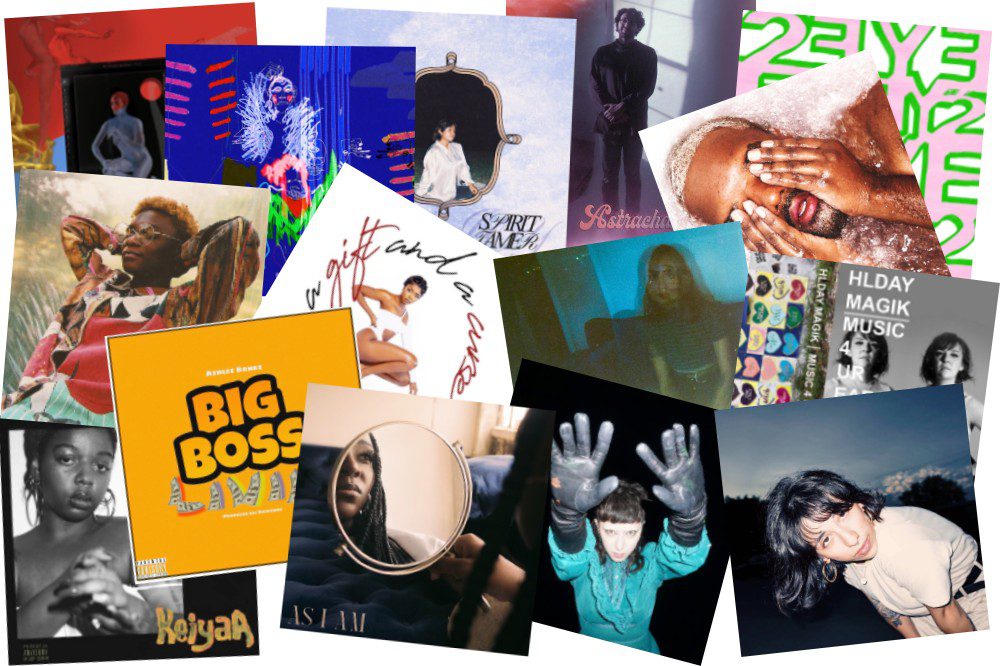
Spring is just around the corner – but this is Chicago. Anything can happen. It has snowed in April here (cue Prince). Luckily, neither the lingering chill in the air nor the ongoing pandemic can stop the city’s creative pulse. There are dozens of releases from exciting, rising musicians set to bloom later with the season – until then, these songs (some of which you might’ve missed in the last year) have been keeping us warm and dancing while the rest of winter melts away. 

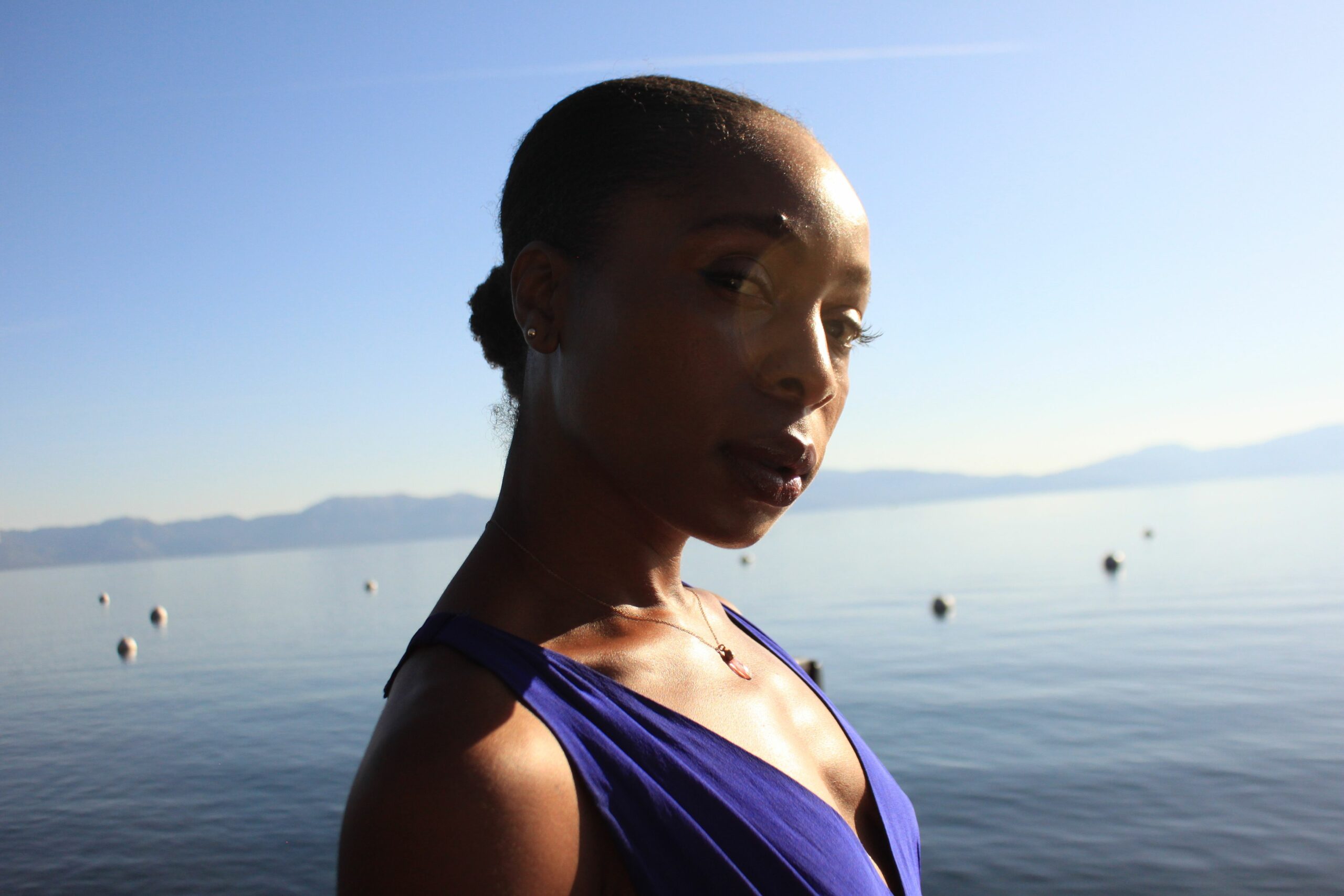
Demetruest – “Blouse Undone”

In under two minutes, singer/rapper Demetruest (a.k.a Demetruis Spidle) delivers a tightly-woven rap allegory over a fierce loop of abstract beats on “Blouse Undone.” Tracking the end of day, when hardworking folks can undo a button or two and find some after-hours relief amid life’s challenges, their lyrical repetition echoes the monotony of the every day while leaving space to celebrate surviving it. Each of the songs on their EP Direction tells a story of identity, but this one’s catchiness sticks with you.

Rat Tally – “Shrug”

With this cold and fuzzy break-up tune, Rat Tally – the musical moniker of Addy Harris – reconciles the need for closure, with the help of her guitar (solo as well as swallowed by muffled layers of distortion). Her take on grunged-up pop bubbles beneath journal-like lyrics, underscored by just a hint of precociousness and wink-delivering stand out one liners like “I wanna throw a fit, fuck, then forget it.” Harris’ vocal quiver will no doubt draw comparisons to the likes of Phoebe Bridgers and others in her indie rock company, but nowhere in my book is that a bad thing.

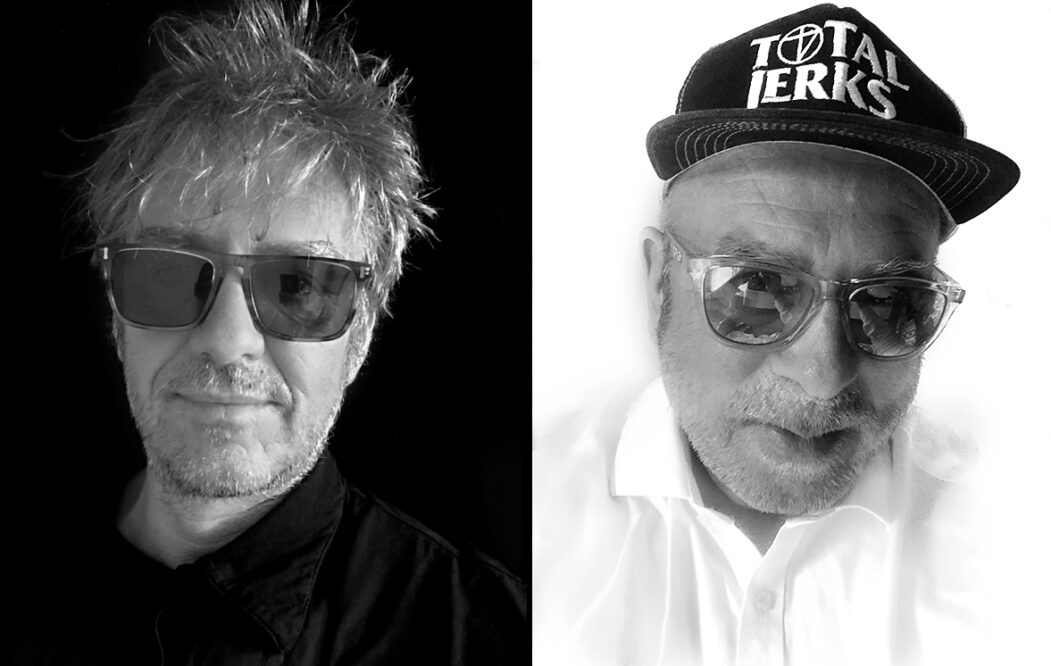
Pixel Grip – “Pursuit”

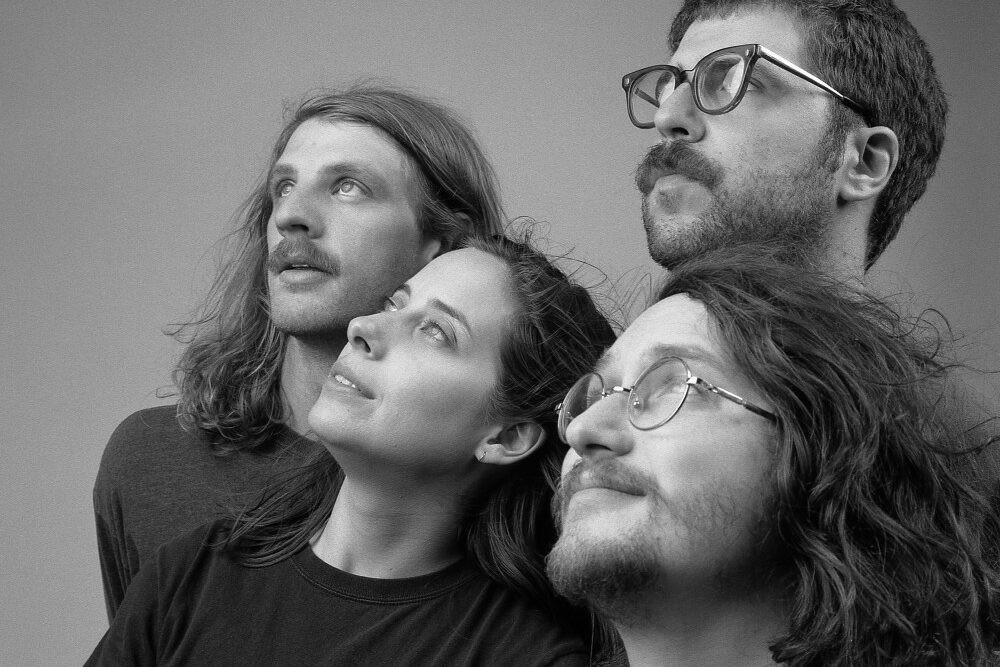
The goth disco is open. A dark, seductive middle-finger to making “good” choices, synthesizers grind against the hypnotic thump grounding Pixel Grip’s exciting single, “Pursuit.” Described as being about “surrendering your desires to be someone who is bad for you,” singer Rita Lukea captures an almost-desperate longing vocally, as a sinister bassline heightens the track’s overall sense of urgency.

Serena Isioma – “Meadows in Japan”

“Meadows in Japan” encourages you to get lost in a fantasy before crash-landing back to reality, while warm melodies invite you into singer/rapper Serena Isioma’s sun-kissed idea of romance. A tempo change disrupts its easy simplicity and takes you to the other side – an “I love you, but I love me more” reflection that isn’t out of character on an EP titled The Leo Sun Sets. As the beat progresses, it unravels much like Isioma’s lyrical affections, culminating in a voicemail – which would be infuriating if it didn’t sound so good.

KeiyaA – “Negus Poem 1&2” Forever, Ya Girl

On her debut album Forever, Ya Girl, KeiyaA weaves observation and meditation into R&B poetry across 16 tracks – but nowhere is the synthesis more complete than on “Negus Poem 1&2.” The track captures the feel of live jazz improvisation, bucking conventional form with the exception of its chorus-turned-chant and fading into a spoken word excerpt, a sonic template repeated in interludes across the album. KeiyaA makes it clear why she’s making music and who she’s making it for: just listen.

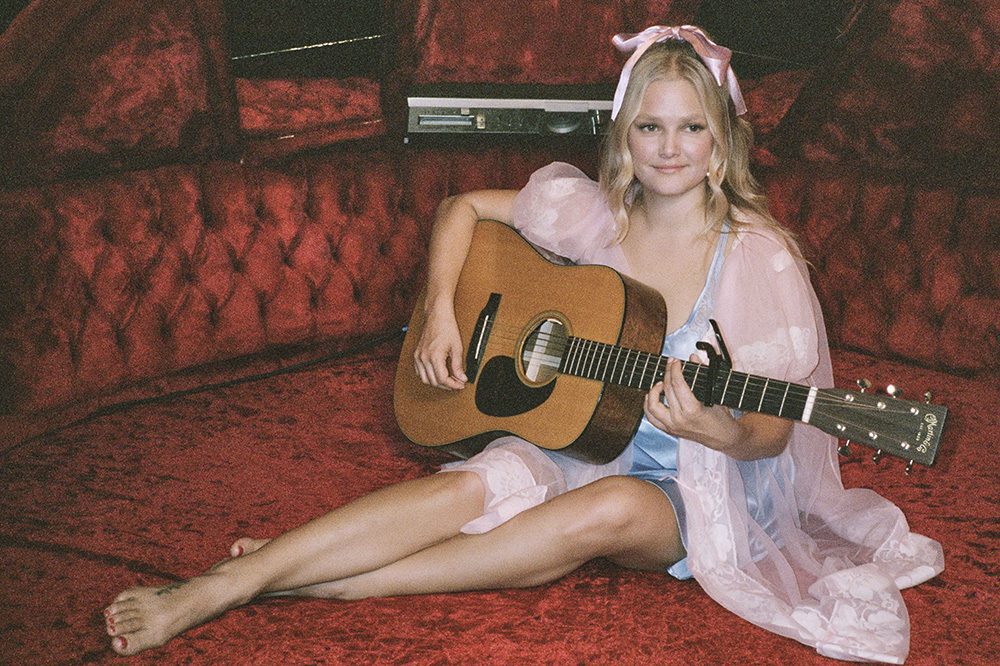
Tenci – “Joy”

Tenci’s soft, warbly twang tells the story of “Joy” – the title could refer to a person or personified emotion, but either way, it’s devastatingly fleeting. A song that feels both hopeful and grief-stricken, the soft strumming of the guitar becomes hypnotic as singer-songwriter Jess Shoman outlines a lullaby of sorts. Set amongst other stellar tracks on My Heart is an Open Field, a bit weathered by time and heartache, “Joy” feels like the beginning of something a bit bigger.

Sol Patches – “Couleur” (feat. Dani Ochoa-Bravo)

Three years after 2018’s Blue Transitions, Sol Patches dropped Vivid Image in February. While the release itself was a surprise, its quality is not. A journey in itself, “Couleur” confronts realities of the Black, Trans experience in America. As Ochoa-Bravo leads you to Sol Patches’ no-holds-barred verse, expressing as much anger as resolution, Sol reminds you why they’ve been so missed.

Mia Joy – “Haha”

One of the most anticipated releases of the year, “Haha” was released in January as the first single from Mia Joy’s debut LP Spirit Tamer, due May 2021. Singer Mia Rocha’s amplified whisper floats above a gentle cascade of synths and strings; enveloping the listener in a beautiful – if not a bit melancholy – ambience. Ushering in change, be it physical, mental, spiritual or otherwise, can be chaotic at times. Let Mia Joy guide you with a more meditative hand.

HLDAY MAGIK – “LUV IS MDTATN (love is meditation)”

A collection of understated, lo-fi pop tracks, singer Pamela Maurer – known as Baby Money – introduced new project Hlday Magik in February with the Music 4 Ur Ears EP. Across seven songs, Maurer explores various vocal textures and the boundaries of her bedroom production aesthetic, but the must-hear is “LUV IS MDTATN.” Without overwhelming her hushed coo, minimal instrumentation serves as the glue holding the vulnerable confessional together. It’s simply lovely.

Jackie Hayes – “Eye 2 Eye”

A bass-driven rocker, Jackie Hayes found inspiration in new wave on latest single “Eye 2 Eye.” A little grimy – with the potential for a big, noisy payoff in a future live setting – the song details the frustration that comes with self-growth, reinvention, and expectation (or lack thereof). Luckily, Hayes left some space to take out said frustrations on the dance floor.

Carlile – “Restart”

A house music-inspired cardio circuit of a song, Carlile sends her brand of pop into overdrive.  A maximalist club track, “Restart” showcases the artist’s developing style and increasingly biting turn of phrase. Racing against time and dwindling patience, Carlile demands a breakthrough. Let it go.

Brittney Carter – “Prove ‘Em Wrong” As I Am

One of the best LPs of 2020, Brittney Carter’s relentlessly focused As I Am is a force. On “Prove ‘Em Wrong,” she makes sure you’ve been listening. Delivering every syllable smoothly, Carter raps with enviable self-assurance regardless of the story she’s telling. Rhythms unrushed (even sparse on other tracks), she makes sure to give every word the attention it deserves – respecting her music as a natural extension of herself.

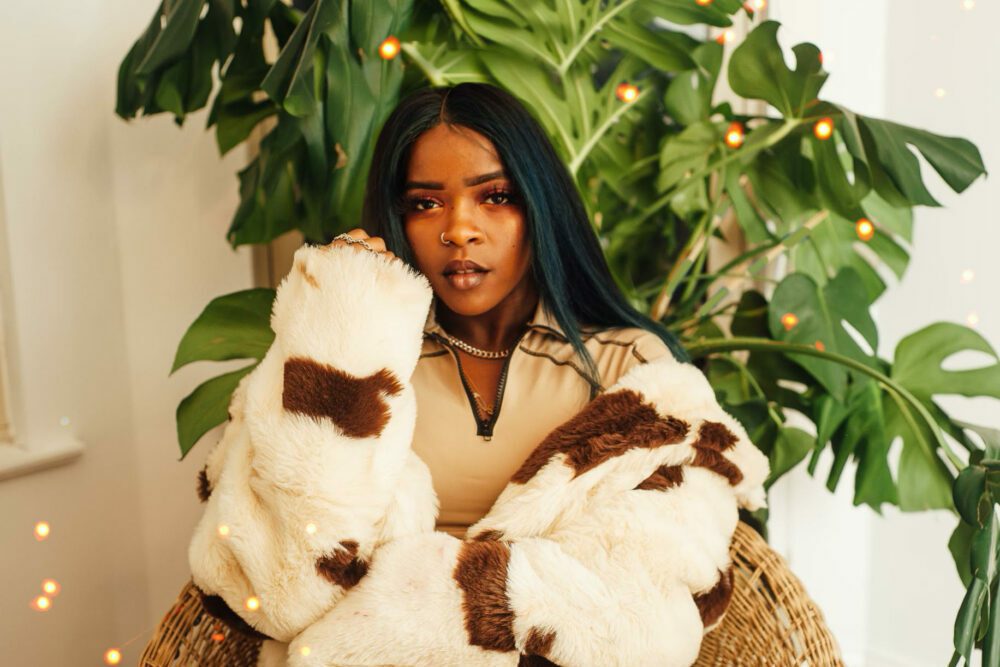
Tink – “CAP”

Tink has had enough and she’s got a list of grievances for the fuckboys on “CAP,” appearing on 2020 EP A Gift and a Curse. She’s concise within the three-minute track, her flow poised despite “cleaning up the mess” she sings of. With a catalog of songs calling for women to stand in their worth, respect and desire, “CAP” and its earwormy hook (“too many lies, too many hoes, too many bitches”) is another one for the Tink canon.

Ashlee Bankz – “Big Boss Livin’”

Ashlee Bankz released a handful of tracks in 2020, but none were quite like “Big Boss Livin’.” In a year that needed any excuse for celebration, Bankz – undeniably dexterous vocally – directed that energy toward herself with this rapid-fire ode to moving up. There’s no filler here, no room for apology or humility. It feels good to flex; let Bankz take this minute and a half to remind you.

https://soundcloud.com/ashleebankz/big-boss-livin

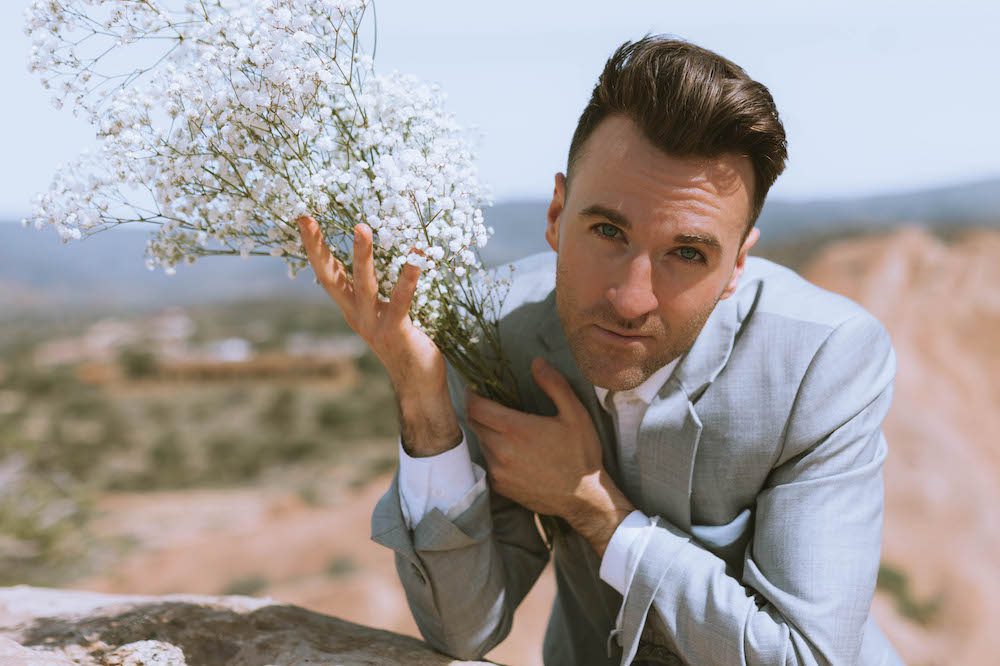
Astrachan – “Ladakh”

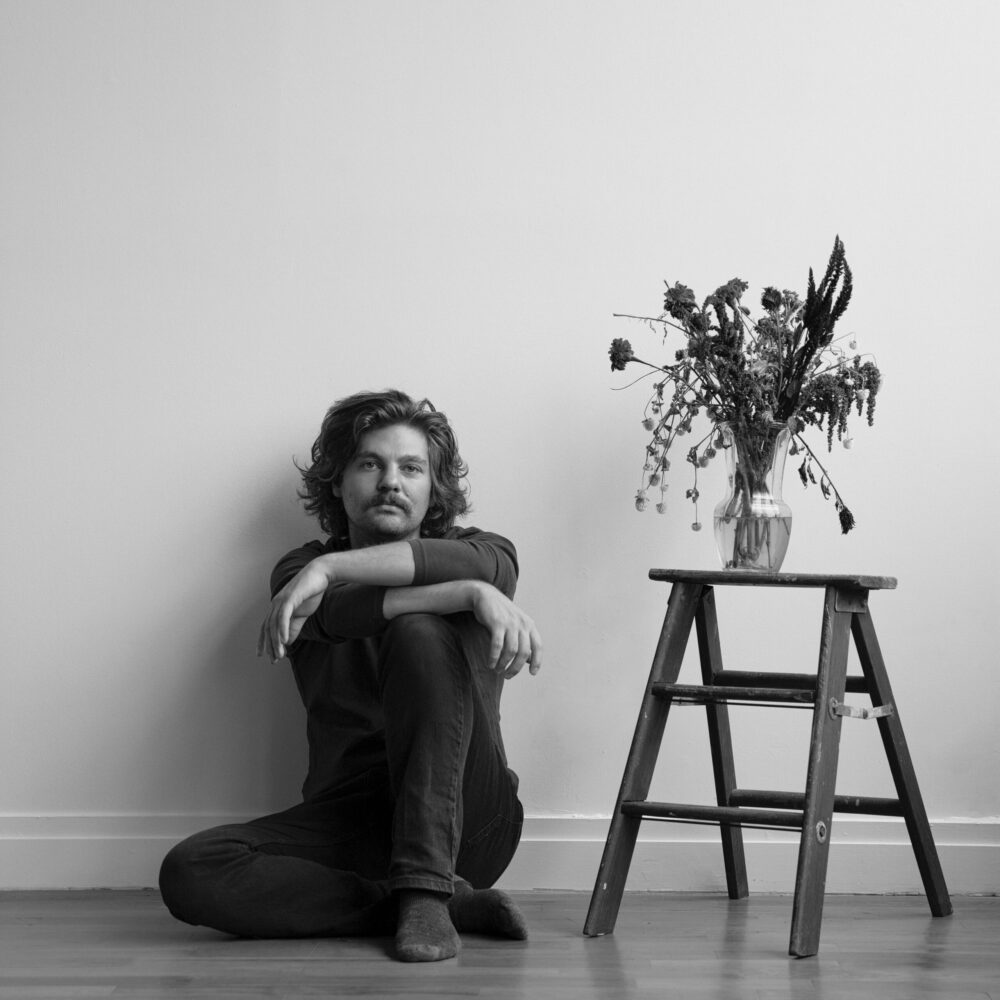
A delightful familiarity rings from Astrachan’s “Ladakh.” Its folksy, Laurel Canyon-feel dances with bits of psychedelia to lull the listener into songwriter Ben Astrachan’s memory. Building a pretty dreamy atmosphere, heightened by clever flairs of clarinet and flute, the artist’s namesake band is as charming as it is promising; be on the look out for a self-titled release due May 2021.
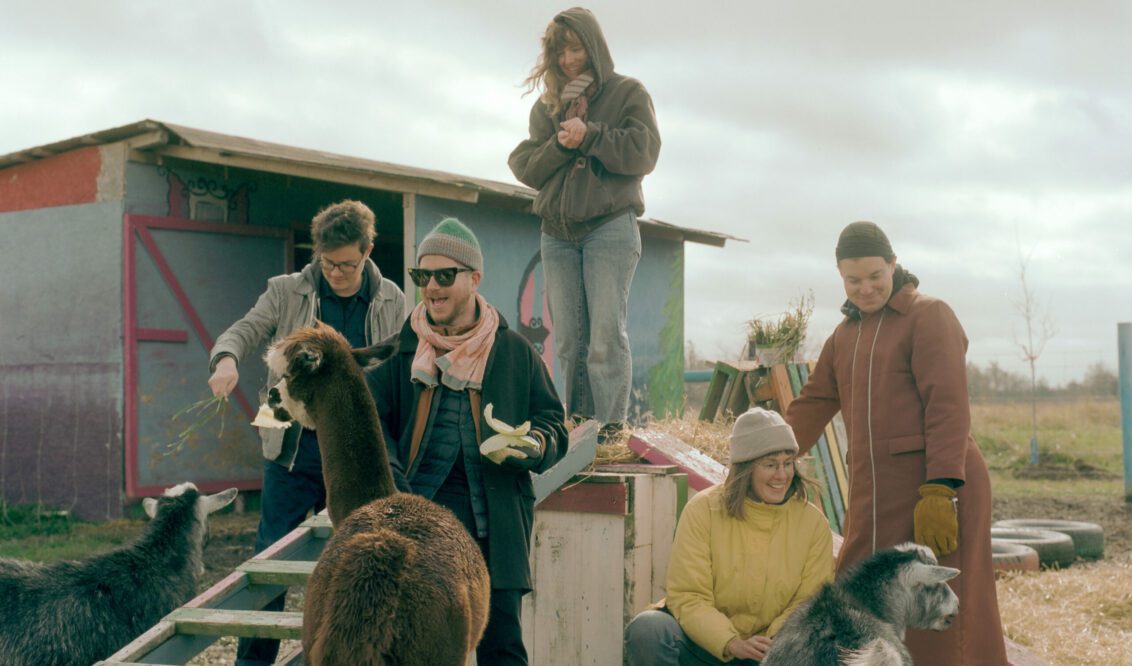
Toronto’s Bernice Mix Mindfulness and Imagination on New LP Eau De Bonjourno

Photo Credit: Colin Medley

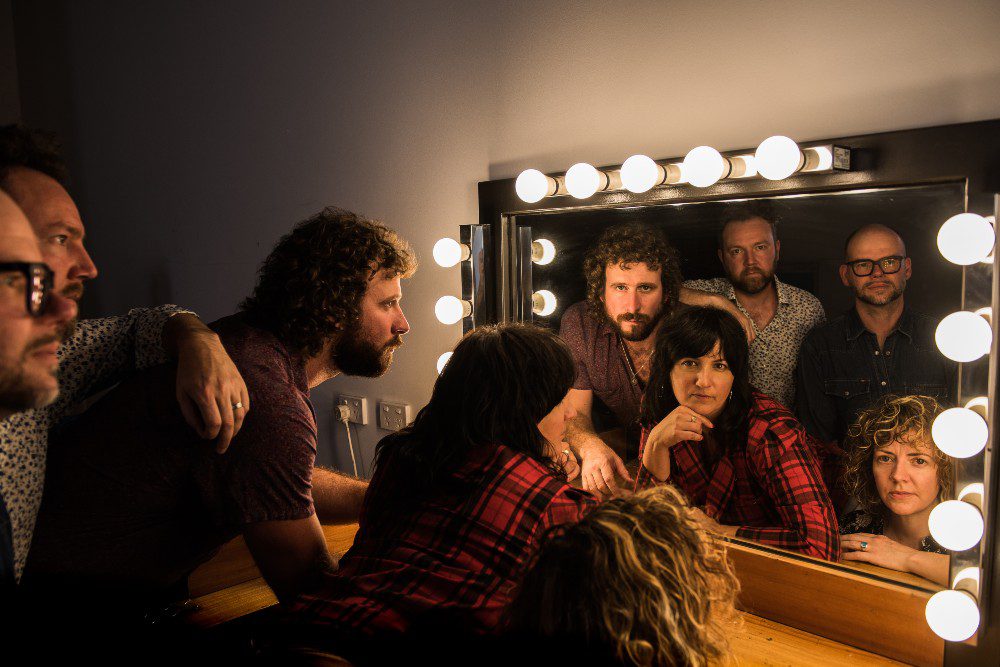
On a small island just outside of Toronto in the summer of 2019, Robin Dann and her band, Bernice, unknowingly made a record that would be extremely relevant to the unforeseeable year ahead. On Eau De Bonjourno, Bernice covers themes of isolation, disconnecting self-worth from productivity and escaping into the imagination. Dann and her bandmates Thom Gill, Dan Fortin, Phil Melanson and Felicity Williams combine their deep knowledge of jazz and shared curiosity for experimentation to create an album that truly transports the listener. 

Dann says that this is the first time the band attempted songwriting as a group, a new challenge that proved to be worth the clunky learning curve. “Collaborative songwriting… I think it’s never easy until you land on a flow,” explains Dann, the band’s lead vocalist and (previously) primary songwriter. “Thankfully, Thom and I have been playing together for so long, we have almost like a psychic connection that works really well… I think the songs on this record are some of our best that we’ve ever written.” The band wrote all of the songs for Eau De Bonjourno in an old school container on Toronto Island. The way that Dann explains the residency – creating and relaxing with friends on a sunny island – sounds like a literal fairytale compared to the way most of us have been living our lives for the past year, more or less in complete isolation. 

Shortly after Bernice finished recording the album in late 2019, everything changed, including the meaning of some of their new songs. Take, for instance, “Bubble,” a song that Dann initially wrote about being uncomfortable in crowds; in 2020, crowds meant contracting more than just social anxiety. The song’s lyrics – “You’re not allowed in my personal bubble/Please step away from my personal bubble” – sound like they could be 2020’s catchphrase. “When we wrote that song… it was a lot more related to having mixed feelings about being social and being in crowded spaces and having a lot of friends that have anxiety around that,” says Dann. “Now, that’s not what it’s gonna be about. It’s gonna be about this year’s experience for anyone who listens to it now. I love that – I love how a song can just change identities when it needs to.”

Most of Dann’s lyric writing contains an innate universality, allowing the song to mold its meaning to the psyche of whoever’s listening. This elasticity is mimicked in the band’s instrumentation — a lush orchestra of experimental synths following syncopated rhythms. And while Dann’s crystal voice and intuitive melodies contain traces of R&B and pop, the band’s heavy jazz influence is evident in the improvisational nature of the music. This “play it as it comes” disposition is something Dann comes back to again and again in the record. Mindfulness and self-acceptance play a central role in this record – and in her everyday life. 

On “It’s Me, Robin,” Dann presents the idea that just being is enough. And in a time when so many of our lives have been put on pause, this idea is more than welcome. The song starts out with an unapologetic introduction: “It’s me Robin/You don’t really know me/I thought if I just expressed this/You might just let me be me and accept that/I’m here, still here/I am really here.” In this song, Dann is simply and elegantly stating that a person is not a list of their accomplishments, social connections or financial assets, that being yourself and being at peace with who that person is is as good a vocation as any. “I don’t agree with [the idea of] some lives having more or less value than other lives,” explains Dann. “It’s like, am I gonna accept myself just for who I am no matter what I do? Or am I gonna continuously try to better myself and do more for my community? And can you live with both somehow? I feel like I’m confronting that a lot.”

These existential questions are ones that seem to have been screamed into the ether for millions of years, and although Dann is still searching for the answers herself, she gives such succinct advice on that it feels she’s on the right track: “Give yourself the same love you receive, believe in your inner value,” she concludes.

Dann’s constant reminders to find worth from within and immerse yourself in the moment are therapeutic in nature, but even more so when sung in her translucent, soothing falsetto. Especially on “Lone Swan,” which was inspired by a swan who would follow her around Toronto Island. Dann explains that swans are creatures of wonder to her – that one day, when swans are extinct, humans will look back in disbelief that we shared the planet with them. “Swans are interesting to me because they have this horrible reputation, but you see them and you’re like, ‘You are not of this world,’” says Dann. “Like, how do people see swans and just accept that they’re real? I see a swan and I’m like, that’s an alien, like that is coming from another planet, it’s not a bird.” 

Simple, but awe-inspiring moments like this throughout Eau De Bonjourno remind the listener not to take our surroundings for granted, but not to take them too seriously either. This balance of playfulness, self-awareness and intention is what makes Bernice’s music so pleasant to listen to, and even heal to. Maybe, one day, we’ll be able to look back on pandemic times the way Dann predicts our predecessors will look at swans – in shock and awe that they ever existed. Until then, I suggest taking a page from Dann’s book on living: “If I did nothing but love myself and love one other person, that’s fine.”

Follow Bernice on Facebook and Instagram for ongoing updates.

Emma Volard Unpacks Femininity With Latest Single

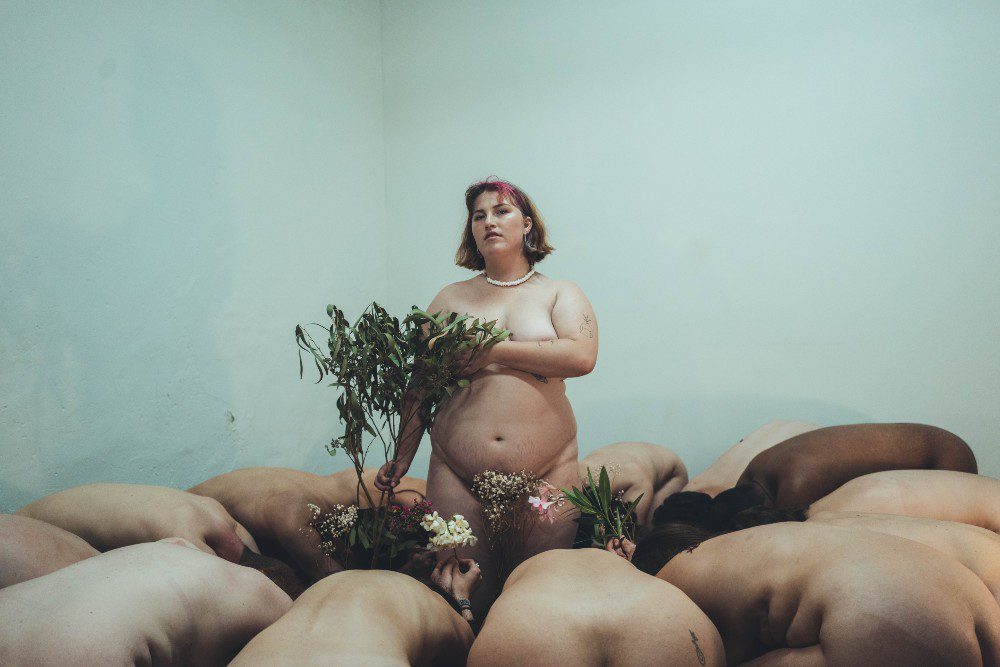
Emma Volard’s sound melds rhythm ‘n’ blues, neo-soul and electro in a contemporary, Australian ode to classic soul/hip hop artists like Erykah Badu and Lauryn Hill. Her 2020 single “Femininity” epitomises the brave, take-me-as-I-am-or-don’t attitude Volard espouses in both her music and her life. The artwork for the single depicts a voluptuous, nude Volard sitting cross-legged amidst a collection of fellow naked bodies lying prone on the floor about her. She looks, unapologetically, at the viewer, as if to say, “What?”

The artwork for the single was an idea that came up during a band trip in Byron Bay, a celebrity-favored beach town in New South Wales. “We came to the idea that it would be beautiful to get a bunch of friends – men, women and non-binary – together to show we’re all just bodies, skin and bone,” Volard explains. “The photographer turned out to be a sexual harasser, so we don’t like to name him. He had over 100 accusations of sexual harassment within Victoria. I continue to put it out there because I want to claim that space back – the art was my own idea, and I was reclaiming my art as a woman.”

Volard believes that femininity is not about a specific aesthetic, or ideals that have ultimately been imposed by white men, but that it is about being authentic, being empowered. The claims of harassment that emerged after the single was released were a blow to her, but she refuses to let that be the storyline.

Rather, her personal challenges and convictions are what deserve attention. Volard’s confidence in her own body, her sexuality, her music and her femininity come from perspective, hard-earned. The power of expression is one that Volard knows is not to be taken for granted, nor used carelessly, a lesson she learned from her sister, Adelaide, who is non-verbal, severely autistic and epileptic.

“Adelaide is two years younger than me and was born fully cognitive. When she hit six months old, she started to regress. She was beginning to walk but then soon after, she couldn’t do anything, even eat,” Volard relays. “She was able to make noises, and she’s very good at expressing emotions, especially when she’s being cheeky. I learnt a lot at a very early age; I matured very fast, because we’d go to hospital at all hours of the night. It wasn’t your regular lifestyle.”

Volard says her sister provides a daily reminder to use her voice for those who cannot, to challenge listeners to consider the impact we have environmentally, politically and personally on each other and the land. “She’s been my biggest inspiration,” Volard says. “She really, really goes through hard times but always has such a positive outlook.”

Volard grew up Southeast of Victoria on Phillip Island, known for its penguins (“country by the sea, an incredible place!”) for four years of her life, so a lot of imagery in her music is inspired by the ocean, the tides coming in and out, and the ideas of change and moving on, especially on luscious, indulgent 2019 single “Peanut Butter,” which oozes with style and soul. It’s jazzy, it’s slinky, it’s unashamedly sexy.

“That track was originally a demo I was sent by a dear friend, [Melbourne artist] Moses Carr, who said I should put some vocals on it. It was called ‘Peanut Butter’ when he sent me the beat, so we stuck with it. The song is nothing to do with that at all!”

But it’s so smooth, with just a little bit of crunch to the beats, I protest.

Volard indulges me.

“Maybe it has peanut butter undertones?” she says with an easy laugh.

Volard believes that expression is dependent on having a comfortable, supported space, something her relationship with her band provides. Despite a band full of boys, Volard has never felt her femininity sets her apart and perhaps it even enables her to feel more confident in the fact she identifies with being a tomboy at heart.

“Femininity is the most socio-political song I’ve written, inspired by being a tomboy,” says Volard. “Why am I less feminine than anyone else because I have some masculine traits? It was surreal to see how many people who got behind that song. It’s so important to me as a woman in the music industry to have that level of support. People from the industry got behind it, it got on the top 5 songs on both Triple J Unearthed and PBS radio. I got messages from people I’ve never met before saying it touched them, which was really great.”

Volard will be playing a few festivals, doing an International Women’s Day event at a local brewery, and, later this year, releasing her debut album – or, to give her band credit where it’s due, “their” album.

“A lot of the songs I write with the boys in the band. We’ve known each other for over five years now and we’re a really close team. We have Jake Amy on keyboards, Harry Leggett on guitar, Hugh Heller on bass, and Jordan Pereira on drums,” she says. “We’re hoping to get it out by September, but we’re still in the early stages of production. I’m recording vocals at Sunderland Studios in Phillip Island. We wrote the songs in two months around November/December last year, under this huge time pressure we put on ourselves. Boundaries are a fun thing to work with, they make you push yourself out of the box. It was really hard to create during lockdown, because I wasn’t able to go out and be inspired by others. All I had was a daily trip to the supermarket, a one hour walk and four walls.”

Volard’s working title for the album is, of course, Femininity.

“I want to show the day to day life, our existence, and gratitude for being a woman,” she says. “I’m finally at a point where I’ve found a sound that really signifies my own musical identity, and me as a person.”

Follow Emma Volard on Facebook for ongoing updates.

PREMIERE: Nisa Meets Anxiety With Understanding on “Turn Me Down”

Photo Credit: Sara Laufer

To call a sound merely indie rock at this point leaves much to be imagined. For New York City born and bred singer-songwriter Nisa, who releases her forthcoming debut EP Guilt Trip on March 26, that sound more specifically borrows elements from the varying subgenres existing under the indie umbrella: the heartfelt sincerity of Julien Baker but higher energy; the emotionality of emo without its saccharine sweetness; the power-pop hooks of Tancred’s 2016 LP Out of the Garden. Nisa combines these elements in an irresistible way, but beneath the EP’s catchy exterior lies themes of emotional detachment and reticence born of anxiety, something of a defense mechanism against the guilt and shame that can pervade the psyche.

After studying abroad in London, Nisa returned to NYC, simultaneously nursing a broken heart and preparing to record her debut. The EP’s title refers to the shift in scenery, as well as the feeling that Nisa could see the break-up coming miles away. “I had been moving toward it but didn’t feel completely certain in my decision to do it, so once I was the one to break it off, I felt guilt,” Nisa recalls. “That guilt was followed by this emotional detachment from myself. That person and the reasons leading me out of the relationship were the ones keeping me there.”

The timing was serendipitous in a way; the geographical and emotional changes intersected with the onset of the pandemic. We’ve all been forced to turn inward and examine our own rough edges over the past year. Nisa says she “took to writing to deal with what I was struggling to vocalize,” given the time to hunker down and consider what she was feeling and how to translate it into music. She also co-produced and released her singles “Forget Me/Giving” and “Colossus,” waiting until it was safer to proceed with her stalled recording plans for Guilt Trip.

Having to wait ended up having a huge impact on the sound, Nisa admits, as did being able to record for the first time in a real studio, rather than her bedroom. “I’d gone in with a much more Americana feel, but then we got there and there was this unnatural energy, this eclectic anger and like, very hard-pressed feeling in your face,” she explains. “It was a confrontation of all that time spent pent-up.” She recorded with a smaller team than she initially intended, working alongside close collaborator/guitarist Fritz Ortman and producer Ronnie Di Simone, as well as a handful of local musicians, like Del Water Gap drummer Zac Coe and guitarist Nick Cianci.

So far, Nisa has shared four songs from Guilt Trip – “Common Denominator,” “Bottom Feeder,” “Ferris Wheel,” and “Growing Pains,” each offering a glimpse into the seven-song effort. Today, she premieres latest single “Turn Me Down” via Audiofemme, which fits squarely into its place on the EP, dealing with social anxiety specifically. It reads almost as though Nisa is giving herself a pep-talk to enter a party, that the “you” and “me” she refers to could be the same person. “If you want, you can turn me down,” she offers, proposing a lonely, late-night diner as an escape route.

But there’s a dare in her voice, too – she makes space for the anxieties at play, but is encouraging enough to push through them, to seek self-acceptance and the ability to embrace our limitations. “It’s always gonna be like that for me as an anxious person,” Nisa explains. “I think that anxiety can also be met with understanding yourself. I just started understanding anxiety as it relates to me, so rather than detaching from myself, I took the time to understand it fully, and sometimes it’s just about riding the wave. So I think this song is definitely a ride the wave song.”

The animated video for the song embodies the tunnel vision that anxiety can create. “We wanted to give it a cinematic feel, and the music video reflects that. It ends up being this grand journey, so super excited to have that come out,” Nisa says. The metaphor is crystal clear: once you give up the guilt about the things that make you you, you’re free to view them from a perspective of neutrality instead of self-loathing. 

Nisa is set to release the full EP on March 26, and in the meantime finds herself remaining productive, recording two other projects she penned during this time at home. With only the smallest light at the end of our pandemic tunnel, she says that if nothing else, she’s “just really grateful to have the time and the right headspace to be writing now.” And, no doubt, to have put some of that guilt behind her.

Follow Nisa on Facebook and Instagram for ongoing updates.

Port Lucian Uses Twitter to Curate ‘Trans Musicians and Allies for Change’ Compilation

Photo Credit: Julia Leiby

We all know that the internet can be a dark, scary place. But sometimes, it can also be a catalyst for beautiful projects that inspire change. Twenty-one year old college junior Portia Maidment (of Port Lucian) harnessed the power of the internet and used it to create a new compilation, Trans Musicians and Allies for Change, out via Ztapes on March 5th. The comp is made up of nineteen different artists from around the world, ranging from an acoustic Diners ode to chilling out, to the watery shoegaze of Floor Cry. All proceeds from the cassette will be donated to Trans Lifeline, a 24-hr hotline dedicated to offering support to trans and gender non-conforming folks.

Maidment, a pre-med student at Case Western Reserve University, was first inspired to make this project after taking a class on transgender literature. “That [class] sort of boosted my interest in transgender rights,” says Maidment. “So, I’m actually applying to medical school so I can eventually perform gender affirming surgeries and things like that.”

If you’re wondering how a pre-med student managed to organize an entire compilation album in the midst of a pandemic, you’re not alone. But Maidment said it was actually pretty easy. “I would hit people up on Twitter and ask if they were interested in this comp,” she says. “That’s honestly how I did the whole thing. A lot of people that are on the comp, I don’t know, but because I had support from a label and a cohesive idea, it just sort of came together.” And the power of the internet prevails.

Maidment’s patchwork approach to choosing the artists is evident in the diversity of sound on the record. Whether it’s an acoustic Joni Mitchell track from Philly indie pop band 2nd Grade or a trademark conversational narrative from Fred Thomas, all of the tracks are either previously unreleased demos or written specifically for it. While all of the songs feel vulnerable and personal, some speak specifically to the transgender experience.

Toronto-based indie group Little Kid explores the importance of defining your own identity in “What’s in a Name?” In the most gentle of voices, singer and multi-instrumentalist Kenny Boothby distills the emotional fallout that can occur after a person chooses to change their name. “Oh babe, what’s in a name?/Grew tired of the one that your parents gave/They heard that you wanted to change it like trumpets on judgment day.” Many transgender and non-binary folks experience pushback from friends and family members when announcing their name change, making the transition harder than it needs to be. Aside from the administrative cost of a name change – ranging from $150-$450 – the emotional cost can be huge. Having to remind your friends, family and strangers of your new name over and over again can be emotionally exhausting and invalidate your identity.

Boothby goes on to support the sentiment that these type of dismissive of reactions usually have nothing to do with the person they’re directed at, but rather, a deep-rooted resistance to change or anything outside of what they know. He sings, “Guess they still don’t know how to behave when they can’t place you anywhere.” The song is a validating, soothing reflection on affirming your identity, and an ever so tender fuck off to those who don’t respect it.

Unfortunately, the theme of people not respecting transgender or gender non-conforming folks’ pronouns, identities and safety is a global epidemic. This threat to safety and selfhood can undoubtedly drive people into dark places. And while organizations like Trans Lifeline are an amazing resource for folks that are struggling, sometimes it’s extremely difficult to take the first step in reaching out. In their song “Are You Doing Alright?” Kennedy Freeman of Highnoon addresses anxiety and depression and encourages listeners to reach out to their friends. Freeman says they wrote the song in December, a time when they were especially feeling the effects of being isolated during lockdown.

Although they tried recording the song a few different ways, they say that a voice recording felt the most natural. “Phone audio can feel really familiar and comforting in a way for me too,” says Freeman. “I wanted it to feel like a close friend reaching out leaving a message or something.” The feeling definitely comes across and feels poignant to this project in particular. “This song felt applicable to the compilation,” says Freeman, “specifically the idea of a lifeline people can access when they’re struggling and how important queer friendships and mutual support can be to gender non-conforming people.”

Much like the community it aims to support, Trans Musicians and Allies for Change is colorful, varied, and refuses to fit in any one box or description. The funds from this compilation will go straight to Trans Lifeline, where they will be used to provide direct emotional and financial support to trans people in crisis. Grab yourself a copy – today is Bandcamp Friday, so the streaming platform is waiving their revenue share – and proceed to listen in awe.

You can reach Trans Lifeline at US (877) 565-8860 or Canada (877) 330-6366. The number for the National Suicide Prevention Lifeline is 800-273-8255

A New Compilation from Womxn in Music Collective Highlights Inclusion and Talent for International Women’s Day

Ailisa Newhall produced the new comp from Womxn In Music. Photo Credit: Dawndra Budd

In honor of International Women’s Day, it seems only right to highlight new Seattle projects specifically designed with the interests of womxn musicians in mind. One great example of such an effort is the new self-titled 15-track compilation from the Womxn in Music Collective, which officially drops on March 8; you can purchase it digitally via Bandcamp today, while the streaming platform is waiving its revenue share (as it does the first Friday of every month).

Womxn in Music Collective was formed in 2018 by two Seattle-based womxn involved in the local music industry—Sarah Gerritsen and Nikki Barron—who were looking for more opportunity to network with other womxn musicians and for the same pay and access to opportunity as their male counterparts. The compilation’s producer, Seattle’s Ailisa Newhall, who also contributed her song “Until The Robins Sing” to the project, was one of the collective’s early members and volunteers.

“Right when [it] was evolving into an actual thing… I was like, this is something I’m passionate about,” says Newhall. “I was really excited about having this safe space.” Newhall spent many hours volunteering and began managing Womxn in Music’s Facebook group (of which I am a member, though I was not involved in putting the comp together), the hub where most of the members have come together regularly during the pandemic. Often posting performances from group members, she found herself more inspired than ever to highlight womxn artists in Seattle and beyond.

Then, in January 2020, Newhall caught wind of a local theater, The Seattle Repertory, that was planning to put on a play about the story of a fictional womxn musician who had gotten her start at one of the area’s most beloved venues, The Tractor Tavern.

“I reached out to the Tractor through Womxn in Music and I was like, can we do a show, and have the Womxn in Music artists come perform and highlight like, real life women who are doing the scene?” Newhall says, adding that the plan was to partner with the Seattle Repertory Theater on the show. “The Rep would send some of their actors to come out and be a part of the show, and the bands would learn some of the music from this show and play their own.”

While everyone was whole-heartedly onboard with the idea, the pandemic had other plans, and the show, which was to occur in June of 2020, never happened. Instead, Newhall decided to coordinate, curate and produce this compilation, which she says is a representation of what she had hoped that show would be.

“That [theater show] just got me thinking… of highlighting the fantastic women that are really kicking ass in our group. During lockdown everyone was struggling, so I was like, how can we lift up the people and get a project going?” she says. “I started applying for money and stuff and finding a way to make something happen. I thought, people are writing music at home – how about we do a virtual idea of that concert through an album?”

After applying for grants for months, she procured a $5000 grant through the Ms. Foundation for Women and dove into getting as many womxn involved with the project as possible – not only the 15 artists who contributed tracks, but also the production crew, which included mastering engineer Rachel Field at Resonance Mastering and Tacoma-based visual artist Ava Wadleigh who designed the cover. The performers found ways to record their tracks at home or in a COVID-safe way, then sent them to Newhall to put the package together—which couldn’t have gone better.

“As I was putting the tracks together, they sort of took on a life of their own,” says Newhall, adding that each of the tracks speak to each other “in a really fantastic and amazing and organic way.” Sure enough, the songs, all of which are originals by women from the group, each muse on this tumultuous time in the world in their own unique but complementary ways. And the compilation also contains a plethora of styles—from jazz to blues to pop to country to folk.

Shaina Shepherd’s rousing piano-pop track, “The Virus,” directly considers the pandemic, Kat Bula’s bluegrassy “Nobody’s Woke,” addresses political polarization and the downsides of the “cancel culture,” and Stephanie Anne Johnson’s “American Blues” addresses the country’s baked-in racial injustice.

Meanwhile, other tracks, like Rani Weatherby’s R&B-infused “Where Can I Run,” gives voice to that general feeling of stuck-ness we all can relate to as we attempt to get up and face the complexity of these times. “It’s a struggle to get out bed/When I feel trapped inside my head/My dreams no longer bring me joy/When I can’t sleep through all the noise,” Weatherby sings.

The album packs a few surprise appearances, too. Sara Gazarek, a notable Grammy-nominated jazz singer who grew up in Seattle, contributes a gorgeous, swingin’ tune called “Easy Love.” And Lady A, a veteran Seattle blues singer who had her stage name stolen by the country-pop group formerly known as Lady Antebellum in June 2020, appears on the compilation to share her matter-of-fact conclusions about the state of the world with “The Truth is Loud.”

Despite all the different approaches and styles of each of the performers involved, Newhall says she’s in awe of how seamlessly it all knits together. She credits that partly the inclusive, open, and supportive energy of the Womxn in Music community.

“It feels whole. There’s blues and there’s jazz and there’s pop and folk; you wouldn’t think that all these genres would fit together so well but they do,” she says. “I’m just proud of the work that these women are doing. I’m blown away by the talent and how humble they are.”

Follow Womxn in Music on Facebook for ongoing updates.

The Lasting Impact of Lush’s “Ladykillers”

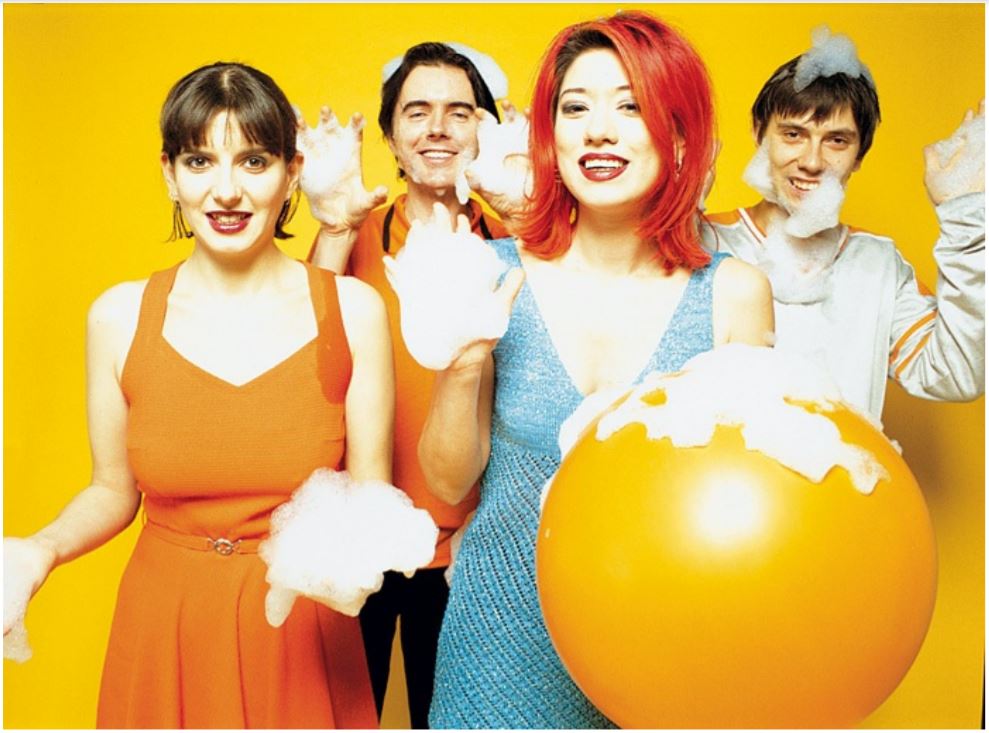
In 1996, Miki Berenyi and Emma Anderson of Lush appeared on MTV’s 120 Minutes answering a question about the themes behind their album, Lovelife. “A lot of people have accused us of being man-haters,” said Anderson, before countering that “a lot of it is quite light-hearted and tongue-in-cheek.” 

Berenyi added, “As light-hearted as you can be when you’re telling someone to get lost forever.” 

In its time, Lovelife, released 25 years ago on March 5, was considered a departure for Lush. With previous albums, the British quartet gained a reputation for a dense sound. On Lovelife, as Anderson in that 120 minutes interview explained, the band had wanted to make something that was closer to their live performances. They peeled off the studio layers and recorded an album with the immediacy of a concert. Lyrically on that album, they often unraveled the complicated mess of emotions that are balled up into dating and relationships with songs like “Single Girl” and “Ciao!” But it’s the album’s opening cut, “Ladykillers,” written by Berenyi, that likely drew the “man-hater” comments back then. 

Last May, on Twitter, Berenyi noted the feedback she’s received for “Ladykillers.” She commented, “Men (and ONLY men) complain I’ve been unfair.” A few weeks later, when she guided fans through the album for Tim’s Twitter Listening Party, she expanded on that, posting a review that referred to the song as a “cynical put-down of flash blokes.” 

With sarcasm dripping from its title, “Ladykillers” presents three separate scenarios, each of which features a distinct, cringe-y male character. There’s the guy trying to spark some animosity between two women in a bar. There’s the dude with the muscles and long hair who feigns sensitivity and uses feminism as bait. Finally, we hear about the one who keeps chasing after a girl who isn’t interested in him. 

Over the years, these lyrics would spark questions over the identity of the men whose behavior is immortalized in the song. In the Tim’s Twitter Listening Party thread, Berenyi commented, “I’m always asked to name the men in Ladykillers but nope, not gonna because it honestly could’ve been written about any number of people (loads of ’em out there!) – and it’s not about the blokes but how it feels to be on the receiving end.” 

With that statement, Berenyi crystalized why “Ladykillers” is such a powerful song. The history of pop music is overwhelmed by songs where women are objects. Even songs named after women are often more about the men singing them than the women in the lyrics. “Ladykillers” flips the script, because it’s a song about a woman’s reaction to men. Specifically, it’s about a woman’s reaction to men who treat women like conquests. 

As vivid as these characters are in “Ladykillers,” there’s a universality to them. Their true identity doesn’t matter because many listeners the world over could easily insert their own characters into the same scenes. It’s not about individuals, but about patterns of behavior and the impact that those patterns of behavior have. Twisting “Ladykillers” into a song about the guys is roughly equivalent to countering #metoo with #notallmen. 

When I first heard “Ladykillers,” I was old enough to go to clubs, but not old enough to drink at them, so I was just starting to amass my own collection of run-ins with guys like those described in the song. Today, that collection is massive and I’m guessing that a lot of readers can say the same thing. Even back when I first heard the song, though, I felt an instant sense of solidarity with it. As I hit my 20s, that would grow stronger. 

However, what resonated with me most about the song then, and still does today, wasn’t any specific situation in the verses, nor was it the smart response in the chorus. It’s the little line that connects verse to chorus, “I want to tell him.” 

The reality of encounters like these is that, no matter how unwanted the attention is, it can be hard to respond. Maybe you’re assessing the situation, wondering if you can say anything without jeopardizing your safety. Maybe you aren’t afraid, but you’re so stunned by someone’s brazenness that you can’t craft a coherent retort. Maybe you’re simply tired of dealing with this kind of crap and don’t want to bother with even acknowledging the guy’s existence. The thing you want to say isn’t always the thing you have the opportunity to say. 

In the 120 Minutes interview, Berenyi mentions, in regard to the album’s lyrics, “If you have an argument with someone, you walk around with it in your head until you win it.” Similarly, there were plenty of times when I fumed over a “Ladykillers” situation with the song playing over and over in my head, imagining that the chorus had been my comeback. For those moments, “Ladykillers” has been a gift, a message for anyone who needs to hear it that you aren’t the only one fed up with that dude. It all comes together in the song’s final line: “Hey girls, he’s such a ladykiller, but we know where he’s coming from and we know the score.” 

How Mia Doi Todd Built Her Music Life, Song by Song

Photo Credit: Azul Amaral

With more than two decades of experience in the industry, Los Angeles folk singer Mia Doi Todd can certainly wax poetic about dedicating her life to music. She dispenses those gems freely on “Music Life,” the title track to her stunning 12th album, depicting the lifestyle as both a blessing and curse: while it “opens up the path” to friendship and collaboration that transcends borders, it can also be a lonely endeavor that fosters self-destructive tendencies. As the track shifts from celebratory to something more like a cautionary tale, the chords darken; these shifts in tone and narrative arc play out again and again over the eight tracks that make up Music Life, Todd’s first collection of original songs since 2011’s Cosmic Ocean Ship.

Motherhood was partly responsible for the slowing of the once prolific musician’s output. “I had the work ethic and drive, but my daughter really didn’t like me to play guitar and hold her. It was like holding another baby – she was jealous of that guitar,” Todd says with a laugh. “She was much less competitive with the piano.” That’s part of the reason so many of the songs on Music Life are piano-driven – and certainly the reason why motherhood emerges as one of the album’s strongest themes.

In the interim, Todd has been navigating the practical side of how to live a music life, becoming adept at making the business of it somewhat sustainable, at least. She’s gradually taken control of all her independently released masters, making licensing that much easier (and more lucrative), and since 2001’s Zeroone has operated her own label, City Zen Records. While she’s produced records with Columbia (2002’s The Golden State) and various indies since founding it, everything she’s put out since 2008’s GEA has been on her own terms. She says this has been invaluable to her creative process, allowing her to take on pet projects like Floresta (an album of Brazilian covers released in 2014), Songbook (her 2016 album of covers revealing surprising influences, from Prince to The Cure to Elliott Smith) and the original soundtrack to Casey Wilder Mott’s 2017 adaptation of A Midsummer Night’s Dream, in which she played Titania alongside Saul Williams’ Oberon.

She’s also co-owner of eclectic Los Angeles venue Zebulon, part of a group responsible for bringing the club’s ethos to the West Coast from its original iteration in Brooklyn. “Because of Zebulon, I started producing shows and putting together bills,” she says. “I’ve very much been like a community organizer in music, so Zebulon opened up even more avenues to bringing together musicians.” Those connections form the backbone of Music Life, and tell Todd’s personal story – if not always obvious in the lyrical details, which borrow from mythology as much as personal experience, then certainly in the album’s guest appearances, which illustrate the rich and beautiful journey Todd has been on.

That journey began in Silver Lake, where Todd grew up – her father is a sculptor, and her mother (who lived in a Japanese internment camp as an infant) was the first female Asian American judge in the United States. A young Mia Doi Todd took lessons from an opera singer neighbor, then attempted to study astronomy and Asian Studies before songwriting for weekly open mic nights and residencies at now-defunct indie club Spaceland possessed her soul. Eventually she landed in a loft space in then-desolate Frogtown known as a reliable spot for touring musicians to crash, where parties and jam sessions could go uninterrupted late into the night. Money Mark, who had a hand in nearly every song on Music Life, also lived in the building.

“He’s like my cousin – for almost 15 years, he’s been a part of our family,” Todd says. “We’ve worked together and played together a lot, but this maybe was the first time he played on something that actually came out. Mark is amazing at making the hook – he did that for Beck and The Beastie Boys. Mark helped set up the studio time where we did the basic tracks for this whole record and a couple extra songs. It was very ambitious, time-wise.”

Recorded over a week-long session at Hollywood’s Barefoot Studios (formerly and perhaps more famously known as Crystal Sounds), Todd played the same grand piano Stevie Wonder recorded on. Instagram posts from that period, before COVID upended the music industry, show Todd laughing and smiling, arms around a cast of dear friends who’ve meant so much to her career and her life, and happen to be some of LA’s most impeccable musicians. Like her relationship with Money Mark, these connections forged over her entire adulthood lend special touches to each of the songs on Music Life.

For instance, “Mohinder and the Maharani” brings together Syrian-Jewish oud/bazuki prodigy Asher Levy (who’s played at Zebulon), drummer Will Logan and Todd’s longtime percussionists Alberto Lopez, Allakoi Peete, and Andres Renteria; Money Mark not only plays keys, but arranged the bright Middle Eastern horn section led by Tracy Wannomae, with Sam Gendel on saxophone, Sean Okaguchi on trumpet, and Jon Hatamiya on trombone.

In fact, the brass and woodwind sounds throughout the album are incredibly diverse, adding an incredible variety to the songs. On “Take Me To the Mountain,” a soaring lament for city dwellers that picks up where “All My City” leaves off, Wannomae’s flute flutters woozily over the whole composition; the orchestral arrangements lend a mystical power across nearly ten plus minutes on “Daughter of Hope.”

Notably, many of the album’s most prominent players are of Japanese descent, like Todd herself. “You don’t think of Japanese Americans as being musicians – Asians get stereotyped for being mathematicians, or doctors,” she says. “I really wanted to show the beautiful faces of these Japanese American musicians playing the songs.” Perhaps most poignant of these was non-album stand-alone single “Take What You Can Carry,” released last year but recorded in the same session. While the song centers the experiences of Todd’s family during World War II, it also hints at the plight of Central American immigrants caught up in the border crisis, the panic of the California fires, and backlash toward Muslim Americans in the aftermath of 9/11.

Todd is particularly adept at transforming trauma into triumph; on Music Life track “Little Bird,” a breezy samba overtone – leant some Brazilian authenticity by Fabiano do Nascimento’s nylon guitar and feathery strings courtesy Miguel Atwood-Ferguson – belie darker themes of escaping childhood abuse. Lines like “Martyr, you suffered more than your share/Your mother, said he wouldn’t dare/Doors closed; it happened all the time” are juxtaposed with carefree responses like “Why not go live in London?/Go out and see the world! Come on, you’ve never left LA!” and “Little Bird, our nest was all broken/But spread your wings and know that you can fly!” Todd says the light-hearted samba represents “the feeling that on the surface everything’s okay… you’re managing, you’re keeping it light, you’ve got it under control. But then underneath and in the belly of the song there’s this change, and that’s the secret hidden in the song.”

She says that watching her daughter grow up, and wanting to protect her, has made her reflect on memories she’d buried within. “You reconsider all the stuff that happened when you were young,” she says. “My daughter is closer now to the age I was when I started songwriting, so I see everything through a different lens. You see how things that happen in your youth have such a long-term effect.”

“Daughter of Hope” ends the record with the a promise – Todd traverses an ocean of tears, pain, fear, life, death, time, and breath, layered with swooning strings and choral vocal rhythms almost reminiscent of the techniques pregnant women learn in Lamaze class. “I haven’t done that on many of my records – I usually just concentrate on the lead vocal. But some of this Steve Reichian [repetition], I’m into that,” Todd says. “Live, it is a Herculean effort vocally to get through that song – there’s hardly a place to breathe, it just keeps going and going. It was such an ode to my daughter, and all my hopes, really acknowledging limitations. That one was so epic – I wrote such a long song and I just could not edit out any of the words. I had a lot to say!”

Todd says she got in the habit of writing longer compositions when she was studying abroad in Japan during her college years. “I didn’t have much outlet for English language conversation so I made a lot of really long songs. It developed my style a lot, ’cause I was in such a vacuum,” Todd remembers. “Being in this last ten years of motherhood and [having] a big shift in my life, there’s something that called me back to those early years of myself, and [this album] was kind of a return [to] some of the long songwriting that I did in my early work.”

She recently experimented with a similar style of vocal layering on a remix of Laraaji’s “Ocean Flow Zither.” Todd became acquainted with the ambient legend as his rediscovery by industry tastemakers led to multiple California tours. He and his partner “prefer to stay in a cozy family environment,” says Todd, so a mutual friend introduced them; the couple eventually became godparents to Todd’s daughter. “They just came to stay with us over and over again on their tours, and I had a bunch of events here introducing him to young musicians, and having jam sessions in the studio, him playing the piano and singing for everybody,” she says fondly. Laraaji had a chance to return the favor by playing zither on “Waniha Valley,” the oldest of Todd’s songs on Music Life, written when he daughter was still an infant.

“Laraaji was coming through and we were trying to figure out what which song might be in the key of his zither – he has to tune it up to a certain key and doesn’t want to detune it too much on tour, it takes a long time to tune it. That’s the most ethereal track on the album, so that one was perfect for the zither,” Todd says. “I remember writing that song on the ukulele – I had like half of an hour where [my daughter] was taking a nap. I remember singing to the waves, just working it out.”

Soon after, she wrote “My Fisherman,” based on Brazilian writer Jorge Amado’s novel Sea of Death. In the song, she takes on the persona of Yoruba ocean deity Yemanjá, who has been an ongoing muse. Both “Waniha Valley” and “My Fisherman” retain Todd’s folkloric sonic sensibilities. But Todd’s attraction to mythologies from all cultures – referenced quite clearly in the cover art for Music Life, a self-portrait of Todd rendered in Grecian amphora style – isn’t just about storytelling. “I always just have this in my framework, that we’re living these archetypes, they’re operating around us,” she explains. She says she’s drawn to the way Ancient Greeks viewed music and dance not as entertainment, but as spiritual practice. “I can see the greater things in motion, even though I live a very mundane, simple life. I like to feel connected to the spiritual world and the ancient world, and we’re not so far from that in the great scheme of things.”

Todd’s next burst of creativity came when her daughter entered kindergarten, attending the same school as Tortoise alum Jeff Parker’s daughter; he also plays on Music Life, his jazzy guitar unravelling through the title track. Another significant contribution came from Brandon Owens, who plays bass throughout the record; “Music Life” was partly inspired by the untimely death of Owens’ brother, Mars Volta keyboardist Ikey Owens, “so it was nice to have Ikey’s brother Brandon playing bass on the track,” Todd says.

But perhaps the most significant of Todd’s contributors is her husband, Jesse Peterson, who plays guitar on the songs and painstakingly co-produced the album in their home studio, a converted two-car garage. “We did a lot of the other overdubs here at home. This is probably one of the more orchestrated albums I’ve made,” Todd says. “You do a bunch of passes [in the recording session] and then you have to go back and find the little bits and edit them all together into a seamless, natural sequence, so that takes a long time. I did some of the editing; one thing I learned in those early producing sessions was that you have to edit what you do before you start recording the next instrument, so you can base one decision off of the last. If you wait to sort it out at the end it’s just a mess. You really need to have some arc in mind; it doesn’t just magically fall into place. [It] took a lot of crafting, and that was on my husband’s part. He is very good at that – I don’t like mixing.”

The ability to fit everything together like a puzzle, to envision that narrative arc – these are strengths than not only inform Music Life, but the principals by which Mia Doi Todd has operated in LA these last few decades. Like the remix album that followed 2005 LP Manzanita – remarkably featuring the inaugural track from none other than a young Flying Lotus – Todd’s planning a remix album for Music Life for later this year. “That’s another way that I’ve collaborated, where I do my part first and then somebody else takes it in a totally different direction, making an entirely new environment for it,” she says. No matter what shape her collaborations take, she says they always help her get outside her songwriting structure and explore.

“I have these tiny hands and I don’t have a lot of actual formal music training on the piano or the guitar – I feel my musical limitations. So working with other people breaks those down and there’s all different sorts of possibilities. It just opens up so much,” she says. “I really like getting outside of my genre, so if I’m invited to sing on like, some hip-hop song I embrace the chance. I’m thought of very much like a songwriter folk artist, but in an improvising, kind of casual jam sessions type of musical sense, I’m very open – that is where I feel most comfortable, really. Collaboration is just so natural among musicians, and I relish that.” She says she’d love to make a reggae record, and even covers Gregory Issacs classic “If I Don’t Have You” on Music Life, her way of adding one “true love song” to the album.

While she says that her folky path has, in many ways, given her a long-term viability that many pop artists don’t have, she’s come to appreciate the songcraft of her daughter’s personal favorite: Taylor Swift. “I’m not a pop music person but I can really appreciate Taylor Swift’s songwriting, and I appreciate the genius of a pop hit. I’ve never listened to as much pop music as I have the last two years,” she laughs, noting that she thinks the closest she’s personally come to writing something perfect is “Summer Lover.”

“Music Life” ought to be a close second though, and it’s resonated with many of her peers. “It definitely captures some feeling about being so grateful for this rich life that we have – it’s like living with the sacred, but there are a lot of sacrifices,” Todd says. “I don’t really encourage my daughter to take up the artist life. For me, I think there was not so much alternative. So if you can do anything else, I think it’s a wise choice. But if you cannot, like, the urge is just all-powerful, then you’ve got to try and answer the call. And I’m glad I did; I’m in it for the long haul… I feel like I keep growing. It’s a path. And I have all these things to show for the path along the way.”

Follow Mia Doi Todd on Instagram for ongoing updates.

Oakland Duo Brijean Vibe Out With Moody Debut Album ‘Feelings’

Photo Credit: Jack Bool

Brijean Murphy’s life was already under great emotional renovation when she began recording a new album. Working toward greater self-love and self-nurturing, she turned the smaller, foundational building blocks of that practice into songs – alongside collaborator Doug Stuart – for her eponymous creative endeavor Brijean. The Oakland-based duo’s latest album, Feelings, released February 26 via Ghostly International, melted from her fingertips, marking a newfound trust in herself as both an active songwriter for the project, and the one behind the microphone.

Murphy says she found a kind of unruly freedom in owning the spotlight. “Once I started to sing on my own project, it felt really good – like home. It’s my own thoughts and expression, and I didn’t have to title that to meet somebody else’s voice or ideas,” she tells Audiofemme. “In the past, I would sing with friends at late-night parties and mess around. But I never had formal vocal training and never really sang out with people until very recently when I was a hired percussionist for tours.”

In previous creative pursuits, most notably as an in-demand percussionist who’s worked with bands like U.S. Girls and Toro Y Moi, Murphy feels her way around soul-tingling soundscapes that give her agency over her own voice and songwriting talents. “I’m definitely growing a lot,” she says. Where the duo’s 2019 EP, Walkie Talkie, was more intimate, Feelings sees them “involve more people” in the process. “With this album, we had more of our community involved. It felt really nice and important to me,” she adds. “I’m so community-centered. Those sounds stretched our compositions in a nice way.” 

Much of the album centers on uncovering equilibrium in life, or, as Murphy puts it on Brijean’s Bandcamp, “romancing the psyche.” As it relates to songwriting, much of her work lives between two worlds: love songs and stream of consciousness. “For love songs, I think about how I can be writing it to myself instead of it being an outward love for another person,” she says. As such, she nosedives into the rejuvenating waters of “how to feel good and how to nurture my own self”  ─ most prominent in songs like “Ocean.”

“This is one of the more significant songs for me ─ as a songwriter, vocalist, and musician. I felt like I stretched in this song. The vocal arrangements were something new for me,” she says. On “Ocean,” she plays all the drums and percussion, and even had a chance to try out some “really beautiful temple blocks.” These elements, including some new bells and a triangle, elevate Murphy’s probing lyrics. “It felt more like a story than some of the other songs,” she continues, “and it feels like an arrival for me, personally.”

“In this gentle space, we lay/Calming when I hear you say,” she sings, almost inviting the listener to enjoy her musical trance. “I want to be inside your ocean/I want to see what there could be.”

“Softened Thoughts” arrives as a shape-shifting musical gem, almost otherworldly in the way Murphy calls back to a childhood memory to nail the song in place. “I kept having this daydream about one of my honorary aunts, one of my dad’s best friends, who helped raise me. I thought about a story when me, her, and my dad went to Hawaii when I was two, maybe two and a half. They took me to this volcano. My dad said he held me over the volcano and that I freaked out, and my aunt Jill chilled me out. Then, the rest of the days we just went to the beach and soaked in the sun. To this day, my dad is always like ‘I can’t believe you don’t remember that.’ I’m like ‘I was… two.’ When they tell this story, they just crack up.”

Feelings is pieced together with two interludes, “Pepe,” a nod to drummer Pepe Jacobo, and “Chester,” a sharply-attentive cat that lived at the Big Sur home where the album was recorded. “Oftentimes, Doug and I like to listen to the songs we started and then continue the thought,” Murphy says. “We usually make an interlude per song if it doesn’t flow directly into another song. I adore and respect Pepe so much. It felt like it fit with the album, thematically.”

Joined by musicians Chaz Bear, Tony Peppers, and Hamir Atwal, Brijean capture the human experience in the throes of remarkable transformation, incorporating elements of jazz, tropicalia, and soul. These eleven songs rise and fall in an enveloping, therapeutic way, conceived, as they were, by a group of people exploring a vibe and developing it into song. In a time when real human connections are few and far between, Feelings translates “some of the magic” of live performance and “the feeling of playing with people you love ─ as opposed to me playing all the instruments in one room,” Murphy says. Though the album was initially driven by Murphy’s steps toward musical autonomy, Feelings ultimately invites listeners right into Brijean’s groovy realm.

Follow Brijean on Facebook and Instagram for ongoing updates.

Mat Weitman of Hotels On Mars Invites Us To Tour His “Grief Museum”

This past year had me glued to late night news channels and articles on my feed, nonstop. Most of it has been dreary, sometimes hopeless; it became second nature, sighing at my screen. Then came the positive takes, so optimistic about the inevitable change, promises of heading into some kind of normalcy. Although comfort in some form is certainly necessary during these times, I found myself wanting to just scream into the darkness; sometimes I’d rather wallow in the bad, or at least accept reality. That’s why Grief Museum, the debut record from Hotels on Mars, out now via Styles Upon Styles, felt so appealing to me – I could throw it on and let its anti-anthems consume me, even from opening track “The Worst Year On Record,” which goes, “If I could become a rat, well, there’s something appealing in that… because then I could chew through the walls.”

Hotels on Mars began in Chicago, where multi-instrumentalist Mat Weitman released several EPs and singles under the moniker before abandoning the project. After relocating to Brooklyn, Weitman started to contemplate putting out new music, and realized it wasn’t just the worldwide pandemic putting his life on hold. In the beginning of 2020, he had also faced personal tragedies. “It was a rough start to the year,” Weitman tells Audiofemme. “I lost someone really important to me. That shouldn’t have happened. Things started to happen, one thing after the other, kind of going to a larger scale.” Fragments of emblematic journal entries started coalescing around the concepts of wasted time and lost relationships, as well as current events; to recontextualize these in album form, Weitman took on something like the role of a curator, cataloguing events and emotions as his beautiful, haunting Grief Museum came together.

It was no easy feat, especially when mourning. Grief comes with a hint of guilt and loss of self-value, apparent in “(I Don’t Want To) Hurt Myself” where Weitman sings, “Lately, it seems as though all the things I do cause me pain/And not only that, but all the things I touch hardly feel the same/I picked a flower the other day and it died before I could get it into a vase.”

Although contemplative and candid, Grief Museum feels twangy and cosmic, offering lighter tracks as a breather at just the right moments. The album was completely recorded in Weitman’s home, which contributes to the dreamlike vibe. On “Catalina Pigtail Pork-Rind,” Weitman purposely leaned into dream-logic. “It’s kind of like waking up, but talking about a dream. Sometimes in a dream, things are the way they are in waking life, but slightly different,” he says.

While he’s a powerful lyricist, Weitman also channels his feelings into instrumentals dispersed throughout the album’s ten tracks. “I had certain musical themes in terms of chord progressions and going back to certain ones,” Weitman explains, noting that his goal was to “make a real art to it, building toward something that would descend. I had certain lyrics that I would come back to. When you’re really going through something emotional, you return to something over and over. It becomes a loop.” 

In the wake of this year’s events, Weitman found another form of catharsis via his sister Drew, giving added meaning to the record. “Over the summer, I marched with Black Lives Matter,” Weitman says. “At the time, I was doing a lot of work with my sister. I released an unpolished version of ‘Worst Year on Record,’ and all proceeds went to the South Brooklyn Mutual Aid.” The organization will also receive a portion of proceeds from Grief Museum, which features a tribute to Drew in the form of instrumental track “13 Mimosas.” Weitman wrote the song in four parts, contrasting with the more direct approach he took for the rest of the record. “I wrote the album mostly sequentially and I didn’t know if I was going to use it,” he admits. “But it was a relief for me to make. And I found a spot for it.” 

While I was listening to this album initially as something I could drown my sorrows in, I’ve realized since its release that it’s also like a battle cry not to go down without affecting some kind of change. Weitman displays his pain as a means of catharsis, but by using Hotels on Mars as a vehicle to benefit others, he also shows us, by example, how to get through it. “It was important to not just make a song about what’s going on, but to do something for the community… even in a small way,” he says. Grief Museum isn’t just a monument to sadness and suffering – it’s one of reverence, where we can all grow and hopefully learn from its artifacts.

Follow Hotels on Mars via Bandcamp for ongoing updates.

Ally Evenson Talks Back to Trauma on New Single “Bite My Tongue”

Photo by Carrigan Drallos

There are some things in life that are impossible to see clearly until after they’ve already happened. Like a bad sunburn in the shower, trauma is often one of those things that doesn’t present its full pain until something seemingly ordinary magnifies it. On her newest single “Bite My Tongue,” Detroit-based songwriter Ally Evenson unpacks this phenomenon and recounts a traumatic experience she endured four years ago. The song is unfortunately all too relatable for anyone who’s been in a relationship ruled by a poisonous power dynamic. 

In the first verse, Evenson sings, “Do I still remind you of yourself/Wide-eyed and hopeful through this living hell/You put me through for loving you?” It’s a tale as old as time: the older, seemingly wiser or “worldly” character lures the naïve, young artist into a relationship where there’s no chance of being equals. Without getting into too much detail, Evenson explains that the song was inspired by a power imbalance in her own life. “I had been wanting to write about this specific experience I had when I was nineteen. I kind of got involved with this person who abused power in the relationship,” she says. “I think I needed four years of complete space from the situation… to realize how truly messed up it was and to write about it.” 

This period of self-reflection is described perfectly in the chorus when Evenson sings, “The way it feels to cry at nineteen/Hurts a lot more when you understand it/Now I bite my tongue and hold my breath/And for what, I don’t know I guess/Maybe I failed at something you did right.” And while this song’s verses are about one specific relationship, Evenson says the chorus is about trauma as a whole – accepting it, learning how to heal from it, and understanding how it can shape you as a person. She explains that the last couple years of her life have been especially trauma-filled and she’s just now figuring out how to process it all. 

Evenson’s 2020 EP Not So Pretty was all about overcoming self-hatred and insecurity. “I went through some pretty tough shit in 2019,” she says. “A person that I knew, we went through a really rough time and they kind of went out of their way to make my life hell for a while for just no reason. I think that gave me a lot of PTSD about things.” Evenson says this experience led her to question everything about herself – whether she was a good person, a good musician, or if anyone even liked her. Obviously, that’s a pretty terrible way to feel, but she says that time and space away from her insular college community during quarantine has helped her heal.

Before the March 2020 shutdown, Evenson was in her senior year at the Detroit Institute of Music Education (or DIME) – picture Camp Rock, but year-round and for college-age students. As fun and educational as it can be, it’s small enough to foster some high school-style cattiness, which deeply affected Evenson. “I just couldn’t perform in my last semester of college before COVID,” she says. “I couldn’t do anything. Every day I would go to school and I was just like, ‘I hate it here. And I didn’t hate it here before.’ And it wasn’t because of the school, it was just because of these people I was coming into contact with. Not seeing those people and knowing that I don’t have to see them ever again is super nice and made my mental health get so much better.” 

Evenson’s newfound freedom re-ignited her ability to write without feeling constantly judged. That’s probably why “Bite My Tongue” feels like it can fit the shoe of so many different relational complexities. Whether it’s realizing your ex was trash, grieving a lost friend, or learning to love yourself again, Evenson captures the essence of self-reflection and forgiveness, coming out the other end exhausted, but exalted.

Follow Ally Evenson on Instagram and Facebook for ongoing updates.

Floatie Prep Release of Debut LP Voyage Out With Latest Single “Shiny”

Photo Credit: Ash Dye

In the past decade, it has felt as though the concreteness once known as “fact” is shifting. What were once black and white truths have now turned grey, good and evil have grown nuanced, genre and labels are infinite, and there’s a general acceptance of fluidity in the nature of being human. Floatie, a Chicago-based band comprised of tight-knit group of friends ​Sam Bern​ (they/them) ​Luc Schutz​ (he/him), Joe Olson​ (he/him) and ​Will Wisniewski ​(he/him), explore these ideas sonically and lyrically on their new record Voyage Out, slated for release March 26 via Exploding in Sound.

“We’ve been looking very seriously into binaries, and it turns out they aren’t real. Human beings are always drawing conclusions about the things we don’t fully understand,” the band says over email. “It is a perfectly natural defense against a strange and incomprehensible world, but we believe abstract questions require abstract answers, so we turn to the language of music, to the vibrations of the spheres, and all we have learned so far is that we know nothing.”

The lyrics on the record can at times feel like listening in on a refreshingly authentic contemplation amongst loved ones. The group have been playing music together for over a decade, causing them to grow a fan base and community of musical peers in the Chicago indie scene, but surprisingly, Voyage Out is Floatie’s first release. “Nothing crumbles that is built on a foundation of love. Playing music with each other makes us happier than little piggies in a watermelon patch,” they say. “There’s a level of trust and understanding and openness that makes writing music with each other really easy. It does make for some distracting band practices though – if we don’t see each other for a while we end up just chatting the whole time.”

Throughout the record, Floatie morphs conventional indie music into something mesmerizing and swirling. At times the instrumentation can sound like a voice all its own, as though a debate between guitar, vocals, and percussion is taking place. Both chaotic and organized, simplistic yet dynamic, Voyage Out sheds genre and rejects definition. The precision the band engages with doesn’t limit their creativity as much as it challenges them to explore something new, a restriction the group seems to thrive under. Voyage Out was recorded by Seth Engel, a local Chicagoan who has been working with up-and-coming bands for the past twelve years, such as Ratboys and Moontype – bands that Floatie played shows with prior to the pandemic. Engel is known less for the sounds he introduces on the record and more for the way he forms an artistic space, with warmth and security in order to yield genuine and open results. 

“Working with Seth is like working with an angel in heaven. He’s always there in your corner, saying all the right things at the right time. He’s proven himself as a more than capable producer both with his own material he puts out as Options, and every other record he is involved with,” says the band. “He is also a dear friend and a fan of the music, so we knew we could trust his decisions when it came to translating the music into the recorded domain. Working with Seth is a blessing and a delight and a gift and we love him.”

The album’s second single “Shiny,” premiering today via Audiofemme, speaks of fate (“Some luck/It’s happenstance/Or consequence/I guess that’s the way it goes”) juxtaposed with choice (“I will try/Even if my brain says so”). Lyrically, it’s a narrative of rediscovering oneself in the wake of change caused by a relationship, and how partnership and the self interact. Floatie claims the song is about “forcing your own luck by committing to your decisions” – a sentiment which scoffs at fate while acknowledging that not all circumstances and outcomes are in our hands. The twisting and turning which takes place sonically reflects this concept; as the flow of the song recedes and advances, so does the confidence of its speaker. 

“The guitar may seem a bit out of fashion these days, but that doesn’t take away from its power as an instrument for channeling divinity,” the band says. “Usually Sam will bring a riff or two – or sometimes many riffs – for the rest of us to play with and modify until we have something that we all feel a connection to. The meaning coincides with the riffs, the vocal melody ensues and lastly the lyrics are finalized, marking the end of a quest for a song that (hopefully) isn’t a stinker.”

“This is surely a tried and true method for us, but we’re looking forward to experimenting with other processes for the next batch of songs,” they add. They’re also looking forward to playing more shows, as evidenced by the line, “I’ll take all the spice in front of me/I’ll go to another show” from “Shiny.” 

“The first live music event post-lockdown will be overflowing with spice, and we will all appreciate the live experience in a new and special way, and that is really exciting,” says Floatie. “The shift from counting on our fellow music community members to fill our creative cups has been an adjustment. What the lyrics are referencing are the things that we do in order to feel driven to challenge ourselves and sit down and write something. Without the stimulation and life of the outside world, I guess it becomes more of a personal responsibility and less of an active experience.”

As we come into a time where commonplace formulas for music, identity, and community are being challenged, Floatie pushes the boundaries of our familiar comforts. This isn’t an indie band that sticks to standard form and discusses conventional truths and dynamics – instead, Floatie experiments with something new on Voyage Out. Through hypnotic melodies and decisive rhythm, the band allows creativity to steer their path, a commitment which only yields new and exciting music from a band to keep on our radars.

Follow Floatie on Instagram for ongoing updates.

al Riggs Commemorates the Birth and Death of the “Emo Revival” on Latest Single

Like any music scene, the Emo Revival of the early 2010s was littered with problematic men wielding power over others. Durham, North Carolina-based singer-songwriter al Riggs returns to that era, not to wallow upon those treacherous slopes, but rather to share honest stories of pain and heartache born out of it. With the aptly-titled “Emo Revival,” premiering today via Audiofemme, al Riggs emerges as a remarkable storytelling vessel, a somber amber glow of guitar and gentle percussion pulsing around them.

“This is about a lot of stories that are not mine to tell, but mainly it’s about witnessing the birth and death of a musical movement in real time,” Riggs tells Audiofemme. “Entire mini-civilizations pop up from time to time and it’s always fascinating to be on the sidelines and witness it until you realize that these are real people (and all that implies) and not the magical architects some folks would have you believe. What a fuckin’ weird time it was. This is a song about someone hoping a dead movement comes back, for good and ill.”

Riggs beholds the emo flame as it ignites and then sputters out on the final stanza. “You weren’t ready to grow that fast/You had friends, then you didn’t have friends,” they cry. “Just a wall to de-thumbtack and shove into a box/Then move on like your future depends on the revival/Then you moved on like your future depended on the revival.”

“Emo Revival” is Riggs’ “pathetic version” of Joni Mitchell’s 1970 classic “Woodstock,” from her Message to Love album. “It was a very specific moment in time that we’re still reckoning with, but I wanted to write it in a way that was as poetic or faux-poetic as any song written about the hippie movement,” they explain.

Usually one to start with a phrase or a title first, Riggs crafted the song around the very loaded term “emo revival” from observing online discourse around very specific bands like The World Is a Beautiful Place & I Am No Longer Afraid to Die and Brightside. Riggs’ performance also speaks to the experience of many friends and ex-friends who once saw their careers flash like a comet in the night sky. “That era was certainly fun, and we got a lot of great music out of it. But I definitely don’t want to go back there,” they say. “I can attest for people I know personally ─ that whole ‘movement’ was just chock full of creeps and people who just wanted to reign supreme.”

“Emo Revival” appears on Riggs’ forthcoming LP, I Got A Big Electric Fan To Keep Me Cool While I Sleep, out April 2 via their own Horse Complex Records. The single is a bit of an outlier to the album’s overarching theme of relationships and queer domesticity. Calling to Father John Misty’s 2015 record, I Love You, Honeybear, in regards to structure, Riggs traces “the path of where I started to where I am now, in terms of my relationship with my now-husband” across 10 other songs ─ Riggs also notes lead single “America’s Pencil” as the other track which lies far outside the general theme.

The record begins with “The Most,” a deceptively anxiety-ridden intro into a an album that ultimately blooms into much brighter, warm colors. “It is a weird way to start an album that’s ultimately about a happy subject, but I think it works as a reminder that the story of the album is an excursion,” Riggs notes. “It’s not an easy path and doesn’t have a 100 percent happy ending. There are good days and there are bad days.”

Later, a cover of “Ragged but Right” finds Riggs linking up with two “bookends on the same spectrum of queer country, the past and the present,” in genre stalwart Patrick Haggerty, frontman of Lavender Country, and Paisley Fields, who has recently broken out with their 2020 record, Electric Park Ballroom.

“I had this song in my head for years,” says Riggs, noting the George Jones version they gravitated toward most growing up. “It’s one of those rare country songs that actually has a happy ending and a contentment to it. It’s someone who has lived a long, troubled life, and finally has settled down with a family and realizes there’s nothing wrong with that at all.”

In their own right, al Riggs is prolific in the Americana scene. They’re most known for a high level of output, often releasing two or more records in a single year. Since their debut in 2016, Riggs has recorded and released nine studio albums, including 2020’s Bile and Bone with producer Lauren Francis. Despite such a consistent stream of music, I Got A Big Electric Fan To Keep Me Cool While I Sleep feels wholly special in the bunch.

“I have figured out how to write about myself in a way that doesn’t seem glorifying or self-pitying. I’ve learned how to better indulge more universal themes and let the songs grow,” they say. “I’ve also learned to let things change and get better. I think the same can be said about my relationship and marriage. We’ve been together for four years. That’s the longest relationship I’ve been in, and I think one of the reasons why is patience. There’s always room for improvement and compromise. It’s easy to spot what is and isn’t worth fighting for.”

“I’m very lucky to have a partner who is tremendously empathetic and works with me in a way that doesn’t feel condescending. He meets me where I am, and that’s rare,” they continue.

Their husband is arts journalist Dustin K. Britt, who actually wrote the press release around the record, and for a very specific reason. While the record certainly explores their relationship, Riggs did not “want to think of him as my muse. It is absolutely not that kind of relationship at all. I hate that trope ─ that this person is my muse and nothing else. It’s a dangerous way to be in a relationship and to make an album.”

Riggs adds, “He points out in the press releases that he only really shows up once or twice over the whole album. It’s not specifically about him, or even me, although it is sometimes. It’s more about the growth between myself and him and the actual bonding and congregation of feelings.”

Follow al Riggs on Twitter and Instagram for ongoing updates.

Piwa Brings the ‘Bass Down’ to Take Her Next Steps as an Artist

Photo Credit: Gracie Hammond Photography

A week-long bootcamp for The Voice was Piwa’s window to the music industry – and its cruelty. 

At age 17, the singer-songwriter, then known as Tapiwa, was in California with her mom for rounds of auditions after a successful submission tape for the Snapchat edition of the NBC singing competition garnered recognition from judges Miley Cyrus and Adam Levine. 

As part of a group told after a round of cuts that they were moving on to the national show, she and the other participants went home to prepare to leave their real lives behind for Hollywood. A few days later, after Piwa had coordinated her schedule with her high school to fit with the show’s timeline, the phone rang.

“I got a call from someone saying ‘Unfortunately, you’re unable to go to the next round at this time.’ I was just like, oh my gosh. It was so heartbreaking. Like you told me, you told me!” she recalls. “But it’s all good. The Voice, with all the auditions and meetings, taught me how the business side really works. It’s very much not an easy game. It’s gonna hurt sometimes, you’re not always gonna get that win.”

Luckily, Piwa didn’t take the missed opportunity to heart. “Them telling me that moment wasn’t my time on that show doesn’t mean I’m not a good singer or exclude me from opportunities after that,” she reconciles. “It’s about learning that things will come.”

While she didn’t make the final cut for the live show, the experience was a catalyst for her creativity upon her return home to Plano, Texas. Taking control, she built her presence on YouTube – crafting unique covers of songs from artists including Arctic Monkeys, Drake, and Hozier. Looking to pursue a degree applicable to her musical pursuits, her path then brought her to Columbia College Chicago.

Now 20, with several singles under her belt as the reinvigorated Piwa, she’s riding high on a wave of renewed artistic momentum. 

After a year of delay due to the pandemic, she’s returned with “Bass Down.” Released Friday, February 26, the new single is a seductive, slinky call for an inconsistent lover to keep up, with an undercurrent of reggae flavoring its rhythms. But the antagonist “lover,” according to the artist, is her own anxiety and fears threatening her work. “It’s basically saying, ‘Step up.’ You’re here to show what you can do; what’s up,” she describes. 

Show up, she did. Showcasing both her powerful low ends and playful higher register, her vocal experimentation is arguably her biggest evolution compared to previous tracks “Love Letters,” “Hundreds” and “Wave.”

“I really feel like [‘Bass Down’] is that song for me,” Piwa continues. “I’m here now. I took a whole year to just fucking work. I want to put myself out there for people to hear.” 

As far as how it was written, she says the verse came in a freestyle as she sang over the instrumental she received one night from producer Sam Pontililo. To his surprise, she emailed him a quick vocal recording in the early hours of the following morning. It all came together with ease, she remembers, and was unlike any process the typically meticulous Piwa had been part of. “It was so nice to have that moment where it just flows,” she laughs, extending the roundness of the “o” sound. “It was really exciting.”

Most inspired lyrically by her own journey, her songs serve as confident reminders of the power of perseverance and preservation. “Love Letters,” the first song she ever produced, details the ways we try to rationalize arguments, red flags and our post-break up peace in intimate relationships, while “Hundreds” doubles-down on affirmations and self-actualization. The atmosphere created by “Wave,” a minimalist, afro-futuristic slow-burner of a R&B track, feels as if you’re being entranced to be kept in her witch’s bottle. 

At just three months old, Piwa emigrated from Zimbabwe to the United States with her parents and older sister. Settling in the Bronx for eight years before moving to Texas, she got involved in the performing arts in middle school and caught the bug quickly. Though she sang in the church choir, she was in and out of school singing groups and orchestra, due to not being able to afford her school’s rental fee for instruments. Her phone, as for most young people, became the center of her world. Different apps served as resources for her do-it-yourself approach, providing the tools she needed to expand her musical education.

“When I was younger, I just wanted to be able to record videos for myself. I started seeing I could be capable of doing more. I had all these big sounds and ideas in my head – I wanted to be able to make those ideas come to life,” the singer says of those early phone app experiments. “It wasn’t pressure; it’s that pull that just grabs you and makes you really want to make music.” 

Then, there was GarageBand. Tinkering with the free version of the app during her spare time, she learned how to build a song from the base beat and up. She’s since graduated to analog instruments, but has a soft spot for songs created entirely digitally. “Love Letters,” she cites – referring to the song as her “baby” – was made solely using her cellphone. 

“It really got me into wanting to do that for myself, and learn and educate myself,” Piwa says excitedly. “Then it was like, I can actually learn with the chance I have of going to college. I can do this and put real time into trying to do what I actually feel like I’m supposed to do.” 

While her family persisted with their own visions for her life (being a doctor, mainly) despite being supportive of her talent show appearances and smaller, local performances for the public, she eventually made headway. Her mom, especially, became her number one fan, helping embolden that soulful, clever voice that brims with assuredness. 

“We’ve had our battles,” she confesses. “She really came through. My mom was like ‘If you want to do this, you do it. Put yourself into it and show them. Tell them, you’ve done this before.'” 

As for many up-and-coming artists, Piwa’s work never stops. After the pandemic shut down music venues, recording studios, festivals and more lifelines for travelling musicians and industry workers, Piwa – like countless others – lost what could have been breakthrough gigs at South by Southwest in Austin and at Chicago’s Aragon Ballroom. But she hopes the buzz around “Bass Down” will entice more listeners to visit past projects and keep an eye on her and her still-in-the-works EP, while opening doors to new opportunities in 2021. 
“[The pandemic shutdown] opened up a lot of time for everyone to just sit there in their own space and their own company, and it changed a lot for me as far as what I’d hoped for 2020 and what I envisioned would be happening now,” she says. “I know I want my music to be my force. I want to show my force through my music. That’s the main point I grasped out of the fear and sadness of 2020. Now, as I go through this forever process, I feel like I’ve got a good grasp on my game plan.”

Follow Piwa on Instagram and Facebook for ongoing updates.

Roberto and Risky Patterns Reunite for ‘Invierno’ EP

roberto
roberto
Photo Credit: Carter Hawks

Cincinnati rapper Roberto and South Texas-based producer Risky Patterns returned last week with their latest joint offering, Invierno, which Roberto will celebrate with a livestream release party via Zoom on Saturday, March 6. The six-song EP marks the second installment in the duo’s seasonal-themed series, after 2020’s Verano (Spanish for “summer;” with Invierno, which means winter, out now, the pair will next release Primavera in spring and Otoño in fall). They first teamed up on last year’s Many Truths EP, when Risky Patterns was still using the moniker Matador. 

For Invierno, Roberto and Risky Patterns continue to build on to the chemistry that they initiated with Many Truths and serve up a new Southern hip hop sound. The pair started writing songs for the project and testing them out for live audiences while touring in Texas with Devin Burgess at the beginning of 2020, before the pandemic. 

“[Risky Patterns] sent me the first beat I ever rapped on when I was 16. So, it kind of built itself into a relationship to the point where I was grabbing beats off his Soundcloud and then we ended up touring together,” Roberto tells Audiofemme. “When we were touring, which is the only time we’ve ever been together in person, we were working on this project.”

Invierno has the audible ease of a project written pre-Coronavirus and the wild stories that can only be captured while on the road. Each track is named after a significant destination in the duo’s Texas travels, such as the desolate “Exit 51,” where Roberto, Risky Patterns and Devin got stranded after running out of gas.

Roberto, who hails from Texas but is based in Cincinnati, said he also felt a special kind of grounding from creating the EP in his home state. “When I was in Texas, shit just kept coming to me,” he recalls. “I don’t know if it was my ancestors or what… but I was really just doing what I felt like I was being told.”

The project still feels a heavy Queen City presence, though, as the rapper calls on several of his “best friends” for features. Invierno sees welcomed assists from local artists Jay Hill, Ladi Tajo and GrandAce, as well as out-of-towners Na$ty and Miles Powers. 

“This project is new to me in that way,” says Roberto. “There’s artists on there that I really admire. This project is reflective of my mission statement as an artist, which is to connect my roots to my upbringing between Texas and Ohio. Everybody here that I know has [a] Risky Patterns [beat] in their head somewhere, and a lot of people of over here I knew would sound good on his beats.”

The collaborative chemistry is especially felt on “sharpstown usa” – the electrifying result of Roberto’s years-long friendship with Jay Hill and Ladi Tajo. “That song makes me so happy,” he says. “Back in the early days, we would all pull up to any show in Cincinnati together. If I did a show, it would be Ladi Tajo and [Jay Hill’s group] Patterns of Chaos with me. Their song ‘Sleep Paralysis’ that they did together; I mixed that song. I’m really glad that chemistry got to be heard.”

2020 was an extremely prolific year for Roberto; in addition to two EPs and some singles with Risky Patterns, he also released purpan collab Happy Birthday, his “face/off” single with Khari (which includes b-side “escape”) and some stand-alone singles as well. “Last year, I dropped like six times,” Roberto says. “This year I’m focusing on making my drops mean more, rather than doing them more often. I didn’t take a lot of time out for burnout and things like that. I think if I take some time for rest, it’ll make more sense on my end.”

Roberto plans to head back to Texas to self-quarantine with Risky Patterns to “knock out” Primavera and Otoño, which he thinks will be finished “in like two weeks.” When asked if he and Risky Patterns will ever swap rapper and producer roles for a project, he responded, “Yes, I’m definitely looking forward to that.” This summer, Roberto will actually release his first-ever self-produced project.

“All the music that you hear from the two of us, he’s produced [and] I’ve written, mixed and mastered, but people don’t know that I can also produce and he can rap,” he explains. “We both do both things, but when we first met, we were very far into one way. Now, we’ve been getting into both crafts, so it’s a growing relationship in a musical sense.” 

Follow Roberto on Instagram for ongoing updates.

PREMIERE: Adeem the Artist Reclaims Identity With Cast Iron Pansexual LP

There are few albums that capture such an array of the queer experience quite like Cast Iron Pansexual, the new LP from Adeem the Artist. Officially out Friday but premiering via Audiofemme today, the record bursts with personality, marked with deep moments of personal retrieval and reflection on queer identity and rural heritage, encompassing some trauma but also recovery from it. “I have found sexuality isn’t just who you kiss/It’s part of your unique identity,” they sing over plucky guitar strings.

“I Never Came Out” cracks open the conversation with plain-spoken honesty and a pinch of cheekiness. “Oh boys in tight blue jeans are driving me crazy/Boys in tight blue jeans with legs that go for days,” they howl with a bluesy growl. “Boys in tight blue jeans are driving me wild/With their poise and impeccable style.”

Unlike most LGBTQ+ people, Adeem, who now identifies as nonbinary and uses they/them pronouns, really did not have that pivotal coming out moment ─ although the release of the record “feels like a definitive coming out moment,” they tell Audiofemme with a laugh. “At this point, it doesn’t feel like it’s something I’ve missed out on.”

Partly because of this, Adeem says they harbored reservations that they “could be centering myself in something that wasn’t mine” with the record. “Last year, I was thinking about identity and who I was when I didn’t see the same friend groups, [asking myself] who am I when I’m not experienced by other people?” In their story, a certain anxiety descended around them when “my friends started treating me differently and interpreted my jokes differently,” they say, noting a song called “Apartment” confronts this, head-on. “That was really scary ground to step into.”

Cast Iron Pansexual began as an entity unto itself toward the end of 2020, initially prompted by Adeem’s Patreon supporters, who desperately wanted a new batch of music. Writing a song a week, Adeem had “urgency to write” through such accountability. “I need deadlines,” they remark.

Some songs are much older, but a bulk of the record was written in the early months of the pandemic when they felt increasingly “isolated” from the world they once knew. “So much of my community is walking around in market square downtown and bumping into people I know or going to the grocery store and chatting with people from the show I saw,” they offer. Normalcy was completely ripped away, of course; Adeem says they “didn’t even make eye contact so I didn’t have to figure out how to communicate” with the implications of the pandemic looming so large over casual run-ins.

Adeem hadn’t really done much writing about their sexuality. While their world was opening up through extensive self-exploration, they were greatly influenced by nonbinary model and gender activist ALOK and their book Beyond the Gender Binary, released in 2020. Adeem also dove into “internet exploration of gender and gender expression,” they say. “All of that was happening while I was examining these early feelings of queerness and trying to pin it down.”

“I’m not trying to represent all queer people by saying I’m queer. I’m just accepting myself for who I am. I allowed myself to step into it,” they add. “I’m nonbinary, but that doesn’t mean I understand everyone who is nonbinary and can speak for them.”

A vital part of Adeem’s journey was growing up in a Christian household. Originally from Locust, North Carolina, they were baptized when they were just a kid, around five or six. Even then, they “had a pretty good understanding of the metaphysical and existential repercussions of making a decision like that.” Adeem’s church was comprised of devout believers ─ so much so, they were “waiting for Jesus to show up on cloud to take us to the new earth” ─ but Adeem firmly left the church when they were 23 years old, in 2011.
Over the next decade, they “came back a couple times,” including in 2014 when they entered the Episcopal Service Corp. During that time, Adeem discovered the teachings of two theologians named John Shelby Spong and Matthew Fox, both of whom “didn’t believe Jesus ever rose from the dead.” That was a light bulb moment. “When Spong entertains the idea that maybe Jesus is a composite of different characters, and all this could be a metaphor, that was cool to me. There’s still things in there I could be interested in if it’s just a mythology,” they say.
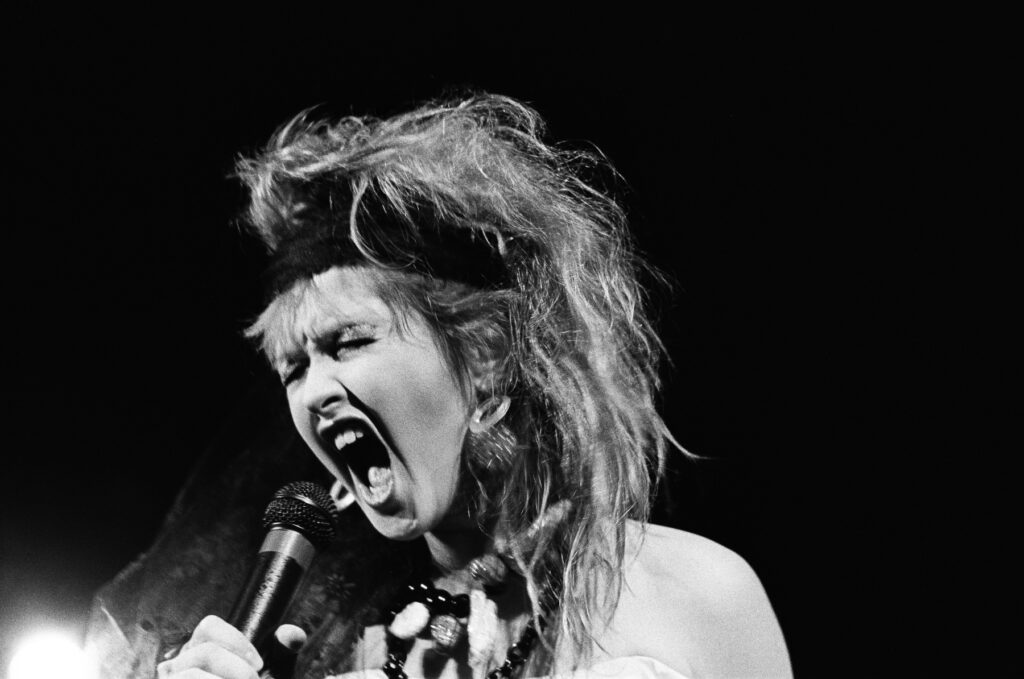
“Going to Heaven,” clocking it at under a minute, is the most forthright in reconciling what they were taught, coming to terms with the truth, and what faith means today, if anything. “On the back roads of my hometown/I was baptized once or twice,” they sing, as their story unfurls. “By some grifters in a storefront church/In exchange for eternal life.” In true Adeem fashion, such heaviness is sliced with refreshing humor. Later, they sing, “I can’t wait to go to heaven/Gonna have a gay old time in heaven/Fuck me, I’m going to heaven/I made a steal of a deal that day.”

Adeem wrote the song amidst a major professional change. They’d had a corporate job for a few years but began to feel the mental/emotional pressure — so they quit. “I’m just not good at having jobs. I’m definitely an artistically-minded person,” they say. Adeem then began doing various odd jobs for some friends to make ends meet, and one of those was driving up to Spencer Mountain to retrieve produce from The Mennonites who lived there. “I was driving through the forgotten towns of Tennessee and thinking, I can’t imagine being 13 and living in a town like this, where the Food City parking lot is lit up on a Friday night because there’s nowhere else to go.”

“I was really ruminating on heaven and hell,” they continue. “It’s important to some people. I would say now I could not careless, but when I was younger, especially in the years after leaving the church, it was heavy for me. I was thinking about how there are people who actively think I’m going to hell. I had this idea of writing a modern hymn and shoehorning in ‘Fuck me, I’m going to heaven!’”

Perhaps Adeem’s boldest entry is “I Wish You Would’ve Been a Cowboy,” a dismantling of country staple Toby Keith’s 1993 hit “Should’ve Been a Cowboy” into an ode of accountability. Adeem examines Keith’s role in perpetuating the extreme patriotism which sprouted up in the aftermath of 9/11 and the deeply troubling exploitation of the working class.

“Your twenty minute song props up Fascists/While you brag about kicking asses/With a boot in your mouth, exploiting the American South,” Adeem sings. There’s both a melancholic weight and an icy rage to their performance, specifically addressing Keith’s 2002 song, “Courtesy of the Red, White and Blue (The Angry American),” which Keith alleges he wrote in just 20 minutes.

Looking back, Adeem says they were not anti-Toby Keith in the early aughts (that would come later). “I was probably pretty ambivalent toward it. I’d discovered Nirvana, and I was in a different space,” they recall. Their family moved to upstate New York that year, and much to Adeem’s shock, the area “maybe had always been kind of racist. It felt like there was renewed strength behind it.”

“There’s a theory country music was killed by 9/11. I’d been ruminating a lot on Toby. I like his music. He’s a great songwriter. I don’t think anybody would contest that he knows how to write a song,” Adeem adds. “He also wrote the shittiest songs in the aftermath of 9/11. They’re so violent and gross. I did so much googling to see if he ever apologized or ever reckoned with this. And he hasn’t once. The only thing I could find was him saying, ‘I wrote this song in 20 minutes.’ And I toiled for a year on this song, at least, trying to get the phrasing right and make sure I said what I wanted to say.”

They also reached out to Palestinian-American poet named Summer Awad to ask if she would take a pass on the song. “I wanted to talk about it, but I didn’t feel I should. My perspective is so much of a white redneck in America. So, I sent the idea to her, and she sent me back a bunch of the same ideas that were written from that perspective. I didn’t experience any Islamophobia or see much in my circle because… everybody was white,” Adeem remembers. “I wasn’t going to put it on a digital release or anything. I didn’t want to be unfair. I lob some accusations at him, that he is exploiting the working class. And I actually don’t think it is unfair. Who can say? Maybe Toby is picking the themes for the same reason I pick the themes I want to. Someone could say I’m exploiting the queer community for releasing this album, which is obviously not true. But I was worried about the nuance of it.”

Adeem was struck by a few other things. Around five years ago, they discovered the work of Roger Alan Wade and his 2010 album, Deguello Motel, which was “full of really brash poetry,” including the song “Rock, Powder, Pills.” “It was the first time I think I related really strongly with country music since I was a kid,” says Adeem, who largely grew up listening to pop-country on the radio. Wade was a gateway into much richer country music, like Guy Clark and John Prine, and this revelation “made me feel connected to being from the South. [It] was really healing for me.”

Adeem’s “origin story” is as country as they come. Their mother worked overnights at Texaco when their father “popped in to get some road beers, had a one night stand, did the Presbyterian thing and got married.” Through both their musical and personal journeys, Adeem has come “to listen to country music and view that as poetry instead of a reason to be embarrassed. It was like finding a gem in the backyard,” they say. “The more I grew into that, I got to thinking about my twang and how I spent so many years trying to cover it up. I didn’t want to be the redneck in a school in New York.”

Much of Cast Iron Pansexual is a love letter written to “the barefoot hick that I was as a child,” Adeem says. “I think it started to give me a lot of bitterness to those artists and that culture that made me feel so estranged in the early aughts. It got to the point where it was like ‘I don’t fit in here. There’s no place for me.’ And there really wasn’t. It wasn’t a scene that was welcoming to people who looked and thought like I did.”

The album arrives five years after 2016’s Kyle Adem is Dead, another watershed moment in their ongoing life story. In a blog post, written around the same time, Adeem wrote openly about “the religious questions that had chased me for years, the troubled relationships I was clinging desperately to, and the difficult work of sorting reality from fiction in a household where mental illness was often a guiding hand.”

Adeem’s growth and strength is palpable these days. Five years is an eternity, not only in the world at large, but on a micro level. “That was a big moment for me. I’d been going by Adeem with my friends for a long time, but ‘Kyle Adem’ was a moniker I was using to blend ‘this is who I was born’ and ‘this is who I want to be.’ I reached a point where people were calling me Kyle a lot, and it was triggering shitty memories of growing up in the South and the way people said my name and the way the world interacted with me then.”

Adeem dropped the name as a way to reclaim their worth and take up some space. Now, going by Adeem the Artist, they remind themselves “why I want to make albums and write songs.”

Adeem the Artist’s Cast Iron Pansexual is a mighty declaration of self, identity, and resilience that comes with living comfortably in one’s own skin. Even if they wouldn’t call themself a trailblazer, they’re certainly living proof that who you are is perfectly okay.

Follow Adeem the Artist on Twitter and Instagram for ongoing updates.

Valley Maker stays next to us When The Day Leaves

In late summer 2019, Austin Crane prepared to to say goodbye to Seattle—where he’d lived, gone to school, and created music under the moniker Valley Maker for ten years—to move cross-country to his hometown in South Carolina. While he didn’t know that journey would be one of the last trips he would take before the pandemic hit and travel restrictions set in, he and his wife knew the transition would be significant; that doubt informs his latest LP for Frenchkiss Records, When The Day Leaves, recorded back in the Pacific Northwest during the last few months of normalcy, but imbued with the sense of uncertainty many of us are feeling now.

Crane usually begins writing in near solitude, connecting himself with the physical world around him—also a dominant theme in the new record. But once in the studio with his collaborators and friends (like vocalist Amy Godwin, who’s appeared on Valley Maker albums since Crane released his 2010 debut, and producer Trevor Spencer) the songs expand. “Valley Maker, at the very core, is my avenue for songwriting. My music would always begin in my own music space, then spread out. I really believe in collaboration, and I’m very lucky to watch the music grow collectively,” Crane tells Audiofemme. Over the course of three weeks of recording sessions at Spencer’s Way Out music studio – a former horse barn in the forested outskirts of Woodinville, Washington – Crane and Godwin worked out their vocal counterparts, guest musicians came to fill out the lush, folky sound, and pieces of the album started coming together.

The inclusive, peaceful, and solitary space in which it was recorded belies the apprehension at the heart of these songs. When Crane and his wife returned to their deep-rooted community and family ties in South Carolina, they bought a historic 1913 home, where Crane got personal with broken wood planks – an experience related in album opener “Branch I Bend.” “The time when I was writing was very transitional, before and after the move. For me personally, it resonates a lot, continuously with the pandemic, uncertainty and being in-between,” he reveals. With touring halted, renovating his new home was one cathartic way to push through those feelings; getting his hands dirty gave Crane a sense of control, of rebuilding. 

The album is airy on first listen, but lyrically profound. In Valley Maker style, his guitar-picking coupled with Godwin’s backup vocals add weight to the alluring, evocative themes. Crane sings about not only his troubles, but those of the people around him, and even some he’s never met, like the victims of the Las Vegas Massacre in “Voice Inside the Well.”

The stress of juggling the move, renovating the house, and the prepping a new album, all while teaching at the college level and researching for his dissertation on migrant rights, border violence, and inequality on all levels filter into the songs. While it may not spell out atrocities in government policies, the album is very deliberate and political. “As a person of the world, I really care about [these issues]. Some songs sound less direct, but it’s meant to engage that mystery about what’s going on,” Crane explains. In “Aberration,” he sings to an entity keeping knots in his spine, and visiting him in the night. “It’s a song about anxiety on some level, and what’s happening to people. One of the lines goes, ‘What do we do with the mad that won’t end?’ It was all the anger. While not new, it’s been taking a pretty ugly form in our country,” he says.

For Crane, the best way to deal with his empathic weight of the world is by appreciating nature. “The natural world has been a source of comfort for me, a place to find some solid ground or permanence,” he says. “It’s rooted and very real. It serves as a counterpoint to human uncertainty.” Throughout the album, he personifies his heartaches with the natural occurrences he can touch, hear, and see, like the bird songs, light on the lake disintegrating, and the earth beneath his feet. The juxtaposition provides a sense of balance and order to the human-created chaos. After a few listens, one song that really stood out was “Freedom,” with Godwin’s airy coos on the bridge serving as a euphonic moment of silence—for me, and for other people’s pain I felt listening to the record. Channeling these collective experiences, Crane allows his guitar and vocals to tell stories that might be personal, or someone else’s, or even your own, just as he intended.

The first thing he thinks about when writing a song is whether or not it is honest. Then he asks himself if he can play it multiple nights on a tour, and still feel it. The song doesn’t needs to answer a question, it just has to mean something real. “A lot of life is mysterious and unknown. The pandemic has definitely reinforced that for me,” Crane says. “The cool thing about these songs is that I can share it with people, to not feel alone. I can make a song that means something to me at any particular moment and I don’t have to have the answers. But that song enters the world, and it can mean a totally different thing to someone else.”

Follow Valley Maker on Instagram for ongoing updates.

Alt-Country Artist Tracy McNeil Explores New Beginnings on You Be The Lightning

Photo Credit: Ian Laidlaw

At the beginning of 2020, country singer Tracy McNeil had decided to finally stop dividing her life, giving up her day job as an educator and packing up her belongings to dedicate her life to touring her music. That new chapter began with the February 2020 release of her fifth album You Be The Lightning via celebrated label Cooking Vinyl Australia; it features her Americana-style approach to country, influenced by both her Canadian roots and adopted hometown of Melbourne. While the universe had other plans, necessitating a temporary return to teaching, You Be The Lightning has been critically acclaimed, securing high rotation across mainstream stations ABC Radio & Double J, and community radio airplay across Australia.

Tracy and her five-piece band The GoodLife finished off 2020 by achieving an ARIA Award nomination for Best Blues and Roots Album, an Australian Music Prize nomination, and an award for Best Country Album at the Music Victoria Awards. From April to July this year, McNeil and her band will tour around Australia. It’s not the rollicking, barnstorming tour she may have envisioned when writing You Be The Lightning, but it’s live and loud and that’s redemptive in itself.

You Be The Lightning is a rejuvenation, a rebirth, sparked by a human place, wanting to feel alive and connected the world,” says McNeil. “It’s about really wanting to feel something. It’s not biographical, but it’s inspired by what I was seeing around me in terms of people sleepwalking through life and not recognising their full potential.”

McNeil studied dance in Canada after finishing high school and began doing open mic nights a few years later. This was the beginning of her solo music career; she assembled a band in 2006 for her first album, Room Where She Lives, and at the same time was offered a position in post-graduate studies in Australia. McNeil opted to research the music scene in Melbourne, which conveniently enabled her to network and befriend local musicians including Jordie Lane, Liz Stringer, Steve Hesketh from The Drones, Melbourne singer-songwriter Suzannah Espie, and The Idle Hoes, some of whom went on to appear on McNeil’s records. McNeil organised a few gigs around town, ultimately juggling both study and full-time employment with her fledgling Melbourne music career.

“I moved here in 2007 to do my teaching post-graduate diploma in education,” recalls McNeil. “I was going to go back to Canada ten months later as a performance and dance teacher. However, I ended up teaching in a high school here. In fact, I’m doing some teaching in Brisbane at the moment. It’s a double-life: music and a solid day job as a teacher! I did quit in 2020, which was because I intended on music  being full-time, so I was purely writing music and planning the tour and now I’m doing some short-term teaching work until the tour starts.”

In February last year, just prior to Melbourne’s first lockdown, McNeil lead Dan Parsons (guitar), Bree Hartley (drums), Brendan McMahon (keyboards) and Craig Kelly (bass) into a compelling live set at the Stag and Hunter Hotel in New South Wales’ Newtown. That night, she performed “Drunken Angel,” the track labelmate Lucinda Williams made into a classic on her 1998 album Car Wheels On A Gravel Road. McNeil likes to do justice to each song, much as Williams has done her entire career. There is no strict genre that McNeil feels beholden to, apparent in the variety on You Be The Lightning. “There was a Neil Young Harvest-esque vibe on one track, whereas on another we layered up the drums and tracks in a very pop style,” McNeil says.

Recorded live to tape – a mix of analog and digital – at The Aviary Recording Studios over three weekends, You Be The Lightning took over a year to complete. This was due to McNeil’s teaching obligations, but it was also the meticulous layering of overdubs, vocals, guitar, and final touches co-produced with Parsons at the helm. It’s been a time of endings and awakenings for McNeil, whose marriage to a fellow musician (that she prefers not to discuss) ended during the making of the record but created the space in which Parsons and McNeil could fall in love with each other.

“The whole experience was tumultuous,” she admits. “It was a very personal time for me, the making of that record. I recall the tape machine broke during ‘Stars’ and we had to go back and start again. I’ve never had a more emotional rollercoaster ride making a record. It was a vulnerable record in terms of themes and working with Dan to produce it. The whole process of falling out of love and into love made it a crazy time to make this album.”

The songs are largely fictitious, a change in approach after the rawness of grief and healing captured on 2016 album Thieves, which was emotionally and energetically sculpted by the death of her father, Canadian singer-songwriter Wayne McNeil. You Be The Lightning was less of a catharsis and more of a record of her emotional landscape over the four years it took to write, rehearse and finally record the songs she’d labored over.

Parsons has proven the ideal collaborator and partner in every sense. “Dan and I have similar musical taste and we think very much on the same page when it comes to music,” McNeil explains. “Dan is far better than me on articulating how to execute ideas in a way that we can accomplish it in studio. Dan’s the musical director of the band, I would say. I trust him completely, and he trusts me completely.”

The irony, McNeil explains, is that when two artists pursue their dreams, it can have dire consequences for the relationship in the long run. “Being on the road together is romantic on so many levels, but it’s not my first rodeo with being with another artist… it’s hard,” she says. “You’re both chasing an end goal that, if everything goes to plan, would move you away from each other.”

The couple have been writing together, and often played shows as a duo prior to the pandemic, scouting audiences and venues for GoodLife gigs. The forthcoming Australian shows will be a welcome treat to fans who’ve waited to see You Be The Lightning live – not to mention a relief for McNeil, her partner, and her band. “We’re chasing the same target and our dreams merge,” she says. “We really look forward to focusing our energy in one direction for a little while.”

Follow Tracy McNeil & the GoodLife on Facebook for ongoing updates.

Mary Akpa Offers Love Letter to the African Diaspora with “A hurum gi n’anya”

Photo by Pedro Cesario

On YouTube, Nigerian-born, California-raised, and Brooklyn-based singer-songwriter Mary Akpa leads a virtual language lesson, teaching her community how to say the name of her latest single “A hurum gi n’anya.” Those unfamiliar with Akpa’s native Nigerian language Igbo may struggle with the title at first, but when Akpa sings the words, they slip fluidly from her lips, as easy as water from a glass.

“I feel such reverence towards music for that reason,” Akpa says on a Skype call with Audiofemme. “You don’t have to understand what someone’s saying, but you can feel something. You may not be able to speak a language, but you can sing it. You can catch it so much faster. Music just has a power. It’s a spiritual or magical force or something.” There’s an Igbo term for kind of power, too: iko nsi oma.

Akpa had originally intended to translate the title to English; she worried the phrase would alienate listeners if they couldn’t speak Igbo. But the meaning behind the phrase wouldn’t leave her. “When I think about Igbo and the etymology of the Igbo language and ‘A hurum gi n’anya’ specifically, it actually means more like, ‘I see you eye to eye, and I carry you in my [heart],'” she explains. “It’s like a deeper kind of love. And when I started learning about that, I’m like, oh, that’s why ‘I love you’ always felt basic to me.”

“Don’t look away/The more I see, the more I wanna see you/Never thought I’d find beauty in the mole/Above the right side of your face/These little scars are roadmaps/Cheat codes/Only you and I know/The more I’m letting go, it’s you I wanna know,” Akpa sings in a gently beckoning tone. The line was freestyled during the writing process and Akpa was certain she’d change it during production, until a friend asked why she wanted to do so. “I didn’t realize I was betraying myself that much,” Akpa says, remembering the shame of the moment, realizing how much she disliked this very intimate part of herself. The song became a personal affirmation: “Mary, you need to see yourself. Remember to love yourself first.”

“A hurum gi n’anya” also serves as a love letter to the Black community in the U.S. that she grew up with. “There’s this beautiful awakening that I’m seeing across the diaspora, where Black people are really coming closer to African culture and traditions and really beginning to see themselves reflected – and it’s like, ‘Yes, it’s yours,'” Akpa explains. “And so I’m like, well maybe this is an opportunity for me to create some bridge. It’s the reason I wanted it to be mostly Black Americans in the video – because I wanted to sort of say, ‘Hey, this is as much your culture as it is mine.'”

To some extent, Akpa has always felt the tension of being stuck between two worlds, familiar with the oppression of growing up in a low-income, over-policed community, but also teased about her ties to Nigeria by those who mainly saw Africans depicted negatively. “I just remember seeing commercials and things about Africans and how Africans were portrayed, with flies on their face, impoverished, with animals, and just looking very not the way Africans are in normal life,” she says. Her family’s own emigration was not driven by need; her mother left a successful printing business behind to bring Akpa, aged two-and-a half, and her siblings to California at her biological father’s insistence (he was a pastor, allowed entry to do missionary work in the States).

“My mom wasn’t too keen on coming to the U.S…. So she had a really interesting love/hate relationship with America for a while,” Akpa recalls. “And I say that because I think it really impacted the way that she immersed us in Nigerian culture. We listened to Nigerian music most of the time, almost like in place of nostalgia. She was missing home.” 

Akpa and her four siblings grew up eating Nigerian food, lingering on long-distance calls to their grandparents, and listening to King Sunny Adé, Jùjú music, Fela Kuti, and the Lijadu Sisters. Contemporary Christian music was also a staple due to her mother’s religious fervor, and Dolly Parton made the Akpa Top 40, too. “Apparently in the ’70s, country music was big in Nigeria,” Akpa says with a laugh. She sang in the church choir and made up little songs she would sing at home, eventually studying ethnomusicology and jazz at UCLA. Though she toured domestically and internationally and independently released her Brave EP in 2012 and followed it with 2016’s Unseen, she never felt like the term “songwriter” applied to her.

This was partly because Akpa’s writing process always begins with a guitar melody, which she dictates vocally to her collaborators in the studio. “I just found out that my grandfather, my mom’s dad, played guitar and had his own musical gifts,” Akpa says. “I’m carrying his baton. I felt that so deeply because I hear guitar melodies first – not even vocal melodies – but I can’t play them.”

Akpa has only begun to acknowledge recently that, instrument to instrument, she’s the one leading the creation of each layer, sculpting the sounds with her voice and listening closely to musicians repeat verbatim. The challenge of working in a male-dominated industry has been that her creative ideas – and the way she expresses them – often get bogged down by technical suggestions, even from those who are simply there to “hit record.” This is ultimately distracting for Akpa, who says, “I need to be able to get my thoughts out without questions.” The musicians she works with in Nigeria, while just as technically versed, can pick up on the sounds and moods she wants to convey without putting her on the spot about it, which is why she recorded “A hurum gi n’anya” there, along with several other tracks that will comprise her forthcoming LP Nnoo, expected this spring.

Nnoo represents a full-circle moment creatively. “I’m just now, as in last year, considering myself a real songwriter. I always felt like I’m aspiring to be a great songwriter,” Akpa confesses. “I felt very insecure because I don’t play instruments well. I’m still trying to teach myself rhythm guitar and it doesn’t come easy to me.” The album is a culmination of many trips Akpa has taken to Nigeria in her adulthood, the first of which was with her sister, who was in law school at the time and working with a Nigerian organization. It was an experience she’s never forgotten.

“When I went home for the first time, I distinctly remember feeling like [I was] remembering parts of myself that I’d forgotten. It was weird – it was just like ‘Oh. Right. This is why I do this,’ and just sort of seeing myself reflected so much,” Akpa says. “Nigerians are a very intense people. I always felt like I was a lot, like, why am I so expressive? When I went to Nigeria I was like, oh, okay. I understood myself for the first time.”

Each time Akpa stepped on a plane and flew back home, the reality of her experience as a Black woman became crystallized; in the U.S., she says she “felt the oppression” even in subtle ways, like how Black New Yorkers shift slightly on the subway when a police officer enters the train car. “It does infiltrate every aspect of life when you’re a Black person. People do not recognize that’s such a reality. I think it was going home that took me outside of that, to feel how unfair that reality is,” Akpa says. In Nigeria, on the other hand, she says she “didn’t feel like I had to watch what I was doing all the time. I felt free. I felt like I could just exist for the first time in my life.”

This was part of what inspired last year’s stand-alone single “Black Body,” an opus on the Black experience in America set atop Akpa’s signature guitar sounds; it’s a striking piece that showcases her unique ability to weave thoughts together, speaking almost in the style of a beat poet, while instruments play in and out of frame. The trumpet acts as an echo, sweetly repeating her as she sings, “You call me angry/Say I pull the race card/Shaming me with stigma/But you take it too far.”

She had recorded the song in 2015 but shelved it, and it looked like the same would happen to Nnoo; despite feeling inspired and in charge during the recording of the album, Akpa was flooded with doubts afterward – those old feelings of being caught between two worlds resurfaced, and she was worried the no one else would be able to relate to her songs, or even understand where she was coming from. She had left New York City and returned to California, closing the door on the album to find clarity.

But in February 2020, after 25-year old Ahmaud Arbery was murdered for “jogging while Black,” Akpa suddenly found her email full of requests, asking about “Black Body.” It wasn’t long before she was digging back into her music files, revisiting “A hurum gi n’anya” and the rest of Nnoo.

Listening back, Akpa realized that “A hurum gi n’anya” held the message she needed to hear most to push through her self-doubt. “I’m such a lover. I love love. And I’m always like ‘I wanna show you all this love,’ but I wasn’t showing myself love,” she says. “Even just thinking I wasn’t a good songwriter. Even just not acknowledging myself as a producer. All the ways I wasn’t showing up for myself because I wasn’t really giving myself the love that I try to give other people. And that was a huge wake up call for me.” As she prepares to release Nnoo, she says the album “brought me closer to myself… it showed me me.”

Akpa brought back more than music from her trips to Nigeria. In 2015, she met up with her mother, who was also visiting Nigeria – the first time they’d been there together since Akpa was a toddler. They walked the same path her mother walked while in labor with her, thirty minutes from her business (where she had just closed another deal) to the midwives’ compound where she was born. They visited her mother’s old school and met a group of girls who would alter Akpa’s life permanently. While her mother spoke with the principal, Akpa found herself surrounded by girls on break, inundated with questions (“Why isn’t your hair plaited?” “Why aren’t you married?”). The principal asked her to speak at the morning assembly the next day; for two weeks after, she went back to the school daily to have one-on-one meetings with each of the girls. She talked with them about going to college, her life as a musician, her experience with sexual assault, and more. “I’m just like hyperventilating, crying after [each session], just realizing these girls are so bright,” Akpa says. “When you really get them talking they have so many ideas and it felt like I couldn’t just be like, ‘Okay, bye!’ after that.” 

Akpa partnered with singer-songwriter Ayo Awosika to found Naija Girl Tribe, a nonprofit working toward a brighter future for Nigerian girls. Their first workshop was held in October 2016, and since then, Naija Girl Tribe has mentored over 500 girls so far, and is “truly the best thing I’ve done with my life, these last four years,” Akpa says. “Our long term goal is to create resource centers around Nigeria so girls have access to computers, to libraries, to mentor matching, any resources that they might need so they can host their own workshops and programs. We want to create a space for them to activate to do whatever they want to do.”

The next step will be setting up internships or some equivalent, so the girls can “start getting their hands on whatever work they wanna do, so they can see that it’s actually possible for them to do it,” Akpa says. “Honestly, these girls are brilliant. One of them wrote out this plan for how she would restructure the Nigerian government when she was fourteen.” Due to the pandemic’s travel restrictions, Akpa is working alongside Awosika on a series of virtual workshops tackling tough subjects like rape, alongside lighter events like an IGTV LIVE event with singer Kaline.

Right now, Akpa is stuck at home in New York City, still dreaming of Nigeria lingering off in the distance. Today, she’s shared a playlist of songs that evoke the mood of “A hurum gi n’anya” – great for those who need a boost, or need to feel seen and loved. Soon, she hopes to return to Nigeria to tape a live recording of Nnoo with the original musicians who worked on the album. It’s just one of many bridges she plans to build between the two cultures that have shaped her.

Follow Mary Akpa on Instagram and Facebook for ongoing updates.

Bella Union Founder Simon Raymonde Finds Creative Balance with Lost Horizons

Photo Courtesy of the Artist

When we met on a recent video call, Simon Raymonde was in the studio he built in his garden just a few years ago. “It’s my happy place, really,” he says. “It’s a real treat to me to have this place, to be able to come in here and actually make music.” 

Initially, Raymonde was best known as a musician – the longtime bassist for Cocteau Twins, who played on albums like 1986’s The Pink Opaque, 1988’s Blue Bell Knoll and 1990’s Heaven or Las Vegas. Following their split, Raymonde continued to make music here and there, but much of his energy went into his label, Bella Union. Since 1997, the indie label has amassed a roster of critically acclaimed artists, releasing music from the likes of Beach House, Father John Misty, Spiritualized, and The Flaming Lips.  

In recent years, though, Raymonde struck a balance between musician life and label life. He teamed up with drummer Richie Thomas, who had been part of Dif Juz and toured with Jesus and Mary Chain, Felt and Cocteau Twins, to form Lost Horizons. They released debut album, Ojalá, in 2017 and the first half of sophomore effort, In Quiet Moments, last December.  The second part of the album is out today, February 26. 

For Raymonde, the music that he creates now in his studio doesn’t necessarily have to be for a project. It can be music that exists solely for himself. “I can’t believe I wasted so much time not making music and missing it so much,” he says, “but now I’m happy.”

Several years ago, when Raymonde was preparing for Bella Union’s 20th anniversary, something was amiss. “I guess I should have been feeling really happy with, proud of, the achievement of making it this far, which I am and was,” he says. After some thought, he realized that it was because he wasn’t making music all that often. 

“I just think I was not managing my time right,” he says. Raymonde also had a change of scenery. After growing frustrated with life in London, he moved to Brighton in 2012. He and his wife now live just outside of the city, where he can see the sea from his window and take his Labrador for walks along the beach twice a day. It’s been a major quality-of-life improvement, he says. 

He says too that he had a “mental block” related to the dissolution of Cocteau Twins. “I needed to grieve that, I think, better than I had,” Raymonde admits. “Once I worked out why that was, I asked myself, ‘What are you going to do?'” Raymonde had wanted to work with Thomas. “I adore his style of playing and I thought it would be fun and I just wanted to have fun, to be honest with you. I didn’t really ever think, ‘I need to make a record.'” 

Lost Horizons’ songs begin with jam sessions between Raymonde and Thomas. From there, Raymonde will tinker with the arrangements and incorporate additional instruments in his studio. Once the instrumentals are at least roughly finished, he’ll start looking for the appropriate guest vocalist. “You’ve got to think about what’s right for this tune,” he says, “and that part of it I really, really, really love.” 

In Quiet Moments clocks in at one hour, 14 minutes, and it’s an eclectic album, stylistically ranging from the groovy title track to the ethereal “Every Beat That Passed,” with Swedish singer Kavi Kwai on vocals, to the dark, noisy rock of “One For Regret,” featuring British band Porridge Radio. Each of the 16 tracks features a different vocalist, including John Grant, Marissa Nadler, Karen Peris of Innocence Mission and many more.

The length and breadth of the album is why it was initially released in two parts. Raymonde explains that a traditional campaign might have confused potential listeners. “I thought the idea of spreading the whole thing out a bit over a longer period, and releasing a lot more tracks during the build up, would give people more of a clue as to what was going,” he says. “Splitting it into two parts was a way of achieving that, so at least people have something at Christmas time to listen to online in one place and then they get everything at the end of February with a full vinyl release.”

One of the standouts is the title track, which features vocals from veteran soul singer Ural Thomas, who had performed with such artists as James Brown and Otis Redding, and now leads Portland-based soul band Ural Thomas & the Pain. Ural Thomas’s collaborators “started sending me bits and pieces of demos of [his] tracks” Raymonde says, and he fell for the music. Meanwhile, he was sitting with a mellow, contemplative instrumental that he and Richie Thomas had recorded for Lost Horizons; it needed a vocal that would add soul and mystery, and “all I could think about was Ural Thomas,” he says. Raymonde reached out to see if there was interest in a collaboration, and of course, the rest is history. “That came so organically and out of the blue,” says Raymonde.

It was the kind of serendipitous collaboration that reflects the balance Raymonde strikes between his A&R ear and his skill as a musician and producer. Says Raymonde, “I’ve been incredibly lucky and very grateful with all the contributions, because it would just be 16 instrumentals without them.”

Follow Lost Horizons on Facebook, Twitter, and Instagram for ongoing updates.

NYIKO Unveils Details of New ’80s-Inspired LP with Premiere of “Make You Feel”

Photo Credit: Niles Gregory

The experience of burgeoning love is bittersweet, and nothing captures that feeling like “Make You Feel,” the latest single from LA-based singer-songwriter/producer NYIKO. Chock full of twinkly synths, falsetto interludes, 100 percent digital drum sounds, and ’80s nostalgia, the song musically illustrates the manic thrill of falling in love, as well as the longing and anxiousness.

“I will kiss you as if/You and I/were the only ones left,” he sings in a voice that conjures up bands like The Cure and The Smiths. “I want to love you as if/We had been together/Since we were kids.”

“It’s essentially the beginning of a narrative of someone who is a little impatient to fall in love,” he says. “The tentpole of the song is that we could be the last two people on Earth, so it’s that feeling of, when you’re with that person, nothing else exists or matters.”

Given the nostalgic feel of the song, it’s unsurprising that NYIKO wrote it with ’80s movies like The Breakfast Club in mind. “When you watch these classic coming-of-age films, there’s this feeling of joy, but there’s also a pain in nostalgia,” he says.

The final post-chorus, where he repeats, “I just want to make you feel alright” in a gentle, high voice, particularly captures this wistful feeling. “When I did that and played it back, it really gave me chills, which is great — that’s something you don’t always get from your own work,” he says.

“One thing I do and one thing I want to normalize for people is to be proud of themselves and to say it out loud — to tell themselves that they did a great job,” he says. “It’s so often that artists, or just people in general, are modest or sell themselves short more often than not, but when you do something you’re really proud of, it’s good to say, I’m really proud of this — I did a good job. And that’s how I felt when I finished ‘Make You Feel.’ I got so inspired and excited.”

“Make You Feel” is the first track on NYIKO’s upcoming debut solo album, Honesty, which comes out on April 9. The LP explores the titular theme not only in regards to relationships but also with oneself, which includes “being honest with what your goals are, with what your desires are, and checking yourself when you might be dishonest because you’ve tricked yourself into thinking there’s this idea of a relationship that you want or this idea of success that you have,” he explains.

The album also includes NYIKO’s previous single “Call the Boys,” which was written in 2018 in reaction to a series of news stories about school shootings. “Call the boys inside/Tell them it’s alright/There’s no use for abuse,” he sings in long, powerful notes against similarly ’80s-inspired synth and guitar.

“It just seemed like, at that time, there was another school shooting every week, and most if not all the cases these shootings were carried out by young white men, and I was kind of just grappling with this,” he remembers. “It made me start thinking about just how outdated so many of the stereotypes are, gender roles and gender stereotypes and this idea of what masculinity means. It made me really inspired to write a song that crystalizes that we are able to redefine this for this generation and the next generation of male-identifying kids.”

He wrote, produced, and recorded everything on Honesty, and also played synths, enlisting the instrumental skills of guitarist Niles Gregory and bassist Stone Irr as well as the feedback of producer Kyler Hurley. The process began with 30 demos he had written and produced on his laptop in his room with one keyboard, then selected his favorites to finalize.

“I was still learning how to be a better producer, how to be a better mixer, so it was almost like the production process was a practice of teaching myself and growing as a producer,” he says. “I think it’s really exciting to have a project that I can look at now and see as this place and this time that I was learning.”

NYIKO, who also works as a music licensing manager, played in several folk bands before beginning the solo electro-pop project that evolved into his current act, taking inspiration from post-punk, synth-pop, and new wave music. He’s also produced music for Hasbro, Amazon, and Disney — he produced and raps in the six-episode Oh My Disney series “Disney Raps,” in which re-imagines Disney classics like Winnie the Pooh and Hocus Pocus through rap songs.

Through the emotional vulnerability in his music as well as his everyday actions, NYIKO hopes to model “ideas of masculinity that are not about toughness and not about being loud or angry, but instead showing an example of masculinity that really emphasizes empathy, raising other people’s voices up and being sensitive,” he says. “I hope people can listen to a song like ‘Call the Boys’ or my work in general and feel understood or feel like they are learning or having space to think about something differently, like how they play a part in the world and how they play a part in the expectations that they set for themselves or other people in their lives.”

Follow NYIKO on Instagram and Facebook for ongoing updates.

Hailey Whitters Honors Perseverance With Deluxe Album Living the Dream

Photo Credit: Harper Smith

When Hailey Whitters wrote “Ten Year Town,” she was starting to lose faith in her dreams of making it big in country music. She’d written songs for Alan Jackson, Martina McBride and Little Big Town, but was still waiting for her own star to rise. “I’m 12 years in to a 10 year town,” she confesses in the heart-opening track, which kicks off her self-funded 2020 album The Dream. She didn’t know it then, but the unflinchingly honest song – about surpassing the time limit to “make it” in the competitive Nashville music industry – is also the one that catapulted Whitters from waiting tables to establishing herself as an artist. “Ten Year Town” helped her achieve many of the goals that come along with country music stardom, from going on the road full time opening for the likes of Maren Morris and Little Big Town to making her Grand Ole Opry debut.

“I really felt like I was living the dream,” Whitters tells Audiofemme of the her “career changing record” and the success that followed. “I was getting to see all these bucket list moments happen and these dreams that prior to this record I had really questioned – ‘Am I going to get to do this?’ ‘Am I going to get to see some of these dreams come true?’ I feel like that record really changed that for me and made that possible.”

Watching the way in which her life was transformed as a result of The Dream, producer Jake Gear (then Whitters’ boyfriend and now her fiancé) suggested making a deluxe edition, appropriately titled Living the Dream, set for release on February 26. The project features five new songs in the form of collaborations with Trisha Yearwood, Little Big Town, Jordan Davis and singer-songwriters Lori McKenna, Hillary Lindsey and Brent Cobb, each of whom Whitters attributes to playing a distinct role in her career.

The new collection begins with “Fillin’ My Cup,” a jovial take on the highs and lows of life and the people who make it all worth it, elevated by Little Big Town’s spirited harmonies. The Grammy-winning group played a significant part in The Dream, as Whitters used the royalty checks she earned from the band’s 2017 single “Happy People,” which she co-wrote with McKenna, to fund the album. On “Fillin’ My Cup,” their voices support potent truisms, like “You can’t appreciate the sugar if you never had the salt.” “It’s one of those lines that reminds me that this is all part of it. Take the good, take the bad, keep going, it’s going to swing back your way,” Whitters says. “All those saltier moments are the ones that come out and make life sweet.”

The native Iowan also called upon one of her childhood idols, Trisha Yearwood, to duet with her on the witty “How Far Can It Go?” an observational look at young love that would fit seamlessly on any ’90s country playlist. “Trisha’s a hero,” Whitters professes, saying she grew up “studying her records.” “She really inspired me to want to do this in the first place, so to have her on it is a huge dream come true.”

Meanwhile, Cobb, who has also taken Whitters out on tour as a supporting act, appears on the bluegrass-influenced “Glad to Be Here,” which finds the two singers on the grateful side of life, while the songwriting dream team of McKenna and Lindsey lend their talents to “How to Break a Heart.” Davis brought Whitters along as an opening act on his Trouble Town Tour in early 2020; here, he helps bring Living The Dream to a free-spirited close through “The Ride,” a tribute to the “burned out believers” and dream chasers. “It’s about moments. It’s about having some of those goals and dreams and getting to see them and appreciate the ride that gets you there,” Whitters notes. 

The young visionary has been intentional about honoring the journey throughout her career – because it’s those honest glimpses into her resiliency that helped her finally reach her goals. “Ten Year Town” showcases her determination (“I didn’t come this far to only go this far”) as well as her hopes (“This next song could turn it all around”) via defining lyrics that can apply to anyone still waiting on their big break – and for Whitters, eventually proved to be prophetic. “That language is very candid. It feels like a page out of a diary,” Whitters says. “Those are lines of persevering and continuing to keep going.”

Perseverance is an integral element of Whitters’ journey and subsequent success. The bright-eyed singer has begun to realize how even the simplest of life’s moments are complexly connected. She’s got some permanent symbols on her skin to remind her of that – visible in the video for “Fillin’ My Cup,” as she sticks out a thumb to hitchhike in a pageant-esque wedding dress. She sticks her thumb in the air, revealing a small tattoo of the letter “D” (honoring her late brother Drake) on her wrist and a delicate prairie rose in the crook of her arm, both symbolizing the deep connection she has to her hometown roots. The prairie rose is Iowa’s state flower, Whitters explains; Gear and her creative director Harper Smith, who sketched the design as a logo for The Dream – are also from the Hawkeye State. “I jog back at my parents’ house on the highway and I see the prairie roses in the ditch, and it always makes me happy,” Whitters says. “It makes me think of Iowa and makes me think of heartland.”

She and Gear had decided to get matching prairie rose tattoos after the album that ultimately changed the trajectory of Whitters’ career was complete. “It makes me think of that record that Jake and I built from scratch. It’s become a very meaningful symbol to me,” Whitters reflects, identifying how her roots are connected to her creative ambitions. “The more I’m forced to create, the more I’m forced to think about some of that stuff. I feel like I’m unraveling these layers that are freaky almost, how much they are intertwined.” 

The newest tracks on Living the Dream are Whitters’ way of expressing gratitude for her time here on earth, the people who’ve shaped her experience, and the dreams she’s carried in her heart that continue to unfold before her — passing that feeling of hope onto each person she reaches through her music. “I think in the most simple sense, living the dream to me is realizing how lucky we are to be alive,” she says. “I was looking at the people in my life who have died and who’ve died young. It was a big lesson in perspective to be able to look at that and think ‘How lucky am I to get to be a human being in this world and live and hurt and cry and laugh and love?’ It’s about feeling vulnerable in all those areas and in all those things.”

“My hope is [that] it shows those dreamers: this is what can happen when you don’t give up and keep going, keep chasing the dream,” she adds. “I hope it’s a story of inspiration.” 

Follow Hailey Whitters on Instagram, Twitter and Facebook for ongoing updates. 

Photographer Sherry Rayn Barnett Shot Music History As It Happened

All photos © Copyright by Sherry Rayn Barnett; Author photo courtesy of Adam Michaels

Having spent over half a century working as a photographer, you’re sure to have seen Sherry Rayn Barnett’s work at some point. Maybe on such album covers as Nina Simone’s Let It Be Me, Toni Basil’s Best of Mickey & Other Love Songs, or What’s That I Hear? The Songs of Phil Ochs. Maybe in books like The Bob Dylan Encyclopedia, or the documentary Joni Mitchell: Woman of Heart and Mind. Sherry began taking pictures at the time rock ‘n’ roll was becoming rock, and rock was becoming art, and legendary careers were just getting off the ground. Her new book, Eye of the Music: The Photography of Sherry Rayn Barnett: New York to LA 1969-1989, offers an engrossing look through her personal archives, charting the career development of a professional photographer and the heady musical atmosphere of times.

Ironically, the COVID pandemic gave Sherry the time to complete the project, which had long been in the making. At the beginning of 2020, she was preparing for the release of a new album by her band, Mustangs of the West, set to be followed by a tour. The album, Time, came out as scheduled in March, but the tour ended up getting cancelled. The unexpected downtime allowed Sherry to focus on Eye of the Music and get it published by last December, making 2020 a busy year after all. “The fact that I was able to have an album release, and a book release, during the pandemic — it’s just absolutely amazing,” Sherry says, still in disbelief. “I doubt it will happen again.”

Music and photography were linked at a young age for Sherry. Her mother was an aspiring songwriter, living in Queens, New York, who would take Sherry with her when she went to pitch her songs at the Brill Building, home to numerous music publishers. “We got on the subway, we went to Manhattan, and would go to this building where I would get either a 45 record from the secretaries or an autographed picture of the artist,” Sherry recalls. “Those pictures really stuck in my mind; it was kind of the full spectrum of, here’s the music and here’s the person, or the group, who’s singing it. And I was fascinated by that. And when I got into my teens, it was like, ‘I want to take those pictures. I want to see these artists in person and I want to photograph them, the same way.’”

By then, Sherry was attending the High School of Performing Arts — the “Fame” school — studying classical guitar. But when she realized she had no interest in becoming a solo performer, she began to focus more on her photography. Soon, she was living something of a double life, attending school during the day, and photographing music performers in the evening: a mini-skirted Linda Ronstadt at Town Hall, backed by musicians who would later form the Eagles; Joni Mitchell, John Denver, and Miles Davis at the Schaefer Music Festival in Central Park; Janis Joplin at Forest Hills Tennis Stadium, just two months before her death. And the rise of underground rock publications provided a ready outlet for her work. Her first gig was a plum assignment to shoot Ike and Tina Turner for a short-lived magazine called CORPUS. Sherry rose to the challenge, capturing the two in concert, then giving an up-close-and-personal look at the couple offstage, lounging on their beds at the Chelsea Hotel.

Emmylou Harris

Sherry credits being a self-taught photographer with giving her a sense of freedom. “I think the advantage of being self-taught is that you’re not regimented,” she says. “Thinking photographically, it’s not like you are told ‘This is how you need to look at something’ or ‘This is how you need to compose a shot.’ So for me it was better. On the other hand, the advantage of being schooled in photography is that you can probably breeze through a lot of technical mistakes. I thought that the way to crop a photograph was to cut the negative. Which of course is absolutely ridiculous! I ruined some of my early shots.”

She was also drawn to acts that tended to play smaller venues, enabling her to get the intimacy so evident in her photographs. “I think that most of the guy photographers went to photograph these guy rock bands: the Who, and Zeppelin, and the Rolling Stones,” she says. “And I was more eclectic. I was really drawn to the singer-songwriters that were starting to emerge. I just loved vocal harmony, I loved the songs, I loved the playing. I don’t think as many photographers were driven to go to, say, Bonnie Raitt early on, at the Gaslight Café [in New York], because they didn’t really know of her yet. But I was always listening to stuff that was a little outside the mainstream.

“I’m grateful that I didn’t shoot as many loud rock bands as your typical rock photographer. Looking back, I realize that I’m a music photographer; I’m not as much a rock photographer. If you look through the book, you’ll see, of course, I photograph bands. But the emphasis really is on the individual performers, whether it’s somebody like a Chuck Berry or a Bette Midler. It’s a lot of solo artists, because I was really drawn to the different personalities.”

Bonnie Raitt, 1981

But the most important factor, she says, is the access she was able to secure for what she wanted to photograph. “I just walked up to the front of the stage, and there was no one to stop me,” she says. “I was pretty bold; I just did what I wanted to do. It’s nothing like today. Now there’s this whole glut of photographers at every show, and to get in to shoot is a whole other thing, and then there are all the restrictions of how long you can shoot for; shooting three songs is a lot now. I heard for some artist it was like 30 seconds — it’s crazy!”

In the early 1970s, Sherry relocated to Los Angeles. “Really, because of the music,” she explains. “I just heard all this music I loved coming out of LA, and I had a friend who was a session singer. She said, ‘Hey, if you want to come to LA, I’ll show you around.’ She took me to all these sessions she was doing and set me up in Beachwood Canyon. And I fell in love with the canyons. It was such a far cry from the way I had been living. And I think I was just done with Manhattan; having to carry my gear on the subway all the time, and the crowds in the streets. I loved the openness, at the time, of LA, where you had some greenery, and you could get in your car and be by yourself. You didn’t have to be in a crowd all the time.

“I started going to the Troubadour and the Ash Grove and McCabe’s, and the Bla Bla Café, where Al Jarreau got his start. A lot of great performers were still playing those small to mid-sized clubs, and you could go out and see them and not have to pay a fortune and be hundreds of feet back. It was growing, but it was still at a level that you could experience and capture a performance in a very intimate way. The intimacy of it was really important to me.”

Linda Ronstadt, The Troubador

It’s not surprising to find that many of the photos in Eye of the Music were taken in small venues. “I’m sure that was deliberate, but it wasn’t conscious. It was just what I was attracted to. After I was able to afford bigger lenses, I could be further back [in a venue]. But I was really passionate about being up front and center as much as I was allowed to be.” Her picture of Little Richard, at the Felt Forum (the smaller room at Madison Square Garden), is a case in point. Sherry’s positioned right at Richard’s feet, her camera looking up, close enough to capture the beads of sweat on his bare chest. “That was not a telephoto lens, that was right there,” Sherry notes with pride. “He looks like a prizefighter. Looking back, it’s an amazing shot, and I don’t say that from an ego standpoint. It’s just like, wow!”

The majority of photos are live shots, each conveying the excitement of a performance: Bette Midler letting loose, Carly Simon looking particularly joyful. There’s a nattily-attired B.B. King, and Phil Ochs in the gold suit he patterned after the same costume Elvis wore on the cover of 50,000,000 Elvis Fans Can’t Be Wrong. And there’s a rare shot of Karen Carpenter behind a drum set, drums being her original instrument.

“I was always drawn to the live moment and that’s what really connected me to the music,” Sherry says. “It’s really the nature of my work. And when you do a portrait, it’s a whole different element. It’s pretty much staged, with the exception of candid portraits; it’s a whole other environment. I would say 90 percent of great studio photographers are educated; they’ve gone to school for it and are technically excellent. I’ve shot album covers, and I’ve done portrait photography, but I’m never as relaxed, I guess, doing a fabricated shot. I leave great portraiture to the people that really do that well. So yeah, I’ve always been drawn to the live aspect of these performers, because that’s exactly what they are. They’re performers.”

Nonetheless, Eye of the Music does contain some offstage, and even “staged” material. Most notable is the picture Sherry surreptitiously snapped while attending a recording session for Joni Mitchell’s classic album Court and Spark at the A&M Records studio in LA. “There was nobody with cameras. And I could tell this was not going to be a photo shoot day. But I did have my camera, and I did get it out for literally just a handful of quick shots.” Joni is seen playing her guitar, lost in thought, the boom mic looming in the foreground.

There’s also an outtake from a memorable session Sherry did with Nina Simone. Sherry had previously photographed the music legend at the Village Gate in Greenwich Village. In 1987, she was hired to shoot the cover shot for Simone’s Let It Be Me album. “I had a home studio, and I had a piano there. We sat around waiting for Nina for, oh, I think close to four hours before she arrived. And she was not in a good mood. I can’t really say what she said about the makeup person, but it was not very kind. She had said when she called in that she wanted a white sheet, so I had gotten her a white sheet. I gave it to her when she got there, and she literally stood there and disrobed in front of the window, in front of everybody. We all just kind of turned our backs. She completely disrobed and put the white sheet on.

“And you can tell [in the final shot], she’s just bare shouldered. You don’t know what she’s wearing, but she’s wearing a white sheet. And I actually had her autograph an album cover for me while she was there; I didn’t usually do that, but she was just so legendary. It wasn’t the most pleasant shoot, but we got a great, great shot of her that she used up until she finally passed as her promo shot. So that was really complimentary.”

Nina Simone, Village Gate, NYC 1970

There’s also a spread devoted to the all-female bands Birtha and Fanny, acts Sherry felt never got the acclaim they deserved. It’s made her consider her own role in music history. “I’m paying more attention now, because people have asked me along the way, ‘Hey, have you felt any prejudice as a female photographer?’ or ‘Did you get fewer jobs?’ I never really thought about it. I didn’t bulldoze my way through anything, but I really didn’t let anything stop me if it was accessible to me, if it was a possibility. But looking back — or even looking now, and at a number of the rock galleries and photographers who are really successful, there is such a small percentage [of women] that I’ve actually sat down and gone, okay, you’ve got a hundred rock photographers here, and truly, it’s lucky if there are 10 percent that are women.”

Sherry ended up in an all-female band herself, when she joined the Mustangs on lead guitar in the late 1980s. “I realized I could be in a band and not have all the focus on me,” she says. Sherry had developed a growing appreciation for new country performers like Roseanne Cash, Mary Chapin Carpenter, Dwight Yoakum, and Randy Travis, and the Mustangs became part of LA’s country-rock “cowpunk” scene. “After I joined, they put me onstage with them the next night, which was completely unnerving, because we were opening for Lucinda Williams! So that was my start with the band.”

The Mustangs split in the mid-1990s, and Sherry went back to photography full-time. By 2017, she felt the time was right to put the group back together, reuniting with two other original members and adding two new ones, becoming the Mustangs of the West “because there were so many more bands named ‘the Mustangs.’” Making Time brought Sherry full circle; it was recorded at the site of the same A&M Records complex — now Henson Studios — where she once photographed Joni Mitchell. She also ran into Wendy & Lisa, the duo known for their time in Prince’s band the Revolution, as well as their own work, at the studio. Wendy ended up loaning Sherry one her vintage Fender Mustang guitars to play on the album.

Eye of the Music has photos of a somewhat scrawny 21-year-old Prince at the Roxy, as well as shots after his fame exploded, from the Purple Rain premiere, and Sherry’s book was originally going to cover the years up to 1999 in another nod to the Purple One. “We thought 1999 was a great year,” she says. “It just sounded good, and the Prince connection and everything. But we ended up spending so much time on the ’70s, we barely got to the ’80s!” Sherry spent the ’80s photographing the likes of Go-Go’s, Elvis Costello, k.d. lang, the Eurythmics, Cyndi Lauper, Lionel Richie, and the sole US season of Top of the Pops. But you definitely get the sense that there are more photos, and stories, to share.

Cyndi Lauper, Beverly Theatre, 1984

“I’ve been shooting for a very long time. Doing this book, going back, it was almost like telling somebody else’s story, because some of the pictures were taken that long ago. I uncovered things that I had forgotten existed. So revisiting them and revisiting that part of my life was a very interesting process. It’s hard when one picture gets used in a documentary, one picture gets used in a book, one picture gets used in a CD reissue, and there’s no story to tell about that. And I didn’t realize, once the book came out, how people really connected and related to the stories. So I might do a book of the 2000s, because I’ve been shooting another 20 years. Or I’ve also considered doing another book on the same eras that I just covered, but digging a little deeper into each shoot.

“But I’m very grateful to have been in the places where I was at the time. Because I got the unique photos. Because I got the ones that nobody else had.”

Follow Sherry Rayn Barnett on Facebook and Instagram for ongoing updates, and purchase the book via her website.

Cassandra Jenkins Grapples With Tragedy and Change with An Overview On Phenomenal Nature

Photo Credit: Wyndham Boylan-Garnett

There’s no better time to have been gifted with the elegance of An Overview of Phenomenal Nature – the sophomore album from NYC-based musician and artist Cassandra Jenkins – than the current skewed reality the world has been thrown into. Wrapped up in the midst of a pandemic and released last week via Ba Da Bing Records, the album candidly addresses the reality of unanticipated life changes and how to come to grips with their rather uninvited side-effects. Though that notion seems all too familiar to the lost and weary humans of today, the parallel occurred almost accidentally. Taking her listeners on a journey intertwined with poetic and metaphorical rhetoric, Jenkins offers solace where it’s most needed.

Jolted by upheaval in her own life, Jenkins had no other intentions in terms of making an album but to pick up her guitar and write, building a strong lyrical foundation resonant with an ambient folk approach. She wrote lyrics spontaneously, whenever and wherever she felt the calling – even on the subway en route to the studio. “The record is from a very windowed period of my life. I didn’t walk into it with a concept of ‘this is what it’s going to mean,’” she describes. “I walked into it with a set of lyrics and experiences from a very particular point in my life. I just decided I was going to show up, and it was going to be like ‘come as you are.’”

The most shattering event propelling Jenkins to turn to her music was the death of David Berman in August 2019, just weeks before she was set to tour with his Purple Mountains project. “I had a really hard time relating to my older material, and it felt almost impossible to get on stage and sing those songs,” she says. “I basically wrote 25 minutes of music [in two weeks]. It was out of necessity. That happened to be the form of expression it took.”

Jenkins had to cancel a planned trip to Norway to tour with Berman, and in the wake of her grief, she rescheduled it. She translated that experience into “Ambiguous Norway,” perhaps the most heart-wrenching tribute to Berman on the record, though the journey was formative to her writing process in other ways, as well. “I thought a lot about my travels in Norway. It can be very uncomfortable to be completely thrown into a new environment, place or culture,” she says. “The act of throwing yourself into an unknown territory requires you to put down all of your assumptions about the world and about the way that you fit into it. It’s one of the most psychedelic experiences you can have without a substance.”

On her return to NYC, the “afterglow” of this experience brought on a new kind of curiosity as she was “hit really deeply” through every human interaction and conversation she encountered; then, the pandemic threw her into isolation before she’d had time to fully reflect on the beauty and tragedy of the previous year, and songwriting took on yet another cathartic function. “I think it was the first time that I outwardly addressed my anxiety. I don’t even think I was intentionally doing that, but now that I’m here and COVID is happening, anxiety has been a really serious problem for me,” she says. “It’s about going through changes and suddenly going through more changes before I even had time to process the first one.”

Jenkins resorted to the desolate, ghostly pathways of Central Park, finding comfort in the tranquility and in the art of walking solo. Inspired by Canadian artist Janet Cardiff, who provides immersive experiences through recorded video and audio walks, Cassandra transformed the physical activity of walking into a means of creative expression. Alas, a song entitled “The Ramble” was born. “I wanted to provide that sanctuary for the record, to give the record that place,” Jenkins explains. “I’m actually going to take you on a walk with me and hopefully give people a place to rest their minds on that.”

Tracks like “Hard Drive” have a similarly immersive, intimate approach. Through Jenkins’ lens, we encounter a cast of characters portrayed with a mix of spoken-word vignettes, lyrical phrases and jazzy ambient tones: a security guard, a bookkeeper, a psychic. Each character’s story unfolds, one after the other, though Jenkins’ dialogue with them, ultimately revealing striking observations on humanity. “I found these connections and meaning between all of them that made a lot of sense, and through the filter of my lens, they became a set of tarot cards,” Jenkins says. “When you look at them side by side, they start to have meaning.”

Turning to her own perspective, Jenkins gives a diaristic account on what it means to be human on album opener “Michelangelo.” She revisits past trauma in order to make sense of life’s by-products: that moment of processing current trauma, falling into abeyance, attempting to understand the cards that have been dealt while moving forward simultaneously. Here, Jenkins investigates “the human tendency to dwell on the things we’ve lost,” illustrated with a powerful metaphor: “I’m a three-legged dog, working with what I’ve got/And part of me will always be/Looking for what I’ve lost.” The track arrives at no grand finale, but instead oscillates with the distorted strumming of a wild guitar solo in lieu of a chorus – quite fitting for a song heavily meshed with themes of trauma and loss.  

Providing an intimate account of her own reflections, Jenkins wants listeners to witness “someone being okay with not being okay” for themselves. Through her eloquent formulation, ethereal vocals, and gnarly guitar riffs, she hints that unexpected change is unfortunately out of our control. “I think we all have the opportunity to go through these changes, but sometimes it’s forced on us, sadly, by tragedy. It can be any number of things that can knock us off of our feet,” she warns.

But perhaps more importantly, Jenkins hopes the album can provide others with a blueprint for productive, healthy coping mechanisms. “I hope that I can also emphasize prioritizing mental health as much as we prioritize other aspects of our health,” she says. “I want [listeners] to find a sense of peace within themselves just knowing that we’re all in moments of great transition, all the time.”

Follow Cassandra Jenkins on Facebook and Instagram for ongoing updates.