
ONLY NOISE: Adele Threads Together Regret and Growing Older from 25 to 30

ONLY NOISE explores music fandom with poignant personal essays that examine the ways we’re shaped by our chosen soundtrack. In this installment, Jason Scott soothes their growing pains with the balm of everyone’s favorite siren singer, who released her fourth studio album last week.

I can’t listen to Adele’s 25 without crying. When her third studio record first arrived in the world, I was withering away in a grimy, cockroach-infested apartment in Washington Heights. I braved the sweaty A train downtown two or three days a week for a fruitless, unfulfilling internship. I ate ramen for dinner, meandered through garbage-laden streets to whittle away the evening hours, and didn’t own a mattress. From the prickly kiss-off “Send My Love (To Your New Lover)” to the serene, riverside haunting of “River Lea,” the 11-track torch collection nurtured me through one of the most transitional periods in my life.

Loneliness and sorrow pooled around my body, and 25 reflected, in moon-shaped puddles, a numbness back into my eyes. Mistakes and regrets rattled their chains, as I fell deeper into slumber 一 I’m speaking quite literally and metaphorically here. Around me, the world quivered with life and purpose, yet I felt nothing. Nothing. Nothing tears you apart more savagely than everything. Adele’s balladeering seared through skin and directly into my veins, becoming, in essence, a striking potion of what it means to feel lost and sad. I’d often put on 25, slip my earbuds in, and tumble like Alice fell into the rabbit hole, the hardwood doing a real number on my back.

Some albums have a way of worming into your soul so deeply that when you revisit them a million years later, you’re yanked through a wrinkle in time. Adele’s gaping and agile vocal tricks, from the devastating dexterity in which she combs such lyrics as “It feels like we’re oceans apart” in “Love in the Dark” and the simple, yet potently precise, refrain of “I Miss You” over bone-breaking drums, tear down your walls as a wrecking ball crushing a dilapidated building’s skeletal remains.

Her voice slides as a pelican dipping its webbed feet into shallow water, a cascading of ripples sent outward and vibrating into your cells. 25 affected me then, as it does now, on a molecular level. On November 24, 2015, I upheld my civic duty and headed to Target to grab a physical copy, listening to the record on Spotify all the way there and back, naturally. The way the Manhattan streets looked and felt, the wind tenderly caressing through the sparse, cadaverous trees sunken into cracked concrete and dirt, is indelibly on my mind. “When We Were Young” electrified me most, with Adele turning the emotional screws tighter and tighter until they popped. “Let me photograph you in this light in case it is the last time/That we might be exactly like we were before we realized/We were scared of getting old,” she flits through the air with swift, exact acrobatic swirls. “It made us restless/It was just like a movie/It was just like a song.”

Those truths speak even more profoundly now. When you get older, and more people fade out of your life 一 whether through severed relationships and friendships or the cold blade of death, you begin to feel that your youth was, in fact, a movie. It’s something intangible, like glittering images from some 1940s talkies like The Jazz Singer or Steamboat Willie, shadows galivanting across a silver screen. It doesn’t become real any longer. To speak honestly, it’s no longer yours. It belongs to the past, and those people, places, and things which once defined your life are nothing more than ghosts. “Everything just takes me back,” she later laments.

Emotion in musical memory is a peculiar creature. Almost everyone is unwittingly branded with a song, or an album, or a pleasing melody in such a way that it evokes the brightest emotions. It’s mostly positive ones, wistful and brilliant, but on the rare occasion, it’s much harsher, unearthing anger from scorned love. As Adele unfurls with “When We Were Young,” she’s “so mad I’m getting old” and taps into the dreadful existential march to old age and eventually death. It does feel like a lifetime ago, but as I work through my 30s these days, the anxiety seems pressurized in a way I couldn’t have predicted.

25 oscillates between the reverberating “Hello,” a mourning, graceful greeting, and the love-affirming “Remedy” before arriving upon “Million Years Ago,” a cruelly-devastating performance. “I know I’m not the only one/Who regrets the things they’ve done,” she tosses the chorus like a sacrificial lamb to slaughter. The regret and the shame tangles with a cutting vocal, leaving her to simply witness her life vanishing (like clockwork, perhaps) before her eyes. And there’s nothing she can do about it.

There’s that word again. Nothing. “I feel like my life is flashing by/And all I can do is watch and cry,” she blubbers, mourning lost life even in her youth. 25 isn’t old by any stretch, but the pummeling of these emotions is valid just the same. And she’s not the only one who has or will ever feel that way.

25 broke my heart into pieces, I realize. It’s been six years since the record release, and most of the album’s core themes of growing older and being at peace with reality burn like a hot iron. Looking back, I continued to obsess over the album, including “All I Ask,” among her most visceral vocals, in the coming months. I moved to yet another sublet that December, this time buried deep in Brooklyn. It was far more polished, a newly-renovated apartment, and my housemates were the creative sort, fluttering from social events to early-morning auditions.

Winter descended in puffs of snow and a bitter, enduring cold. My life turned around for the better, and I began working as a staff writer for a ticketing company. Adele’s words, especially with this last song, are what I remember most, as I cozied into a nest of fleece blankets atop an air mattress. “If this is my last night with you/Hold me like I’m more than just a friend/Give me a memory I can use,” swoons Adele. I could do nothing but sob into my pillow.

I was 29, feeling time hiss its annoying tick, tick, boom! into my ear, and Adele’s 25 comforted me through it all. I couldn’t fathom how things may have turned out without it, and as hyperbolic as that sounds, it’s true. Albums are life preservers, cast into raging waters right when you need it most. “It ain’t no life to live like you’re on the run,” advises Adele with “Water Under the Bridge,” moments before shooting like a torpedo into the skyline.

I don’t feel much like I’m on the run these days. Sure, I still have no clue what I’m doing, but does anyone? I play pretend and pay my bills and snuggle my cats on the darkest days. I’m here and alive 一 and that’s enough.

Here’s where 30 comes sliding into the frame. Adele endured a painful public divorce and found herself treading water as she dealt with her son’s many inquiries and her own oppressive loneliness. “I’ll be taking flowers to the cemetery of my heart,” she sings with delicacy in the opening lines of “Strangers by Nature,” greatly inspired by the work of Judy Garland. A patchwork of stars glistens around her, with strings ebbing and flowing in colorful patterns, and Adele gives you a peek into the musicality and emotional voyage on which you’re about to embark.

30 bottles up Adele’s very personal experiences with divorce, but it also singularly captures the beautiful tragedy of growing into your 30s. It’s brutal out here. And there’s no escaping it. “I had no time to choose what I chose to do, so go easy on me,” she impresses with lead single “Easy on Me.” It’s an admission that sometimes, many times, life happens to you, and you go along for the ride whether you’re prepared for it or not. It’s a march, and we’re all beating our own drums, hoping to keep up.

“My Little Love” then cools the temperature with an exposing moment, in which she invites her son into the story via recorded audio. It’s uncomfortable, yet necessary. Divorce can damage a kid (I should know; my parents’ split hit me… hard), so to witness Adele guiding her son through unknown territory is refreshing. Later, she stitches in a voicemail she left for a friend to reveal her mental state, mid-panic attack. “I’m having a bad day. I’m having a very anxious day. I feel very paranoid. I feel very stressed,” she says in the audio track. “I feel like today is the first day since I left him that I feel lonely. And I never feel lonely. I love being on my own. I always preferred being on my own than being with people.”

Such vulnerability marks 30 as her best record to-date. “Cry Your Heart Out” masks honest lyrics (“I’ve never been more scared,” she admits) behind a Motown slink, jaunting over beats as a distraction to the vital catharsis occurring in private. Then, “Oh My God” finds Adele course-correcting, emotionally, and reclaiming her psychological condition. “Oh, my god, I can’t believe it/Out of all the people in the world/What is the likelihood of jumping/Out of my life and into your arms?,” she exhales, permitting herself to have fun again, even if it’s terribly fleeting.

“Can I Get It” is a flirtatious cry for a real relationship (finding the L.A. dating scene mediocre, at best), whereas “I Drink Wine” re-centers the record’s focus on probing what it means to heal, be a whole person, and unconcerned with “seekin’ approval from people I don’t even know,” she sings over Elton John-influenced melody and production. “I hope I learn to get over myself/Stop tryin’ to be somebody else,” she continues. “Oh, I just want to love you, love you for free/Everybody wants somethin’ from me, you just want me.”

As you get older, there’s a crossroads where you have to decide to show up for yourself and not for others. The things you fussed over don’t seem as fussy, and the things you took for granted become important again. Relationships are more precious, and you even reconsider what it means to be alive. “Sometimes, the road less traveled is a road best left behind,” she counsels.

Adele’s most astute and passionate moment arrives with “To Be Loved,” a six-minute epic about how she “built a house for a love to grow.” The sterling piano ballad roots itself in heartache, but its emotional appeal ventures into greater territory 一 like death and losing loved ones. My mother died two months ago, so forgive me if this song has completely shattered every part of me. “To be loved and love at the highest count/Means to lose all the things I can’t live without,” she spills out her heart and soul onto the piano. “Let it be known that I will choose to lose/It’s a sacrifice, but I can’t live a lie/Let it be known, let it be known that I tried.”

“Let it be known that I tried.”

Let it be known that I tried with my mother. I too “took some bad turns that I am owning,” as Adele confides. Let it be known that I cared and sacrificed and loved to the best of my ability, losing myself in the process. But that doesn’t make the sting of vanishing any less severe. It’s like your house being ripped apart in a hurricane and only walking away with a broken leg. It could have been worse, but it sure as hell could have been better.

Death surrounds you as you grow older, another terrible side-effect of aging. It never gets any easier. It gets harder, actually. “Let it be known that I cried for you, even started lying to you. What a thing to do,” Adele leaves you questioning existence, as framed within the universal experience of love.

What a thing to do: to love and be loved. What a thing it is to live and fail so many times. But we’re here and we have albums like 30 that are far more than a divorce album. It’s about life and death, passing into and out of love, forgetting to live and then remembering, and crashing recklessly through your experiences. And it’s joyous and fulfilling and wonderful and messy and devastating and sad all at the same time. And sometimes you may want to stay in bed. But at least you’re here. That is what matters most.

At least you tried.
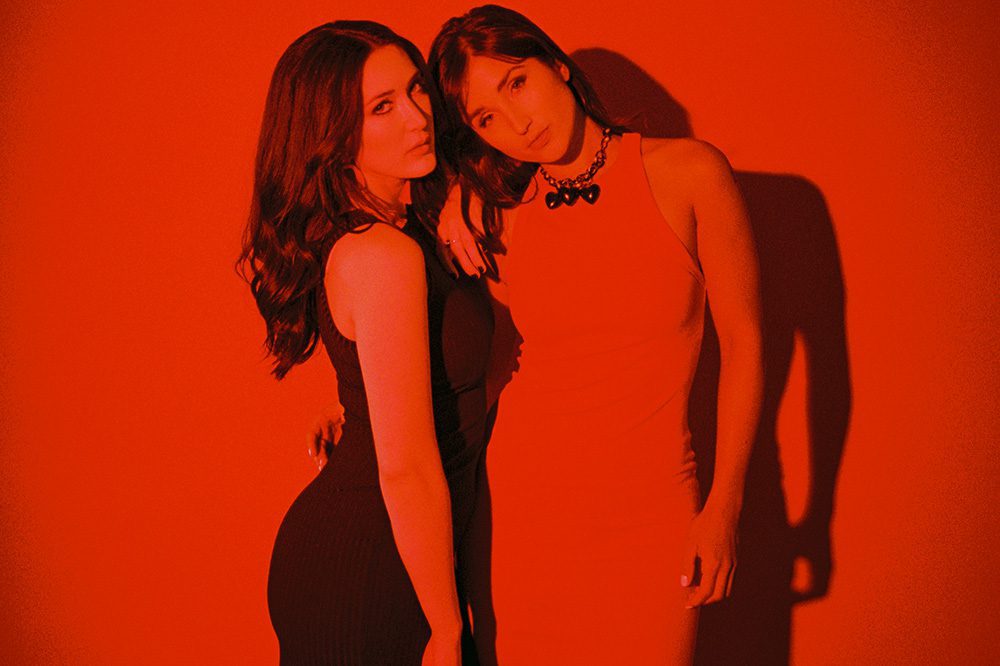
Jackson+Sellers Bring Their Cosmic Connection to Debut LP Breaking Point

Photo Credit: Ashley Osborne

Jade Jackson and Aubrie Sellers met like many people do in the era of social media — sliding into each other’s DMs. But they established an artistic connection long before the message was sent. 

The seed was planted at AmericanaFest in 2019 in Nashville when they were performing at the same showcase, the sound of Sellers’ voice stopping Jackson dead in her tracks. “I was walking into the showcase we were playing and I’m like, ‘My ears are happy. I hear something I really like,’” Jackson recalls to Audiofemme. “I look up and it was Aubrie and she was such a badass on stage. She owned the stage, you just had to stop and look. I became a fan instantly.”

Following the showcase, Jackson began digging into her future bandmate’s music, citing Sellers’ voice as “my favorite voice I’ve ever heard.” In the process of gathering songs for her solo album at the time, Jackson felt compelled to share one in particular with Sellers, called “Hush.”

“I had written this song for my sister that I really envisioned some strong female harmonies on, and Aubrie’s vocals came to the forefront of my mind. I was like, ‘That’d be really cool if she did these harmonies,’” Jackson remembers. “It was a shot in the dark.”

Jackson’s instincts were correct, as Sellers “immediately loved” the song and the two decided to meet at Sellers’ house in Los Angeles. What started as a simple session to discuss the potential of Sellers lending her harmonies to “Hush” turned into an all-nighter where they recorded several demos and sent them to Jackson’s label, ANTI- records, in hopes of releasing a single. Impressed by the caliber of their work, the label instead requested a full-length album, resulting in the release of their debut LP Breaking Point on October 22. The album introduces the newly formed duo, Jackson+Sellers, to the world. 

“Everything happened really fast and we were fast friends. The spirit of the record was a very quick and seamless progression of things,” Jackson says. “Nothing was forced. We didn’t try and aim for a certain genre. We just became friends and created music, and that’s this spirit of this record. It was so much fun and you can feel that when you listen to it. I think it was really magical in that way.”

“We didn’t even know what we were doing. But we got together and really hit it off personally, too, which I think was a big factor. Not only did we like each other’s songs, but… it felt like there were a lot of weird synchronicities,” adds Sellers. “I It felt cosmic.”

That cosmic connection arose after years of building their own solo careers. Jackson has released two albums under ANTI- and Sellers, the daughter of country legend Lee Ann Womack, has been a mainstay in the Nashville scene with her blend of grunge rock and country that’s scored her nominations at the Americana Honors and Awards. Breaking Point arrived at a time when the singers needed it most, both off the road and at home as a result of the COVID-19 pandemic, the lack of touring allowing them the space to create something new. It also provided a refreshing opportunity to have a musical partner after years of going through the process alone, both grateful to have a teammate in the grueling music industry.

“Having been a solo artist and feeling alone being a front woman, this is a very male dominated industry and touring and doing everything, feeling isolated in press and all these things like you’re on your own. Sometimes it was really hard to connect with people, being a sensitive person and living an extroverted lifestyle,” Jackson explains. “When Aubrie and I met, we were of the same stripe. We connected on cosmic levels. We’re both sensitive, we’re both introverted and now all of a sudden we’re standing on stage doing this thing together. I have someone to talk to about it, I have somebody to lean on. I have somebody to be my friend up there who actually knows what I’m going through because they’re going through the same thing, and I really appreciate that. I think that’s one of the most special parts of this whole journey.”

“There is something to be said for having someone do literally everything with you as the co-front person. Getting to do things together like that is super amazing. I’m very introverted, so I’ve really enjoyed doing all this with someone else,” expresses Sellers. “We’ve faced plenty of challenges in our solo careers, but with this record and this project, everything really fell together in a magical way.” 

The duo carries this fellowship into each of the album’s edgy rock-leaning melodies wrapped around their dreamy voices. The two were intentional about selecting songs they naturally gravitated to, including “Hush,” the bluesy, yet gentle ballad they recorded on that fateful night in L.A. The song marries the captivating nature of both their voices on the unconventional lullaby: “Her soul’s slipping/Her mind’s drifting/Like a ship letting go of her ropes/Sand’s shifting, her hand’s gripping/She just can’t let go/Hush little darlin’/Don’t you cry.”

“I tend to write pretty simple, straightforward, and I’ve been drawn to that kind of music in the past. ‘Hush’ is that way, but it’s also very poetic in a way,” Sellers says of the track written by her bandmate. “I was really drawn to the general vibe and emotion of the song.”

Meanwhile, Jackson is a fan of the Sellers-penned “Fair Weather,” which evokes a sense of longing as they acknowledge “As fast as a cold wind blows/Fair weather comes and it goes.” “It really filled my cup and I felt like it was written about me and for me, like my ego is being stroked,” Jackson observes. “It conjures up so much imagery in my mind that I really love.” 

Breaking Point is a masterclass in what happens when two people follow the creative muse. The duo admits they’re unclear if Breaking Point is a one-off project or the beginning of a long partnership. Regardless, they’ll continue to allow their instincts to guide them, and hope others will do the same. “What that boils down to is being in a creative space where you can be experimental and free and yourself and not care what other people think and voice your opinions. That’s what this record was. Create to create and have fun,” Jackson proclaims, stating that “all the stars were aligned” when making this project. “It’s not even so much taking a risk, it’s just following your inner creativity and your true creative self and expressing your voice and see what happens. That’s what I did for this record and it’s my most favorite, cherished project I’ve done.”

“We were very much creating to create. I think that came out and it was what was so fun about it,” reflects Sellers. “I hope [listeners] feel that. Jade and I both write songs as an outlet for ourselves and our own emotions, but also the reason we share them with people is so they’ll connect with them. I’m at a point in my journey where I’m wanting to create to create, and I think this was such an amazing experience for both of us because of that spirit. I want to bring that idea to the world and hope that people also take that from this.” 

Follow Jackson+Sellers on Instagram, Twitter, and Facebook for ongoing updates. 

Cedric Noel Defines His Own Sense of Belonging on Hang Time

Photo Credit: Kristina Pederson

Cedric Noel wrote his fourth LP Hang Time from the perspective of a young adult attempting to transform lived experience into lessons for his teenage self. But the Canadian singer-songwriter admits the album, released November 12 via Joyful Noise Recordings/Forward Music Group, has a deeper purpose as well. Touching on the often-neglected topic of racism (and tokenism) within the indie rock genre, Noel tells Audiofemme he “hope[s] that this album can contribute to the reimagination of what is understood as ‘Black music’ and help remove the boundaries that term currently encompasses.” Throughout the work, Noel allows his sonic imaginings to embody experiences which are often difficult to put into words – developing an intimacy with the listener through poignant compositions that feel close to the heart. 

Across his previous releases, and through playing in other bands, Noel has become a pillar of Montreal’s vibrant indie rock scene, where he was primarily surrounded by white people. He began to feel as though he needed the space to “figure out a lot of things in terms of how I felt about myself and my identity and how I felt about my white peers and the disconnect that I had with them due to our difference in race and upbringing.” Written from 2016 to 2020, much of it during self-imposed exile from Montreal at his family’s home in Ottawa, Hang Time became a way to distill and examine these feelings, and allowed the artist to communicate his truth through sonic avenues.

“I think that the majority of musical choices that are made on the album reflect that feeling of ostracization or loneliness or the lack of empathy within a certain community,” he explains. “I think when I listen to the songs on Hang Time now I can very much hear somebody who’s in their mid-twenties and struggling with certain personal things.”

When writing the album, Noel was listening to artists like Lomelda and Okay Kaya. “Both of those artists bring a certain sense of intimacy when talking about struggle, and I find that comes through a lot in both the music and in the vocal deliveries,” he reveals. Sonically, he was influenced by Fleet Foxes’ third album Crack-Up, not in terms of specific sounds, but in how different parts of the songs sit together. Noel found inspiration, too, from artists in the Montreal rock scene like Thanya Iyer, Nennen, SkinTone, and Paper Beat Scissors. “There are so many folks that inspire me and that have made me think of music in different ways,” he says. 

To that end, Hang Time is marked by inspired collaborations with artists like Squirrel Flower and Common Holly. By adding additional vocals on the tracks, Noel is able to further diversify the sounds of the work, creating a quilted sonic pattern and allowing space for more consistent intrigue. “Sometimes I want to completely remove myself from the part that they contribute to a song,” Noel says. “I don’t want every album I make to be 100% me. Most of the time, it’s going to be a lot more interesting to have other people’s voices instead of me always inserting myself in a musical situation when I so often don’t need to.” For an album so focused on personal experience, collaboration leaves room for distinct and varied stylings throughout. 

In addition to playing bass for Le Ren and Ada Lea, Noel also has another solo project known as Special Solace “that I started quite a while ago now,” he says. “It’s sort of jus a way for me to explore a different side of my musical tastes with something more fun and something with a lot more levity, musically anyways.” As an artist with synesthesia (a neurological condition in which the stimulation of one sense causes an involuntary reaction in another, such as hearing colors, seeing numbers or letters surrounded by colorful auras, or tasting sounds) Noel initially created Special Solace as an outlet for music with more brightness and saturated colors. Now, he sees having two projects as an opportunity for “musical exploration, experimentation and improvisation.”

The practice of communicating through sound often requires emblematic arrangements paired with a refined perspective on what an artist is attempting to pass through to a listener. Noel’s ability to harness these two aspects of writing can be viscerally felt on Hang Time, “even if lyrically the songs jump around from topic to topic,” he says. “They all have a similar longing and malaise in them which I think comes from those open voicings. Otherwise there is a fair amount of distortion and ambience which can help give some sonic context to the lyrical content as well.”

As a songwriter, he finds himself less attracted to specific lyrics and more interested in what can occur through the repetition of singular phrases. “My intention when I am repeating is to either build intensity, or remove that intensity, or to hammer home a point, or to show different sides of a certain statement,” he explains. “I think that allows the listener to have a wide breadth of understanding of what the lyrics might be about.” 

When listening to Hang Time, it’s hard to not find yourself deeply compelled by the vulnerability displayed on the album. Noel embodies honesty without being fanciful or overly sentimental. Instead his authentic expression leaves room for listeners to identify their own place in his introspections. Swirling with ambient, rock, and folk sounds, Noel expands the indie rock genre while creating a distinct place for himself in its canon.

Follow Cedric Noel on Instagram for ongoing updates.

Dyan Valdés Lights The Fuse With Premiere of “Be My Revolution”

Photo Credit: Petra Valdimarsdóttir

Relationships that burn through our lives like meteors can be revolutionary. After a wine-soaked evening out with her BFF and frequent creative collaborator Jess Sweetman, singer-songwriter Dyan Valdés found herself reflecting on just how important those relationships can be.

“We often get together and plot how we are going to change the world, and this evening was no exception. On the way home, I kept thinking about how much my life has changed for the better because of this friendship,” Valdés says, “and how much she has energized me to tackle painful and difficult issues with my music and my career in general.” This personal realization became the basis for a new song called “Be My Revolution,” coinciding with worldwide protests and social justice movements.

“By the time my taxi arrived home, I had thought up the first verse and chorus,” she continues. “I went straight into my music room and recorded the first version of the song, hopefully not waking up my poor neighbors in the process. The idea behind the song was to capture all of the love and excitement that go along with political awakening, that delicious feeling of finding your ‘people’ as you try to make the world a better place.”

Initially, the line “she’s my revolution” erupted in her brain, but eventually morphed into the hook as it’s heard now. “Storm my walls and take me/Break me down and change me,” she provokes, funneling passion like fresh chopped kindling into a fireplace. “Shake me up and wake me/Be my revolution.”

“Protest was in the air,” Valdés notes. Black Lives Matter, Fridays for Future, and protests surrounding the assault and murder of Sarah Everard converged into a boiling vat of pain, police brutality, and a long-overdue reckoning. “All of these movements were responding to horrific circumstances, but it was invigorating to see people take to the streets in solidarity and with a vision for a better world. Whether on a larger social level or on a personal level, the connections we make with people who give us hope can be truly revolutionary.”

“I realized that this awakening feels a lot like falling in love and vice versa,” Valdés adds. “You are terrifically excited, a little scared, and yet full of hope for a future you can’t quite imagine.”

“Be My Revolution” leads into Valdés’ forthcoming solo debut record, Stand, expected early 2022, and also siphons rage and rebellion from her own very personal experiences. Now based in Berlin, the Cuban-American artist was attacked in broad daylight by a man in the early days of the pandemic. She was rattled but “arrived home, fortunately safely, and felt overwhelmed by my own experience, by reports of increased domestic violence and the exploitation of female labor at the frontlines of the pandemic response.”

Stand sculpts its lyrical venom and torrential emotional winds from this specific moment but appeals to the universal institutions long built against women and for men. As such, Valdés, known for her work as founding member of The Blood Arm and Mexican Radio, as well as keyboardist in Die Sterne, turned to working exclusively with women on the record, from production to styling and design. It’s a reclaiming of agency – and “Be My Revolution” simply sparks the ignition.

Follow Dyan Valdés on Twitter and Instagram for ongoing updates.

Flying Nun Founder Roger Shepherd On Forty Years of The New Zealand Label’s Highs and Lows

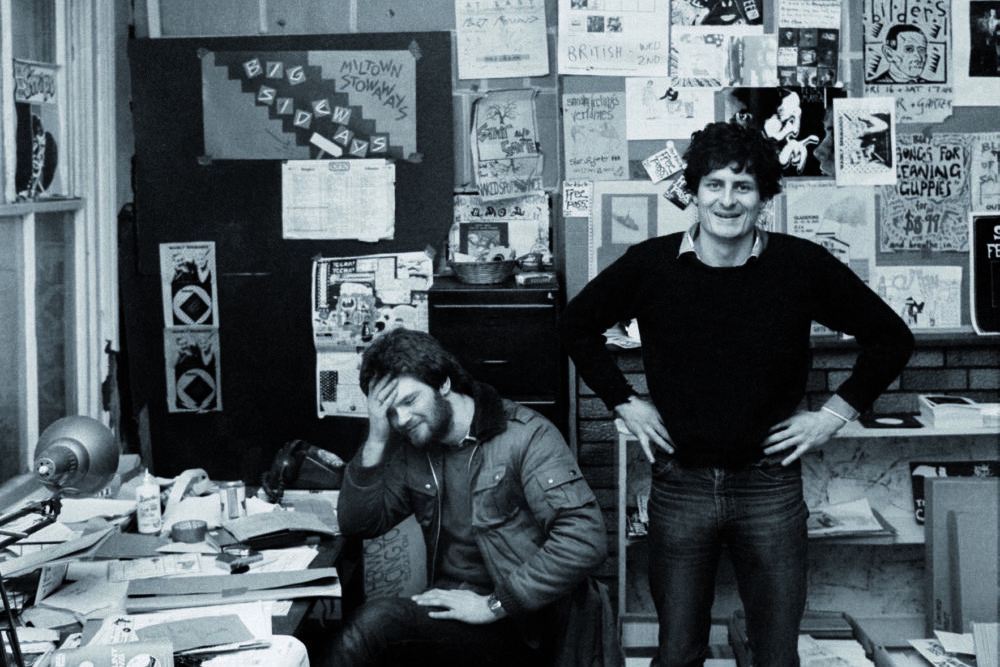
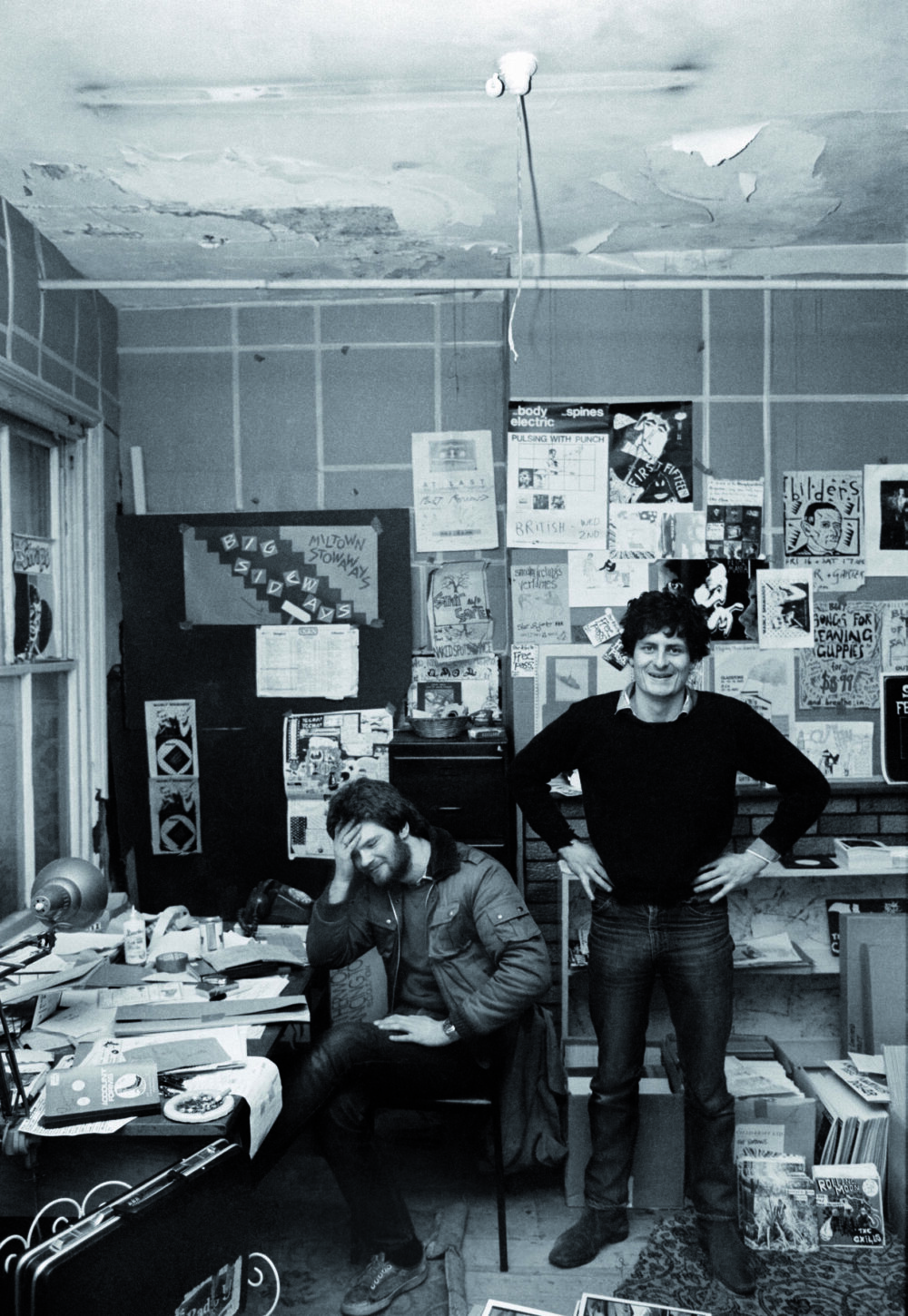
Flying Nun Records’ office circa 1982

This story begins a long time ago, in a faraway land. Not Narnia, that’s another story. But, like the C.S. Lewis classic chronicles, this story has all manner of magical creatures, wild wardrobes and wondrous landscapes.

Forty years ago, Roger Shepherd founded New Zealand’s Flying Nun Records in Christchurch, the largest city on the Southern island. It was at a time when the university city of Dunedin was providing fertile ground for post-punk and indie pop acts to form and flourish. He’d worked in record stores throughout high school and when he began university, his dedication to working in record stores trumped lectures and textbooks.

“I’d dropped out of university… I don’t know if it was just me, but the music was just so exciting at that time that university became a sideshow, really,” he tells Audiofemme. “My musical experience is that of a music retailer. I never learned a musical instrument, I was never in a band, I can’t sing, I can’t keep time, I’m not a dancer.”

In the early 1980s, post-punk bands were only beginning to emerge. Their frenetic, DIY attitude to making music and performing was catnip to a young, impressionable New Zealand boy who’d grown up with his parent’s Beatles and Bob Dylan albums on high rotation.

“When I was about 17, we’d driven to Dunedin in my incredibly unreliable car. I can’t believe that we even attempted it,” he remembers. “We patched up that for the five hour drive to see this band called The Enemy and they were a kind of punk rock band that had a ferocity about them that was unmatched by anything we’d had any experience of; devastatingly good. The support band was The Clean, playing their first support show, and they were ramshackle.”

He returned to Christchurch, where years later The Clean would show up in 1981. Shepherd’s freshly minted record label was waiting with open doors for them.

“The Clean turned up in ’81 and played, and they were just so clearly the best band in the world,” he says. “You have that moment, when you’re young. They were just so devastatingly good, everyone was gobsmacked. I was up on that stage, I think, before they’d even finished playing. I had agreed to release that Pin Group single, but I hadn’t released anything else, and there was nothing else in sight, but I just knew that I had to do something with those guys and they were open to that.”

The fledgling label struck out with some memorable and chart-recognised releases, making an early impact that would imprint the label into the hearts and earholes of New Zealanders for decades to follow, unbeknownst then to Shepherd. The first release, “Ambivalence” by Pin Group, was followed by “Tally Ho” by The Clean, the latter of which snuck onto the New Zealand charts at nineteen. It was an unexpected boost for the freshly founded label, providing publicity and income.

The idea, 40 years ago, of record stores in regional cities was a novelty. Until then, major record labels with a purely commercial, mainstream agenda had their offices in cities like London, Los Angeles, Berlin and Sydney.

“One of the reasons I set up was that there was no other label in the south island for independent-minded bands,” Shepherd explains. “Nationally, there were only a couple… There was major record companies releasing records by really boring, middle-of-the-road bands, and we weren’t part of that world. The major record companies had offices here, mainly in Auckland, but they wouldn’t have had much of a budget for local stuff.”

Over the decades, the label was sold, merged into other labels, and finally bought back by Shepherd. In 1990, Australia’s Festival Records bought half-ownership into Flying Nun, before merging it into Mushroom Records in 2000. Six years later, Warner acquired it when it bought out Festival Mushroom Records.

“I didn’t really sell it,” Shepherd clarifies. “I was more pushed out. Mushroom were business partners and I think they were in the process of selling up to News Corp and I was part of the wash up from that, really, because I was in London at that stage. The Mushroom director that I was aligned to – he went, so the writing was on the wall for me. They pushed me out, I didn’t sell. If I’d sold, I would have had some money to show for it, but I really didn’t.”

Shepherd and his wife remained in London for another decade from 1995, raising their two young children, before returning to Wellington for his wife’s job in 2005. Happily a “house husband” at that time, he’d had no plans to return to the music industry until he was approached by Warner to compile a 25th Anniversary Box Set, which lead him to buy back the label in 2009.

“I found myself reconnecting with a lot of that music, really relating to it and liking it, and thinking about the people who made it. So I asked [Warner], would you sell me Flying Nun back? After a very convoluted process… they said yes, we’ll sell this back to you. Fifteen years later, it’s still going strong.”

The upstart 20-year-old who leapt on stage to sign The Clean back in 1981 was appointed an Officer of the New Zealand Order of Merit (ONZM) for services to the music industry in the 2018 Queen’s Birthday Honours. It was bittersweet, since Shepherd’s mother had developed dementia by that time and couldn’t appreciate that her punk-rock loving son had been approved by the Queen.

Shepherd is humble and seemingly nonplussed by the recognition. There’s an audible brightness and fervour to his voice when he is talking about the label and the artists, though. This is the beating heart of Flying Nun.

“As far as sound or an aesthetic, the label has become less identifiable with a number of music scenes. In the early days, we were closely aligned with what was happening with Dunedin and to a lesser extent, Christchurch. We’ve become less scene-centric and now it’s a bigger, broader community and that community idea is more of a description of what Flying Nun is now – likeminded people rather than likeminded guitar sounds,” he says. “We didn’t know what a community was 40 years ago but obviously now, that’s what we’re part of – creative, independent music makers and the audience, as well. That’s the label’s strength. It’s less about the sound, it’s a nebulous thing.”

Matthew Bannister of Sneaky Feelings wrote a memoir of the scene and Flying Nun records, to which his band was an early signing, called Positively George Street: A Personal History of the Sneaky Feelings and the Dunedin Sound, released in 1999.

Bannister and the band met at the University of Otago in Dunedin. In 1981, a year after forming, they played at a hotel in Christchurch, where Roger approached the band. “He was offering us whisky, he had a white Jaguar, so we thought ‘this guy looks like somebody,’” Bannister recalls. “In Dunedin in 1980, the idea of releasing a record was our wildest dream so to have a record company come to our gig – that is, Roger – and say ‘I like you guys, do you wanna make a record?’ was the greatest thing ever, really.”

Sneaky Feelings featured on The Dunedin Sound: two 12” EPs that also featured The Verlaines, The Chills and The Stones, with a band on each side. “It sold reasonably well [despite the] weird format,” says Bannister. “It sold several thousand copies, which in New Zealand is pretty good.”

“The label has gone on to become pretty well known overseas, sort of famous I guess in a sort of indie way,” Bannister reflects. “The Verlaines, The Chills, The Bats have done pretty well. New Zealand has become known as a place that produces a distinctive style of music. I think that’s a great achievement.”

“We’ve always quite liked noisy stuff,” confirms Shepherd. “Quite early on, it wasn’t just jangly guitars, there was a lot of other stuff happening. That idea of just one sound early on… it’s always been broader than that.”

Godzone, by Auckland alt-rockers Sulfate, is still making big waves on Melbourne community radio after Flying Nun released the record in September. “Sulfate fit in with that whole world, that raucous, different way to make noisy music,” says Shepherd. “On the other hand, we do Reb Fountain who’s got a bit of a folky background and she’s been really successful in the last year. Vera Ellen, a young person from Wellington… I think it’s a good time for women in music.”

One thing that’s changed since the label’s inception is the way they discover new bands. “We spend quite a bit of time on Bandcamp, mainly because we’re just interested – not hard-nosed trawling through the internet!” says Shepherd. “The thing that’s stayed consistent is that we’re just fans of music, really. It’s never been ‘we’re gonna sign this band and take over the world’. We want to sell enough records to cover the costs.”

And despite worldwide pressing delays, Flying Nun’s commitment to vinyl records remains, for good reason. “We thought that was going to save us, the streaming thing, but it’s terrible for us and terrible for our acts. It generates income for the major record labels and artists with that mass pop online presence. For us, it’s almost not worthwhile doing the admin,” Shepherd admits. “Our business is based on vinyl, and even then, the margins aren’t great. They’re expensive to make, expensive to ship. [But] we split the profit on the budget 50/50 with the act. It’s a mature business that we’re operating and we know what we’re doing, what we’re dealing with.”

40 years and you haven’t peaked, Flying Nun. Happy anniversary.

Follow Flying Nun Records on Twitter and Facebook for ongoing updates.

PREMIERE: Nicole Marxen Shares Haunting Video for “Bones / Dust”

Photo Credit: Daven Martinez

Nicole Marxen says that she was “really insecure” when she started out in music. “I didn’t grow up playing music,” she says on a recent phone call. “It’s something that I got into by accident in my early 20s and was obsessed with it, but I always felt a little behind everyone else.”

Earlier this year, Dallas-based Marxen, who cut her teeth with the band Midnight Opera, released her first solo EP, Tether, and since the summer she’s been playing live solo as well. “Forcing myself to do it on my own really helped me navigate some of those boundaries that I could not get past,” she says. “Playing live by myself too has been a really good experience because you don’t have anyone else up there to bounce energy off of or depend on. It’s just you, so you need to be able to work a room.”

Today, Audiofemme premieres the video for “Bones / Dust,” directed by Salt Lake City-based Richard Krause. “The first time I heard ‘Bones / Dust,’ I knew I wanted to make a music video for it,” writes Krause in his director’s statement. “Nicole’s vocals are haunting yet beautiful, like a siren’s call. As I listened, atmospheric black-and-white images flooded my mind. A world encased in fog. Giant monsters emerging from the earth, coming for humanity. Shadows and light painting the scenes.”

“He came to me with some test renders and I was just blown away,” says Marxen. 

“Bones / Dust” was one of the earliest songs that Marxen wrote for the EP, dating back about five or so years prior to the release of Tether. Much of the rest of the collection was written around 2018 and reflect Marxen’s grief over the loss of her mother.

“She passed away ten years ago, but because I was so young when it happened and my life was so busy, I really didn’t grieve until 2018,” she says. “Things were just moving so fast and I had a lot of living to do before I was in a place where I felt safe and secure enough to do so.”

Marxen was inspired to write – and to process that belated grief – while going through her mother’s belongings. “Sorting through her stuff was really the thing that triggered it and left the floodgates open,” she says. 

She points to “Moonflower,” from the EP, as a song that came out of this process. Marxen notes that, at the time, she was getting interested in plants and gardening, as her mother had been. “I wish it was something that we could have experienced together, bonded over, but the fact that it found me regardless, I thought that was really beautiful,” she says. 

To bring these songs to life, Marxen knew that she would have to work solo. “Looking back on it now, I understand it a little more, that it was a pretty integral part of my grieving process to do something with those songs alone,” she says. 

For her solo debut, Marxen turned to producer Alex Bhore, with whom she had previously worked. “I just had 100% trust in him that he was going to help me do the songs justice,” she says. “I’m still super proud with what we were able to come up with and I love working with him.”

Gradually, the EP came together over the course of about a year and a half. “Now, I just trust the process so much more,” she says. “I trust that we’re going to do songs justice and, if it takes a while, that’s okay. Sometimes, it takes time to find what’s right. That’s the only way that I want to write music right now.”

Marxen began performing live again in July; she’s been playing mostly in and around Dallas, but one gig took her to a Victorian home in Wichita, Kansas. “They were just the coolest family ever that opened their house to this goth night,” she says of the hosts for the show. “The promoter found my music somehow and asked if I wanted to do it and I said yes, so I went and didn’t know a single person, but by the end of the night I had a million new friends and it was really cool.”

With shows lined up in Fort Worth, Dallas and Denton this December, Marxen is also at work with producer Bhore on a full-length album. “I feel like I’ve expressed my grief fully and now it’s time to figure out what else I need to say,” she says. 

“Honestly, [Tether] just helped me find myself as an artist. I couldn’t really write any truths without going for my most painful one first,” says Marxen. “It was something that I needed to deal with it and it wasn’t until dealing with it that I was able to set myself free.”

Follow Nicole Marxen on Instagram and Facebook for ongoing updates.

DoNormaal Quietly Releases Video for Brand-New Track “Baby May”

It’s been a while since we’ve heard from DoNormaal, the mesmerizing emcee and producer who exploded on the Seattle underground hip-hop scene in November 2015 with the release of her debut LP Jump Or Die and 2017’s follow-up Third Daughter. Since 2018, her shows and fresh releases have appeared to taper off, save for one-off singles like her stirring response to police oppression in Black communities, “gift and a promise.”

But on November 2nd, DoNormaal quietly reemerged with a new release, “Baby May,” and an accompanying video. There’s a steady bittersweetness in the track’s looped music box lullaby, created in Logic and produced by DoNormaal herself. The track’s title references the name of an auntie the artist’s grandfather often spoke about during his calls home to Sierra Leone, so the beat dovetails nicely with an overall sense of reconnecting to a literal and figurative home. It’s a spacious, emotional track that undulates like the brown hills of the Coachella Valley and speaks to DoNormaal’s last few turbulent years.

DoNormaal, whose given name is Christianne Karefa-Johnson, was raised in Southern California, and also, on the road. She has often described her childhood as “nomadic,” which at times lends her work the sort of wistful quality of watching the world from a car window.

DoNormaal the artist was first born while studying poetry at Sarah Lawrence College. But it wasn’t until after moving to Seattle in 2013 to be with her then-partner, artist Rave Holly, that Karefa-Johnson began releasing music and performing regularly. Together, DoNormaal, Rave Holly, and some friends formed an arts collective and began sharing their individual projects, which, like DoNormaal’s 2015 LP Jump or Die, were well-received by local music fans and critics alike. “It was a beautiful time for me,” she tells Audiofemme.

By the time she released her 2017 LP, the raw post-hip-hop masterpiece Third Daughter, Karefa-Johnson was playing shows almost every night and began slowly working on what she thought would be her next project, Yippee, even releasing a video for the album’s first single, “wannabe,” produced by Wolftone.

“I started making Yippee at a time where I just felt very confident, very secure in and satisfied by my reality,” Karefa-Johnson says. “I had this self-assuredness that came from figuring out how to express myself in a way that people related to and that helped people. The high of being in Seattle and doing all these shows and having people respond the way they did, I had this feeling that no matter what life threw at me, it’s all ‘yippee!’ Because it is, right? All the sorrow and the beauty is always one, but in this particular time I had almost no fear. I was like, ‘I feel blessed. I feel powerful. No matter what.’’’

But, by 2019, that boundless confidence began to wane a bit and she found herself feeling tired and a little stuck. Reeling, DoNormaal made the difficult decision to pick up and head to Palm Springs to live with her mother.

“‘Baby May’ feels very big like the desert,” she explains. “I wrote this song towards the end of my time in Seattle, when I was contemplating, like okay, is it time to make a move? Where am I going to go? What is this going to mean?”

When she landed in Palm Springs, DoNormaal had only planned to spend six months there. The pandemic extended her stay, and the ending of her long-term relationship shortly after left her with much to reflect on. 

Feeling untethered and isolated, DoNormaal stepped away from Yippee and threw herself into creating a project that encapsulated what she was currently feeling. She decided to call it Palmspringa, in a play on Rumspringa, a rite of passage in Amish culture when adolescents are allowed to explore the secular world. Palmspringa, produced by Seattle artist Welp Disney, is due out in 2022.

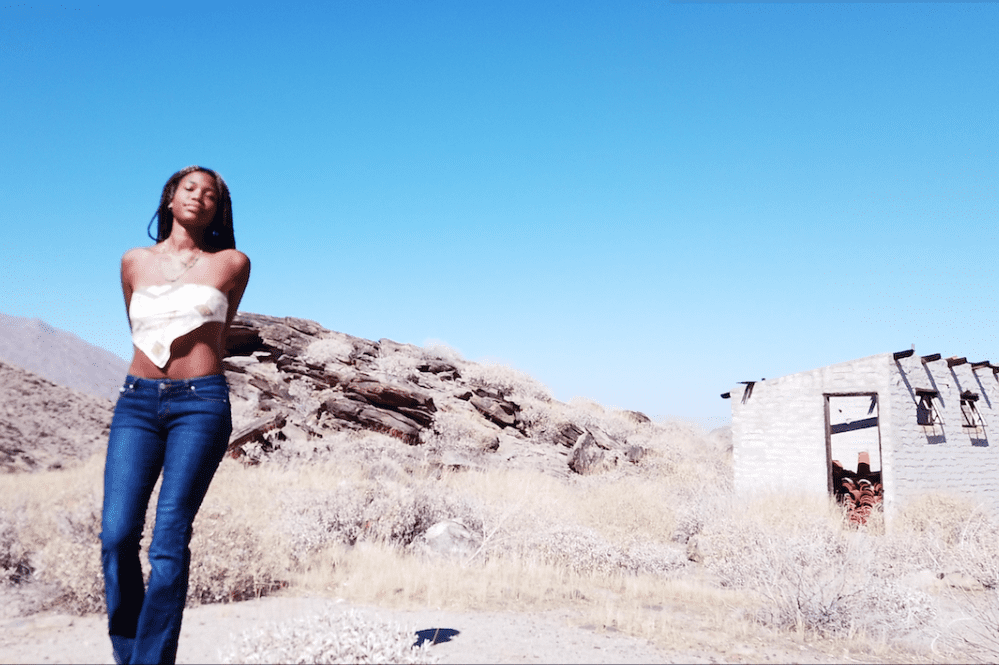
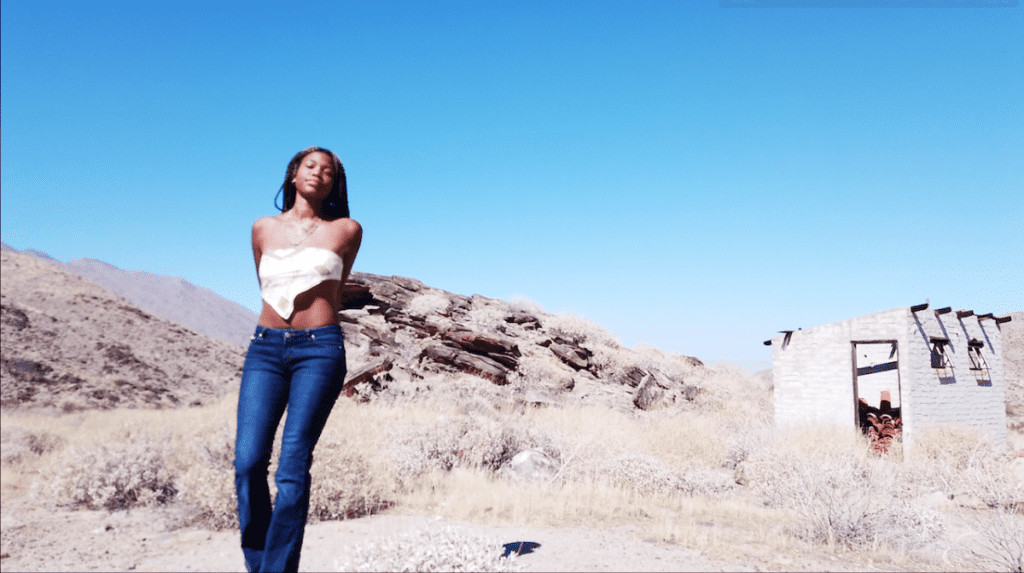
DoNormaal filmed the video for “Baby May” in the mars-like desert of Agua Caliente Reservation in Palm Springs, but she says it will not appear on Palmspringa. Instead, it will be part of Yippee, which she plans to finish afterwards.

For now, the reopening of the world has allowed DoNormaal to settle in L.A., where she lives in a communal artist house and works at a collective of artist studios called Church of Fun. Still, she will be back in Seattle to perform and then some, she says.

“I became DoNormaal in Seattle. I completely grew up in Seattle. It feels very much like a home even though I couldn’t stay there,” she says. “I couldn’t make it my home forever because I had to get back to this other place I come from, to this sun and these palm trees and these brown mountains. But I feel very influenced by Seattle and molded by my time there.”

Follow DoNormaal on Instagram for ongoing updates.

Marie Nyx and Maude Vôs Champion Inclusivity with Delusional Records

Photo Credit: James Barton aka James Has Friends

Finding a record label to release your music isn’t easy. And sometimes, the hardest part is finding one that also aligns with your artistic mission and ethos. That’s what led Los Angeles-based producers Maude Vôs and Marie Nyx to found Delusional Records earlier this year. The queer-owned label focuses on underground electronic music, largely derived from techno, with an emphasis on artists who use hardware. Their roster consists of 60% women and non-binary artists and they’re committed to inclusiveness and diversity. 

“Over the pandemic, we both built a community on Twitch. We met a lot of people throughout the world that showed so much support in anything we did,” says Nyx on a recent video call. 

Vôs adds that digging deeper into various record labels over the course of the pandemic led to a realization that “visibility is so needed once this world maybe comes back.” The time that Nyx and Vôs spent without live gigs provided the opportunity to prepare the label for its launch, which happened right around the same time that Los Angeles venues reopened. Delusional Records dropped its first release, Vôs’ three-track EP The Umbra, in early June. With the label’s second release, V Twin from Salt Lake City-based SIAK PHD, they were able to celebrate with a private rooftop party in downtown Los Angeles. 

While Vôs and Nyx share a vision for the label, their approaches are different. Vôs works full-time in music. She does sound design for art and fashion projects and is beginning to take on film work too. She also mixes and masters music for other artists. To manage all that, she keeps a schedule that’s divided into ten-hour chunks. “That works really well for me; it’s the concept of time boxing,” she says. That means that, in any given week, she’ll spend ten hours learning, ten hours on tech-related tasks, which could be anything from mastering to trouble-shooting, tem hours on PR and administrative work and another ten hours on creating her own music. 

“I don’t have a set schedule of hours for specific things because my schedule is ever-changing,” says Nyx, who has a full-time, work-from-home job in another industry. Nyx has also been playing a lot more gigs now that in-person events are a thing again. “I keep a calendar and really stick to the list of things I have to do that day,” she says. “I generally put label and music things first. That’s what I do right when I wake up.”

After the sun sets, Nyx will work on producing music or recording mixes. “At night is when I really get into my creative mode,” she says. “It’s more admin in the morning and creativity at night.”

In less than six months, Delusional Records has put out six EPs. The most recent, Nyx’s Elysium: The Remixes, hit the web on November 11. It includes contributions from L.A.-based duo tau0n, Deckrekord label founder ILAŸDA and producer Kana Hishiya. Vôs collaborated with whoistheMETRO for a remix of “Out of the Shadows.” 

The remix EP comes just a few weeks after Nyx’s successful debut, Elysium, released On October 20. Just four days later, Elysium, driven by the track “Occult Reverie,” topped the Techno (Raw/Deep/Hypnotic) chart on dance/electronic music online store, Beatport. Meanwhile, another cut, “Up for Air,” landed the EP in the number three spot on the Minimal/Deep Tech chart. 

“That is something for a label because it put us on the map on Beatport,” says Nyx, before noting how shoppers checking out the EP will see the label’s other releases as they browse. “It’s nice to have that visibility.”

Since Beatport is widely used by DJs, it’s safe to say that a chart hit there can also mean that Nyx’s music is making its way into sets at clubs and other events. “Back when I was first starting to DJ, I would check those top 100 charts first and start going through all the music. I would see a track by a specific artist or label that I liked and go to that artist’s page or go to that label and try to find other similar music,” says Nyx. “So, it does help ending up in a bunch of DJ sets and getting your sound out there.”

That achievement has had an impact on Nyx. She says, “For me, as an artist, it definitely feels unreal and makes me want to keep improving my work.”

Follow Delusion Records on Instagram for ongoing updates. 

Mandy, Indiana Snarl Into Sonic Techno-Punk Fury On Their Frenetic, Fiery Debut EP

Photo Credit: Holly Whitaker

It is in the early hours of morning, sweaty with glitter and eyeliner smudged over your face, having lost your car keys and ID hours ago, that Mandy, Indiana want to come right up, take your face in their hands and devour you with their gristly, abrasive, angular, industrial techno. There’s a violence within their music that is tempered by Valentine Caulfield’s sultry, low octave spoken word-song. It’s immersive, propulsive and driving – and Fire Talk unleashes the band’s three-song debut EP (including two remixes) November 19.

When we connect via phone to chat, Caulfield is staying at her parent’s home in Brittany, in North Western France. It’s the first time she’s left her adopted home of Manchester since February 2020, and she’ll only be there another day before visiting her grandmother in the city she was born and raised in, Paris, before returning to the UK. Along with being the theatrical frontwoman of Mandy, Indiana, she works in a café part-time while completing her Masters in Journalism full-time.

“This EP is a weird kind of collection of moments of us as a band, which I really like,” she says of the five tracks, crafted during lockdowns. “We’d only just started working with Fire Talk, [so] we didn’t really know what was gonna happen.”

Guitarist and producer Scott Fair and vocalist Caulfield first met in 2016, when both were still in other bands on a shared bill at Aatma, a venue in Manchester’s Northern Quarter. Fair posted a rave review of Caulfield’s band on social media and they began messaging each other, occasionally ending up on shared bills, before Fair reached out with the proposition of forming a band at the end of 2017. And thus, Mandy, Indiana began.

Their modus operandi of working remotely, as Caulfield explains, kept them productive through the pandemic, but it was borne of convenience since both she and Fair have other commitments, as do the more recent members of the band, drummer Liam Stewart and Simon Catling on synths (Fair runs a business and has three kids; Stewart is a member of various other bands, and Catling works as a promoter).

“The EP is a collection of bits from our band throughout the past year and a half,” explains Caulfield. “‘Nike of Samothrace’ was written and recorded entirely throughout the first lockdown. Scott sends me demos, the rough idea for a song, I listen to it maniacally on repeat to put me in a state of mind to write all the vocals and lyrics.”

Fair built the other compositions and arrangements, meticulously sorting through demos and recordings to layer melody over noise, slashing through it with dissonant fuzz and fraying here and there. Each time, Caulfield improvised her lyrics in French and delivered them in her low-octave, melodic spoken word, with malevolent, furied levity. The guitars and drums were recorded live, with the remaining instrumental arrangements composed digitally. The idea was always to write music that would translate to a live environment, explains Caulfield. “Originally the plan was that we’d play to backing tracks, but we’ve been able to replicate almost exactly the EP [in our live shows], except for ‘Bottle Episode’ where the bass is a backing track.”

The band have been gigging, and will be joining The Horrors for a couple of shows in the UK in December. They’ve also been winning fans through exposure on prominent US and UK radio, including KEXP and BBC.

It was the remix of “Alien 3” by the band’s musical hero, Daniel Avery, that debuted the band on Mary Anne Hobbs’ BBC6 radio show in September this year. “We’re all big fans of Daniel Avery’s music,” enthuses Caulfield. “As early as this year, in March or April, we got a notification on the band’s Instagram that Daniel Avery was following us – so we had a freak out about it on group chat.”

Having discussed their plan to have an EP made up of three tracks and two remixes with their label, they took the leap of asking their ideal collaborator. They messaged Avery, and within a few days his “Alien 3” remix was complete. “It was really, really hard for me to not play it to every single person I know,” says Caulfield. After Hobbs had played the track on her show, Caulfield tweeted the radio DJ to ask if she’d play the original, too. It worked.

Hobbs has also since played the final track the band recorded – “Bottle Episode,” in which a raucous percussive clash and clang works its way into a muscular rhythm, underpinning a serpentine, writhing, breathless vocal mantra in French. The track, with its militant drumming, snarling synths and gothic-sexy-Euro chic vocals epitomises the sound and vibe of the band. They’ve achieved a sense of spaciousness, both physical and audible, but also ephemerally.

It was recorded in the confines of rehearsal rooms and home studios, but elsewhere, tracks were recorded in industrial mills, high-ceilinged buildings and halls. “We always try to find spaces that we think are gonna suit the sounds that we want. We’re not the kind of band – not that there’s anything wrong with it – that records in a studio where it’s spotless and perfect. There’s something inherently visceral and dirty to our music so we try to find spaces that reflect that,” she says.

The drums for “Alien 3” and “Nike of Samothrace” were recorded in an old warehouse-cum-arts space. The drums for “Bottle Episode” were recorded in the corridors of the building they rehearse in, an old mill. It imparts a “naturally spooky feel,” as Caulfield puts it. While she recorded her vocals for the other two tracks in a practice space into a mic, she is proud of the clarity she achieved in recording the “Nike” vocals into her iPhone in the middle of lockdown.

It’s hard to imagine, when listening to the abrasive, punkish, dark techno of Mandy, Indiana, that their frontwoman was once a fervent member of the neighbourhood choir at age six and a classical singing student for a selective musical academy in Paris throughout her high school years. What makes more sense is that she quit music school when she discovered The Sex Pistols, The Clash, Nirvana, Pearl Jam, “and some really, really bad emo bands” toward the end of high school. Those early years, studying opera and her undergraduate degree in literature, languages and history, are not lost on her performance though.

“If you ever get to catch a live show, and I hope you do, I’m always wearing something completely stupid but the guys look like three regular white dudes. It’s an inside joke – ‘what’s she gonna wear this time?’” she laughs.

She’ll have to save the most outrageous outfits for next year. The band have just revealed that they have been invited to take part in SXSW in 2022.

“If you’d told Scott and I we’d be going to Texas a couple of years ago, we’d have said ‘Nah, you’re insane,’” Caulfield muses. “We’re enjoying the high.”

Follow Mandy, Indiana on Instagram for ongoing updates.

Brandy Zdan Releases Her Pain on Falcon LP

Photo Credit: Alysse Gafkjen

In the middle of our call, Brandy Zdan looks up at the tree in her backyard and notices a bird of prey, swinging from branch to branch. As she looks closer, she’s shocked to see that it’s a falcon, a bird that has served as an important symbol in her life. “I called it to happen,” she professes. “It’s amazing.”

The falcon has served as an important symbol in her life since appearing in a dream she had after experiencing a devastating miscarriage two years ago. It then manifested into a song about that heartbreaking experience, “Falcon’s Wing,” and now bears the title of her new album, Falcon. In the weeks following the miscarriage, the falcon made its physical presence known, flying through the trees at her Nashville home, and serendipitously reappeared the week before she gave birth to her daughter, Lucky, in March 2020.

“I had experienced this vision of a falcon and this little spirit being taken away on the back of a falcon’s wing,” she recalls of the dream. “It’s a very unique animal symbolism representing the spirit for me. It represents so much more than that, but it felt like a great way of honoring that whole experience and everything that came from it, as well as that little spirit that went away and somewhere into the great unknown,” she continues.

Zdan carries this bravery into nine songs that detail her journey with pregnancy loss, new motherhood and postpartum depression, ultimately finding hope and love on the other side. The Canada-born, now Nashville-based artist has crafted an album that is a masterful demonstration in rock ‘n’ roll grit married with deeply vulnerable lyrics, each song penned and produced solely by the singer.

“I was using what I know how to do to get through those times, which is songwriting. There is such great comfort in that and figuring out how to sing a song about the thing you’re going through and write about it and articulate it. I didn’t set out to do it, and it morphed into this thing that existed,” she expresses. “We’re always told as artists to write what we know. If we’re not having any experiences that are interesting and living life, what are you supposed to write about? If you’re going through these things, you have to be open enough and brave enough to write about them.” 

Zdan made the conscious decision to illuminate her pain instead of hide it. “You were carried away on a falcon’s wing/High above the hills/I didn’t even catch a glimpse/I was lost in the tears,” she sings with her gritty, yet melodic voice. The song was written just one week after she experienced the miscarriage and was still “really deep” in the grief of it and emotions of it. Months later, “The Worst Thing” arrived in a moment of anger, Zdan responding to the expectation that women are taught to hold their trauma in an effort to demonstrate “self-control.”

“I was getting really mad about the fact that nobody is voicing these things that are happening to women all the time. None of this is stuff we even talk about. Mothers are the most unsupported people, and yet there’s states that are trying to force us to have kids. It’s like, we can’t do this if you’re not going to support us,” she remarks. “That song came from the anger of why the fuck aren’t we writing [about this]? Why aren’t we hearing more about this? I want to put some of these kinds of narratives in rock and roll and break down some walls.”

Walking boldly and fearlessly in her desire to bring vulnerability and female-focused topics into rock music, Zdan honors this fully on “Mama,” a guitar-laced ballad that shows off the angelic tones in her voice. She confesses to living in fear while craving gentleness, singing, “Mama I’ve been living in fear/Mama I’ve been trying to heal.”

“It’s the one that came very easily, but also has a lot of joy and pain in it and also encompasses myself, my daughter, my mother and my grandma all in one song. That was the hardest and the easiest place to go,” she shares. “It’s a place that I needed to heal some things within myself. I knew I had to, but that doesn’t mean that it’s an easy thing.”

Zdan continues to channel this vulnerability into “Dying Inside” where she takes an honest look at the feeling of being burned out from constant touring pre-pandemic, harboring a resentment toward her life’s calling. “I was very afraid that I was hating what I was doing, and that was very scary. It was a moment of ‘you need a little break and you got to focus on something else,’” she describes.  

That opportunity for a reset would arise when the arrival of COVID-19 brought live shows to a screeching halt, yet opened a pathway for Zdan to wholly embrace the album-making process, including producing and engineering Falcon entirely by herself. Zdan notes that the process was born out of necessity. Off the road and unable to pay a team of producers, she took it upon herself to fulfill a longtime goal she knew she’d one day accomplish.

“It was more of a trial and hard work to put the record together more so than the songwriting that just happened. Then all of a sudden I had this body of work that was super vulnerable and I thought, ‘I think I can actually try to record this on my own,’” she explains. “I also knew that I could do it and I was ready to do it. I think the experiences of motherhood and the trials of what I had been through in those first six months, and previously leading up with pregnancy and miscarriage, I was like, ‘I’ve gone through all this. I can figure this out. I can do it all; why not try to do it?’” 

Zdan paired her determination with melodic intuition, building comforting melodies around heavy subject matter. The process not only affirmed her vast skillset and sharp musical instincts, but proved to the versatile creator that she is capable of all goals she sets her mind to. “I think doing this on my own and having it work out, it’s given me that affirmation that I am all these things that I thought I was for my whole life. There’s no imposter syndrome. [I’m] coming from this really settled place within myself to take the risks and see what will happen,” she observes. “To have grown in the ways that I grew with the writing and where I went with the writing and then all the other things that have to do with being behind the board, that’s a success unto itself, which I’m holding on to.” 

By pouring her heart and soul into Falcon, Zdan hopes fans will make their own connections to her stories, and feel inspired share their own stories in turn. But she will always come back to the falcon, the symbol of ambition, aspiration and freedom, all of which is reflected in her powerful music.

“If you didn’t know these songs were about what they were about, I think you could relate your own grief and loss situations to them. It’s not all darkness – there’s light, and it’s a bit of a journey. I also would hope that there’s girls and women that will listen and feel empowered to tell their stories. That’s really the main thing I want; the only way that we’re going to change the stigmas around these issues is by speaking about them more and I’m using my voice to do it. My job is that,” she proclaims. “I think the falcon will come back again and reaffirm this for me.” 

Follow Brandy Zdan on Facebook, Twitter and Instagram for ongoing updates. 

PREMIERE: Sulene Crashes Her Own Party In “We Go Hard” Video

Photo Credit: SK Studio

Sulene wants to do one simple thing: dance. Well, it’s actually a little more complex than that, as she attests with her latest single “We Go Hard.” Through a claustrophobic wall-to-wall sound, the indie-electronic artist embraces “every aspect of being a woman” and screams without hesitation, “I do what I want, and what I want is to dance.”

“We Go Hard” rumbles and lurches from its staticky casing, as if a beast is being reborn into the world, its former body discarded and swapped out for a better, more resilient one. In many ways, the musical composition mimics Sulene’s awakening into herself. While the song “lends itself to a more universal ‘anthem,’ which is on purpose,” she says, “if you listen to the fine details, it’s about giving myself permission to be a whole human — to be rowdy, to ugly cry, to look ‘not feminine,’ and still feel beautiful. [It] grapples with the complexities of being a woman and what is expected from you in society versus who you really are past all that noise.”

She more than gives herself permission; she soaks the patriarchy in gasoline, strikes a match, and watches it all come burning to the ground. “You boys love the cool girl/She’s fun but not too crazy and so vapid in this world,” Sulene sings, lambasting misogynistic notions about what and how a woman should be. “Let’s go out tonight/And commit a crime.”

The video for “We Go Hard” (Secret Friends Music Group/Trash Casual) premieres today on Audiofemme; with the visual, directed by Spencer Kohn, Sulene takes a literal approach in interpreting the lyrics. Joined by musician Miiranda and comedian Molly Gaebe, the Brooklyn-based performer crashes her own tea party. “The video is basically the idea of doing things that are perceived as very ‘not hard’ juxtaposed with the song saying over and over ‘We go hard!'” explains Sulene about the clip, co-starring furry companions named Kurt Brussel and Violet Von Griffon.

“I wanted to portray a badass girl gang who are just going off while having a beautiful tea party and a pink, flowery sleepover,” Sulene adds. “The video’s message is that going hard is in your being, in your spirit, and not based in how you look or what you do even. Going hard is a mindset.”

It’s glam rock madness, the camera and strobe light working overtime like a sleepover funneled through an acidic hallucination. “We’ll party tonight out of spite,” Sulene huffs into her microphone. It’s a cathartic cleanse, this necessary deconstruction of expectation—even her own. Sulene leaves the ash to melt back into the earth.

Originally from South Africa, Sulene has forged quite the rockstar career for herself. She’s best known as live guitarist in fun. but has also played with Betty Who and Candy Hearts and written music for TV shows like Ray Donovan and The Affair, among countless other creative endeavors. It all began with a red Ibanez Gio electric guitar she was given when she was 14, leading her to eventually study at Berklee College of Music and form a band called Helicopria. A degree in film scoring in hand, she set about taking over the world — well, her little corner of it, at least.

Her first record, titled Strange EP, arrived in 2017; three years later she released another EP called Fire Escaping, then followed it up with her he•don•ic EP in 2021. Intermittently, Sulene rolled out several one-off singles and continued massive touring efforts, all the while further honing her songwriting skillset. Earlier this year, alongside the latest EP, she reimagined Spice Girls’ “Say You’ll Be There” and Destiny’s Child’s “Say My Name,” two unpredictable touch points for her own musical style.

With “We Go Hard,” Sulene continues breaking her own rules and shaking up the status quo. Only legends are made that way.

Follow Sulene on Twitter and Instagram for ongoing updates.

Uffie Gets Weird on Remix of “Cool” Company Records Single

When it comes to songwriting, a lot has changed for Uffie since she unleashed her mid-‘00s club hit “Pop the Glock.” 

Back then, the American-French singer-songwriter kept busy jaunting across Europe, where she typically played club nights, sometimes in a different country each night. “I started touring immediately after I released my first songs,” she recalls on a recent phone call from her home in Los Angeles. “We were literally making music to play for shows.” That meant working quickly to craft songs that would resonate with nightclub audiences. 

These days, Uffie spends more time in the studio. “It’s much more concept-based,” she says of her current approach to songwriting. “What are you writing about? How does this hit you?”

In September, Uffie dropped her single “Cool” via Toro y Moi’s Company Records, where a melancholy intro snaps into a pogo beat augmented by vivid lyrics (“Mink when I’m cold/Kissing by the pool/Life’s a disco”) and a thick bassline. 

The song was made prior to the pandemic during an in-person studio session. “I had never met either of the producers or writers in the room. It was our first time all meeting and I had some of the lyrics written out, but we formed it there,” she says. “It was one of those days where I feel like everything just lined up.”

Uffie says that lyrics and songwriting have always been her focus, but she’s becoming more interested in production as well. “It really lends itself to the songwriting in that it’s an extension of how you can control the emotion of what you want to portray,” she says. “That’s an evolving process for me right now.”

In fact, a new remix of “Cool,” released on November 16, was helmed by Uffie. “I thought it would be really fun to try remixing my own music,” she says. On the remix, Uffie teases the “Life’s a disco” line with a snippet of strings, but the track runs a different course as the tempo increases. It plays less like a dance track and more like blur of memories from wild night out.

“I had originally thought more about doing a club mix, but we just got weird with it,” she says. Uffie collaborated with pal Veronica Wyman (Veronica Jane of DAGR) under the name NeverHaveIEverFuckedABlonde on the remix. Uffie was featured on DAGR’s single “Fuck Knots,” earlier this year.

“Originally working on ‘Cool,’ it was such a cinematic, visual inspiration, especially through the video and pulling from those references,” she says. “We wanted to have this break in the middle that felt like that cinematic dream moment and then reverse the whole thing and have a tempo change and make it go in this whole other world.”

The remix came together quickly. “We started together and had to go to two separate sessions, so we reconnected on Zoom after and, I think, stayed up until 3 or 4 in the morning working on it,” says Uffie. 

While Uffie spent much of the ‘00s touring, she took an extended break in the ‘10s. “I had been on tour since [I was] 16. I needed a moment to just be a human, mature, and exist,” she says. That break had an impact on her music as well.

“I think just maturing changed the content a lot, growing up a bit, but as well, as a mom, I’m not going to be doing club tours every day anymore,” says Uffie, who has two children. “[Touring] was very fun when I did it, but I don’t necessarily want to do now. I think all of that combined really changes where you want your music to live and exist.”

In recent years, she’s been spending her time co-writing for other artists in addition to working on her own material. “I only really write for artists where I really love what they do and feel a connection to it and I think that I can add to it. I don’t think it’s really worth it as a songwriter trying to squeeze into something that you don’t help elevate,” says Uffie. 

“What I really love is that you can get outside of your own mind and, after touring for so long, when you’re writing, you kind of have a little voice in the back of your head that’s reminding you that you’re going to have to sing these words for years to come,” she continues. “You lose a little bit of that naivety and freedom. Stepping into someone else’s head, you just don’t have that. It’s getting to exist in somebody else’s world and interpret it.”

Songwriting with others, she says, has changed since the pandemic. “Before, I was doing sessions every day, whether it be for myself or for somebody else, five days a week,” Uffie explains. “But working on Zoom has really changed that pace and process. Instead of volume, it’s taking more time on things, being more selective. So some weeks, I’ll spend focusing on co-writing or doing writing camps for other people.”

While in-person writing sessions have been returning, Zoom sessions aren’t a thing of the past. “If you can’t dedicate a whole day, Zoom can be incredibly efficient, if you work well with people,” she says. “It takes out that time of banter and messing about, which is also, at the same time, one of my favorite things about the studio.”

She adds, “I definitely still do some Zooms and it can be convenient, but it is really nice to get back into the room and feeling the energy that you really can’t recreate over a screen.”

Follow Uffie on Instagram for ongoing updates.

Melanie Charles Champions the Work of Black Women with Re-Imagined Classic Verve Recordings

Photo Credit: Meredith Traux

There’s an art to covering a classic song – and Melanie Charles has perfected it. Approached by Verve Records to remix songs from the label’s back catalogue, Charles brought a lifelong reverence of jazz to the project while also putting her unique stamp on each track, sometimes mashing her vocals and new beats with original recordings of Dinah Washington, Sarah Vaughan, Ella Fitzgerald, and others who paved the way for her own career. Its point-blank title, Y’all Don’t (Really) Care About Black Women, is a reminder to show real support and solidarity with the performers, rather than just consume or appreciate their artistic contributions.

Far from simply showcasing the fury and the frustration of Black women in a world that has denied them a voice and so much else, the collection also relishes their joys and accomplishments. While Charles had no interest in sugar-coating her message, she didn’t want listeners to feel alienated by songs now more than fifty years old. But it is to her immense credit that none of the songs she has selected from the Verve catalogue sound dated. Instead, the album invites celebration and movement.

“When I was arranging these songs, there were certain things I wanted to happen: I wanted people to dance, I wanted people to twerk to these songs. I wanted people who enjoyed the originals… to appreciate the reimaginings, while also making space to welcome in a new audience,” explains Charles. “I also didn’t want it to sound too pristine. I wanted to put some of that cassette tape ‘dirt’ from [2017 debut] The Girl with the Green Shoes. So, that’s how come Y’all Don’t (Really) Care About Black Women sounds like it does. The goal was to dance, to connect, to have that soulful grit.”

Born and raised in Brooklyn by her Haitian mother, Melanie Jean Baptiste Charles grew up steeped in the work of classic jazz performers, going on to study flute and vocals at the famed LaGuardia High School for the Performing Arts, and eventually enrolled at the School of Jazz and Contemporary Music at The New School. In 2016, she founded “Make Jazz Trill Again” in an effort to place jazz in a context that would feel more relevant to today’s youth – a mission that certainly lives on with her reimagined version of Betty Carter’s “Jazz (Ain’t Nothing But Soul).”

Anyone familiar with The Girl with the Green Shoes (which attracted the attention and acclaim of The New York Times and The Village Voice) knows Charles’ prowess as a musical creator. It is not just her voice, but her presence that compels attention. The album was recorded live to tape at Loud Door Recordings in Oakland, and produced by Charles’ nom de plume, D’flower. There’s a spaciousness and deep, luscious atmosphere that sounds as if she’s recorded in a church. In her lovely, undulating voice, surely she must be forging direct lines to heaven.

The Girl with the Green Shoes is a snapshot of a time in my life when I was transitioning from the college jazz conservatory sort of way… into more of a beat scene, the beat world,” she explains. “I was never into computer. I’m definitely an analog girl to the core, so I pieced the project all on my [Roland] SP [202].” It was released via cassette tape label Hot Record Societe, helmed by Charles’ friend Mejiwahn, who provided the beat for album standout “Be On My Side.”

“Mejiwahn – his real name is Jamie – had a beautiful tape recording setup so we were able to record the music, perform it just one time down, no punches, no edits,” Charles remembers. “I just wanted to capture a natural, organic sound. I feel that the cassette tape mixes the music for you, it warms it up, it provides this comforting feeling when you listen to music recorded on tape.”

The fuzzy static of dust on tape gives that nostalgic, vinyl-style crackle to Y’all Don’t (Really) Care About Black Women, too. The format, and choice of songs, was entirely up to Charles, and her intuition guided her, since Verve had given her space and trust to narrow down the tracklist.

“Verve weren’t very hands-on about it; they let me really do my own thing. When it came to choosing songs, they had faith in me,” says Charles. “I started pulling the songs together before the pandemic happened. I went to the headquarters and I was able to go through the CDs and vinyls, listen to some songs, and share with them the ones that really stood out to me or talk to them about songs that I always loved and always wanted to sing and check in to see if they were also available to flip.”

Charles’ mission was clear to her, and she has, movingly and memorably, accomplished it with Y’all Don’t (Really) Care About Black Women. “My mission was to honor the original pieces… I listen to these songs remembering when I was at high school or college listening to these songs. I wanted to capture that feeling, but I also wanted to create a different type of groove and create an experience of something that you know or is familiar in a different way,” she explains. “The label supported that and really encouraged me to create sounds that were true to me.”

Her wonderful “Woman Of The Ghetto (Reimagined)” is a ballsy, rich, bluesy soul affair that partners Charles’ burnished, bourbon-rich voice with Marlena Shaw’s 1969 plea to men of the law and government. “How do you raise your kids in a ghetto?/Feed one child and starve another/Tell me, tell me, legislator/How do you make your bread in the ghetto?/Baked from the souls of the dead in the ghetto.” Charles and Shaw were both born in New York; both raised on their elder’s jazz records; both outspoken, proud Black women. This song, sculpted by Charles’ into smooth R&B poetry, sounds both classic and entirely fresh. The challenges, despite decades passing, are the same.

“I definitely feel like I face challenges in the music industry that are related to being a Black woman, specifically a dark-skinned Black woman, specifically a curvy Black woman,” says Charles. “How do I deal with it? By making sure that I am undeniably good at what I do. This is what I strive for. I oftentimes fall short of that goal, but if that’s the one thing I can fully control, that’s the one thing that I’ll focus on.”

Follow Melanie Charles on Instagram and Facebook for ongoing updates.

Cincy R&B Singer Tori Helene Chronicles Dating Downfalls on Moonchild EP

Tori Helene
Tori Helene
Photo Credit: Lunsford Photography

Tori Helene combines earworm pop production and glimmering vocals on her first project of the year, Moonchild. Teaming up with frequent collaborator and producer Natown, the Cincinnati-based songstress breezes through feelings of longing, lust and dissatisfaction in relationships on the seven-song EP.

Helene asserts her expectations on songs like “Figure it Out” and “Passion,” where she laments lackluster romance. However, she also shows self-awareness on songs like “Moody,” where she acknowledges her own shortcomings in relationships. Besides her direct and vulnerable lyrics, Helene’s music stands out for her glossy vocal range, which is complimented especially on Moonchild by Natown and others’ production.

So far, Helene has released visuals for Moonchild cuts “Little Black Dress” and “Sleepwalking,” the former of which ended with a teaser for “Moody.” The singer-songwriter is now working on filming live video performances for “Passion” and “Sleepwalking.”

Below, Helene answers questions about Moonchild, getting vulnerable in her songwriting, upcoming videos and what else she’s working on, including a new EP slated for release in 2022. Read her Q&A with Audiofemme below.

AF: Congratulations on releasing Moonchild! When did you start working on this project?

TH: Thank you so much! I started working on Moonchild in August of 2020. I was DoorDashing one day and listening to beats in the car, and I started writing some songs and felt it was time to start working on the EP. Those car rides really helped my inspiration for writing the project. 

AF: What producers did you work with for Moonchild?

TH: I worked with Natown – like always, and I also started working with a producer named VSHY from the Netherlands. He’s really dope. I found him online and started reaching out to him and getting beats. 

AF: The video for “Sleepwalking” was super fun and cute. What was filming that like?

TH: The “Sleepwalking” video shoot was a good time! I asked two girls that I know from the music scene here – a very talented artist name Sahara and dope engineer Ihlana [Niayla] from Timeless Recording Studio, where I record my music – to be a part of the video. I wanted it to have a mini girls night/kickback vibe and they did amazing and had great energy. The overall energy on-set was so fun, which is what I wanted since the song is so upbeat and light-hearted. 

AF: If you had to pick one, what is your favorite Moonchild song and why?

TH: I love all the songs on Moonchild with all of my heart, but, if I had to choose, my favorite one would be “Moody.” That one is produced by VSHY, and I fell in love with the beat instantly. It actually made me cry, it moved me that much. Some records are just so effortless for me to make, and “Moody” was one of them. The song is about me getting into my moods, where I can be clingy or have an attitude when I don’t get my way, and it was very freeing to write. I’m basically admitting a flaw that I have, which I felt was growth. I love that song so much! I’ll never ever get tired of it. 

AF: “Passion” has to be one of my favorites off the project. What was your inspiration behind that song? 

TH: I love “Passion” so much. What inspired me to write “Passion” was my dating life! I get very unsatisfied and bored with men and relationships. I’m sick of the boring conversations and the lack of depth. When I wrote “Passion,” I was visualizing having a romantic dinner, going on trips, being wined-and-dined. It was literally me asking, ‘Where is the passion?’ I need that in my life!

AF: Do most of your songwriting ideas come from personal experiences, or from other people in your life?

TH: All of my writing comes from personal experiences and my feelings. That’s why I love making music so much. It’s like my diary – it’s therapy for me. 

AF: What’s up next for you?

TH: I’m planning on pushing Moonchild for several months, and I’m trying to get out and perform at more shows out of town. Also, I am writing and working on my next EP for 2022! The grind doesn’t stop.

Follow Tori Helene on Instagram for ongoing updates.

Ellise Conjures Dark Pop Coven with Mothica and DeathbyRomy on Expanded Version of “Soul Sucker”

Photo Credit: CASTRO

The concept of the “Power of Three” has existed in many religious beliefs, but it is, perhaps, its proximity to Pagan, occult, and Wiccan religions that has made it a trope within gothic-horror media since Shakespeare’s Macbeth, and more recently with cinematic hits such as Hocus Pocus, The Witches of Eastwick, Charmed, and Netflix’s The Chilling Adventures of Sabrina. These unholy trinities have been a mainstay of the genre and persist as a symbol of female solidarity. Now, producer, musician, and lover of all things spooky Ellise taps into this theme for a new version of “Soul Sucker” featuring additional verses by fellow dark-pop artists Mothica and DeathbyRomy.

“Soul Sucker” first appeared on Ellise’s most recent album Letting the Wolf In, conceptually centered around retelling Grimm’s Fairy Tales and released just before Halloween. “Soul Sucker, Pt. 2” builds on the song’s themes of toxicity and self-destructive behavior. “It’s such a spin on what my songs are usually about, where the female is portrayed as this victim,” Ellise tells Audiofemme. “In ‘Soul Sucker,’ it’s completely the opposite…you are the soul sucker.”

While she’s always harbored a fascination with the fantastical and the so-called Halloween-pop it inspires, Ellise says, “I always want my music to be real and realistic. The reality is that we all have toxic tendencies. We are all imperfect and we’ve all hurt people just in the same way people have hurt us.” For Ellise, it’s the manner in which the sub-genre serves as the antithesis of the bubblegum aesthetic of pop. Since moving to Los Angeles from the Bay Area at the age of 17, she’s made it a tradition to release new music on or near Halloween, beginning with EPs Can You Keep A Secret? (2018) and Under My Bed (2019). Letting the Wolf In nips at the heels of her proper full-length debut from earlier this year, Chaotic; though Ellise has been prolific, there was something missing from “Soul Sucker.”

Originally produced by her brother LilSpirit, Chelsea Collins and Brandon Shoop, Ellise tweaked the vocal arrangements and production for “Soul Sucker, Pt. 2,” and wanted to activate the power of three in her own way. “I’ve never dropped a song with features on it. So I knew I really wanted to do that,” Ellise expands. “I just loved all the dynamics of that. I thought of Mothica because she has a very nice, powerful pop voice. Then I thought of Romy because I knew she would kill a sort of like, more minimal production section, and I’m really happy with how it came out.”

Mothica, who released her latest EP forever fifteen earlier this year, says she was drawn to the project because she was intrigued by Ellise’s work on Letting the Wolf In, and felt it mirrored her own. “All of us thematically cling to the darker imagery. I love her concept of turning fairytales into haunting dark pop, so when she reached out to have me on Soul Sucker Part 2, it was a no brainer to jump on it!” she says.

“I’ve admired Ellise and her project for a couple years now” DeathbyRomy adds. “I’m all for females supporting each other and bringing each other up. This industry can be extremely catty especially with women versus other women.” DeathbyRomy released her debut, Songs For My Funeral, earlier this year as well.

As with the first version of the song, “Soul Sucker, Pt. 2” immediately introduces Ellise’s clear, delicate vocals that bring to life a “beautiful vixen” with dark secrets. “Don’t get too lost in her arms/All she wants is a bite of your heart,” she warns before launching into a chorus where no one gets out alive. Sonically, the track sticks to the basics, keeping the verses bare of any overwhelming elements and allowing the listener to zero in on the singer’s haunting words.

Mothica and DeathbyRomy follow Ellise’s lead, painting practically tangible imagery in lyrics fleshed out with mainstay motifs such as the femme fatale, Satan worship, and mythological figures like Medusa. The trio play with these stereotypes to illustrate the ways in which women in horror and mythology have historically been dehumanized; their desire for obtaining power at any cost in turn makes them monstrous.

Mothica goes first, belting lines like “You drink it up but it’s dark magic/No room in her heart to be romantic/I don’t blame you, it’s hypnotic/Skeletons inside her closet.” In her considerably deeper register, DeathbyRomy narrates the demise of those who fail to recognize the warning signs: “Toxic lullaby/Kiss your comforts all good-bye/Turn you to stone with a look in her eye/But you love her all the same.”

When discussing the creative process with these three, the word seamless keeps coming up; it’s clear that this project wasn’t only a creative partnership but a collaboration between friends. Their ability to tap into each other’s psyche and create a similar tale whilst retaining their own sonic independence is testament to that.

“They really elevate and expand on the sound of it. Both of them really played off of the lyrics of what the song is already about, which is just like this dangerous… absolutely unbothered woman,” says Ellise. “Sonically, I think it added so much more like variation to the song. They both have incredible voices, but what’s awesome is that all three of us sound so different. You’re getting to hear all these different voices. It’s really cool to me. I’m very happy.”

DeathbyRomy agrees, saying, “Aesthetically we meld well… I think we all did our own thing, in our own way, and still maintained something very cohesive.”

“Soul Sucker, Pt. 2” offers yet another example of the power of female collaboration within an industry that continues to pit female performers against each other, while also adding dimension to the trope of the femme fatale as a complex, multi-layered being – one that resides within us all. As a cautionary tale, the song acts as a reminder not to let our toxic tendencies take hold, and instead reach out to those who will support and nourish us the way Mothica and DeathbyRomy have for Ellise.

Follow Ellise on Instagram for ongoing updates.

Navigating Wonderland With Jon Hopkins and Music for Psychedelic Therapy

Photo Credit: Steve Gullick 

Music can carry a psychedelic experience every which way.  It can evoke joy, heartbreak, or terror. It can cause you to dance, laugh, shake, or cry. It can bring you up into space or ground you back down to reality. It can open up the luminous rainbows of a commencing trip, or color the world with earthy greens and browns as you land down. 

When I first received a review copy of Music for Psychedelic Therapy, an album designed to accompany psychedelic journeys by acclaimed English electronic composer Jon Hopkins, I was seeking the latter: a way to land. It was September, and I was recovering from a seemingly never-ending iboga journey that began in January. 

After a transcendent flight through heaven back then, I’d fallen down the other side into a rabbit hole, conversing with invisible characters in my mind that spoke like Cheshire cats. For months, strange words and phrases, riddles and rhymes and paradoxes, were flooding into my brain from nowhere. I couldn’t find my way out of Wonderland. 

When people decide to listen to psychedelic-inspired music, Wonderland is often exactly where they want to go. Hopkins says his album — which was made without beats to create a unique piece of art — is intended to conjure metaphysical experiences. “I’d like to think it could induce a trance state,” he says. “It’s intended to guide you deeply into yourself so that you can get in there and resolve some things.” One listener told him that his nine-year-old son saw swirling colors as he heard it. Another said it helped her grieve and move past the death of her brother.

“There’s no situation I’ve encountered where music is more powerful than in the psychedelic space,” he adds. “It’s like you can create a whole universe.”

As I contemplated the power of music to induce altered mental states, a dilemma presented itself: to listen or not to listen? Listening, I knew, could take me deeper down the rabbit hole.

But as I lay on top of my white comforter, closed my eyes, and hit “play” on the first song “Welcome,” I was surprised to hear slow, graceful synths and calm waterfall sounds – not the kind of trippy tunes that show up when you search YouTube for mushroom-inspired music and the like. Next came pouring rain and chirping birds in the following three tracks — dubbed “Tayos Caves, Ecuador i,” “ii,” and “iii” — and strings full of angelic tremolo in “Love Flows Over Us in Prismatic Waves.”

The highlight of the album, though, was “Deep in the Glowing Heart,” which paints a portrait of heaven with an airy choir and mystical chimes laid over bustling orchestral sounds.

While I listened to these tracks, I had a feeling of being high up in a plane, the sun peaking in from the pillowy clouds through the windows. Yet even as I heard the simple sparkly piano in the appropriately titled “Ascending, Dawn Sky,” I had a comforting sense that I’d come back down shortly — and sure enough, it was followed by the high-pitched organs and deep soft hums of “Arriving.”

Part of the impetus for Hopkins to create the LP was to provide a continuous soundtrack to cover a whole psychedelic journey from beginning to end. “People have been building playlists for the time of the medicine — that’s six or seven hours, and that’s lots of energies coming into your experience,” he says. “I liked the idea of it being held in one specific album.”

To my relief, the album served not as a shovel that dug me down deeper into a rabbit hole, but a rope that gently descended until I could grab it, then helped lift me out.

The very last song, “Sit Around the Fire,” incorporates a talk by the late spiritual guru Ram Dass, whom Hopkins had met before he died. It’s the only track with words and serves as an “integration” piece for Hopkins, a way to make meaning of the rest of the album.

As Ram Dass repeated the phrase “quiet the mind, open the heart,” I wondered whether the iboga had been working on me in a roundabout way: it was adding noise to my mind to teach me how to quiet it, how to get back into my heart no matter what else was going on around it. And as I sat up and meditated to his talk about learning to love all beings, I realized that perhaps I’d ventured into Wonderland just to see how much beauty there was back home.

Follow Jon Hopkins on Instagram and Facebook for ongoing updates.

Ruby Jones Brings The Woman Who Loves You to Life

Photo Credit: Lilli Waters

In the years since recording and touring with one of Melbourne’s most renowned jazz bands, Clairy Browne & The Bangin’ Rackettes, came to an end for Ruby Jones, the Melbourne born-and-raised singer-songwriter has crafted a folksy, guitar-driven spectrum of pensive, redemptive love songs. She’d been writing with her long-time friend and bandmate, lead guitarist and songwriting partner Jules Pascoe (Husky, JAZZPARTY, Jaala) throughout their time with the Rackettes, amassing a catalogue of songs to suffuse with blood, breath and life. But Jones admits that she’d initially written the songs with the intention of giving them to someone else.

“There’s a certain level of safety; you can be really vulnerable when you’re not planning on singing any of the lyrics yourself. Actually, that’s something I learned in the Rackettes; I was so open, vulnerable and honest in that band because at the end of the day, I could give it to Clairy and she’s such an incredible vocalist that it was a real joy, at the time, to write these songs and not have to sing them,” says Jones. In 2015 when the Rackettes ended, she adds, “I was not interested in having a band, but I wanted to write songs. And in Melbourne, if you want to get into the publishing side of things, you had to play them live or sing them yourself. Jules and I, then eventually my partner [bassist Joel Loukes] and [drummer] Selwyn [Cozens] got together and it was the perfect fit.”

As their muscular, well-honed supergroup coalesced, the songs Jones had written grew on her, too, and she could hardly picture anyone else singing them. “I didn’t really want anybody else to do it, and that’s when I knew. It was like, oh shit, I guess I have to do them now,” she confesses. “I went into this record being as honest, as vulnerable, as heartbroken as I wanted to be because I wouldn’t have to own it and seven years later, be talking to journalists about it!”

On November 12, Ruby Jones finally delivered her vulnerable, heartbroken, and ultimately healing folk-rock stories on debut LP The Woman Who Loves You. Each of the ten tracks has a throbbing heartbeat of its own, a storyline and a bristling sensory system that connects to the invisible spine running from the opening title track through to “Closing In.” There’s so much feeling in Jones’ voice, in her lyrical candour and the genuineness with which she addresses listeners, it’s as if we are part of the stories. As if we have lived these tales, too.

There’s also a romantic wink and a nod to the witchy magnetism of Fleetwood Mac’s Stevie Nicks, especially in the heartbreak-hurt of “Griffith Park.” That mid-70s luscious noodling guitar anchoring ethereal, psychedelic excursions into dreamy melodies gives a nostalgic sheen to the musical arrangements. There’s nothing sepia-toned about Jones’ songwriting and vocals though. Her melodious voice is gravel-edged on “Cruel” and sandpaper raw at the tip of her plaintive appeals to a careless lover, of whom she asks, “Why are you so cruu-eel?”

“’Cruel’ was the very first song that we wrote. I’d written other songs with Jules before this, but it was the first from our sessions together that made it onto the record. Originally, I came up with some of the chords on the piano because I wanted to bring something to our session. We’d started writing but I didn’t think anything would come of it,” Jones reveals. “The interesting thing about this song is that it’s gone through so many sonic iterations. It’s changed the most. The original demo is a piano-based country thing, written as a duet, a lot slower; then it went really country, really Americana, then we arranged it again almost as a Twin Peaks, prom night, rock ’n’ roll feel – which was my favourite version – but nothing felt right. Now, honestly, I think it sounds like a Prince song. It has a Purple Rain feel.”

On “Cruel,” she refers to her inability to let go as being “like Stockholm Syndrome” and the sense of being alone in the depths of a one-sided love affair is delivered in the downbeat atmosphere, a weeping guitar, intercut with savage fuzzy riffs towards the latter half of the song as backing singers bloom into harmony where both redemption and freedom seems possible.

Sprinkling the album with these beautiful harmonies, celestial songs and stardust seems to ease the soul-squeezing sadness of love lost, as well as deeper traumas. “Make It Out” sounds like an overexcited dog pulling its powerless owner towards sand, saltwater and sunshine; a subtle but frenetic beat keeps pressing the cadence upward, while a warm, sanguine bass line adds a lush laziness around the whole affair. But it’s deceptively upbeat.

“You know the song ‘Hey Ya’ by Outkast? I love that song and everyone gets down to it, but if you actually listen to the lyrics, it’s a really sad breakup song. I’d look out and people would be singing along [to ‘Make It Out’] so joyously and yet, it’s a song about a domestic violence situation. The verses are pretty dark,” Jones points out. “It feels like an exorcism.”

“I wasn’t in a super happy place at the time… it was one of the last songs that made it onto the record. It [was written] in 2018, two years after every other song on the record, primarily because we didn’t have a lot of up-tempo songs,” she continues. “The way that I approach songs is that I take inspiration from many different places and people in my life, and even relationships which I observe in others. ‘Make It Out’ was not about me at all. That’s the beauty of songwriting – you can shift the pronouns around…[but] some songs are pretty cut-and-dried autobiographical.”

Luckily, she doesn’t have to explain where her lyrics come from to her songwriting partner. “Jules and I are Irish Catholic so we don’t really talk about our feelings to each other, we put it into our music. That’s what makes our writing relationship function how it does,” she says. “He’s really good at what he does, and I’m really good at what I do, so I don’t really ever give him notes on the songs. Likewise, he never critiques what I have to say lyrically – he stays out of my way when it comes to our songs. We work well together in that sense.”

Jones’ vocal delivery harks to another singer capable of channeling dark tales with a country-folk-jazzy buoyancy and oozy sweetness: Rickie Lee Jones. The funky play on tempo and vibe that sounds like a starbust of Broadway, doo-wop, old-time rock and Americana on Pirates is a spiritual sister to Jones’ debut. High praise? It’s deserved. The melancholic, anthemic beauty and broken-but-healing resolve of “We Belong Together” channels its soul anew into Ruby Jones’ “Griffith Park” and “Backbone.”

Jones admits that Melbourne’s world-record breaking lockdowns were not a time of enormous productivity, but on the day she speaks to Audiofemme, she’s headed for Bakehouse Studios to record vocals for the second album.

“I learned from the Rackettes that when you’re going through something that’s really a traumatic, altering experience, for me personally, I just have to survive it then I can write about it,” she says. “I didn’t do anything in lockdown. I watched Buffy and ran on my little treadmill. As we started to get out of it, I had some ideas… Jules was the total opposite. He emailed me ten songs – these fantastic guitar pieces – when I reached out to suggest getting together. So, we’ve got seven songs. I think we’re all just gonna want to get into the studio as quickly as possible.”

She takes a moment and the smile in her voice beams through as she dials off. “We’ve been playing Woman Who Loves You for five years now… I’m excited to make some new music.”

Follow Ruby Jones on Instagram and Facebook for ongoing updates.

Scrappy Brooklyn DIY Synth Poppers Nation of Language Find Their Way Forward

Photo Credit: Robin Laananen

The three members of acclaimed Brooklyn synth pop band Nation of Language were quite literally searching for a way forward after the onset of the COVID-19 pandemic cut short what would have been their first major tour. After four years of scraping funds together to record one-off singles, they’d finally been able to release debut LP Introduction, Presence in May 2020; when songwriter/vocalist Ian Devaney and keyboardist Aidan Noel got married, they’d requested guests give them money for studio time in lieu of wedding gifts. But without a tour to promote the album, releasing it seemed like a lost cause – until Introduction, Presence gained unexpected traction and critical acclaim, selling out of three vinyl pressings.

Devaney, Noel, and bassist Michael Sue-Poi did what any scrappy DIY act would do in a similar situation – they decided to record a quick follow-up with Abe Seiferth (who’d worked on their debut) and Nick Millhiser (of Holy Ghost!). “There was so much uncertainty in not being able to tour that for a while we felt a bit lost while everything was locked down. Starting to write and record seemed like the only way to take a next step and get out from under the cloud that was so heavy over us,” says Devaney. Released November 5, A Way Forward takes its title from minimalist album track “Former Self,” in which Devaney sings, “”Away from you/I cover it well/But I may crumble/I can’t stop myself/A careful word/Something to guide my soul/A way forward.”

“Sonically speaking it felt like a good title because we were diving into a more expanded pool of influences,” he adds. “It felt right both in terms of life during the pandemic, and as a band finding new ways to expand what kind of sonic space we could occupy. There were so many directions that could be taken, but this felt like the right next step.”

Back in 2014, Devaney and Sue-Poi were at another crossroads; their Westfield, New Jersey-based pop rock group The Static Jacks had just broken up despite releasing two LPs and touring internationally. “The Brooklyn DIY scene is really what brought me out of just being a New Jersey musician in my early 20s and expanded the people and bands and venues I would come to know and love,” Devaney remembers. “It taught me the hard work it takes to try and stand out as a band and the fun you can have while you do that work. Quasi-legal venues like Shea Stadium were so important to my development and the friends I would make through the years.”

Devaney recognizes that NYC “looms large” on A Way Forward. “I still love the romance of New York, even as I contend with disillusionment with it on songs like ‘In Manhattan.’ It can really grind you down sometimes but that can also be a great source of inspiration, and I love the idea that our records might have some sense of place here,” he says.

Nation of Language deftly leverages the power of synth and new wave tropes, treading the line between contemporary indie rock and post-punk of the ’70s and ’80s. Anthemic while remaining authentic, A Way Forward juggles nostalgia and innovation meticulously, crafting contemporary modes of interacting with the new-wave icons of yore like Orchestral Manoeuvres in the Dark, Depeche Mode, Kraftwerk, and Cluster. They studied the Krautrock pioneers of the ’70s, bands whose electronic experimentations influenced new-wave bands of the following decade. “That helped us give the music some more room to breathe,” says Devaney.

One advantage of having that breathing room was the ability to revisit old ideas with a refreshed mindset. “There are elements of songs that go back a few years, and others that were written entirely during the pandemic. The act of curating from a large list of songs and making last minute changes is a really fun and challenging endeavor,” Devaney says. “I like to say that I’m writing every album at the same time in a way, so that as I write I’m never limited by what kind of record I’m supposed to be making.”

The band went into the studio with several songs in a more open-ended place so they could continue to elevate what they had already written. “A Word & A Wave” and “They’re Beckoning” both started as shorter demos, but “grew into so much more as we used the studio itself as an instrument, flipping switches and turning knobs” for each take, says Devaney. “The song you hear is essentially just one variation of the song, of which there were a few to choose from.”

With “This Fractured Mind,” the band was able to take small moments from a demo and build it out into something new in the studio. “I had written a lull into the song before the last chorus. Once in the studio, we filled it with more ambient sounds that we created from playing synths backwards through a tape machine, which gave the moment much more meaning and value to me,” says Devaney.

No matter how much experimentation goes into making an album, Devaney says he sees Nation of Language primarily as an indie rock project. “It’s a pretty broad umbrella, but I like the freedom it gives – it presents an exciting opportunity to draw from as many influences as I want,” he explains. “If I only thought of myself as a new-wave band I think I might feel more limited, whereas as an indie band I could make a shoegaze record, an acoustic record… the future feels wide open.”

This way of writing allows Devaney the freedom to explore, understanding that Nation of Language may not always have the same sound. “If I find I’m writing a song that’s all violins or something, I can finish it and set it aside as another direction to explore in the future, rather than stopping because I need to write more songs with synth arpeggios.”

This is perhaps where the band diverges from new-wave bands of days gone by. Traditional synth sounds may provide a spark, but eventually traverse a broader territory of sound – another way forward. “It’s really just chasing what I hear in my head – sometimes that may be referential in some way to a certain sound on a record I love, sometimes it might come from a place all it’s own,” Devaney says. “It’s also about leaving space to be surprised – part of what I love about not being some kind of synth master is the ways the machines can do unexpected things with the push of a button. Maybe you have some sound you think is cool, and suddenly it’s moving in a crazy rhythm and inspires a whole new song then and there.”

Balancing this point of entry while allowing oneself to be affected by the unexpected allows Nation of Language to write music that is both familiar and mercurial. Endeavoring into places unknown can snowball into new songs, new sounds, and new ways of expression, but as Devaney says, “In the end, the most important thing is to feel excited and moved by whatever is being made.”

Follow Nation of Language on Instagram and Facebook for ongoing updates.

Sound Baths Helped Center Taleen Kali; Now She Pays It Forward With Free Songs For Meditation EP

Photo Credit: Devon Ingram

Last April, as soon as Taleen Kali and her bandmate Miles Marsico were vaccinated, they headed to a warehouse in Glendale, California, just outside of Los Angeles, with a bass, a harmonium, some synths and singing bowls. Then they hooked up the bass and synths to “a mess of pedals” and recorded a sound bath. On November 5, the fruits of that session were released as a five-track EP, Songs for Meditation, for free, a gesture that Kali describes as a “gift to the universe during these wild times.” 

Songs for Meditation is divided into five improvised compositions that take their titles from the components of narrative structures; it begins with “Prologue” and ends with “Denouement.” The EP is also structured similar to a traditional sound bath, although some of the techniques they use aren’t. “It’s a meditation record, a sound bath record, but sometimes it also sounds like a post-rock record or an ambient album,” Kali says on a recent phone call. It’s also a culmination of a rock musician’s journey into the healing power of sound baths. 

Back in 2013, Kali, who plays multiple instruments including piano and guitar, had been experiencing tendonitis and was noticing the beginning of carpal tunnel syndrome. That’s when she headed to her first yoga class, which quickly became a passion. In a class she took early on, the teacher played a singing bowl; Kali was instantly intrigued. “It sounded holy. It sounded beautiful,” she recalls. Kali wanted to learn everything about singing bowls, so she trained to become a sound bath practitioner. 

Singing bowls, particularly the crystal ones that Kali often plays, have some major differences from traditional rock instruments. “With rock and roll or punk, you can thrash. You can thrash on your guitar and it feels amazing. You can feedback. I feel like when I play traditional rock instruments, I can be really volatile with them and channel anger and channel all sorts of things that come up,” Kali explains. “However, with singing bowls, if I do that, I’m going to break the crystal bowl.”

In fact, Kali did have a crystal bowl once that broke when it fell, even though it was packed inside of a gig bag. The fragility of the instrument lends itself to a different type of playing style. “You really have to play the singing bowl with reverence and be very grounded while you play it, otherwise, you’re going to hurt the singing bowl or hurt yourself,” says Kali; it’s more like settling in to a balancing pose in yoga.

Still, there are elements of singing bowl techniques that Kali, who released the rock-oriented EP Soul Songs in 2018, has been able to transfer over to her work on guitar. “It was great practice for me for relearning to play guitar in a safer way in order to avoid injury,” says Kali. “The practice of playing the crystal singing bowl really has reeducated me in thinking, getting grounded, taking a few breaths before I play, so that I’m playing from a more centered place.” 

A few nights before our interview, I sat in on a virtual sound bath where she played three crystal quartz composite bowls that were tuned to the notes D, F and A, respectively. “They make up a perfect triad, a perfect chord, a major chord,” she explains. The bowls were already tuned to those notes in order to achieve the harmonic sounds that they can produce. 

In the sound bath, she encouraged viewers to set an intention and gave journal prompts. The latter activity, she says, is the result of the amount of people in the creative fields who attend the events. “They can be really creatively generative,” she says of sound baths. Something like a journal prompt can help direct that inspiration.

Kali has been creating sound baths for about three years now, but, for a while, she had put the practice aside due to touring. “My singing bowls were in the studio in the gig bags,” she says. “I didn’t have them out anymore.” That changed, though, with the onset of the COVID-19 pandemic, when Kali brought her bowls home from the studio. “Within the first few weeks of the pandemic, I started doing these virtual sound baths because I needed them,” she says. “I needed to come down off of all the anxiety related to the start of the pandemic.”

She kept going with it, and has more recently started doing one-minute sound baths on Instagram, where she plays at times that are unannounced, although they typically come at the top of an hour. These mini sound baths are a response to the phenomenon of doomscrolling. “I also fell prey to so much doomscrolling and internet addiction, especially in the middle of the pandemic, when I couldn’t socialize normally,” Kali says, noting how she would end up spending time on social media networks even when she didn’t want to. “It started to not feel good. That’s how I knew that it was addictive.”

The Instagram pop ups are a way to offer some of her sound bath work for free, something Kali felt was important to do. “By playing the instruments, it’s actually helping me too,” she says. “It’s a fair exchange of energy. I’m not giving anything away. It’s helping me, it’s helping others, and that feels really good.” 

Follow Taleen Kali on Instagram and Facebook for ongoing updates.

hackedepicciotto Renders Tumultuous Pandemic Year on The Silver Threshold

Photo Credit: Sven Marquardt

If there’s one song that truly encapsulates the frustration of life right now, it’s “Babel,” from hackedepicciotto’s latest album, The Silver Threshold. Over music that rises and falls with cinematic tension, Danielle de Picciotto tells the story of the Tower of Babel, of the construction of a building intended to reach heaven, of a God who splits their one language into many and of a people divided when they can no longer communicate. 

“All of our songs always deal a lot with our situation and the situation that we feel confronted with, in general, around us,” says de Picciotto, who is joined by Alexander Hacke, on a video call from the duo’s studio in Berlin. Since The Silver Threshold came together in the midst of the COVID-19 pandemic and a series of global upheavals that happened in 2020, that certainly played a part in the album’s evolution. 

“When we were writing it, I had the feeling for quite some time that people don’t seem to understand each other anymore,” de Picciotto explains. “As the pandemic progressed, that feeling got stronger and stronger. You had the feeling that you were talking to friends that you had known for your whole life and they just didn’t understand you anymore and you didn’t understand them.”

That situation reminded de Picciotto of the Tower of Babel story told in the book of Genesis (though there are parallels to the story throughout a variety of cultures). “I wasn’t raised religiously, but there were a couple of Bible stories that I always thought were interesting,” she says. “I very often have the feeling that we’re actually experiencing that which, in the Bible, was mentioned being in the very beginning.” She points out this is intended to be a contemporary commentary reflective of current global situations, asking the rhetorical question: “Do we realize that somehow, for some reason, we are in this state where we do not understand each other anymore?”

“That doesn’t mean enemies or people from different countries, but even your best friend,” she adds. “There’s something wrong in our communication and we have to figure that out again.”

When the pandemic hit, hackedepicciotto, as de Picciotto says, considered themselves “touring nomads,” though the couple had long been associated with Berlin. De Picciotto is a U.S. born multi-disciplinary artist who moved to Berlin in 1987 and co-founded the city’s infamous Love Parade. She’s also released a number of solo and collaborative albums, written multiple books, made several films and has had her art shown in galleries and museums in Europe and North America. Hacke was born in Berlin and was just a teenager when he joined Einstürzende Neubauten, who would go on to become legendary force in underground and experimental music. He’s also played with Crime and the City Solution and composed a number of film scores. 

The two have been collaborating on music together for 20 years now and, about a decade ago, they gave up their home and hit the road, mastering the ins-and-outs of checking gear onto planes as they played in various parts of the world. Their last album, The Current, was released in early 2020 and they had just begun a tour in support of that when the pandemic hit. Hacke recalls that he had planned to cancel the lease on their recording studio for that year, but had missed the deadline. It was “a very lucky coincidence,” he says. “Otherwise, if we hadn’t had that, we would have no place to hang out and work.” 

Their final pre-COVID gig was in Frankfurt. Back in Berlin, they caught up on sleep. “We weren’t jet-lagged for the first time in years,” jokes de Picciotto. They also gave virtual performances a chance, although it wasn’t really their thing. “We missed the interaction with the audience, so we didn’t go on doing that as long as we planned,” she says. 

“It is very different performing for an iPhone and a tripod than for people,” adds Hacke. 

Meanwhile, de Picciotto wrote another book and Hacke worked on film music. “We don’t participate in the Berlin nightlife as much as we used to anyway. We don’t go out drinking or anything like that, so we did not miss that,” says Hacke. “It was really a time to immerse yourself into things that you were only talking about doing in previous years.”

In the late summer of 2020, they started writing new material as hackedepicciotto. They also earned a grant to fund their work and were signed to Mute. “The stars were aligned in a good way,” says de Picciotto. 

Before they began recording at the end of 2020, they posed for a photo shoot with Sven Marquardt, an old friend of de Picciotto who is also well-known as the doorman at Berghain. “I always wanted him to take photos for our album, because I’ve done other shoots for him, but not of music,” says de Picciotto. While they don’t normally take press photos before recording the album, they did this time because of concerns of another lockdown. 

“It really influenced us,” says de Picciotto of the film shoot, which became the basis of the music video for “Kirchhain.” “He works with analog cameras and only works with daylight. In that way, his pictures have this incredible aura and that really helped us with our music.”

“Also, he projects this authority,” adds Hacke. “You cannot bullshit him. He looks straight through you and that’s what makes the pictures great, because you have to be yourself.”

Photo Credit: Sven Marquardt

The Silver Threshold is designed so that each song goes up a key in the scale, beginning with D. The music is as reflective of the tempestuousness of 2020 as the lyrics. Take “Babel” as an example. “We work with strategies to illustrate conflict, like rhythms counteracting to each other and stuff like that,” says Hacke. “It gives you a feeling of uneasiness or a feeling of [being] out-of-whack. Rhythmically, I like to do these things, stuff that makes you lose your balance or something.”

The album also includes hackedpicciotto’s first love song, “Evermore,” a duet that came as a result of the lockdown situation and sounds as if the couple are singing to each other while caught in the midst of downpour. “We had that feeling that this pandemic was a storm that came upon mankind and we were all standing in this storm,” says de Picciotto. “We felt that the most important thing during the storm was to keep in contact with your friends and loved ones… because everybody was so separated. It was us two and, during the whole time of the pandemic when lockdown was really heavy, we felt like it was us two standing in this tiny little nutshell, which was our studio, and the storm raging around us and the only thing that kept us alive in the storm was our love.”

With “Evermore,” they brought the connection that they share into the lyrics. Says Hacke, “This is the first time that we also actually speak to each other lyrically, rather than describing something or proclaiming something to the outside world.”

The Silver Threshold, and “Evermore” in particular, taps into a chemistry that has always been part of their collaboration as hackedepicciotto. “I think that what makes this project work so well is that we are so confident and we trust each other so much,” says Hacke, surmising that it’s this kind of honesty that appeals to fans. “It’s a different set up than a regular band in that way.”

Follow hackedepicciotto on Facebook and Instagram for ongoing updates.

Amy Jay Readies New LP Awake Sleeper With “Monster” Single

Photo Credit: Katrina Sorrentino

Amy Jay hates being the center of attention. An indie-folk musician based in New York, Jay finds that “everything leading up to the stage” sends jitters throughout her body. It’s only once she’s planted firmly centerstage that those rattling nerves dissipate, and she loses herself in the music. With her new song “Monster,” premiering today via Audiofemme, the singer-songwriter manifests her anxiety in tangible form, a driving tick-tock base mimicking her own mental war.

“Monster,” sampling her forthcoming new LP Awake Sleeper, out February 4, 2022, clocks in at nearly six minutes. Its structure is quite unconventional, containing two very different songs pieced together with a spacey instrumental in between. “I wrote these two ideas, kind of in the same headspace. I can’t remember if it was actually the same day or same week or something, but it was around the same time,” she says. “I love the tuning and the chords. It felt like something when I was playing it, and I experimented with finger picking and strumming.”

Over the coming months, she tried editing and expanding each separate idea but nothing ever worked. “What I had was a couple verses and a chorus. If I tried adding something else to one idea, it just didn’t feel right. I was not in that space anymore,” she shares.

With both ideas in the same tuning, she decided to “smash them together” into a towering, cathartic epic about anxiety. “Practically speaking, I was given a 10-song cap by my producer John [Seal],” Jay says with a laugh. “Then, there’s a beautiful freeform instrumental interlude between the two that I feel glues them perfectly together and ended up being exactly what I intended to say.”

“Keep at bay all the worries/About the impression I’m making,” she sings, the clock striking like lightning through her vocal cords. “In this half-empty attempt at small talk/Due to internal dialogue.”

Pianist Andrew Freeman supplied the interlude, a drifting, mind-melting piano part that assists in quieting the harsh, combustible tick-tock of the first half. “I wasn’t sure if I wanted the clock ticking sound, because it actually did evoke anxiety in me,” she admits. Ultimately, Jay and Seal “ended up going with it” to hammer home the message of suffocating anxiety and its outward ripple effects. “I hope that it helps us face it – and helps me face it – in a way that’s constructive, so we left it in.”

Jay’s artistic career began five years ago with the release of an EP titled Supposed to Be in 2016. Her follow-up, So It Is, arrived two years later. Both projects indicated a knack for stirring together the synthetic with the organic, and her forthcoming Awake Sleeper continues the work with equally creamy, ethereal blends.

“Monster” is, if nothing else, an ambitious musical piece, haunting and torrential. In “trying to capture the emotions in a sonic way,” Jay beckons the listener into a front-row seat to her mental anguish. “That’s where I struggle with my anxiety. I’m very melancholic, naturally, inside my head, so trying to put that into the album, in creative ways, was really fun and interesting,” she explains.

Jay utilized analog synths, heard with resounding effect in the mid-section of “Monster,” and doubled up on vocals to create an immersive soundscape. “I wanted to use repetitive elements of instrumentation to portray a sort of emotional dissonance. I might look calm on the outside, and I might be sleepy, walking on the street and kind of half awake, half asleep in this weird state, but what’s going on inside is a very different experience.”

In the studio, she recorded live drums and bass guitar in the same weekend to “establish that foundation in a traditional way and set the framework to build upon all of these other elements,” she adds. Her vocals were simply the “cherries on top. I remember coming around every weekend during the recording process, having dove deep that weekend prior, with fresh eyes and ears and intensity.”

“Monster” and the previously released “Reliance” serve contrasting purposes for the album. She explains: “Lyrically, ‘Monster’ is capturing an underlying theme for the rest of the album (introspective anxiousness), and subsequently contains the lyrics to the album title. On the other hand, ‘Reliance’ is a manifestation of that theme played out in my relationship, portrayed in a lighthearted way.”

“I am still trapped in my mind like in all the other tracks, but ‘Reliance’ felt like it eased the listener into the idea in a relatable way before things get too overwhelming,” she adds, noting the song as the second track in the lineup. “[It’s] still very much an introduction but coming off the heels of [album opener] ‘Lucid Dreaming,’ helping the metaphorical heart rate go down and relax a bit. And still, it ends with heavy questions: ‘Do I rely too much on you? Take and withhold love from you?'”

Where the first half of the album possesses “a more forward sound overall, where lyrically and production-wise I feel my voice has value and I am wrestling with how to handle that,” the second half settles into a particular tempo, paired against a more visceral sort of lyrical vulnerability. Yet both “Monster” and “Reliance” are connected in their brawny use of “repetitive background melodies to portray the feeling of time. “

As Awake Sleeper will be Jay’s first-ever vinyl release, she chose “Monster” as the second-half fire starter. “Interestingly enough it’s also the second single — I didn’t realize the connection until now. In classical music, there’s the idea of a tonic expansion where you are building and building on top of the base key throughout the piece,” she says, “and this is kind of like that, if you think of the album as one piece. We are in the middle, and we are nowhere near done. What follows is a series of melancholic ballads, a lamenting plot twist, and the final capping off of the album with an unresolved layer of doubt.”

To celebrate the record announcement, Amy Jay will perform her first full band show since pre-pandemic on Stage 3 at the Rockwood Music Hall this coming Tuesday, November 16.

Follow Amy Jay on Instagram for ongoing updates.

Dropper Seeks Personal Growth with Lead Single “Don’t Worry”

Photo Credit: Cirsty Burton

Dropper is the brainchild of Brooklyn-based multi-instrumentalist Andrea Scanniello, who finally steps into the spotlight as a vocalist and songwriter after many years playing guitar, bass or keys in other projects. A veteran of Brooklyn’s indie rock scene, Scanniello previously played in High Waisted and Stuyedeyed, and has filled out the line-ups of TVOD, Russian Baths and Saara Untracht-Oakner (Boytoy, SUO)’s solo projects, among others.

She comes from a long line of musicians and has played music since childhood, but says she “was always too shy to show people music that I was writing. I was like, well I’ll just play guitar, I’ll play keys. It’s fine. I don’t mind being in the background.”

She is in the background no longer. Joining longtime collaborators Jono Bernstein (also of High Waisted), Yukary Morishima and Larry Scanniello, Dropper releases their first LP Don’t Talk To Me on February 11, 2022, and they’re premiering their first-ever single from the project, “Don’t Worry,” today on Audiofemme.

The album is two years in the making, written and recorded pre-COVID, something Scanniello patiently sat on while she awaited the return of live music. “I don’t want to release anything if I can’t play a show,” she said. “I [didn’t] want to put it out in the middle of the pandemic, because we’re so new, that I just didn’t want it to get lost in the Internet shuffle.” The band will have the opportunity to preview the album on a handful of Midwest tour dates with Habibi later this month.

The record lays bare Scanniello’s personal journey through her twenties in nine tracks. She wrote it while she scraped by with a series of service industry jobs and all that comes with them: the late nights, the drinking, the shallow friendships born of participation in a scene. What started as an exercise in healing after a bad break-up became more introspective, a personal inventory of life thus far, the habits that weren’t serving her and the things she’d like to change about herself.

“For a while I was kind of caught up,” she says. “Going out too much, partying too much, and then being anxious because you’re partying too much, and not feeling really connected to anything you’re doing, general bad feelings.” She laughs. “Trying to work through that.”

In the band’s press release, they say they write music for “People who have worked in the service industry too long and become curmudgeons at the ripe old age of 26. People who are lonely yet want to be left alone. People who drink because they are sad but also sad because they drink. Bisexuals with crumbs in their bed. Optimistic pessimists. Those with seasonal allergies. But overwhelmingly for people who, in lieu of being crushed by the eternal weight of existence, choose to scream internally with a smile upon their face.”

And it lands squarely at this nexus, emotionally astute in a way that speaks to Scanniello’s self-awareness and chops as a songwriter. “Don’t Worry” is peak Dropper, in that it encompasses the entire weight of the album with these words: “I do it to myself.” The track negotiates the happy medium between what Scanniello calls “sad girl singer-songwriter kind of stuff” (your Angel Olsens and Waxahatchees) and the heavier, psychier aspects of the Brooklyn music scene, with nods to all the bands Scanniello has lent her talents to. It hits a nerve emotionally, but one can imagine the energy of a raucous, PBR-soaked crowd growing as the track’s energy builds from the opening licks to the multi-faceted explosion of sound that drops in after the bridge. The irony is that it’s exactly this kind of scene that led Scanniello’s songwriting to this place to begin with.

She says this track particularly speaks to “the amount of times in my life I woke up hungover, being like what the fuck am I doing with my life? But then realizing it’s my fault, these are choices that I’m making, and I could easily change these things but I’m choosing not to.”

This type of reflection and self-realization is frequently the catalyst for the type of change she’s referring to, a journey I imagine we’ll see play out alongside Dropper’s journey as a band. In the meantime, you might bask in the sharp empathy of this first offering, that you’re not the only one who feels this way. 

Follow Dropper on Instagram and Facebook for ongoing updates.

Allie Dunn Sheds Fear of Commitment on Debut EP Good As Gone

Photo Credit: Libby Danforth

On her debut EP, Good As Gone, Allie Dunn overcomes her fears and transforms them into a collection of breath-taking songs. With a strong desire to bring back that nostalgic Laurel Canyon vibe while adding her own flair, Dunn shows off her sparkling voice and melodies to match on a backdrop of organic instrumentation.

Dunn notes that each of the four songs is a reflection of a different time in her life, particularly her experience with love and fears surrounding it. This becomes obvious in the first few lines of opening track, “Need Somebody” as she projects, “I was dead set on dying alone/85 with no one to call my own/Love was never a friend of mine/’Til it found me/Now I find that everybody needs somebody” Written in 2020 during the early days of quarantine with boyfriend Collin Rowe, whom she was staying with at the time, Dunn realized that we all need a support system in order to survive in life – once the right person entered her life to change her perception.

“It was a truth that I’ve been wanting to say, but was scared to say it,” she remarks. Confronting uncomfortable truths is a theme that arises throughout the powerful project. This shines through potently on “Do You Miss Me (NYC),” a love letter to the city she grew up in but left behind in order to pursue her dreams. Caught in a moment of fear and vulnerability at the onset of the COVID-19 pandemic when it was unclear when she’d be able to return to New York to see her family, the lyrics woke Dunn up one morning, leading her to the piano where she finished the song in 30 minutes.

Growing up in New York, Dunn was instilled with a love of music and performing when she began taking piano lessons at age 10 and landed a starring role as Tracy Turnblad in her school’s production of Hairspray. “It was something so special about it that I really wanted to pursue it,” she recalls to Audiofemme. By age 13, while most of her peers where listening to Justin Bieber, she and her dad were immersing themselves in the Eagles’ classic rock discography, sparking her desire to write songs. Two years later, she acquired a guitar, but says, “It was more about the people I was playing it to than myself at that time.”

“I would write to make other people happy in a sense, or invite them to my world at that age, which was interesting for young me,” she explains. “But as time got on, it started to become more personal, my writing, and more about stories that I’ve been through and what I found that people relate to. I think that’s so powerful, because at the end of the day, the reason I write is to give people something to make their day better.”

Later her perspective shifted toward creating a space for people to feel safe being themselves. “Every day, people come across things that aren’t always authentic, and sometimes people feel like they have to fit a mold. I especially went through that,’” she continues. “For me, it’s being as honest and authentic as possible in my writing [that] allows people to realize it’s okay to feel, reminding them that there is still authenticity in this world of craziness right now. That’s my main motivation.” 

Dunn carries this pure motivation into Good As Gone, reflecting her genuine spirit. It’s a great introduction to her ethereal blend of pop country and Americana, but the journey to get here was winding. Her mother was a doctor, and Dunn initially planned to follow that same path. “I wanted to have a career that helps people,” Dunn says. She studied pre-med in college, writing songs and performing with her band around town in between biology classes. But during her senior year, she was met with a life-changing epiphany while shadowing a doctor in the trauma unit. There, she encountered the family of a young patient who was in critical condition.

“That was a wake up call for me,” she says of the pivotal moment. “I was like, this is not something I’m passionate about. I’d rather allow someone else who really loves this stuff to do it.” It became clear then that music and songwriting was her true passion and life’s purpose; just one month after graduating from college in 2019, she was living in Nashville, pursuing her musical dreams unabashedly.

Still, a piece of her spirit will always remain connected to home, and “Do You Miss Me (NYC)” captures the homesickness and longing for a place she’s unsure that she fits into anymore. “You got a million people/You don’t need no girl like me to stay,” Dunn sings passionately in what she calls the EP’s most vulnerable number. “That song came out of my heart. It just poured out, I had no control over it. I don’t know what it was, but it just came out of me,” she expresses. “It was the first truth I’ve written since being in Nashville that I was not afraid to hold back. It was a moment for me where I was like, ‘why am I so scared to write what I’m feeling?’ because I think that’s where the magic comes from. That song was a turning point for me as an artist, because from then on out, I stuck to the truth and said the truth. I’m thankful for that song.” 

Dunn reveals that “NYC” is the ideal lead-in to her next project that will explore her story in even greater depth. Until then, Good As Gone serves as a well-rounded introduction and glimpse into the soul of one of Nashville’s brightest new talents. “This EP was a little a foot in the water to let everyone see how I write, and if they can relate to any of the songs on the EP, then my goal is complete,” she proclaims. “I hope people see honesty and want to be part of that world where you’re allowed to be yourself. I want to bring back the feeling that music is something that people find solace in, and I hope that people find solace in my music, for people to find some piece of truth that they’re going through in my music.” 

Follow Allie Dunn on Instagram and Facebook for ongoing updates. 

Carissa Johnson Premieres Game-Changing New Album Blue Hour

Photo Credit: Melissa Desmond

A week before the pandemic forced sweeping lockdowns in the states, singer-songwriter Carissa Johnson moved to Los Angeles to reset. Little did she know her life would be completely upended. “I was out of my world and not feeling the same inspiration,” she admits. Deflated and lost, Johnson spent her days driving aimlessly around the glistening cityscape, once brimming with hope and promise, and found herself unexpectedly inspired to write.

Several songs for her new record, Blue Hour (officially out Friday, November 12 but premiering today via Audiofemme), were born out of these early days of uncertainty and panic, including the galactic banger “Polaroids.” A month later, Johnson decided to repack her bags and head back out East, settling in the Boston scene. “I needed a break from the band and to figure things out,” she reflects on her time fronting Carissa Johnson & the Cure-Alls. “We had just been all over the country, and the three of us dispersed and moved to different places, so we’d fly home to Boston for our shows. I never felt like we had the proper time to really practice.”

Once in Boston, the ensuing 12 months, spent in deep self-reflection, gave birth to a 10-song manifesto that Johnson calls her “scrapbook of 2020.” While writing when she could, she took a day job with Fishman Transducers, building guitars and learning how to construct guitar pickups. “It took up a lot of my time, and I ended up being pretty tired after the end of the day,” she says.

But she kept pushing forward. “I only really needed a couple friends and a couple experiences to form the whole album,” she adds. She proceeded to pour all her “loneliness and confusion and frustration” into the work, and it shows. Blue Hour rocks hard, splintered electric guitars creating a star-like pattern in “The Sound” and a decorative thump mesmerizing the listener with “Tourist,” but it’s also quite brooding and emotionally confrontational.

In “Time, Only Time,” Johnson sings, “I took a loan out on myself/And now I’ve grown deep in debt,” and while it’s partly metaphorical, it feels more literal to Johnson in terms of the investment she made for the record. “I don’t know why, but today, that lyric has been going through my head. It never does. Honestly, it’s one of my most vulnerable lyrics that I’ve been scared for people to hear,” she says with a self-effacing laugh. “It’s one of those things where you don’t want people to know you’re driving yourself into debt. I didn’t actually take out a loan, but I really feel like I did. I’m spending the most money I’ve ever spent on anything in my life on this album. It feels like I put a down payment on a house.”

The message to “do it all, do it right now, just anything you want” operates against an effervescent, somewhat sticky, arrangement. And it is one creed Johnson grasps firmly in her hands. “Just go after it all and invest, even if you don’t have it, because it’s going to come back if you believe in it,” she says. “I really believe that, and I really am behind all of these songs. I think it’s a new level for me. I’m ready to get to that next level. It’s either all in or nothing.”

Among other sterling moments, “Middle of Nowhere” proves she really is ready for the big leagues. Originally found on her 2019 record, A Hundred Restless Thoughts, Johnson revisits the folk tune and chisels it into reverberating, static-synth track. “I used to call it my campfire song,” she says. “My friend Lukas [Kattar] played guitar on that one, and for the solos, specifically, he had like a 100 to 200-note solo in there. He’s a great guitarist, but that’s not what we were going to do.”

Instead, Johnson, alongside producer Benny Grotto (Ben Folds, The Magnetic Fields), chopped it down to 10 measures. “It ended up being like a Jefferson Airplane kind of thing,” she remarks. “Originally, it was a sad song. I felt that vibe come across on the acoustic guitar. When I did it with the full band, it added so much depth to it, and we actually swapped a couple of the chords. It gave it a whole different vibe that doesn’t capture the same feeling. I think it’s almost more hopeful.”

Musically, Blue Hour is a testament to Johnson’s fearlessness to go big. She’s already gone home, so she has nothing else left to lose. “Merry Go Round,” a breakup-turned-self-love anthem, sends electrifying sparks directly into the Milky Way, whereas “The Sound” creeps along the dirt like a black widow spider, a sinister force that’s near unstoppable. Once the percussion swoops in, it’s almost like the throbbing heartbeat from Edgar Allan Poe’s “The Tell-Tale Heart.”

As with the entire record, the demo process for this song began in GarageBand, working as though she were building a song with her unplugged electric guitar. “I just started plugging it into my computer and recording it and then adding a drum track and then adding synth lines. I wasn’t even using a real keyboard, and I didn’t actually know what I was doing,” she says.

It sounded cool, though. Yet in the song’s early form, it was “actually the weakest [song]. It wasn’t hitting the way I wanted it to.” To get some feedback, she sent the bare bones over to her guitarist and frequent collaborator Steph Curran, who “added some really cool synth lines in the background that really drove it. I really wanted it to be spooky and have kind of a ‘game over’ noise in the beginning and at the end.”

Drummer Ryan Manning then took a turn to layer on that bottle-rocket-emitting drum kit and percussion. “He’s the hardest hitter, and that’s what that song really needed — to have that momentum behind it,” she says. “It’s my favorite song on the album.”

Blue Hour is far more than a career game changer for Carissa Johnson. It’s a life preserver tossed out into raging waters during one of the most trying times of her life. While navigating a new kind of isolation, she learned to cherish the people in her life far more than she had previously. She also dove into self-help books and started “learning about energy and physics. I’m pretty obsessed with manifestation and quantum physics,” she says. “I had to refocus. I was really feeling scattered and doing so much at once.”

Now, she’s blossomed into a vibrant, passionate human being and further learned “to do the things that really matter,” understanding “my space is worth protecting. I’m worthy of all these things. I was feeling down on myself and not feeling like I was where I wanted to be, from not being able to actually progress in the same ways that I knew.”

With Blue Hour‘s release, she barrels forward with renewed energy. “There have been a lot of moments where I’ve gotten kicked down and had to face a lot of things,” she says. “I’m gonna come out of this and make something better from it. That’s the reason I write and play music, and to hopefully help other people who are going through the same thing. I think that’s where this album was really born from — just wanting to continue doing that and create something great from all the difficulties of the last year.”

Follow Carissa Johnson on Twitter and Instagram for ongoing updates.