PREMIERE: Wild Heart Club Embraces the Art of Breaking in “Rainbow”

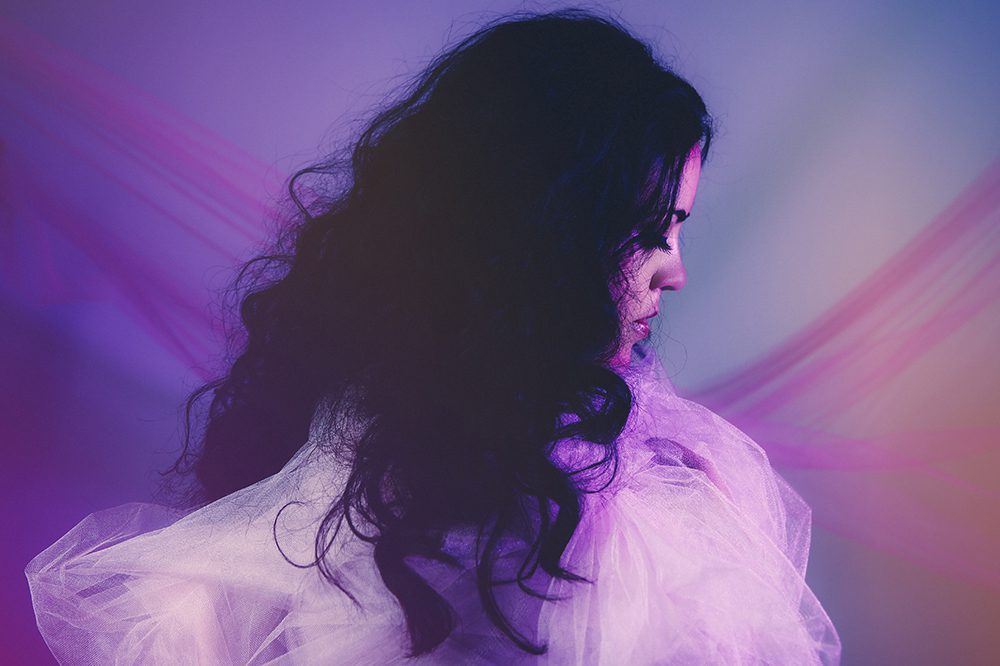
Photo Credit: Anna Haas

In Japanese culture, there’s a special method of repairing a broken object. Known as Kintsugi, the art form uses lacquer mixed with gold to not only mend broken pottery, but celebrate its imperfections, incorporating the broken pieces into the object’s history. The art from continuously revealed itself to Kristen Castro – singer, songwriter, and multi-instrumentalist behind Wild Heart Club – while in the writing process for her new album Arcade Back in Manitou, released November 12. “That was a visual I had the whole record,” Castro tells Audiofemme. “I was like ‘Okay, maybe I’m on the right path.’” But before she could walk the path to her destiny, she had to embrace her own brokenness.

Growing up in Simi Valley California, Castro always had a deep sense of observation and empathy. “As a kid, I was always weird,” she confesses. “I could always tell when people would click, the popular kids. I was really empathetic and I could feel when people were lonely and I was like ‘you’re just as important.’ Quiet people are usually weirder. There’s a lot going on in their head. Maybe they’re not as confident, but they’re just as important as the popular people.”

Embracing her weirdness is a habit Castro carried into adulthood, particularly her career as a country artist. After moving to Nashville, Castro joined country trio Maybe April in 2013, their sparkling harmonies and bluegrass-infusion scoring them opening slots for the likes of Bonnie Raitt, Kris Kristofferson, Gavin DeGraw, Brandy Clark and others. But in spite of their growing success, Castro still felt like an outsider.

“I wasn’t like everybody else. I struggled with being confident, and I really want to uplift others who struggle in that same area,” she professes. “If I have this ability to make music; why not make it to connect with other people who can’t create and want to connect. It’s nice to be heard. I have a duty to myself to be honest. It took me a long time to get there though.” Amd it wasn’t without a personal toll – what got her to the point of being honest in her music was “constantly letting myself break, which was really hard,” she says. “Every time I’d put myself first, it would break something.”

The first break came when she departed Maybe April after six years, realizing she was not speaking her truth through the music. She also ceased co-writing with other Nashville songwriters as it began to feel “artificial,” the blossoming singer-songwriter drawn more to connecting with people through the power of music rather than chasing a number one song. Then, Castro experienced another break when she endured a devastating breakup with her girlfriend. At the time, she thought, “I need to grow and I need to figure this out or else I’m not going to get better.”

But those moments of darkness put Castro on a path of truth and honesty that inspired her to launch a career as a solo artist. With only her guitar and a slew of ideas and emotions waiting to be turned into songs, Castro flew to Los Angeles to stay with her brother, where she created Wild Heart Club’s exquisite debut. “It was a lot of healing. No one’s around me, I get to make this music for nobody right now,” Castro describes of making the album in solitude. “This is just for me.”

But the song that started it all was written years prior. Castro penned “Rainbow” when she and her ex-girlfriend starting dating. The couple was part of a now-defunct band, Mountain Time, and after a show in Colorado, they attended a bonfire where Castro saw a shooting star race across the sky, wondering in that moment if it was a sign from the universe that her then-girlfriend was “the one.”

“When you’re young and in love, you’re looking for any sign to tell you you’re on the right path. I saw so much magic in that moment and in that person, and looking at myself now, even though I miss her, I feel like all my favorite parts of her are part of me now,” Castro reveals. “I love when the sky is crying and all of a sudden you get a rainbow. For some reason, I felt like that sky, and I was like, ‘I deserve a rainbow. Is she my rainbow?’ I’ve had a lot of sadness in my life, so it’s just looking for signs.”

In the live acoustic video, premiering exclusively with Audiofemme, Castro strips down the upbeat pop number that appears on the album to the bare bones. With just an acoustic guitar, her soft voice and the gentle sound of the waves crashing along the shore behind her, Castro maintains the song’s dreamy element as she sings, “Break down like a waterfall/When your tears dry there’s a rainbow/Lost in love, lose yourself/When your tears dry there’s a rainbow.”

“It talks about this magical moment with a person, [and] it alludes to toxic moments,” she notes of the lyrics. “That relationship had so many beautiful parts to it and also so many negative parts to it where I would cry if I was happy, I would cry if I was hurt. But at the end of it all, she was always there.” As songwriting partners, the couple would write verses back and forth to each other. One of the verses her ex wrote foreshadowed a breakup where one partner encourages the other to go to the beach to find peace.

When Castro’s friend and videographer suggested they film a live version of “Rainbow” on the beach, it marked a full-circle moment for the singer. “I think it honors the song in the way that we used to play together,” she observes. “It was honoring what she wanted for me and what I want for myself.”

Castro received yet another sign from the universe that she was where she was meant to be while filming on the remote beach in California. A bystander approached to remark on the “beautiful” song. “The first thing she says is ‘I could tell it was a really hard song for you to sing. It sounded like you were in a toxic relationship.’ It took everything in my power not to cry. It was again this full circle feeling, these little moments where you’re like ‘I’m on the right path’ and respecting your life guides,” Castro observes. “I needed somebody to be that rainbow for me and now it feels like I’m my own rainbow.”

Castro continues to walk a path that is deeply honest, living fully in her truth as she works to pass on the core message embedded into her music: it gets better. “Something I kept thinking about was if I could talk to my past self who was going through all of this and let her know that it gets better, because so often it feels like it won’t. This album was more than just a breakup. I finally lost myself and gave myself the ability to find myself,” she proclaims. “I think lyrically [and] sonically it was me being honest for the first time, and being honest let me start to find myself, my truest self.”

As for how she defines her truest self? “Someone that’s free. Free of self-judgement, others’ judgment, free of being critical of yourself, free to create. It’s to find the beauty in the little things,” she expresses. “I think it’s letting yourself go through it, even though you know it’s going to be really awful. If you feel a pull to something, sometimes you need to walk through it. There were so many red flags where it was like ‘don’t do it,’ but if I didn’t do it, I wouldn’t have this album, I wouldn’t have broken. It’s being grateful to others and myself for letting myself go through that.”

Follow Wild Heart Club on Instagram and Facebook for ongoing updates.  
Deap Vally Invite Creative Collaborators Into Their Rock ‘N’ Roll Marriage

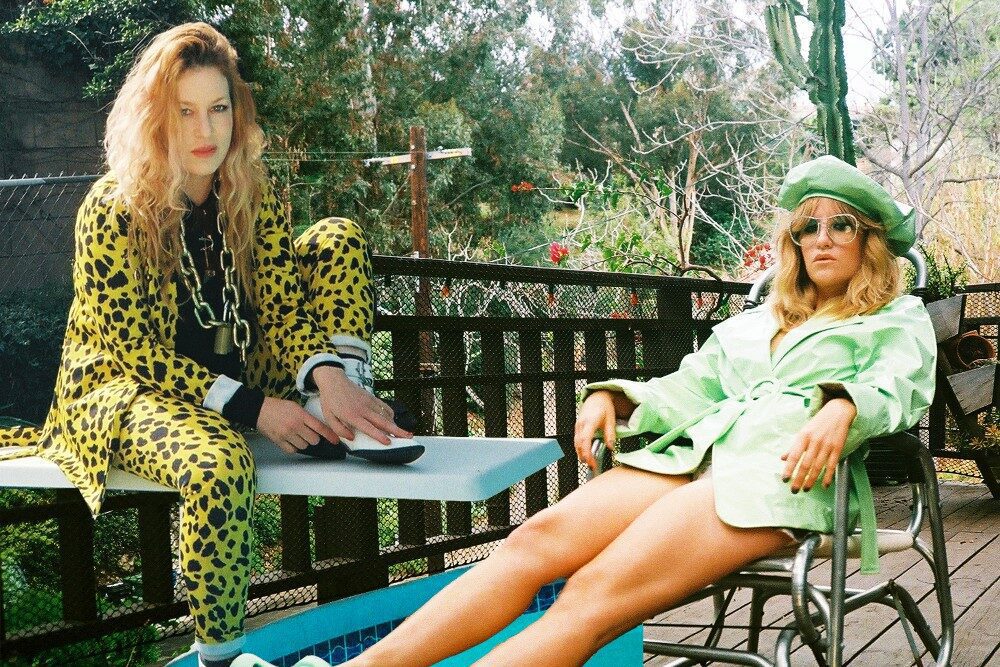
Photo Credit: Ericka Clevenger/Kelsey Hart

The musical marriage between Lindsey Troy and Julie Edward began a decade ago when they committed their respective rock ‘n’ roll talents to Deap Vally. Their long friendship and professional partnership has been creatively fertile in the last two years, culminating in the release of their third album, Marriage, released November 19 via Cooking Vinyl. It follows two EPs released earlier this year: in February, they dropped the Digital Dream EP and in June, American Cockroach.

Both the EPs and Marriage are the products of the “collaboration series” the duo began after releasing their second album Femejism in 2016, which was produced by Nick Zinner of Yeah Yeah Yeahs notoriety.

“After Femejism came out, we did quite a bit of touring in the US,” says Troy. “We were on the road a lot, and then, once we finally got time to do some more writing, we were trying to figure out how to shake up the writing process and make it exciting for us again, because we’d spent so much one-on-one time with each other.”

Reaching out to potential collaborators – something that happens often in EDM and hip-hop, but not so much in the rock ‘n’ roll world – proved to do just that. One of their first acts they got in touch with was The Flaming Lips, with some unexpected results.

“That ended up turning into a full record!” says Troy. “We released that first, but originally that was meant to be a song as part of our collaboration series.” The Deap Lips album, a scuzzy, hazy-glam, psyched-out antidote to the pandemic blues, whet their appetites for more creative partnerships. The possibilities open to them as they expanded beyond their two-piece lineup felt suddenly real and immediate, as evidenced by the bleepy, trippy, Wayne Coyne-flavoured track “The Pusher.”

“The beauty of collaborating is that you can always take something new away from witnessing and participating in someone else’s approach,” says Edwards. “Although we had many of our collaborations already in progress when we wrote with the Lips, it was inspiring to see their seamless blend of practical work ethic with spontaneous inspiration. Definitely recording at the Flaming Lips studio in Oklahoma was a true highlight so far.” 

“So far” refers to the ten years since Edwards and Troy formed Deap Vally in 2011. When they met in Silver Lake, Los Angeles, Edwards had been a vocalist, drummer, and keyboardist for LA-band The Pity Party alongside Marc Smollin since 2005, which toured and released EPs until 2012. Meanwhile, San Diego-born singer-guitarist Troy had (child-prodigy style) teamed up with her sister Anna to form The Troys, recording their debut album for Elektra Records in 2002 but never releasing it (Lindsey was just 15 at the time, and Elektra closed shop soon afterwards). The sisters released their solo projects in 2006: Anna’s Ain’t No Man LP; Lindsey’s Bruises EP months later. Lindsey had been doing her own solo thing until meeting Edwards, in the last place you’d expect given their hard-hitting sound.

“Lindsey actually came into my shop, The Little Knittery, and I taught her how to crochet and knit, and that’s how we met,” says Edwards. “At this point, there’s pretty much no downtime to make stuff, but we used to knit compulsively on the road and sell our handknits at shows.”

They shared more in common than a love of crochet. The two women spoke the same language when it came to rock, bonding over a love of Led Zeppelin.

Their own raw, noodling, punk-garage-blues rock relies purely on guitar, drums and frank, feminist lyrics delivered in a full-throated holler. The duo signed to Island Records in 2012 on the strength of their first single, “Gonna Make My Own Money;” the raucous, frenetic drums teamed with fuzzy, savage guitar riffs and a Karen O-style guttural-yet-melodic moan was undeniably a anthemic feminist cry in the spirit of Bikini Kill, L7 and Babes In Toyland. It would appear on their 2013 EP Get Deap! alongside three additional tracks that Spin declared “a burst of self-reliant aggression.”

“It’s unapologetic, heavy and groovy,” the duo stated in their trailer for the EP, in which the furious, fabulous “End Of The World” soundtracks footage of Troy and Edwards looking suitably rock ‘n’ roll with their big hair, swigging hard liquor straight from the bottle and ferociously swinging their instruments about on stage. That was but a sampling of the 11-track debut to come: Sistrionix, recorded in LA with producer Lars Stalfors of The Mars Volta, dropped in June of that same year. With instant acclaim came festival spots at Latitude, Leeds and Reading Festivals in the UK, and tours with The Vaccines, Muse, Wolf Mother, Marilyn Manson and Red Hot Chili Peppers.

The same album spawned one of my favourite Deap Valley bangers: “Baby I Call Hell,” a hot, hollering, anthemic rock beast in which Troy demands of her lover, “Are you gonna please me, like you swore you would, or is it just to tease me? Better treat this woman good!”

Femejism followed in 2016, and 2017 saw the duo touring with Blondie and Garbage on the Rage and Rapture Tour. But their marriage was feeling frayed at the edges and the creative spark had been dulled by domestic demands (both Troy and Edwards have very young children). The thrill of releasing music as Deap Lips only confirmed that collaborations seemed to reignite the muse, and Marriage showcases that renewed passion.

“High Horse” features KT Tunstall and Peaches. “She’s brilliant as fuck, bold, funny, and completely down to Earth,” says Edwards of Peaches. “She’s a blessing to humankind, truly.”

Eagles of Death Metal bassist Jennie Vee is a primal force on “I Like Crime.”

“A few years ago, we played a really great rock festival called Aftershock…one of the bands playing was Eagles of Death Metal,” recalls Troy. “I’m a huge fan of Eagles of Death Metal – they’re such a tasty, feel-good, unique, authentic rock ’n’ roll band. We were watching them side stage and Julie and I were like, ‘Holy crap! Who is this woman?’ We didn’t know they had a female bass player… she’s incredible, she had such good stage presence, she looked so cool. We were blown away.”

The mutual love affair resulted in studio time in LA, with “I Like Crime” completed in three days.

On “Look Away,” the dreamy, sadly romantic Warpaint vibe is unmistakable thanks to jennylee. It’s a bittersweet, ’80s-style ballad in which the refrain “This is heart, this is heart, this is heartache” smarts with the raw, hopeless lonely fog of a breakup.  

“We booked a day at the Cave Studio in LA with engineer/producer Josiah Mazzaschi and we went in with jennylee, and basically the way we started writing together was just with spontaneous jamming in the live room that Josiah recorded,” recounts Edwards. “We jammed out a few different spontaneous ideas that were just springing up and then took a break to listen to what we came up with. Listening to jams can be painful and funny, and we embraced that. Then we picked which jam we all agreed was our favorite, and we started to build on that. We got most of the structure and ideas done in a day, and then did two more days to finish the song. It was really fun and easy. The whole point was not to overthink it and to surrender to the song that was forming, rather try to control the outcome.” Spontaneity and surrender: the perfect recipe for a rock ‘n’ roll marriage likely to go the distance another ten, if not twenty, years.

Follow Deap Vally on Instagram for ongoing updates.